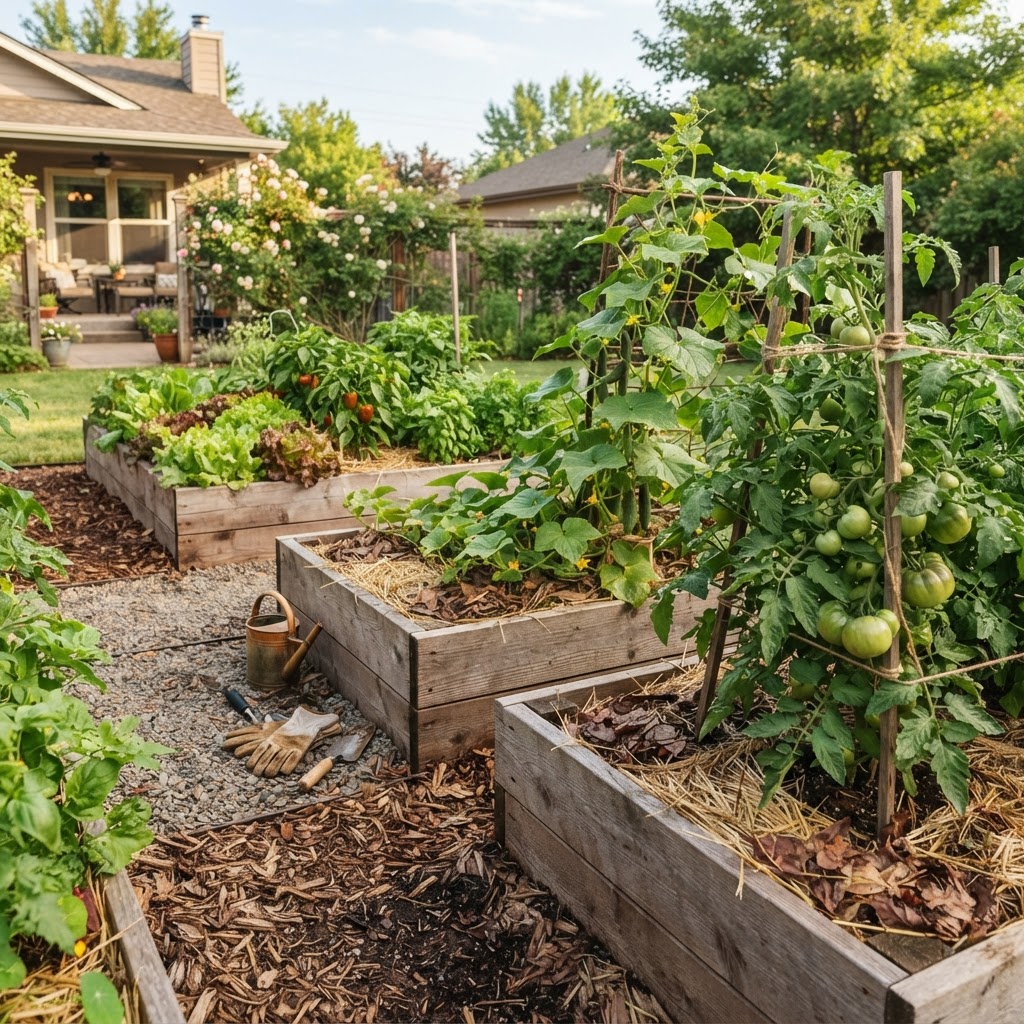
Best Mulch for Raised Bed Vegetable Gardens: Easy Options for Healthier Soil and Bigger Harvests
Mulch may look like a simple finishing layer, but it can make a big difference in a raised bed vegetable garden. The right mulch helps the soil stay moist, slows down weeds, and can even improve soil health over time.
If you are wondering what the best mulch for raised bed vegetable gardens is, the short answer is that it depends on what you are growing and your local climate. For most beginners, clean straw, shredded leaves, and untreated grass clippings are some of the best and easiest choices.
Why This Topic Matters
Raised beds dry out faster than in-ground gardens, especially in warm, windy, or sunny locations. That means your vegetables can become stressed quickly if the soil loses moisture too fast.
Mulch acts like a protective blanket over the soil. It reduces evaporation, softens temperature swings, and helps keep the soil surface from crusting over after watering.
It also saves time. A good mulch layer can cut down on weeding and reduce how often you need to water during the hottest parts of the season.
For beginner gardeners, that matters a lot. When your garden is easier to manage, it is much more likely that you will stick with it and enjoy the process.
There is another benefit too: many organic mulches break down slowly and feed the soil. That supports earthworms and beneficial microbes, which are key parts of a healthy vegetable garden.
Quick Answer
The best mulch for raised bed vegetable gardens is usually an organic mulch that is safe, affordable, and easy to apply. For most home gardeners, these are the top choices:
- Straw: Great for moisture retention, weed control, and keeping fruits like tomatoes or peppers cleaner.
- Shredded leaves: Excellent free mulch that improves soil as it breaks down.
- Untreated grass clippings: Best used in thin layers; good for quick moisture protection.
- Compost: Works more like a soil-feeding top dressing than a weed-blocking mulch, but it is very helpful.
- Pine needles: Useful in some beds, especially where you want a light, airy mulch.
For most beginners, clean straw is often the easiest all-around option. It is light, simple to spread, and works well around common vegetables.
The main mulches to be careful with are:
- Hay, because it often contains weed seeds
- Wood chips mixed directly into annual vegetable beds
- Thick layers of wet grass clippings that can mat down and smell
- Dyed or chemically treated landscape mulches not intended for food gardens
Step-by-Step Guide
1. Decide what you want mulch to do
Before choosing a mulch, think about your biggest garden challenge. Are you trying to hold moisture, stop weeds, keep fruits off the soil, or improve soil over time?
If your raised beds dry out fast, straw or shredded leaves are strong options. If your main goal is feeding the soil, compost and leaf mulch are especially helpful.
2. Choose the best mulch type for your raised bed
Here is a beginner-friendly breakdown of the most common mulch options.
Straw
Straw is one of the most popular mulches for vegetable gardens for good reason. It is made from the stalks of grain plants after the seeds have been harvested, so it usually contains fewer seeds than hay.
Why it works well:
- Helps retain moisture
- Blocks many annual weeds
- Keeps mud from splashing onto vegetables
- Breaks down slowly enough to last through much of the season
- Easy to move aside for planting and watering
Best for:
- Tomatoes
- Peppers
- Eggplant
- Cucumbers
- Squash
- Paths between raised beds
Watch out for:
- Straw bales that contain seeds
- Mulch blowing away in very windy gardens before it settles in
Shredded Leaves
If you have deciduous trees nearby, shredded leaves are one of the best low-cost mulches available. They are easy to source in fall and can be stored for use later.
Whole leaves can mat together, so shredding them first works better. You can do this by mowing over a pile of dry leaves.
Why gardeners love them:
- Usually free
- Add organic matter to the soil
- Help hold moisture
- Support soil life
Best for:
- Most raised bed vegetables
- Fall and winter bed protection
- Gardeners looking for a budget-friendly mulch
Watch out for:
- Thick layers of whole leaves that block airflow and water
Grass Clippings
Fresh, untreated grass clippings can be useful if you have a lawn that has not been sprayed with herbicides or other chemicals. They are rich in nitrogen and break down quickly.
Use them in very thin layers. Thick layers can become slimy, compacted, and smelly.
Benefits:
- Free and easy to access
- Adds nutrients as it breaks down
- Good for quick summer moisture protection
Best for:
- Established plants
- Beds that need a temporary light mulch
Watch out for:
- Clippings from treated lawns
- Thick wet mats that prevent air and water movement
Compost
Compost is not always the best weed-blocking mulch by itself, but it is excellent for raised beds. It improves soil structure, adds nutrients, and supports healthy microbial activity.
Many gardeners use compost as a thin top layer and then add straw or shredded leaves on top. That combination gives you both soil improvement and better weed suppression.
Best for:
- Feeding heavy-feeding vegetables like tomatoes, squash, and brassicas
- Refreshing raised beds at the start of the season
Watch out for:
- Using compost alone if your main problem is weed pressure
Pine Needles
Pine needles, also called pine straw, create a light mulch layer that lets water pass through easily. They can work well in some raised beds, especially in humid areas where a looser mulch helps with airflow.
Despite the common myth, pine needles do not dramatically acidify garden soil once they are on the ground. They are generally safe for many vegetable gardens.
Best for:
- Gardeners who have easy access to them
- Beds that need a lighter, airier mulch
Watch out for:
- Very shallow-rooted seedlings that need a finer mulch around them at first
Mulches to avoid or use with caution
Not every mulch is ideal for raised bed vegetables.
Use caution with:
- Hay: often loaded with weed seeds
- Wood chips in planting zones: better for paths than around annual vegetables
- Black plastic: can work in some cases, but it does not feed the soil and may overheat beds in hot climates
- Dyed mulch: not the best fit for edible gardens
- Fabric under mulch: can interfere with soil improvement and make bed maintenance harder over time
3. Wait until the soil has warmed
In spring, do not mulch too early. Raised bed soil needs to warm up for many vegetables to grow well.
If you cover cold spring soil with a thick mulch layer too soon, you may slow down plant growth. A good rule is to wait until seedlings are established and the soil has started warming consistently.
4. Weed and water first
Mulch works best when you apply it to a clean, moist bed. Pull weeds before mulching, and water the soil deeply.
If you mulch over dry soil, you may lock in dryness instead of preserving moisture. If you mulch over weeds, you are giving them a head start.
5. Apply the right depth
The right mulch depth matters. Too little will not block weeds well, and too much can reduce airflow around plants.
For most organic mulches in raised beds, aim for:
- Straw: 2 to 4 inches
- Shredded leaves: 2 to 3 inches
- Grass clippings: 1 to 2 inches at a time
- Compost: 1 to 2 inches as a top dressing
- Pine needles: 2 to 3 inches
Keep mulch a little away from plant stems. Piling mulch directly against stems can trap moisture and invite rot or pests.
6. Adjust for different crops
Not all vegetables need the exact same approach.
Use mulch generously around:
- Tomatoes
- Peppers
- Cucumbers
- Zucchini
- Melons
- Eggplant
Use a lighter hand around:
- Tiny direct-sown carrots
- Lettuce seedlings
- Radishes
- Beets just after germination
Small seedlings benefit from some open soil space until they are established. Once they are bigger, you can tuck in a finer mulch around them.
7. Refresh as needed through the season
Organic mulches break down over time. That is a good thing for soil health, but it also means you may need to top them up.
Check your beds every few weeks during summer. If the mulch layer has thinned out and weeds are starting to appear, add a little more.
Common Beginner Mistakes
Using hay instead of straw
This is one of the most common mulch mistakes. Hay often contains lots of seeds, which can turn your raised bed into a weed nursery.
If you want a clean, simple mulch, straw is usually the safer choice.
Applying mulch too early in spring
It is tempting to mulch right away, but cold soil can delay plant growth. Wait until the soil is warming and your plants are established.
Making the mulch layer too thick
A very thick mulch layer can hold too much moisture near stems, reduce airflow, and create hiding spots for slugs. More is not always better.
Start with recommended depths and observe how your garden responds.
Smothering seedlings
Tiny seedlings need light, space, and airflow. Heavy mulch can overwhelm them.
For direct-sown crops, wait until plants are a few inches tall before adding much mulch nearby.
Using contaminated materials
Always know where your mulch came from. Grass clippings from treated lawns, persistent herbicide contamination in hay, or questionable yard waste can damage vegetable plants.
When in doubt, use a trusted source or choose materials from your own yard.
Forgetting to water before mulching
Mulch helps preserve existing moisture. It is not a substitute for deep watering.
Water first, then mulch. This simple step makes the mulch much more effective.
Best Tips for Success
If you want the best results from mulch in raised bed vegetable gardens, keep these practical tips in mind:
- Match the mulch to the season. Straw and shredded leaves are great in summer, while compost and leaves are excellent for fall bed building.
- Combine compost with another mulch. Compost feeds the soil, and straw or leaves improve weed control.
- Store extra mulch nearby. Having more on hand makes it easy to refresh thin spots.
- Check under the mulch occasionally. This helps you monitor soil moisture and spot pests early.
- Keep mulch off stems. Leave a small gap around each plant base.
- Use finer mulch for small crops. Shredded leaves or a thin compost layer work better around tender seedlings than coarse straw.
- Mulch paths too. If you have space between raised beds, mulching paths can reduce mud and weeds.
A simple beginner strategy is this:
- Top beds with compost at the start of the season.
- Plant your vegetables.
- Once plants are established, add 2 to 3 inches of straw or shredded leaves.
- Replenish any thin areas in midsummer.
That approach works well in many home gardens and keeps maintenance manageable.
Recommended Supplies or Tools
You do not need much to mulch raised beds well, but a few simple tools make the job easier.
Helpful supplies
- Straw, shredded leaves, compost, or another organic mulch
- A watering wand or hose
- Garden gloves
- A hand trowel or hand fork
- A wheelbarrow or garden cart
- Pruners or scissors for opening mulch bags or trimming twine
Useful tools for preparing leaf mulch
- A lawn mower for shredding leaves
- A large tarp for collecting and moving leaves
- Storage bins or bags for saving dry leaves until needed
Optional product ideas
If you want to buy supplies online, look for simple, durable basics rather than specialized gadgets. For example, sturdy garden gloves, a watering wand, and a small garden fork are often more useful than expensive tools.
If you include products in your own planning list, make sure any food-garden materials are labeled safe for edible gardens and free from dyes or chemical treatments.
Frequently Asked Questions
What is the best mulch for raised bed vegetable gardens?
For most beginners, straw is one of the best all-around mulches because it helps with moisture retention, weed suppression, and clean harvesting. Shredded leaves are also an excellent low-cost option, and compost is a great addition for soil health.
Is straw or wood chips better for raised bed vegetables?
Straw is usually better for annual vegetable beds. Wood chips are more often used on garden paths or around perennial plants because they break down slowly and are less convenient around small vegetables.
Can I use grass clippings as mulch in a vegetable garden?
Yes, if the clippings come from an untreated lawn. Apply them in thin layers and let each layer dry a bit before adding more so they do not mat down.
When should I mulch my raised beds?
Mulch after the soil has warmed and your plants are established. In many gardens, that means a little later in spring rather than immediately after planting.
Is compost enough as a mulch?
Compost is excellent for feeding soil, but it does not always suppress weeds as well as straw or shredded leaves. Many gardeners get the best results by using compost underneath another organic mulch.
Final Thoughts
The best mulch for raised bed vegetable gardens is the one that fits your crops, climate, and available materials while supporting healthy soil. For most home gardeners, straw, shredded leaves, compost, and small amounts of untreated grass clippings are the most practical and beginner-friendly choices.
If you are just getting started, keep it simple. Begin with compost for soil health, then add straw or shredded leaves once your vegetables are established.
You do not need a perfect system to see great results. A thoughtful mulch layer can make your raised beds easier to care for, more resilient in hot weather, and more productive throughout the season.