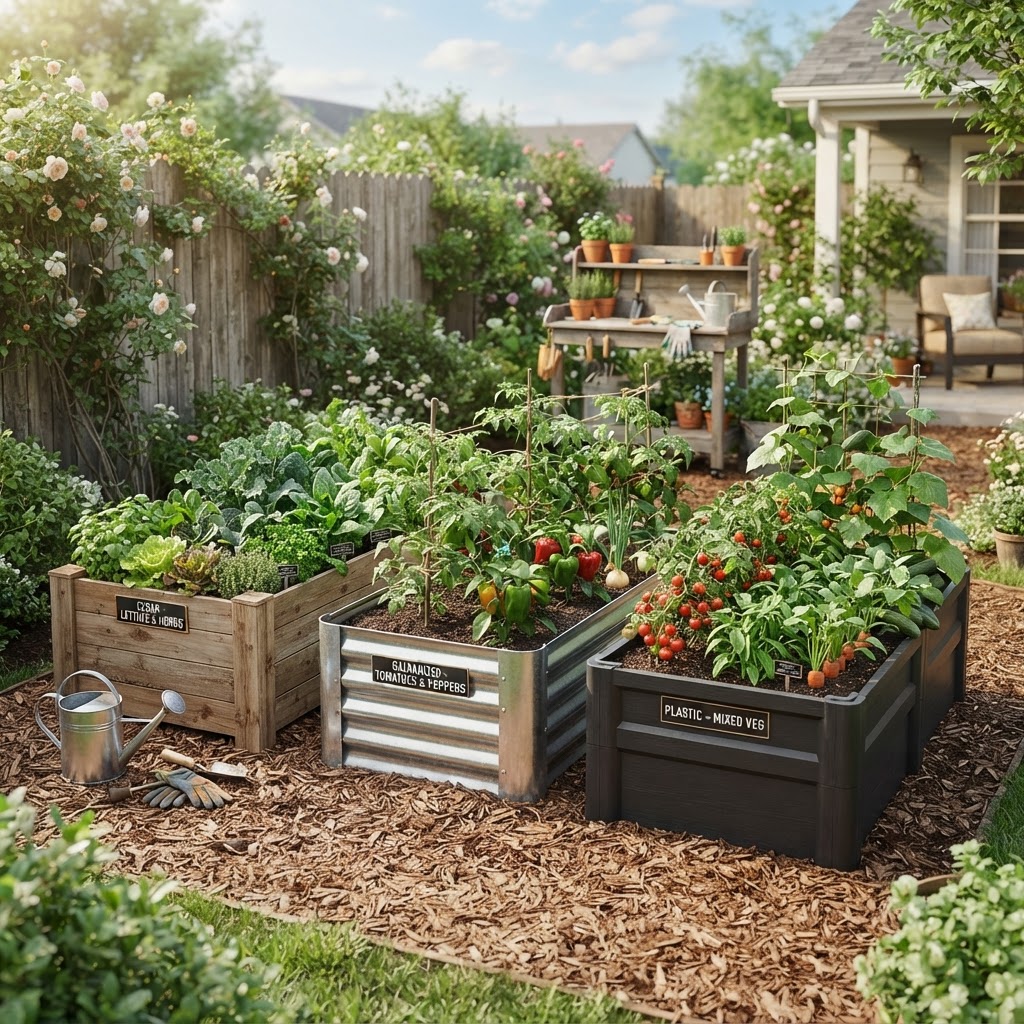
Best Raised Bed Material: Wood vs Metal vs Plastic for Beginner Vegetable Gardens
Choosing the best raised bed material can feel surprisingly hard when you are just trying to grow a few tomatoes, greens, or peppers at home. Wood, metal, and plastic all have real advantages, but the right choice depends on your budget, climate, and how long you want the bed to last.
If you are feeling stuck, you are not alone. This guide will walk you through wood vs metal vs plastic raised beds in simple terms so you can pick a material that fits your space and start gardening with confidence.
Why This Topic Matters
The material you choose affects much more than looks. It can change how long your raised bed lasts, how much maintenance it needs, how quickly the soil warms up, and how much money you spend over time.
For beginners, the wrong choice can lead to frustration. A bed that rots too fast, overheats in summer, or cracks after a cold winter can make gardening feel harder than it needs to be.
Raised beds are an investment, even if you build them cheaply. Taking time to compare wood, metal, and plastic now can help you avoid replacing everything in just a few seasons.
It also matters for sustainability. Some gardeners want natural materials, others want the longest lifespan, and some need the lightest option for patios or temporary spaces. There is no single perfect answer, but there is likely a best match for your garden.
Quick Answer
For most beginner vegetable gardeners, wood is the best all-around raised bed material because it is easy to build, widely available, attractive, and beginner-friendly.
That said, metal is often the best long-term choice if you want durability and do not mind a higher upfront cost. Plastic can be a practical budget or lightweight option, but it is usually less attractive and may not last as long in full sun.
Here is the simple breakdown:
- Choose wood if you want a classic look, easy DIY options, and a good balance of cost and function.
- Choose metal if you want a long-lasting bed with low maintenance and a modern look.
- Choose plastic if you need something lightweight, affordable, and easy to move or set up.
If you want the shortest recommendation possible, start here:
- Best for most beginners: cedar or another rot-resistant wood
- Best for long lifespan: galvanized metal
- Best for tight budgets or temporary use: food-safe, UV-resistant plastic
Step-by-Step Guide
1. Start with your gardening goals
Before comparing materials, think about how you plan to use the bed. A raised bed for a long-term backyard vegetable garden is different from one for a rental home, patio, or small seasonal project.
Ask yourself a few simple questions:
- Do I want this bed to last 2 years or 10+ years?
- Am I building it myself or buying a kit?
- Is appearance important to me?
- Do I garden in a very hot, cold, or wet climate?
- Do I want to move the bed later?
Your answers will quickly narrow the options.
2. Understand the pros and cons of wood raised beds
Wood is often the first choice for home vegetable gardens, and for good reason. It feels natural in the landscape, is easy to customize, and works well for almost any garden style.
Pros of wood raised beds
- Natural, warm appearance
- Easy for beginners to cut, screw together, and repair
- Available in many sizes and price ranges
- Does not usually heat up as fast as metal in direct sun
- Easy to build custom depths and shapes
Cons of wood raised beds
- Can rot over time, especially in wet climates
- Lower-cost lumber may warp or break down faster
- Some woods are expensive, especially cedar or redwood
- Needs occasional maintenance or replacement
Best wood choices
For edible gardens, rot-resistant woods are usually the safest and most practical choice.
Good options include:
- Cedar: popular, attractive, naturally rot-resistant
- Redwood: durable but often more expensive and less available
- Untreated pine: budget-friendly, but shorter lifespan
- Douglas fir or hemlock: moderate options depending on local availability
Many beginners ask about pressure-treated wood. Modern pressure-treated lumber is considered safer than older versions, but some gardeners still prefer to avoid it for vegetable beds. If you want the simplest peace of mind, choose untreated rot-resistant wood.
When wood is the best choice
Wood is best when you want:
- A beginner-friendly DIY project
- A traditional garden look
- A balance between cost and durability
- Flexibility in size and design
3. Understand the pros and cons of metal raised beds
Metal raised beds have become very popular, especially corrugated galvanized steel models. They look neat, last a long time, and are often sold as easy-to-assemble kits.
Pros of metal raised beds
- Very durable and long-lasting
- Resistant to rot, termites, and many weather issues
- Low maintenance once assembled
- Clean, modern appearance
- Often available in larger sizes and taller heights
Cons of metal raised beds
- Higher upfront cost than basic wood beds
- Can heat up more in intense summer sun
- Edges may need protective trim for safety
- Less simple to modify than wood
Does metal get too hot for plants?
This is one of the most common concerns, and it is a fair one. In hot climates, metal sides can become warm in full sun, but that does not always mean the entire root zone overheats.
Soil temperature depends on bed size, soil depth, mulch, watering, and air flow too. In many home gardens, metal beds grow vegetables very successfully, especially if you mulch the soil and keep plants well watered.
If you live in a very hot area, choose a taller bed, add mulch, and avoid placing shallow-rooted crops right against the hottest wall of the bed.
When metal is the best choice
Metal is best when you want:
- Long lifespan
- Very low maintenance
- A sleek or modern look
- A ready-made kit instead of a full DIY build
4. Understand the pros and cons of plastic raised beds
Plastic raised beds are often overlooked, but they can be useful in the right situation. They are usually lighter than wood or metal and can be easy to assemble without tools.
Pros of plastic raised beds
- Lightweight and easy to move
- Often budget-friendly
- Usually simple to assemble
- Will not rot like wood
- Good for temporary or portable setups
Cons of plastic raised beds
- May become brittle over time in strong sun
- Can crack in extreme cold or after years outdoors
- Usually less sturdy than wood or metal
- Appearance may not appeal to everyone
- Quality varies a lot between brands
What to look for in plastic
If you choose plastic, look for:
- Food-safe materials
- UV-resistant construction
- Thick, durable panels rather than flimsy plastic
- Good drainage and solid corner support
Cheap plastic beds may seem like a bargain, but if they warp or break after a couple of seasons, they can cost more in the long run.
When plastic is the best choice
Plastic is best when you want:
- A lightweight option
- A bed for a patio, rental, or temporary garden
- Very simple setup
- A lower initial cost
5. Compare wood vs metal vs plastic side by side
Here is the practical comparison most beginners need.
Durability
- Metal: usually the longest-lasting
- Wood: moderate to long-lasting depending on species
- Plastic: varies widely, usually moderate at best
Upfront cost
- Plastic: often cheapest
- Wood: moderate, but depends heavily on lumber choice
- Metal: often highest upfront cost
Ease of DIY building
- Wood: easiest for custom DIY projects
- Plastic: easiest if using a snap-together kit
- Metal: easiest when purchased as a kit, less simple for custom builds
Appearance
- Wood: classic and natural
- Metal: clean and modern
- Plastic: practical, but often less attractive
Maintenance
- Metal: lowest maintenance
- Plastic: fairly low maintenance if quality is good
- Wood: needs the most monitoring over time
Climate performance
- Wood: performs well in many climates, but rots faster in wet areas
- Metal: excellent in wet climates, but may warm faster in hot sun
- Plastic: can struggle in intense UV or freezing conditions if low quality
6. Match the material to your climate
Climate matters more than many beginners expect.
Best raised bed material for wet climates
If you get frequent rain or have high humidity, wood may break down faster unless you choose a naturally rot-resistant species. Metal often performs very well here.
Best options:
- Galvanized metal
- Cedar or redwood
Best raised bed material for hot climates
In very hot areas, both wood and metal can work well. Wood may stay a bit cooler at the edges, while metal benefits from mulch and deep soil.
Best options:
- Cedar or other untreated wood
- Metal with mulch and proper watering
Best raised bed material for cold climates
Freeze-thaw cycles can be tough on weak plastic and poorly built wood beds. Durable wood and quality metal are often the safest choices.
Best options:
- Galvanized metal
- Thick cedar or redwood boards
7. Think about food safety and soil health
For vegetable gardening, it is normal to be cautious about what touches your soil. That is a good instinct.
Here are the simple guidelines:
- Use untreated rot-resistant wood if you want the least worry.
- Use galvanized steel from a reputable manufacturer for metal beds.
- Use food-safe, UV-stable plastic if choosing plastic.
- Avoid unknown materials, especially if they were not designed for garden use.
Lining a bed is optional in most cases. Some gardeners line wood beds with landscape fabric or plastic sheeting, but this can affect drainage. If you line the inside, make sure water can still drain freely.
8. Choose the best option for your budget
If cost is your biggest concern, compare short-term and long-term value, not just the sticker price.
A cheap pine bed may cost less now but need replacing much sooner. A metal bed may cost more at the start but last long enough to become the better value over time.
A helpful way to decide is this:
- Set your total garden budget.
- Decide how many years you want the bed to last.
- Estimate whether you would rather pay more once or replace a cheaper bed later.
- Choose the strongest material you can reasonably afford.
9. The best choice for most beginners
If you are still undecided, here is the most practical advice.
Choose cedar wood if you want a forgiving, attractive, beginner-friendly raised bed you can build or buy almost anywhere.
Choose galvanized metal if you want to set it up once and use it for many years with minimal maintenance.
Choose plastic only if portability, very easy setup, or low upfront cost matters most.
Common Beginner Mistakes
Many raised bed problems come from setup choices, not the material itself. Avoiding a few common mistakes will save you time and money.
Picking based only on looks
A beautiful bed that does not suit your climate or budget can become frustrating fast. Always balance appearance with durability and practicality.
Buying the cheapest option available
The lowest-priced bed is not always the best value. Thin boards, flimsy plastic, and weak metal panels often fail early.
Ignoring bed depth
Material matters, but depth matters too. Most vegetables do best with at least 8 to 12 inches of soil, and root crops often appreciate more.
Forgetting sun exposure
A metal bed in intense reflected heat or a plastic bed in harsh all-day sun may need extra care. Think about the exact spot before you buy.
Using unsafe or questionable materials
Avoid old painted boards, railroad ties, or mystery salvage materials around edible crops. It is better to keep things simple and known.
Overbuilding at the start
Beginners often build too many beds at once. One or two well-made beds are easier to manage and help you learn what works in your yard.
Best Tips for Success
No matter which raised bed material you choose, these tips will help your vegetable garden perform better.
Prioritize soil quality
Good soil matters more than the bed material. Fill your raised bed with a balanced mix of compost, topsoil, and organic matter suited to vegetables.
Mulch the surface
Mulch helps regulate soil temperature, reduce moisture loss, and limit weeds. It is especially useful in metal beds during summer.
Keep beds a manageable width
Most raised beds work best at about 3 to 4 feet wide. That lets you reach the center without stepping into the soil.
Do not make beds too long for your space
Long beds look nice, but they can become awkward if they block paths or harvesting access. Plan for movement, watering, and wheelbarrow space.
Water consistently
Raised beds drain well, which is great for roots, but they can dry out faster than in-ground gardens. Check moisture regularly, especially in hot weather.
Start small and improve over time
Your first raised bed does not need to be perfect. A practical, sturdy bed with good soil will teach you more than weeks of overthinking materials.
Recommended Supplies or Tools
You do not need a huge shopping list to get started. The exact supplies depend on whether you choose wood, metal, or plastic, but these basics are useful for almost any raised bed project.
Basic supplies
- Raised bed kit or building material of choice
- Quality garden soil or raised bed soil mix
- Compost
- Mulch such as straw or shredded leaves
- Measuring tape
- Level
- Gloves
Helpful tools for wood beds
- Drill or screwdriver
- Exterior-grade screws
- Saw if cutting boards to size
- Corner brackets for extra support
Helpful tools for metal beds
- Work gloves for assembly
- Rubber edging or trim for sharp edges if needed
- Wrench or screwdriver depending on hardware
Helpful tools for plastic beds
- Rubber mallet for snap-together parts if needed
- Ground staples or anchors in windy areas
Nice extras for any raised bed
- Soaker hose or drip irrigation
- Trellis for climbing vegetables
- Frost cover or shade cloth depending on season
- Plant labels
Frequently Asked Questions
Is wood or metal better for raised garden beds?
For most beginners, wood is easier to work with and often feels more approachable. Metal is usually better for long-term durability and lower maintenance.
Are metal raised beds safe for growing vegetables?
Yes, quality galvanized metal raised beds are widely used for vegetable gardening. It is best to buy from reputable garden brands and avoid mystery scrap materials.
How long do wooden raised beds last?
It depends on the wood and climate. Cedar can last many years, while untreated pine usually has a shorter lifespan, especially in wet conditions.
Do plastic raised beds leach chemicals into soil?
This depends on the plastic type and quality. For edible gardening, choose food-safe plastic made for outdoor garden use and avoid unknown or repurposed plastic materials.
What is the cheapest material for a raised bed?
Untreated pine and basic plastic kits are often among the cheapest options upfront. But the best value depends on how long the bed lasts before needing replacement.
Final Thoughts
When comparing the best raised bed material, wood vs metal vs plastic is really a question of priorities. Wood is the best all-around choice for many beginners, metal is excellent for durability, and plastic can work well for lightweight or temporary setups.
If you want the simplest path forward, choose a well-made cedar bed or a quality galvanized metal kit, fill it with great soil, and start growing. A raised bed does not need to be perfect to produce fresh vegetables, and the best material is the one that helps you begin with confidence and keep gardening season after season.