What Is Indoor Gardening? A Beginner’s Guide to Growing Vegetables Inside
Affiliate Disclosure: This article contains affiliate links. If you make a purchase through one of them, we may earn a small commission at no extra cost to you. We only recommend products we genuinely believe will help your garden thrive.
If you have ever wished you could grow fresh food without a backyard, indoor gardening is a great place to start. It is simple, flexible, and beginner-friendly, especially when you choose easy crops and set up your space with the basics.
Indoor gardening can feel a little mysterious at first, but it does not have to be complicated. Once you understand light, containers, soil, and watering, you can grow herbs, leafy greens, and even a few compact vegetables right inside your home.
Why This Topic Matters
Indoor gardening matters because not everyone has access to outdoor growing space. Many people live in apartments, rent their homes, deal with harsh weather, or simply want to keep fresh plants close to the kitchen.
It is also a practical way to learn gardening skills on a smaller scale. You can observe your plants every day, catch problems early, and build confidence before moving on to larger outdoor beds or containers.
For beginners, indoor gardening offers a low-pressure way to get started. A sunny windowsill, a few pots, and the right plants can teach you a lot about how vegetables grow.
There is also a sustainability angle. Growing even a small amount of food at home can help reduce packaging waste, cut down on grocery trips, and give you a better connection to the food you eat.
Indoor gardening is especially useful for:
- Apartment dwellers
- Busy beginners
- People in cold climates
- Families who want fresh herbs year-round
- Gardeners extending the growing season
- Anyone who wants a small, manageable gardening project
You do not need a perfect setup to begin. In fact, many successful indoor gardeners start with one or two pots and improve their setup over time.
Quick Answer
Indoor gardening is the practice of growing plants inside your home instead of outside in the ground. It can include herbs, leafy greens, microgreens, houseplants, seedlings, and some compact vegetables grown in containers with natural light, grow lights, or both.
For edible gardening, indoor gardening usually means using pots or trays, quality potting mix, regular watering, and a spot with enough light. The goal is to create a small growing environment indoors where plants can get the essentials they need: light, water, air, warmth, and nutrients.
The easiest food crops for beginners are usually:

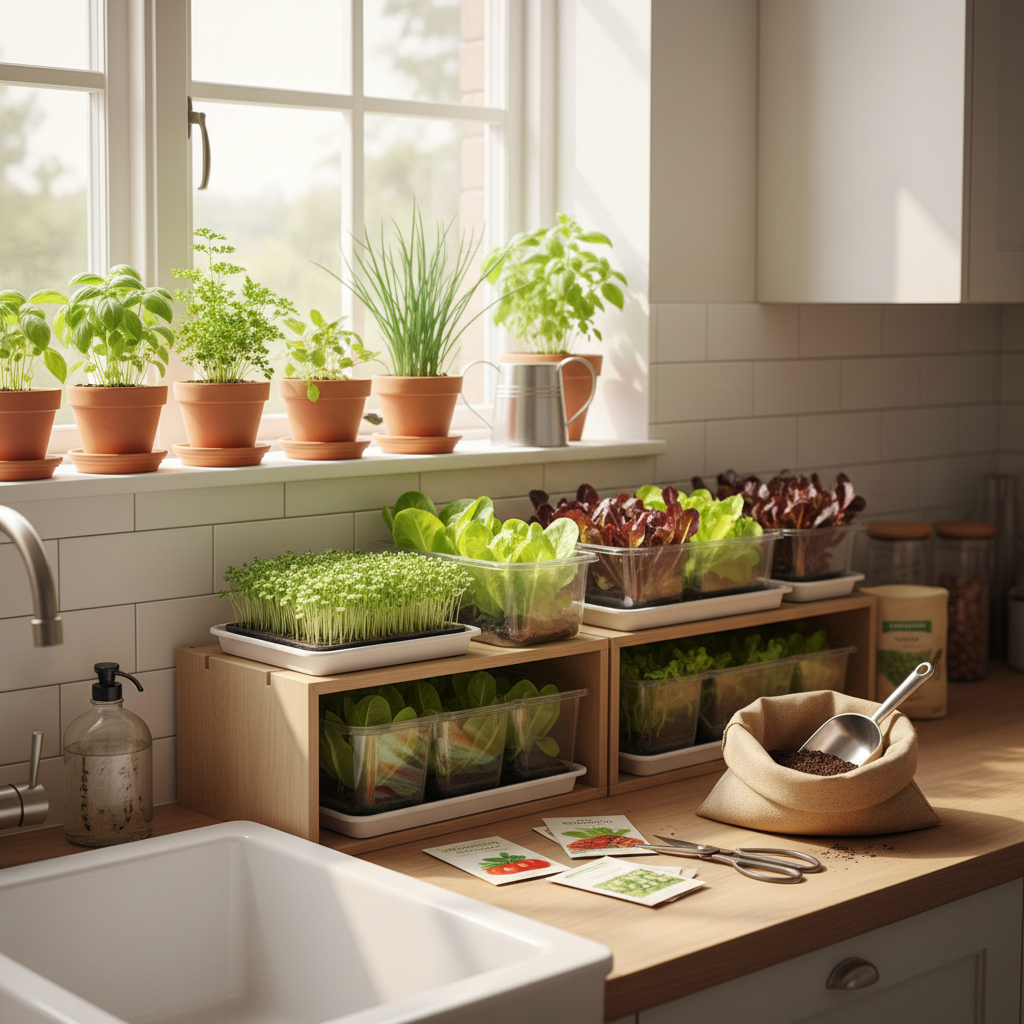
A sunny kitchen windowsill is one of the best places to start an indoor herb garden.
- Basil
- Mint
- Parsley
- Chives
- Lettuce
- Spinach
- Microgreens
- Green onions
Some people keep indoor gardening very simple with a kitchen windowsill herb garden. Others use shelves, LED grow lights, and multiple containers to grow more food in a small space.
So if you are wondering what indoor gardening is, the simplest answer is this: it is growing plants inside your home in a controlled, small-space setup.
Step-by-Step Guide
Starting an indoor garden is easier when you break it into small steps. You do not need to do everything at once.
1. Choose the Right Space
Start by looking for a place in your home that gets consistent light. South-facing windows are usually best, but east- or west-facing windows can also work for some crops.
If your home does not get enough sunlight, do not worry. A basic grow light can make a huge difference and often gives more reliable results than a dim window.
Good indoor gardening spots include:
- Kitchen windowsills
- Bright dining room windows
- Shelving near a sunny window
- A spare corner with a grow light
- A laundry room or office with controlled lighting
Try to avoid spots near heating vents, cold drafts, or frequently opened exterior doors. Sudden temperature changes can stress plants.
2. Pick Beginner-Friendly Crops
Not every vegetable grows well indoors. Fruiting crops like full-size tomatoes, pumpkins, or corn are usually more demanding and need more space and stronger light.
For beginners, it is better to start with crops that stay compact and grow quickly.
Best choices for indoor vegetable gardening:
- Herbs: basil, cilantro, parsley, chives, oregano, thyme
- Leafy greens: lettuce, spinach, arugula, kale
- Fast-growing crops: microgreens, pea shoots, radish greens
- Easy regrow options: green onions from kitchen scraps
- Compact vegetables: small peppers or dwarf tomatoes, if you have strong light
Starting with one herb and one leafy green is a smart first step. That keeps your setup simple while letting you learn how your home environment affects plant growth.
3. Use Containers with Drainage
One of the most common beginner mistakes is using a container without drainage holes. Extra water needs a place to go, or roots can sit in soggy soil and rot.

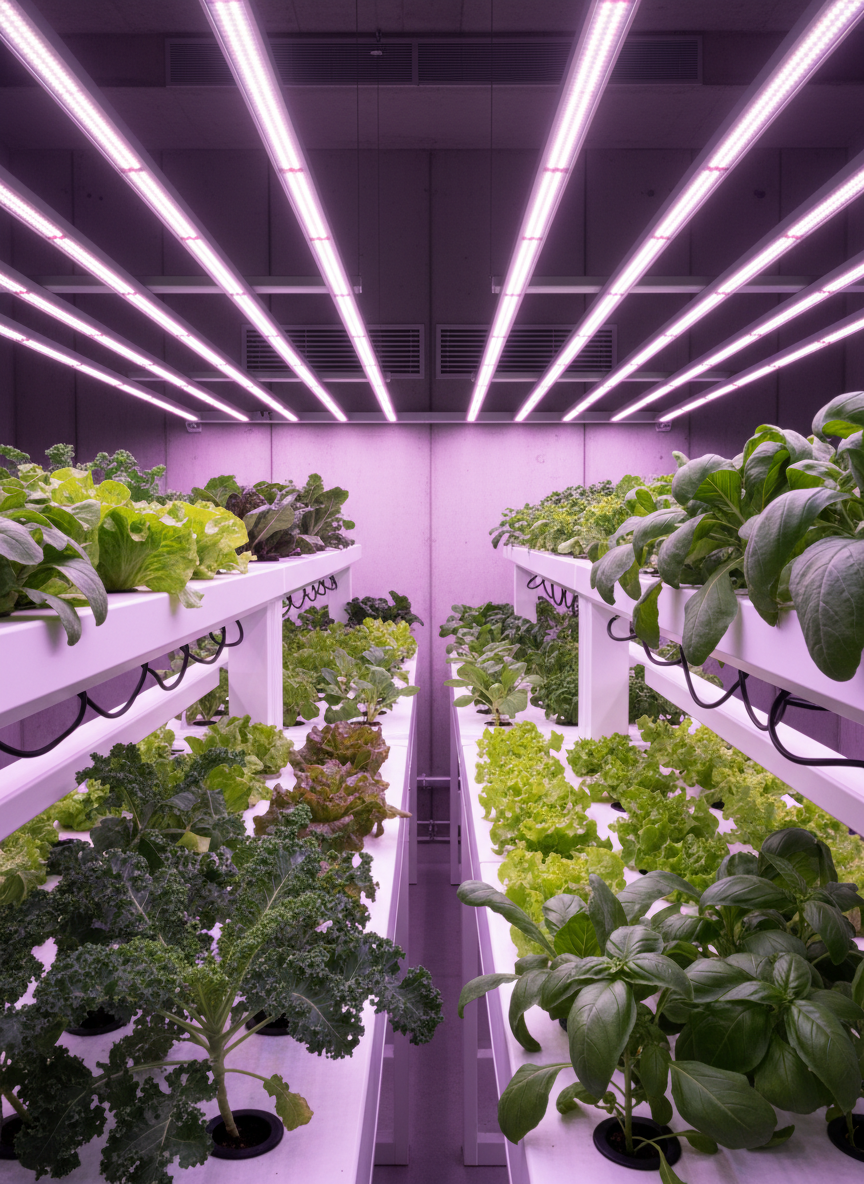
A grow light shelf lets you garden in any room, regardless of natural light.
You can use:
- Plastic nursery pots
- Ceramic pots with drainage
- Grow bags
- Window boxes
- Seed trays for greens and microgreens
Put a saucer or tray under each container to catch excess water. Choose a container size that matches the plant. Herbs can do well in small to medium pots, while leafy greens often need wider containers.
4. Fill Pots with Quality Potting Mix
Do not use garden soil from outside for indoor containers. It is usually too heavy, may not drain well, and can bring in pests or disease.
Use a bagged potting mix made for containers. A good mix feels light and fluffy and holds enough moisture without staying waterlogged.
Some gardeners like to mix in compost for extra nutrition, but plain potting mix is perfectly fine for beginners. If your plants will stay in pots for more than a few weeks, plan to fertilize lightly later on.
5. Plant Seeds or Seedlings
You can start from seeds, or you can buy small seedlings from a nursery. Seedlings give you a faster start, but seeds are usually cheaper and offer more variety.
If planting seeds, follow the seed packet directions for depth and spacing. Many beginners sow too deeply, which makes germination harder.
A few seed-starting tips:
- Moisten potting mix before planting.
- Sow seeds at the recommended depth.
- Press lightly to ensure good contact with the soil.
- Keep the soil evenly moist, not soaked.
- Thin crowded seedlings once they sprout.
For herbs and greens, do not be surprised if germination times vary. Some sprout in a few days, while others take a week or two.
6. Give Plants Enough Light
Light is usually the biggest challenge in indoor gardening. Most edible plants need more light than people expect.
As a general rule:
- Leafy greens and herbs do best with several hours of bright light each day.
- Fruiting plants like peppers and dwarf tomatoes need even more.
- Grow lights can provide a more consistent setup than window light alone.
If you use grow lights, place them close enough to the plants to be effective, following the manufacturer's guidance. Lights that are too far away can lead to weak, stretched seedlings.
Signs your plants need more light include:
- Long, leggy stems
- Pale leaves
- Slow growth
- Plants leaning strongly toward the window
7. Water Carefully
Indoor plants often suffer from overwatering more than underwatering. Because containers hold a limited amount of soil, it is important to check moisture before watering.
A simple method is to stick your finger into the top inch of the potting mix. If it feels dry, it is usually time to water. If it still feels moist, wait a bit longer.
When you do water, water thoroughly until some drains from the bottom. Then empty the saucer if water sits there for too long.
8. Feed Plants Lightly
Potting mix does not provide nutrients forever. Once plants have been growing for a few weeks, they may benefit from a gentle fertilizer routine.
A balanced liquid fertilizer, diluted according to label directions, is often enough for indoor vegetables and herbs. It is better to feed lightly and consistently than to overdo it.
Too much fertilizer can lead to salt buildup, weak growth, or poor flavor in herbs and greens. More is not always better.
9. Watch for Airflow and Humidity
Indoor spaces can be dry, especially in winter. Good airflow helps reduce fungal issues and keeps plants healthier.
You do not need anything fancy. In many homes, spacing plants properly and occasionally opening a window or using a small fan nearby is enough.
Try not to crowd your plants too closely together. Leaves need room for air to move around them.
10. Harvest Regularly
One of the best parts of indoor gardening is harvesting fresh food right where you live. Many herbs and leafy greens respond well to frequent picking.
For herbs, pinch off the top growth regularly to encourage bushier plants. For lettuce and greens, harvest outer leaves first so the center can continue growing.

Check soil moisture before watering — overwatering is the most common indoor gardening mistake.
Small, regular harvests often work better than taking everything at once. This helps plants stay productive longer.
Common Beginner Mistakes
Every new gardener makes a few mistakes. The good news is that indoor gardening gives you quick feedback, so you can adjust fast.
Expecting Big Vegetables in Low Light
A dim room may be fine for some houseplants, but edible plants usually need more light. If you try to grow tomatoes in a dark corner, the plant will struggle.
Match your crop to your conditions. Grow greens and herbs in moderate light, and save fruiting vegetables for stronger light or grow-light setups.
Overwatering
This is probably the most common issue. Beginners often water on a fixed schedule instead of checking the soil first.
Wet soil can lead to yellowing leaves, fungus gnats, and root problems. Let the soil moisture guide you.
Using the Wrong Soil
Heavy outdoor soil does not belong in indoor containers. It compacts easily and can create drainage problems.
Stick with potting mix made for containers. It is one of the easiest ways to improve your results.
Growing Too Many Plants at Once
It is tempting to start with ten different crops. But too many plants can become overwhelming, especially when each one has slightly different needs.
Start small. A few thriving plants will teach you more than a large setup that feels stressful to manage.
Ignoring Container Size
Tiny pots dry out fast and limit root growth. On the other hand, very large containers can stay wet too long if the plant is small.
Choose a container that fits the crop. If a plant becomes root-bound, repot it into the next size up.
Forgetting to Harvest
Many herbs and greens grow better when harvested regularly. If you leave basil or lettuce untouched for too long, plants can become leggy or crowded.
Use what you grow. Frequent picking is part of keeping indoor plants productive.
Best Tips for Success
Indoor gardening gets easier when you focus on a few simple habits instead of trying to master everything at once.
Start with Easy Wins
Choose crops that grow quickly and reward you fast. Herbs, lettuce, and microgreens are ideal because they are manageable and satisfying.
Quick results help you stay motivated. They also make it easier to notice what is working in your space.
Observe Before You React
If a plant looks unhappy, take a moment before changing everything at once. Check the light, soil moisture, container drainage, and plant placement.
A thoughtful small adjustment is usually better than several big ones. Plants need time to respond.
Keep a Simple Routine
A basic weekly check can prevent most common problems. Look at your plants, touch the soil, remove yellow leaves, and rotate pots if they lean toward the light.
Small, regular care beats occasional bursts of attention.
Label What You Plant
If you are growing from seed, labels are very helpful. Herbs and greens can look similar when young.
A simple plant label or piece of tape on the pot saves confusion later.
Clean Up Promptly
Remove dead leaves, spilled soil, and standing water. A tidy growing area is less inviting to pests and mold.
Clean tools and trays occasionally as well. Good sanitation is an underrated part of healthy indoor gardening.
Be Realistic About Seasons
Even indoors, winter growth can be slower because of lower natural light and cooler temperatures. That does not mean you are failing.
Adjust expectations with the season. Sometimes the best winter indoor garden is a few healthy herbs and a tray of greens.
Recommended Supplies or Tools

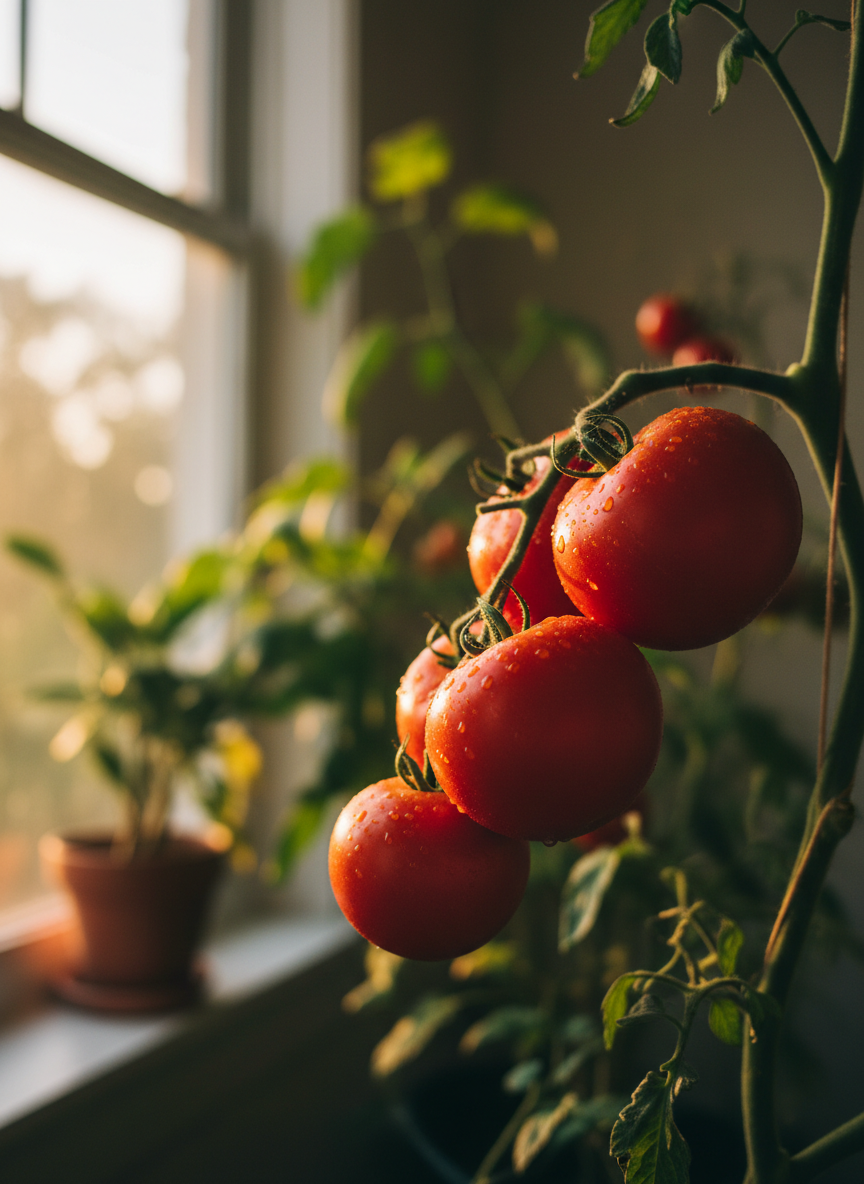
With the right setup, you can harvest fresh food from your indoor garden all year round.
You do not need a complicated indoor gardening system to get started. A few basic supplies are enough.
Must-Have Basics
- Containers with drainage holes
- Saucers or trays
- Quality potting mix
- Seeds or seedlings
- Watering can or small pitcher
- Sunny window or grow light
- Plant labels
- Scissors or herb snips for harvesting
Nice-to-Have Upgrades
- LED grow light
- Timer for grow lights
- Small fan for airflow
- Balanced liquid fertilizer
- Moisture meter, if you struggle with watering
- Narrow shelf or plant stand to save space
- Seed-starting trays for greens and herbs
Budget-Friendly Tip
If you are trying indoor gardening for the first time, begin with the basics and only upgrade when needed. A simple setup often teaches you more than buying lots of gear upfront.
Frequently Asked Questions
Can you really grow vegetables indoors?
Yes, you can grow many vegetables indoors, especially leafy greens, herbs, microgreens, and some compact varieties of peppers or tomatoes. Success depends mostly on choosing the right crops and giving them enough light.
What is the easiest thing to grow indoors for beginners?
Basil, chives, lettuce, microgreens, and green onions are among the easiest choices. They grow quickly, stay fairly compact, and do not need a lot of space.
Do indoor vegetable gardens need direct sunlight?
Some can grow with strong indirect light, but most edible plants do best with very bright light or direct sun. If your windows are not bright enough, a grow light is often the simplest solution.
How often should I water an indoor garden?
There is no perfect one-size-fits-all schedule. Check the soil first, because watering needs depend on the plant, pot size, light, and temperature in your home.
Is indoor gardening worth it?
For many people, yes. It gives you fresh herbs and greens, helps you learn gardening skills, and makes good use of small spaces. It may not replace a full outdoor vegetable garden, but it can be very rewarding.
Recommended Products
Looking for the right gear to get started? We've curated our top picks for sustainable vegetable gardening — from raised beds and grow lights to seed-starting kits and organic fertilizers — on our Recommended Products page.
Ready to Start?
If you're ready to gear up, check out our recommended raised beds and grow lights on Amazon — beginner-approved and built to last.
Ready to Start?
If you're ready to gear up, check out our recommended raised beds and grow lights on Amazon — beginner-approved and built to last.
Ready to Start?
If you're ready to gear up, check out our recommended raised beds and grow lights on Amazon — beginner-approved and built to last.
Ready to Start?
If you're ready to gear up, check out our recommended raised beds and grow lights on Amazon — beginner-approved and built to last.
Ready to Start?
If you're ready to gear up, check out our recommended raised beds and grow lights on Amazon — beginner-approved and built to last.
Ready to Start?
If you're ready to gear up, check out our recommended raised beds and grow lights on Amazon — beginner-approved and built to last.
Ready to Start?
If you're ready to gear up, check out our recommended raised beds and grow lights on Amazon — beginner-approved and built to last.
Ready to Start?
If you're ready to gear up, check out our recommended raised beds and grow lights on Amazon — beginner-approved and built to last.
Final Thoughts
Indoor gardening is simply the practice of growing plants inside your home, but it opens the door to a lot more than that. It can help you grow fresh herbs and greens, learn useful gardening skills, and enjoy the process of caring for food plants every day.
If you are new to gardening, keep it simple. Start with a bright spot, a few containers, and beginner-friendly crops like basil or lettuce.
You do not need a perfect setup to succeed. With a little observation, the right expectations, and regular care, indoor gardening can become an easy and enjoyable part of your home life.