Growing your own vegetables indoors is one of the most rewarding things you can do as a home gardener. Whether you're working with a sunny apartment windowsill, a spare corner with a grow light, or a dedicated indoor garden setup, fresh homegrown produce is absolutely within reach — no backyard required. The satisfaction of snipping herbs for dinner or harvesting a bowl of salad greens you grew yourself never gets old.
The good news is that indoor vegetable gardening has never been more accessible. Better grow light technology, affordable seed-starting supplies, and a wealth of community knowledge mean that beginners can get real results without a steep learning curve. That said, not every vegetable thrives indoors, and choosing the right crops from the start will save you a lot of frustration and wasted effort.
This guide is built around one simple goal: helping you grow food successfully inside your home. We'll walk through the best vegetables for indoor growing, what each one needs to thrive, and the practical steps to get started — even if you've never grown anything indoors before.
Why Growing Vegetables Indoors Is Worth It
Affiliate Disclosure: This article contains affiliate links. If you make a purchase through one of them, we may earn a small commission at no extra cost to you. We only recommend products we genuinely believe will help your garden thrive.
Indoor vegetable gardening isn't just a consolation prize for people without outdoor space. It offers some genuinely unique advantages that even dedicated backyard gardeners appreciate.
For starters, growing indoors means year-round harvests. You're not at the mercy of frost dates, scorching summers, or autumn rains. Lettuce in January? Absolutely. Fresh basil in February? No problem. Indoor growing extends your growing season to 365 days a year.
There's also the food security and cost savings angle. Herbs alone can cost $3–5 per bundle at the grocery store, and they often wilt before you use them all. A single pot of basil or a tray of chives grown on your windowsill pays for itself within a few weeks of harvesting. Microgreens can cost upward of $8 a punnet at specialty stores but cost pennies to grow at home.
Finally, there's the connection to your food that indoor gardening creates. Watching a seed germinate, tend it through its growth stages, and finally harvest something you grew entirely yourself is genuinely meaningful — and it's a wonderful activity to share with kids or anyone new to gardening.

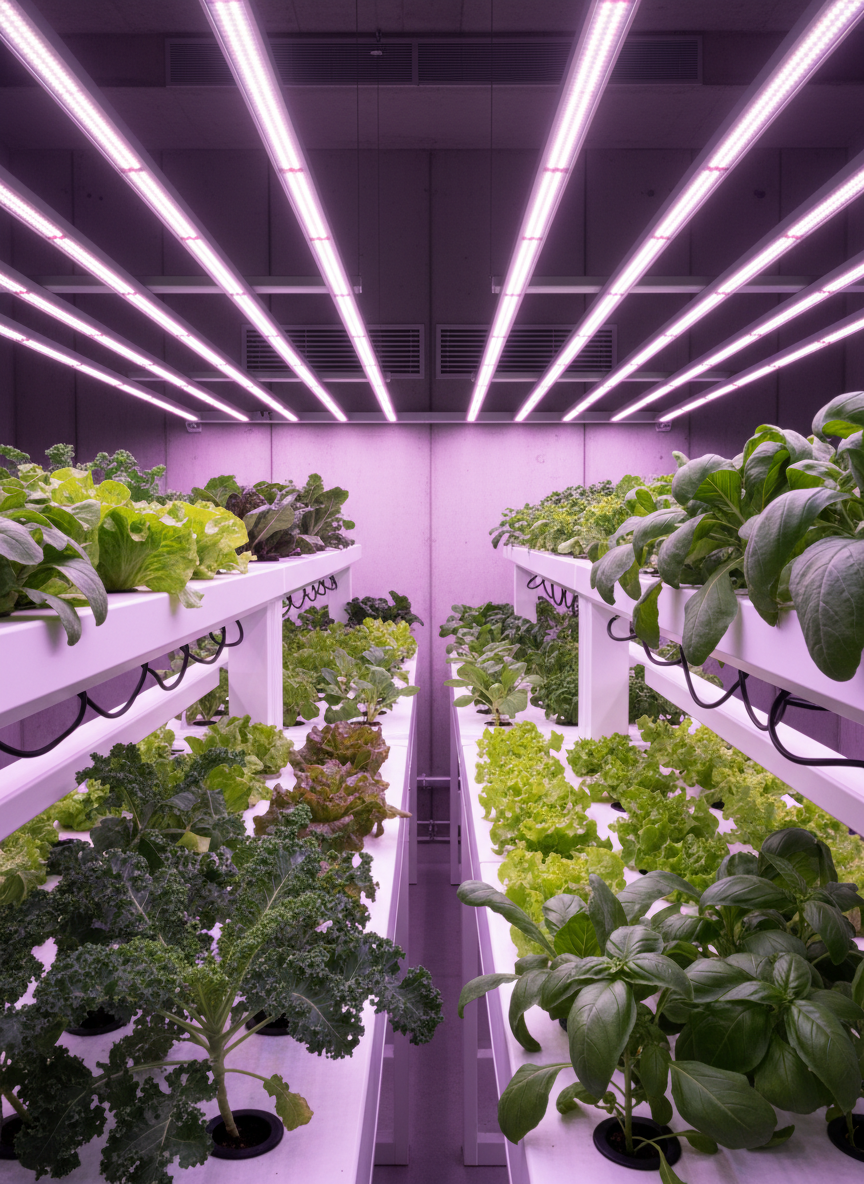
A basic grow light shelf can produce a surprising amount of fresh greens indoors.
Quick Answer
The best vegetables to grow indoors are leafy greens (lettuce, spinach, arugula), herbs (basil, chives, parsley, mint), radishes, microgreens, green onions, cherry tomatoes, and peppers. Leafy greens and herbs are the easiest starting point because they grow quickly, don't need much space, and tolerate lower light conditions. Fruiting vegetables like tomatoes and peppers are more rewarding long-term but require grow lights and a bit more attention to detail.
The Best Vegetables to Grow Indoors
1. Leafy Greens — The Ultimate Beginner Crop
Lettuce, spinach, arugula, kale, and Swiss chard are among the most forgiving and productive indoor vegetables you can grow. They don't need particularly deep containers (6 inches is plenty), they tolerate lower light levels than fruiting plants, and they grow fast — many varieties are ready to harvest in as little as 3–4 weeks using a cut-and-come-again method.
What they need: A bright windowsill (south or west-facing) or a basic grow light running 12–14 hours a day. Temperatures between 60–70°F are ideal. Water consistently but avoid waterlogged soil.
Best varieties for indoors: 'Tom Thumb' lettuce (compact and perfect for containers), 'Baby Oakleaf' lettuce, 'Bloomsdale' spinach, and 'Astro' arugula.
Pro tip: Sow a small pinch of seeds every 2 weeks for a continuous harvest rather than one big glut.
2. Herbs — High Value, Low Maintenance
Herbs are arguably the single most practical thing you can grow indoors. They sit right at the intersection of easy-to-grow and genuinely useful in the kitchen. Basil, chives, parsley, cilantro, thyme, and mint all do well indoors with the right conditions.
What they need: Most culinary herbs want at least 6 hours of direct light per day. A south-facing window is ideal, or supplement with a simple grow light. Basil prefers warmth (above 65°F), while parsley and chives are more cold-tolerant.

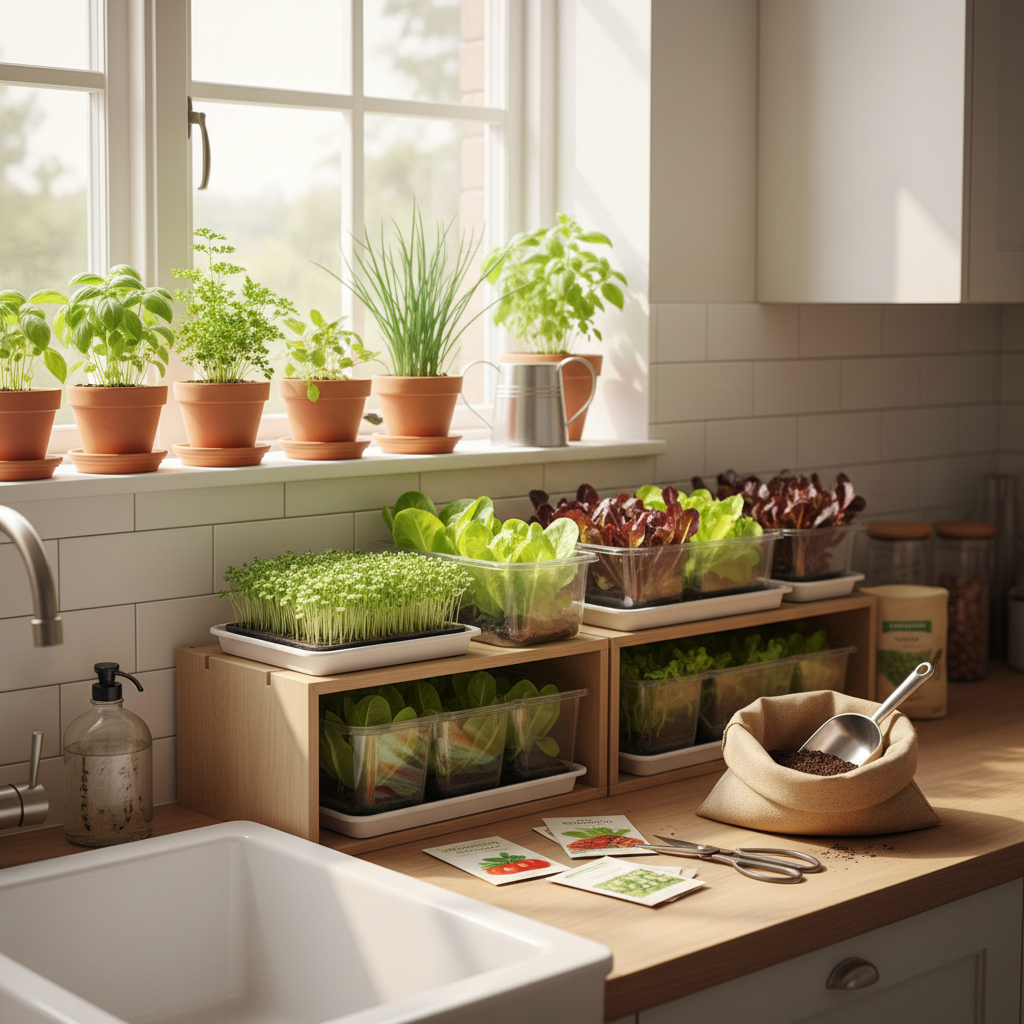
A windowsill herb garden keeps fresh flavors at arm's reach for everyday cooking.
One important note on mint: Grow it in its own pot. Mint spreads aggressively and will take over any shared container within weeks. In a pot, though, it's nearly indestructible and incredibly productive.
Common mistake to avoid: Overwatering herbs is the number one reason they fail indoors. Most herbs (especially Mediterranean ones like thyme and rosemary) prefer to dry out slightly between waterings. Stick your finger an inch into the soil — if it's still moist, wait another day.
3. Microgreens — The Fastest Harvest You'll Ever Get
If you want to harvest something in under two weeks, microgreens are your answer. These are simply young seedlings — sunflower, pea shoots, radish, broccoli, mustard, and many others — harvested just after the first true leaves emerge. They're extraordinarily nutritious, packed with flavor, and incredibly easy to grow.
What they need: A shallow tray (even a recycled takeaway container works), a thin layer of potting mix or a coconut coir growing medium, seeds sown densely, and light — either a bright windowsill or a basic grow light. No deep containers, no special equipment.
How to grow them: Fill your tray with 1–2 inches of moist growing medium. Scatter seeds thickly across the surface, press them down gently, and cover with a second tray or plastic wrap for the first few days to retain moisture and encourage germination. Once seedlings appear, remove the cover, move to good light, and water by bottom-watering (pouring water into a tray beneath) to avoid damping off. Harvest with scissors when seedlings are 1–3 inches tall.
4. Radishes — Surprisingly Easy and Fast
Radishes are often overlooked as indoor crops, but they're genuinely excellent for beginners. They germinate in just a few days, mature in 3–5 weeks, and don't need a lot of vertical space. They do need a pot that's at least 6–8 inches deep to allow the root to develop properly.
Best varieties for indoors: 'Cherry Belle' and 'French Breakfast' are compact, reliable, and delicious. Avoid large daikon-type varieties for indoor growing.
5. Green Onions (Scallions) — Grow From Scraps
Green onions might be the most beginner-friendly crop in this entire list, because you can literally grow them from the roots of store-bought scallions. Place the root ends (about an inch of white stem attached) in a glass with a small amount of water, set them on a windowsill, and watch them regrow within days. For a more robust harvest, plant them in a pot of moist potting mix.
They won't regrow indefinitely, but you'll get 2–3 harvests from each set of roots before the quality declines. Start a fresh batch every month for a continuous supply.
6. Cherry Tomatoes — The Rewarding Challenge

Green onions regrow from scraps in just days — one of the easiest indoor gardening wins.
Cherry tomatoes are the gateway fruiting vegetable for indoor gardeners. They're more demanding than leafy greens — they need strong light, consistent feeding, and hand pollination indoors — but the reward of picking ripe tomatoes from a plant you've grown yourself is hard to beat.
What they need: A minimum of 8 hours of bright light per day (realistically, a dedicated grow light is strongly recommended). A container that's at least 5 gallons. Regular feeding with a balanced fertilizer once fruiting begins. Because there are no bees indoors, you'll need to gently shake the flowering stems or use a small paintbrush to transfer pollen between flowers — this mimics the vibration of a visiting pollinator.
Best varieties for indoors: 'Tumbling Tom' (specifically bred for containers), 'Red Robin', and 'Tiny Tim'. All stay compact and produce prolifically.
7. Peppers — Slow But Spectacular
Like tomatoes, peppers need strong light and warm temperatures, but they're actually well-suited to indoor growing because they naturally prefer warm, sheltered conditions. Sweet peppers and chillies both work well. They take longer to produce fruit than tomatoes — expect 3–4 months from transplant to harvest — but a healthy pepper plant can produce all year long indoors.
Best varieties: 'Lunchbox' sweet peppers, Thai chillies, and cayenne peppers all perform well in containers indoors.
Step-by-Step Guide to Getting Started
Step 1: Choose Your Setup
Decide whether you're working with natural light (a south or west-facing window is ideal) or adding a grow light. For leafy greens and herbs, a bright windowsill may be enough. For tomatoes, peppers, or year-round growing regardless of season, invest in a quality LED grow light. You don't need to spend a fortune — a simple panel light in the 2000–4000 lumen range will support most indoor crops effectively.
Step 2: Select Containers With Good Drainage
Every indoor vegetable container must have drainage holes. Waterlogged roots are the most common cause of indoor plant death. Use pots, trays, or grow bags appropriate to each crop's depth requirements — shallow for greens, deeper for root vegetables and fruiting plants.
Step 3: Use Quality Potting Mix
Never use garden soil indoors — it compacts in containers, drains poorly, and can introduce pests. Use a quality peat-free potting compost or a mix of coconut coir, perlite, and compost for excellent drainage and aeration.

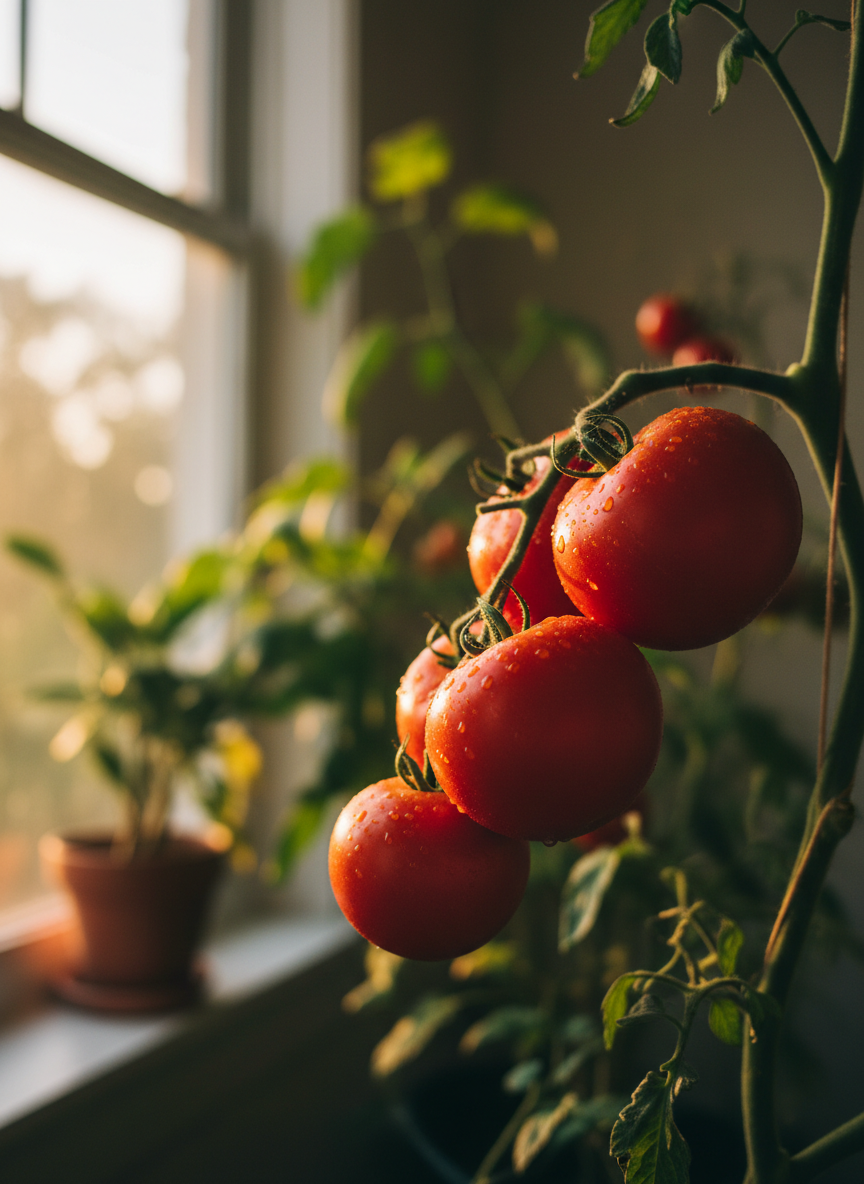
Compact tomato varieties can produce ripe fruit indoors with the right grow light setup.
Step 4: Sow Seeds at the Right Depth
A general rule: sow seeds at a depth of roughly twice their diameter. Most vegetable seeds are tiny and only need to be pressed lightly into the surface or covered with a thin layer of compost. Always label your trays — small seedlings are notoriously hard to tell apart.
Step 5: Water Wisely
Water when the top inch of soil feels dry, and always water at the base rather than overhead where possible. Bottom-watering (placing the pot in a shallow tray of water and allowing it to absorb from below) encourages deep root growth and reduces the risk of fungal problems.
Step 6: Feed Regularly
Once plants are established (2–3 weeks after germination), begin feeding with a diluted liquid fertilizer every 1–2 weeks. Leafy greens do well with a nitrogen-rich feed; fruiting plants prefer a balanced or potassium-rich fertilizer once flowering begins.
Common Mistakes to Avoid
- Choosing the wrong location first: Always assess your light conditions honestly before choosing crops. A north-facing window is rarely enough for most vegetables without supplemental lighting.
- Overwatering: More indoor plants die from too much water than too little. When in doubt, wait a day.
- Skipping drainage: Never let pots sit in standing water for extended periods.
- Trying to grow everything at once: Start with two or three crops, get confident, and expand gradually.
- Forgetting to pollinate fruiting plants: Without bees, tomatoes and peppers won't set fruit unless you help them along.
Your Next Steps
The best time to start your indoor garden is right now. Pick one or two crops from this list — herbs and lettuce are the perfect starting pair — gather a few basic supplies, and get seeds in soil this week. Don't wait for the perfect setup or the ideal conditions. Most successful indoor gardeners started small, learned as they went, and built their skills and confidence one harvest at a time. Your first homegrown salad will taste better than anything from a supermarket shelf, and once you've had that experience, you'll be hooked for life.
Recommended Products
Looking for the right gear to get started? We've curated our top picks for sustainable vegetable gardening — from raised beds and grow lights to seed-starting kits and organic fertilizers — on our Recommended Products page.
Ready to Start?
If you're ready to gear up, check out our recommended raised beds and grow lights on Amazon — beginner-approved and built to last.
Ready to Start?
If you're ready to gear up, check out our recommended raised beds and grow lights on Amazon — beginner-approved and built to last.
Ready to Start?
If you're ready to gear up, check out our recommended raised beds and grow lights on Amazon — beginner-approved and built to last.
Ready to Start?
If you're ready to gear up, check out our recommended raised beds and grow lights on Amazon — beginner-approved and built to last.