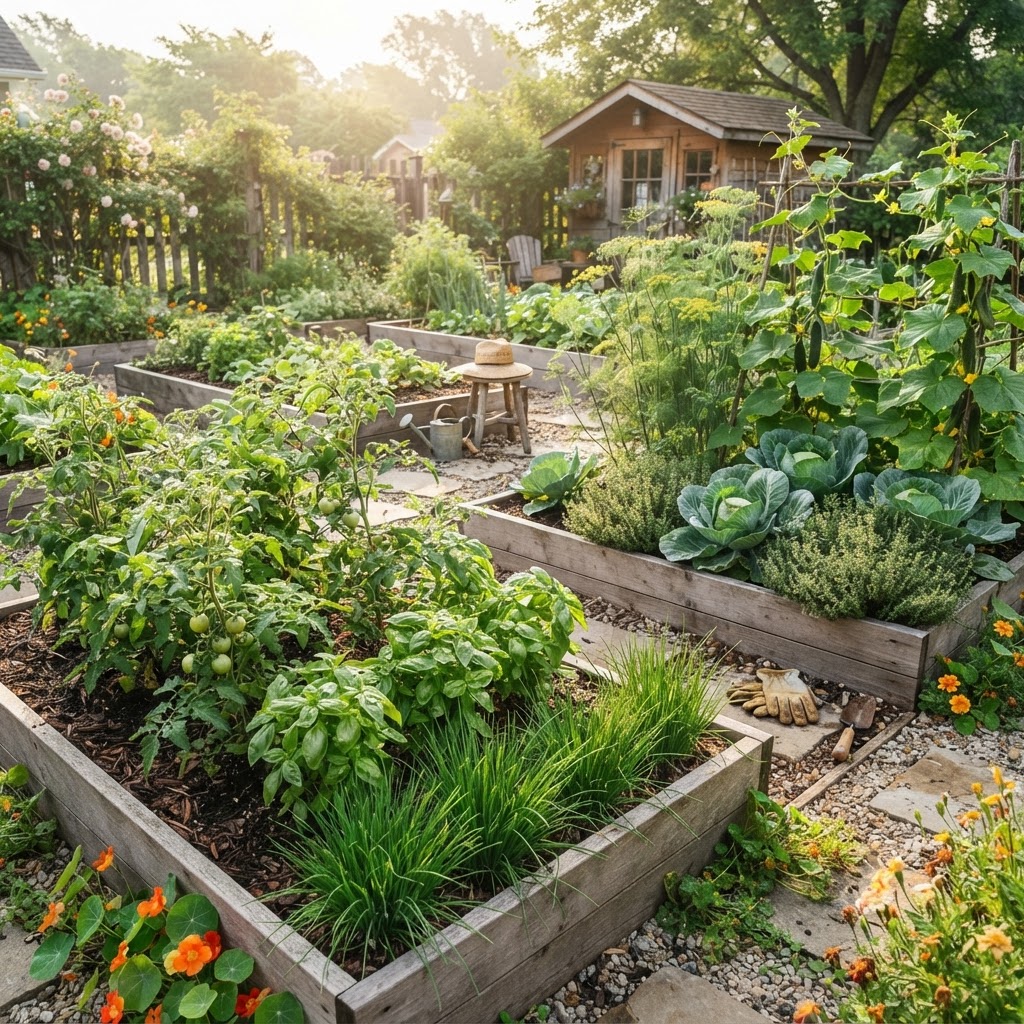
Best Herbs to Grow Alongside Vegetables for a Healthier, Easier Garden
If you want a vegetable garden that looks lively, smells amazing, and works a little harder for you, herbs are a smart place to start. Many herbs do more than flavor your meals—they can help attract pollinators, make better use of garden space, and create a more diverse, resilient planting area.
Why This Topic Matters
Growing herbs alongside vegetables is one of the easiest ways to make a home garden more practical and beginner-friendly. You get fresh cooking herbs within reach, and your garden beds can become more balanced and productive.
A mixed garden also tends to feel less overwhelming than a bed filled with only one type of plant. Different leaf shapes, scents, and growth habits can help you observe your space more closely and learn how plants support each other.
For beginners, companion-style planting with herbs can be a simple first step toward gardening more sustainably. Instead of thinking of herbs as separate plants that need their own area, you can use them as useful partners among your vegetables.
Some herbs attract beneficial insects. Others stay compact and fit neatly along bed edges. A few can even serve as low-growing fillers between larger vegetables, helping you get more from a small space.
Quick Answer
The best herbs to grow alongside vegetables are basil, parsley, cilantro, dill, chives, thyme, oregano, sage, rosemary, and calendula-like flowering herbs such as borage if you have the room and climate for them.
For most beginner gardens, the easiest and most useful choices are:
- Basil near tomatoes and peppers
- Parsley near carrots, onions, and asparagus
- Cilantro near leafy greens in cooler weather
- Dill near cucumbers and brassicas, with a little spacing
- Chives near carrots, lettuce, and strawberries
- Thyme near cabbage family crops and along bed edges
- Oregano as a pollinator-friendly border plant
The main goal is to choose herbs that:
- Match your sunlight and watering conditions
- Do not outgrow or crowd your vegetables
- Offer extra value such as flowers, fragrance, or easy harvesting
Step-by-Step Guide
1. Start with herbs that match your garden conditions
Before pairing herbs with vegetables, look at the basics: sun, soil, and moisture. Most popular herbs prefer full sun, which also suits many vegetable crops such as tomatoes, peppers, cucumbers, and beans.
If you have a shadier bed, parsley and cilantro are often more forgiving than rosemary or oregano. Matching plants to the same general conditions makes care simpler and improves your chances of success.
2. Choose herbs based on how you want them to help
Herbs can play different roles in a vegetable garden. Some are best for edging, some are useful for attracting insects, and some are simply easy kitchen staples to keep close.
Here are a few practical roles herbs can fill:
- Border plants: thyme, oregano, chives
- Pollinator attractors: dill, basil, oregano, borage
- Compact kitchen herbs: parsley, cilantro, chives
- Warm-season companions: basil, oregano, rosemary
- Cool-season companions: parsley, cilantro, chives
Thinking this way helps you plan more intentionally instead of squeezing herbs into random empty spots.
3. Pick the best herb-and-vegetable pairings
Basil
Basil is one of the most popular herbs to grow with vegetables, especially summer crops. It thrives in warm weather and fits beautifully near tomatoes and peppers.
Good companions for basil include:
- Tomatoes
- Peppers
- Eggplant
- Lettuce, if basil won’t shade it too much later in the season
Basil stays manageable if you harvest often. Pinching the tips encourages bushy growth and gives you more leaves for the kitchen.
Parsley
Parsley is beginner-friendly, useful in cooking, and attractive enough to mix into ornamental-looking edible beds. It handles cooler weather better than many Mediterranean herbs.
Good companions for parsley include:
- Carrots
- Onions
- Asparagus
- Tomatoes
Flat-leaf parsley is often easier to cook with, while curly parsley adds texture to the garden. Either can work well tucked near medium-height vegetables.
Cilantro
Cilantro grows best in cool weather and can be very rewarding in spring and fall gardens. It tends to bolt quickly in heat, so it is usually better near crops that appreciate cooler conditions.
Good companions for cilantro include:
- Lettuce
- Spinach
- Kale
- Radishes
If cilantro flowers, don’t rush to remove it. The blooms can attract beneficial insects, and the seeds become coriander.
Dill
Dill is airy, upright, and excellent for adding height without too much heaviness. Its flowers are especially useful for attracting pollinators and beneficial insects.
Good companions for dill include:
- Cucumbers
- Lettuce
- Onions
- Cabbage family crops like broccoli and kale
Dill can self-seed, which may be a bonus if you enjoy a relaxed garden style. Give it a little room, since mature plants can get taller than beginners expect.
Chives
Chives are one of the easiest herbs to tuck into a vegetable bed. They stay fairly compact, return well in many gardens, and their purple blooms are attractive to pollinators.
Good companions for chives include:
- Carrots
- Lettuce
- Tomatoes
- Strawberries
Because chives grow in clumps, they work nicely at the corners of raised beds or along pathways where you can snip them often.
Thyme
Thyme is a low-growing herb that works well as a bed-edge plant. It likes sun and well-drained soil, making it especially useful near vegetables that don’t need constant moisture.
Good companions for thyme include:
- Cabbage
- Broccoli
- Cauliflower
- Brussels sprouts
Thyme is also a good choice for gardeners who want something tidy and drought-tolerant once established.
Oregano
Oregano spreads more than thyme, but it can be a great companion if you give it its own small zone. Its flowers are loved by pollinators, and regular trimming keeps it productive.
Good companions for oregano include:
- Peppers
- Tomatoes
- Squash
- Beans
It works especially well near the edges of beds, where it can spill slightly without swallowing smaller crops.
Sage
Sage is sturdy, beautiful, and useful in the kitchen. It has a shrubby habit, so it is best placed where it won’t shade low-growing vegetables.
Good companions for sage include:
- Cabbage
- Carrots
- Strawberries
Sage is a better fit for larger beds or perennial herb corners than for tiny, tightly packed raised beds.
Rosemary
Rosemary is fragrant, productive, and excellent in hot, sunny gardens. It prefers drier conditions than many vegetables, so placement matters.
Good companions for rosemary include:
- Beans
- Cabbage
- Peppers
Rather than planting rosemary in the middle of a thirsty vegetable bed, place it at the edge or in a nearby container where drainage is easier to manage.
Borage
While technically not one of the classic kitchen herbs for every gardener, borage is often included in edible companion planting because of its pollinator-friendly flowers. It can get large, so use it thoughtfully.
Good companions for borage include:
- Tomatoes
- Squash
- Cucumbers
- Strawberries
Borage is best in larger garden spaces where its size feels helpful rather than overwhelming.
4. Use spacing to prevent crowding
One of the biggest keys to success is spacing. Herbs may start small, but some become woody, wide, or tall as the season progresses.
Follow these simple spacing ideas:
- Plant compact herbs like chives and thyme near bed edges
- Keep spreading herbs like oregano slightly separate from tiny seedlings
- Place taller herbs like dill where they won’t block sun from shorter crops
- Use containers for rosemary, mint, or aggressive growers if needed
Mint deserves a special note. It is a wonderful herb, but it spreads aggressively and is usually best kept in its own pot rather than in a vegetable bed.
5. Group by water needs
This step is easy to overlook, but it makes garden care much simpler. Basil and parsley usually appreciate more regular moisture than rosemary and thyme.
When herbs with very different water needs share one space, one of them often struggles. Try grouping moisture-loving herbs with thirsty vegetables and placing drought-tolerant herbs in drier zones or containers.
6. Harvest often and observe what works
Herbs generally perform better when you harvest them regularly. Trimming encourages bushier growth, delays flowering in some plants, and keeps herbs from taking over nearby vegetables.
It also helps you learn what your specific garden likes. A pairing that thrives in one climate may need adjustment in another, so observation matters more than strict rules.
Common Beginner Mistakes
Planting aggressive herbs directly in the bed
Mint is the classic example, but oregano can also spread farther than expected. Beginners often place these herbs beside small vegetables and later find them competing for space.
If you love vigorous herbs, use containers or give them a defined border.
Ignoring mature plant size
Tiny herb starts look harmless in spring. By midsummer, dill, sage, rosemary, and oregano may be much larger than you planned for.
Always picture the full-grown plant, not the seedling.
Mixing plants with opposite watering needs
Mediterranean herbs like rosemary, thyme, and sage like good drainage and don’t want soggy roots. Lettuce, cucumbers, and basil usually need more consistent moisture.
This does not mean they can never be near each other, but it does mean placement should be thoughtful.
Letting herbs flower too early
Flowering is not always bad, especially for pollinators. But if you want tender leaves from basil or cilantro, harvesting before full bloom often gives better kitchen quality.
A balanced approach works well: let some plants flower, and keep others trimmed for leaf production.
Overpacking a small raised bed
It is tempting to grow every favorite herb beside every vegetable. In a compact space, though, too many plants can reduce airflow and increase maintenance.
Start with two or three herb types, then expand next season if the layout works.
Best Tips for Success
Keep the easiest herbs close to the kitchen
If you cook often, place basil, parsley, and chives where you can grab them quickly. The more convenient harvesting feels, the more use you will get from them.
Mix annual and perennial herbs carefully
Annual herbs like basil, dill, and cilantro are easy to rotate with vegetables. Perennial herbs like thyme, sage, chives, oregano, and rosemary may stay in place longer.
If possible, keep perennials at bed edges or in a dedicated herb section so crop rotation stays simple.
Let some herbs bloom
Not every herb needs to be kept in constant leaf production. A few flowering dill, oregano, chives, or basil plants can bring welcome insect activity to your garden.
Start small with proven combinations
If you are new to companion planting, try these simple combinations first:
- Tomatoes + basil + chives
- Cucumbers + dill
- Brassicas + thyme
- Carrots + parsley
- Lettuce + cilantro
These are easy to remember and practical for beginner gardens.
Use containers when in doubt
If you are unsure whether a herb will spread too much or need different soil moisture, plant it in a pot beside the bed. This gives you flexibility without giving up the benefits of keeping herbs nearby.
Recommended Supplies or Tools
You do not need much to grow herbs alongside vegetables successfully. A few basic tools can make planting and maintenance easier.
Helpful supplies include:
- Hand trowel for transplanting small herb starts
- Pruning snips for clean herb harvesting
- Watering can or gentle hose wand for seedlings
- Plant labels to remember what you planted where
- Mulch to help hold soil moisture around vegetables
- Containers or grow bags for mint, rosemary, or spreading herbs
- Raised bed or border edging to define herb placement
If you shop online, look for durable basics rather than specialty gadgets you may not use often. For example, a simple pair of garden snips like https://www.amazon.com/dp/B00004SD76?tag=sustainablevegetablegardening-20 and a basic hand trowel can cover most beginner needs.
A container is especially useful if you want to grow mint near your vegetable garden without letting it spread into everything else.
Frequently Asked Questions
Can I plant herbs in the same raised bed as vegetables?
Yes, many herbs grow very well in the same raised bed as vegetables. The key is to choose herbs with similar light and water needs and to leave enough space for mature growth.
Compact herbs like basil, parsley, chives, and thyme are often the easiest to mix into raised beds.
What herbs should not be planted directly in vegetable beds?
Mint is the biggest one to avoid planting directly in most vegetable beds because it spreads quickly. Large or woody herbs such as rosemary and sage can also be awkward in very small beds if they crowd nearby crops.
These herbs often do better in containers or in a dedicated herb area.
Are herbs actually useful in companion planting?
They can be very useful, especially for increasing diversity and attracting beneficial insects. Herbs also make space more productive because you harvest both vegetables and fresh seasonings from the same area.
Still, herbs are not magic fixes. Good spacing, healthy soil, and regular observation matter most.
Which herb is best for tomatoes?
Basil is the classic favorite to grow near tomatoes because both enjoy warm weather and regular harvesting. Chives and parsley can also work well nearby, depending on your bed layout.
Can I grow perennial herbs with annual vegetables?
Yes, but planning helps. Perennial herbs stay in place for multiple seasons, so it is usually easiest to plant them at the edge of beds, in corners, or in nearby containers.
That way, you can rotate annual vegetables more easily each year.
Final Thoughts
The best herbs to grow alongside vegetables are the ones that fit your climate, your cooking habits, and your garden space. For most beginners, basil, parsley, cilantro, dill, chives, thyme, and oregano are excellent places to start.
You do not need a perfect companion planting chart to create a thriving mixed garden. Begin with a few reliable herb-and-vegetable pairings, pay attention to spacing and water needs, and let experience guide your next season.
A garden that includes herbs is often easier to enjoy, easier to harvest from, and more inviting to beneficial insects. That is a simple win for any home vegetable grower.