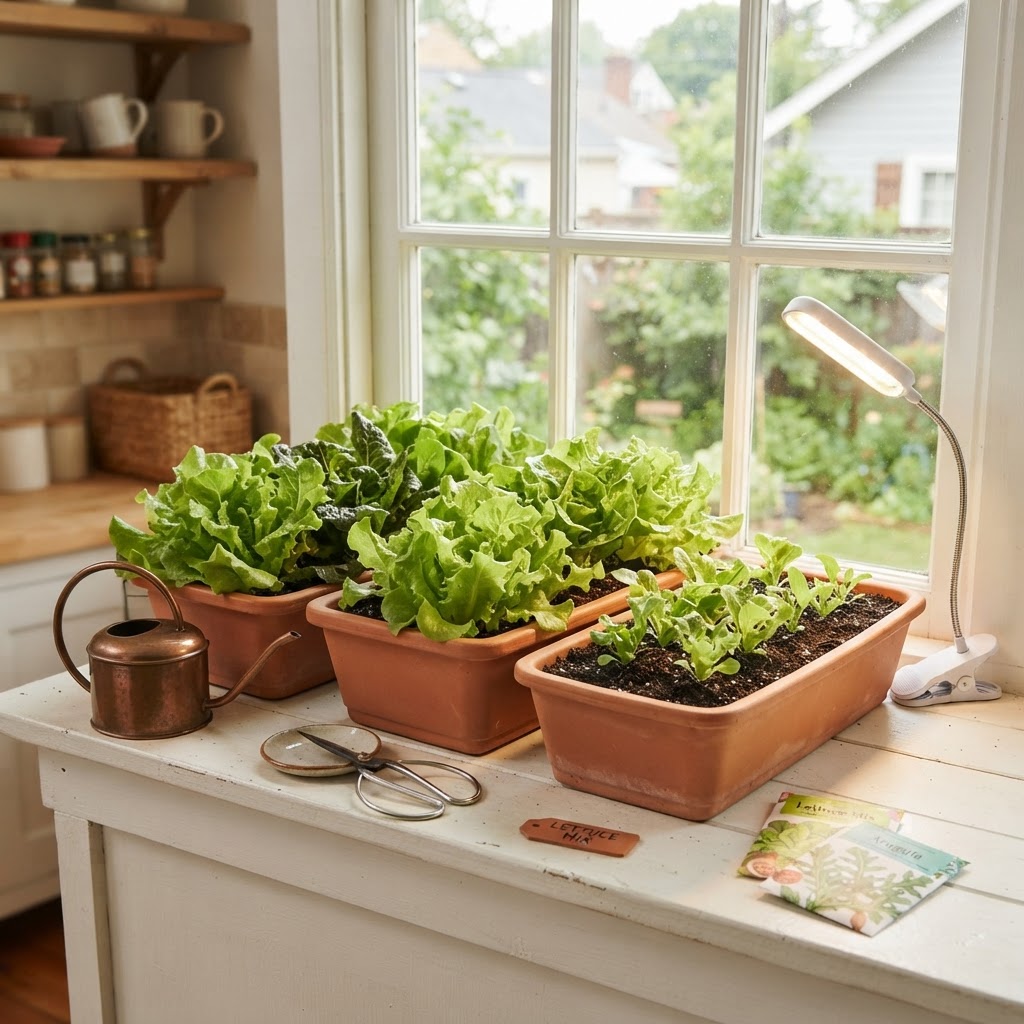
How to Grow Lettuce Indoors Without Hydroponics: Easy Soil Method for Beginners
Growing lettuce indoors is one of the easiest ways to enjoy fresh greens without needing a yard, raised bed, or complicated system. If you have a sunny window, a small container, and a bag of potting mix, you can grow tender lettuce right in your home.
The best part is that you do not need a hydroponic setup to make it work. A simple soil-based method is affordable, beginner-friendly, and perfect for anyone who wants an easy indoor vegetable to start with.
Why This Topic Matters
Lettuce is one of the most practical crops for indoor gardening because it grows quickly, stays compact, and does not require deep containers. For beginners, that means faster wins and less frustration.
Indoor lettuce can also help you stretch your grocery budget and reduce food waste. Instead of buying a whole head and watching half of it wilt in the fridge, you can harvest just a few leaves when you need them.
This topic matters even more if you live in an apartment, have poor outdoor soil, or want to keep gardening through winter. Learning how to grow lettuce indoors without hydroponics gives you a simple path to fresh food all year.
Quick Answer
Yes, you can absolutely grow lettuce indoors without hydroponics. The easiest way is to plant loose-leaf lettuce in a shallow container filled with quality potting mix, place it where it gets 10 to 14 hours of bright light each day, keep the soil lightly moist, and harvest the outer leaves as they grow.
For best results, choose compact varieties like leaf lettuce, use a container with drainage holes, avoid overwatering, and keep temperatures cool. Lettuce prefers conditions that are bright but not hot.
Step-by-Step Guide
1. Choose the right type of lettuce
Not all lettuce grows equally well indoors. Head lettuces like iceberg take longer, need more space, and can be trickier for beginners.
Loose-leaf varieties are the easiest choice because they grow fast and let you harvest leaves little by little. That means you do not need to wait for a whole head to form.
Good indoor lettuce choices include:
- Black Seeded Simpson
- Red Sails
- Oakleaf lettuce
- Buttercrunch
- Mesclun mixes
- Baby leaf salad blends
If you are just starting out, pick one or two loose-leaf varieties. They are more forgiving and give you the quickest harvest.
2. Pick a container with drainage
Lettuce does not need a deep pot, but it does need enough room for roots and airflow. A container about 4 to 6 inches deep works well for baby greens, while 6 to 8 inches is better for larger plants.
The most important feature is drainage holes. Without them, water collects at the bottom, and lettuce roots can rot quickly.
You can use:
- Plastic nursery pots
- Window boxes
- Shallow planters
- Recycled food containers with drainage holes added
- Seed trays for baby leaf production
If you are growing several plants together, give them enough space so the leaves are not packed too tightly. Crowded plants stay damp longer and are more likely to struggle.
3. Use a light, high-quality potting mix
Do not use soil from your yard for indoor lettuce. Garden soil is often too heavy for containers, can bring in pests, and may not drain well.
Instead, use a fresh potting mix made for container gardening. A good mix holds moisture while still allowing extra water to drain away.
Look for a mix that is:
- Light and fluffy
- Well-draining
- Sterile or bagged for containers
- Blended with compost, coco coir, or peat moss
Fill your container to about an inch below the rim. This makes watering easier and helps prevent overflow.
4. Sow the seeds correctly
Lettuce seeds are tiny, so there is no need to plant them deeply. Scatter them thinly across the soil surface or place them in short rows.
Cover the seeds with a very light layer of potting mix, about 1/8 inch deep. Gently press the surface so the seeds make good contact with the soil.
After sowing:
- Mist or water gently so the seeds do not wash away.
- Keep the soil evenly moist during germination.
- Place the container in bright light right away.
Most lettuce seeds germinate in about 5 to 10 days. Some may sprout faster if the room is cool and stable.
5. Give your lettuce enough light
Light is the biggest challenge when growing lettuce indoors. A sunny window can work, but many homes simply do not provide enough consistent light, especially in winter.
Lettuce grows best with 10 to 14 hours of bright light per day. A south-facing window is usually your best natural-light option.
If your window is weak or shaded, a simple grow light can make a huge difference. You do not need an expensive hydroponic kit to use one. A basic LED grow light placed a few inches above the plants is often enough.
Signs your lettuce needs more light include:
- Long, stretched stems
- Pale leaves
- Slow growth
- Plants leaning heavily toward the window
Rotate containers every few days if you are using window light. This helps the plants grow more evenly.
6. Water carefully and consistently
Lettuce likes evenly moist soil, but it does not like soggy roots. The goal is to keep the potting mix lightly damp, not soaked.
Check the top inch of soil with your finger. If it feels dry, water until a little moisture drains from the bottom.
A few watering tips help a lot:
- Water in the morning when possible
- Avoid splashing leaves too often
- Empty saucers if water collects underneath
- Reduce watering slightly in low-light conditions
Indoor containers can dry out faster near heaters, sunny windows, or grow lights. On the other hand, cool rooms may need less frequent watering. Pay attention to the soil, not just the calendar.
7. Thin seedlings for healthier growth
When seedlings begin to crowd each other, it is time to thin them. This means removing extra plants so the remaining lettuce has enough room for roots, airflow, and leaf development.
For baby greens, you can leave plants closer together. For larger leaf lettuce, aim for about 4 to 6 inches between plants.
Do not think of thinning as waste. The tiny seedlings are edible and can be sprinkled onto sandwiches or salads.
8. Feed lightly if needed
Lettuce is not a heavy feeder, especially if you are using fresh potting mix. In many cases, your plants will grow well for several weeks without extra fertilizer.
If growth slows or leaves look pale after the first couple of weeks, use a diluted liquid fertilizer at half strength. Choose something balanced and gentle for edible plants.
Too much fertilizer can lead to fast but weak growth. It is better to feed lightly than to overdo it.
9. Keep temperatures on the cool side
Lettuce prefers cooler conditions than many other indoor crops. It generally grows best between 60 and 70 degrees Fahrenheit.
Try to keep containers away from:
- Heating vents n- Radiators
- Hot appliances
- Drafty exterior doors
If lettuce gets too warm, it may become bitter, grow poorly, or try to bolt. Bolting means the plant starts sending up a flower stalk instead of making tender leaves.
10. Harvest the right way
One reason lettuce is such a rewarding indoor crop is that you do not have to wait long to enjoy it. Many loose-leaf types are ready for small harvests in about 3 to 4 weeks.
The easiest method is called cut-and-come-again harvesting. Snip the outer leaves first and leave the center growing.
For the best harvest:
- Use clean scissors or pinch leaves off gently.
- Harvest outer leaves when they are 3 to 5 inches long.
- Leave the inner crown intact.
- Take no more than one-third of the plant at a time.
This method lets you keep picking fresh lettuce over several weeks.
Common Beginner Mistakes
The most common mistake is not giving lettuce enough light. Many new indoor gardeners assume a bright room is the same as direct or strong light, but lettuce often needs more intensity than a room alone can provide.
Another common issue is overwatering. Because lettuce likes moisture, beginners sometimes keep the soil constantly wet. That can lead to yellow leaves, fungus problems, and root rot.
Planting too densely is another easy mistake. It seems efficient at first, but crowded seedlings compete for light, airflow, and nutrients.
Watch out for these beginner problems:
- Using garden soil instead of potting mix
- Growing lettuce in containers without drainage holes
- Keeping plants too close to heat sources
- Letting the soil dry out completely between waterings
- Expecting head lettuce to perform as easily as loose-leaf types
- Harvesting too much at once from young plants
The good news is that lettuce grows quickly, so mistakes are usually easy to correct. Even if one planting does not go perfectly, you can often resow and improve within a few weeks.
Best Tips for Success
Start small. One or two containers are easier to manage than a whole shelf of plants, especially while you are learning how your home’s light and temperature affect growth.
Choose loose-leaf lettuce instead of heading types for your first attempt. It is more flexible, faster to harvest, and better suited to indoor spaces.
Use succession planting to keep the harvest going. Instead of sowing all your seeds at once, plant a small new container every 1 to 2 weeks.
Here are some of the best ways to improve your results:
- Grow baby greens if light is limited
- Keep a simple watering routine based on checking the soil
- Clean containers before reusing them
- Harvest often to encourage fresh growth
- Pair natural light with a basic grow light if needed
- Label varieties so you can track what performs best indoors
Another helpful tip is to treat indoor lettuce as a short-cycle crop. Rather than trying to keep one plant going forever, replant regularly for the freshest leaves.
If you notice pests, act early. Indoor lettuce can occasionally attract fungus gnats or aphids, especially if soil stays too wet. Better airflow, careful watering, and clean containers usually prevent most problems.
Recommended Supplies or Tools
You do not need fancy gear to grow lettuce indoors without hydroponics. A few basic supplies are enough to get started.
A simple beginner setup might include:
- Loose-leaf lettuce seeds
- Shallow container or window box
- Quality potting mix
- Watering can or spray bottle
- Drainage tray or saucer
- Small scissors for harvesting
- Plant labels
Optional but very helpful tools include:
- LED grow light for low-light homes
- Timer for consistent light schedules
- Small fan for airflow in very still rooms
- Liquid organic fertilizer for longer-growing containers
- Moisture meter if you tend to overwater
If you are trying to keep costs down, reuse containers you already have as long as you add drainage holes and clean them well. Indoor gardening does not have to be expensive to be productive.
Frequently Asked Questions
Can lettuce really grow indoors in soil?
Yes. Lettuce grows very well indoors in containers filled with potting mix. As long as it gets enough light, steady moisture, and cool temperatures, it can thrive without any hydroponic system.
How much sunlight does indoor lettuce need?
Lettuce does best with 10 to 14 hours of bright light each day. A sunny south-facing window may be enough, but many gardeners use a grow light for more reliable results.
What is the easiest lettuce to grow indoors?
Loose-leaf lettuce is usually the easiest option. Varieties like Black Seeded Simpson, Red Sails, and oakleaf lettuce are great for beginners because they grow quickly and can be harvested leaf by leaf.
How long does it take to harvest indoor lettuce?
You can often start harvesting baby leaves in about 3 to 4 weeks. Larger leaves usually take around 4 to 6 weeks, depending on the variety and growing conditions.
Do I need fertilizer for indoor lettuce?
Not always. If you are using fresh potting mix, lettuce may grow well without extra feeding for the first few weeks. If the leaves start looking pale or growth slows, a diluted liquid fertilizer can help.
Final Thoughts
If you have been wondering how to grow lettuce indoors without hydroponics, the simplest answer is this: use soil, keep it light and moist, give the plants enough brightness, and harvest often. You do not need a complicated setup to grow fresh salad greens at home.
Lettuce is one of the best vegetables for beginner indoor gardeners because it is fast, compact, and forgiving. Start with a small container, plant a loose-leaf variety, and learn as you go.
Once you harvest your first handful of fresh leaves from your windowsill or shelf, indoor gardening starts to feel very possible. And that small success can be the beginning of a much bigger edible garden inside your home.