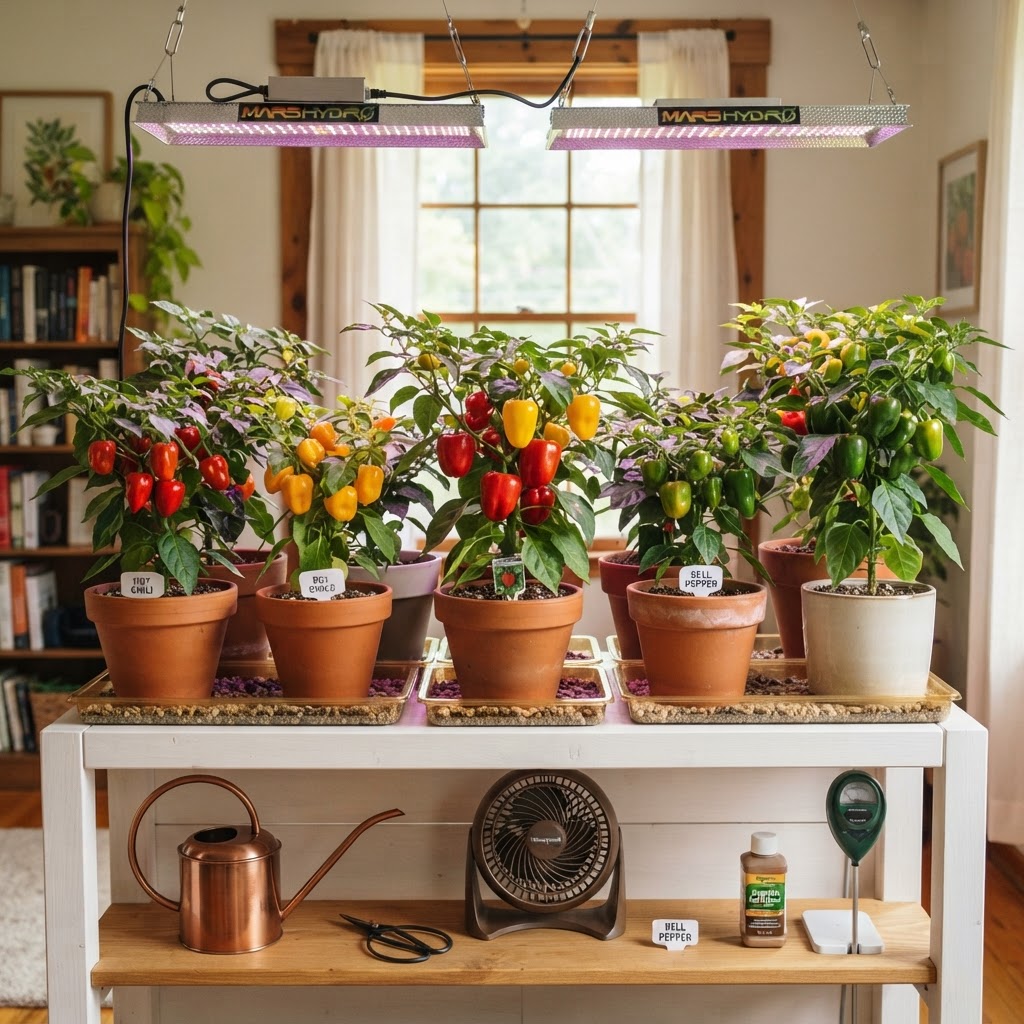
How to Grow Peppers Indoors Year Round: A Beginner-Friendly Guide
Growing peppers inside your home is one of the easiest ways to keep a vegetable garden going in every season. With the right light, warmth, and a little daily attention, you can enjoy compact plants, pretty flowers, and fresh peppers even when it is freezing outside.
If you have been wondering how to grow peppers indoors year round, the good news is that it is very doable for beginners. The key is to recreate the warm, bright conditions peppers love and to choose varieties that adapt well to containers.
Why This Topic Matters
Peppers are naturally long-season plants. In many climates, the outdoor growing season is simply too short to support continuous harvests, especially for hot peppers that take time to mature.
Growing them indoors solves that problem. You can start earlier, harvest longer, and in some cases keep the same plant producing for more than one season.
Indoor pepper growing also gives you more control. You can manage temperature, moisture, pests, and light much more easily than in an outdoor bed.
For beginner gardeners, peppers are a rewarding crop because they stay fairly compact, grow well in pots, and produce colorful fruit that is both useful and attractive. Whether you want sweet mini bell peppers or spicy jalapeños, indoor growing lets you enjoy homegrown food with less weather stress.
Quick Answer
To grow peppers indoors year round, place compact pepper plants in containers with drainage, use a strong grow light for 12 to 16 hours a day, keep temperatures around 70 to 80°F, water when the top inch of soil feels dry, feed regularly with a balanced fertilizer, and hand-pollinate flowers if needed. Choose smaller varieties, provide good airflow, and watch closely for pests like aphids or spider mites.
If you can give peppers enough light and warmth, they can thrive indoors for many months and often continue producing well beyond a normal outdoor season.
Step-by-Step Guide
1. Choose the Right Pepper Variety
Not all peppers perform equally well indoors. Large bell peppers can grow inside, but compact plants are usually easier for beginners.
Good indoor choices include:
- Jalapeño
- Serrano
- Thai chili
- Cayenne
- Shishito
- Mini bell peppers
- Ornamental edible peppers
- Dwarf or patio pepper varieties
Look for seed packets or plant labels that mention words like “compact,” “container,” “patio,” or “dwarf.” These plants usually stay manageable and fit better under lights or on a sunny shelf.
2. Start From Seed or Buy a Young Plant
You can begin with seeds or transplant a healthy nursery pepper into a pot. Seeds are budget-friendly and give you more variety, while starter plants help you get to harvest sooner.
If starting from seed indoors:
- Sow seeds 1/4 inch deep in a seed-starting mix.
- Keep the soil warm, ideally 75 to 85°F.
- Use a humidity dome if your home is dry.
- Place under grow lights as soon as seedlings emerge.
- Pot up into larger containers once they have a few true leaves.
Pepper seeds can be slow to sprout, so patience matters. Warmth speeds up germination more than almost anything else.
3. Pick the Right Container
Peppers need containers with drainage holes. Without drainage, roots can sit in water and rot quickly.
As a general guide:
- Small dwarf peppers: 1 to 3 gallons
- Most hot peppers: 3 to 5 gallons
- Larger sweet peppers: 5 gallons or more
Fabric pots, nursery pots, and sturdy plastic or ceramic containers all work well. Make sure the pot is large enough to support the mature plant without drying out too fast.
4. Use a Light, Well-Draining Potting Mix
Garden soil is too heavy for indoor containers. It compacts easily and may bring in pests or disease.
Instead, use a quality potting mix designed for containers. A good mix should hold some moisture while still draining well.
You can improve structure by mixing in:
- Perlite for drainage
- Coconut coir for moisture balance
- Compost in small amounts for organic matter
Avoid overloading the mix with rich compost. Too much can lead to soggy soil or fungus gnats indoors.
5. Give Peppers Enough Light
This is the biggest factor in indoor success. Peppers need bright light to grow well, flower, and produce fruit.
A sunny south-facing window may help, but in most homes it is not enough for year-round harvests. Grow lights are usually the best solution.
Aim for:
- 12 to 16 hours of light daily
- Lights positioned close to the plants, following the manufacturer’s guidance
- A timer so the schedule stays consistent
If plants become leggy, pale, or stop flowering, weak light is often the reason. Strong full-spectrum LED grow lights make indoor pepper growing much easier.
6. Keep Temperatures Warm and Stable
Peppers love warmth. Indoor plants grow best when daytime temperatures stay around 70 to 80°F and nights remain above 60°F.
Avoid placing plants near:
- Drafty windows in winter
- Heat vents that dry them out
- Exterior doors with temperature swings
- Cold floors in unheated rooms
A small heat mat can help seedlings, but mature plants usually just need a comfortably warm room and stable conditions.
7. Water the Right Way
Indoor peppers do not like constantly wet soil, but they also should not stay bone dry for long. The best habit is to check the soil before watering.
Water when the top inch feels dry. Then water thoroughly until excess drains out the bottom.
A few watering tips:
- Empty saucers after watering
- Water less often in lower light or winter conditions
- Increase checks when plants are flowering or fruiting
- Do not follow a rigid calendar if conditions change
Overwatering is one of the most common problems indoors. Slightly dry is usually safer than soggy.
8. Feed Regularly, but Do Not Overdo It
Container peppers need ongoing nutrition because watering gradually washes nutrients from the potting mix. A balanced liquid or water-soluble fertilizer is a simple option for beginners.
You can start with a general fertilizer at half strength every 2 to 3 weeks, then adjust based on plant growth. Once plants begin flowering and fruiting, some gardeners switch to a fertilizer with slightly more phosphorus and potassium, but avoid anything extreme.
Signs of overfeeding include:
- Salt buildup on soil surface
- Leaf burn
- Lots of leafy growth but few peppers
More fertilizer does not always mean more fruit. Consistency matters more than heavy feeding.
9. Support Pollination Indoors
Outdoors, wind and insects help pollinate pepper flowers. Indoors, you may need to help a little.
Luckily, peppers are self-pollinating. That means each flower can pollinate itself, but movement helps release pollen.
To improve fruit set:
- Gently shake the plant once a day when flowers are open
- Tap flowers lightly with your finger
- Use a small soft paintbrush or cotton swab to move pollen between blossoms
- Run a small fan nearby for airflow, but not directly blasting the plant
If flowers keep dropping without forming peppers, weak light, temperature stress, or poor pollination may be the cause.
10. Prune Lightly for Health and Shape
Indoor peppers do not need heavy pruning, but a little trimming can help. Remove yellow leaves, damaged stems, or crowded growth near the center of the plant.
You can also pinch the growing tip of very young plants to encourage branching, especially on varieties that tend to get tall and thin. More branches often mean more flowering sites later.
Do not remove too much at once. The goal is to improve airflow and shape, not stress the plant.
11. Watch for Indoor Pests
Indoor plants are not pest-proof. In fact, dry indoor air can encourage spider mites, while crowded conditions may lead to aphids, whiteflies, or fungus gnats.
Check leaves weekly, especially the undersides. Early detection makes control much easier.
Simple pest prevention steps include:
- Isolate new plants before placing them near others
- Remove dead leaves from the soil surface
- Avoid overwatering
- Improve airflow around plants
- Wipe leaves if you spot sticky residue or fine webbing
If pests appear, insecticidal soap or neem-based treatments can help when used carefully according to label directions.
12. Harvest Often to Keep Plants Productive
Pick peppers when they reach usable size and preferred color. Many peppers can be harvested green or left to ripen fully into red, yellow, orange, or purple depending on the variety.
Harvesting regularly encourages the plant to keep producing. Use scissors or pruners instead of pulling hard, which can snap branches.
If your plant slows down after a heavy flush, keep light, watering, and feeding consistent. Indoor peppers often produce in cycles.
Common Beginner Mistakes
Many first-time indoor pepper growers run into the same issues. The good news is that most are easy to fix once you know what to watch for.
Not Giving Enough Light
A bright room does not always mean enough light for peppers. If plants look stretched, weak, or flower poorly, upgrade your lighting first.
Overwatering
Wet soil causes yellow leaves, drooping, root stress, and fungus gnats. Always check the soil before watering instead of watering on autopilot.
Choosing a Pot That Is Too Small
A tiny pot dries out fast and limits root growth. When roots become crowded, the plant may stall and produce less.
Skipping Fertilizer
Peppers in containers use up nutrients over time. If plants stay pale or stop growing despite good light and water, feeding may be the missing piece.
Ignoring Pollination
Flowers may bloom beautifully and still fail to set fruit indoors. A quick daily shake or a small fan can make a big difference.
Letting Pests Build Up
Indoor pest problems can spread fast. Inspect often and act early before a small issue becomes a major infestation.
Best Tips for Success
If you want the simplest path to healthy indoor pepper plants, focus on a few high-impact habits.
- Choose compact varieties instead of large field peppers
- Use a full-spectrum grow light on a timer
- Keep plants in a warm room with stable temperatures
- Water deeply, then wait until the top inch dries out
- Feed lightly and regularly during active growth
- Shake flowers or hand-pollinate when blooming starts
- Rotate pots every few days if using window light
- Use reflective surfaces or a light-colored wall to boost available light
- Harvest often so the plant keeps producing
- Keep notes on which varieties perform best in your home
One of the best beginner strategies is to start with two or three plants instead of a whole indoor jungle. That gives you enough variety to learn without feeling overwhelmed.
Recommended Supplies or Tools
You do not need a complicated setup to grow peppers indoors year round, but a few tools make the process much easier.
Helpful basics
- Containers with drainage holes
- Quality potting mix
- Full-spectrum LED grow light
- Timer for lights
- Watering can or squeeze bottle
- Balanced liquid fertilizer
- Small fan for airflow
- Pruners or plant scissors
- Sticky traps for monitoring pests
- Plant saucers or trays
Optional upgrades
- Seed-starting heat mat
- Thermometer and humidity gauge
- Shelving unit for multiple plants
- Trellis, stake, or plant clips for support
- Moisture meter if you tend to overwater
If you decide to link to supplies in the future, be sure any Amazon links use the full format required by your site, such as https://www.amazon.com/dp/ASIN?tag=sustainablevegetablegardening-20.
Frequently Asked Questions
Can peppers really grow indoors all year?
Yes, many pepper varieties can grow indoors year round if they receive enough light, warmth, and basic care. They are perennial plants in warm conditions, so they can keep living and producing beyond one outdoor season.
How many hours of light do indoor peppers need?
Most indoor pepper plants do best with 12 to 16 hours of strong light each day. Fruiting plants usually need more intensity than leafy houseplants, so a proper grow light is often necessary.
What is the easiest pepper to grow indoors?
Jalapeños, Thai peppers, and mini sweet peppers are often good beginner choices. They tend to stay manageable in pots and usually produce reliably with strong light.
Why are my pepper flowers falling off?
Flower drop is often caused by weak light, temperature stress, inconsistent watering, or lack of pollination. Review those conditions first, then gently shake the plant or hand-pollinate flowers.
How long do indoor pepper plants live?
With good care, pepper plants can live for several years indoors. Many gardeners keep them productive for more than one season by pruning lightly, refreshing soil when needed, and maintaining strong light through winter.
Final Thoughts
Learning how to grow peppers indoors year round is mostly about matching the plant’s natural preferences. Give peppers bright light, warm temperatures, well-draining soil, and steady care, and they can reward you with flowers and harvests in every season.
If you are just getting started, begin with one compact variety and keep things simple. As you gain confidence, you can experiment with more types, fine-tune your setup, and enjoy a productive indoor pepper garden no matter what the weather is doing outside.