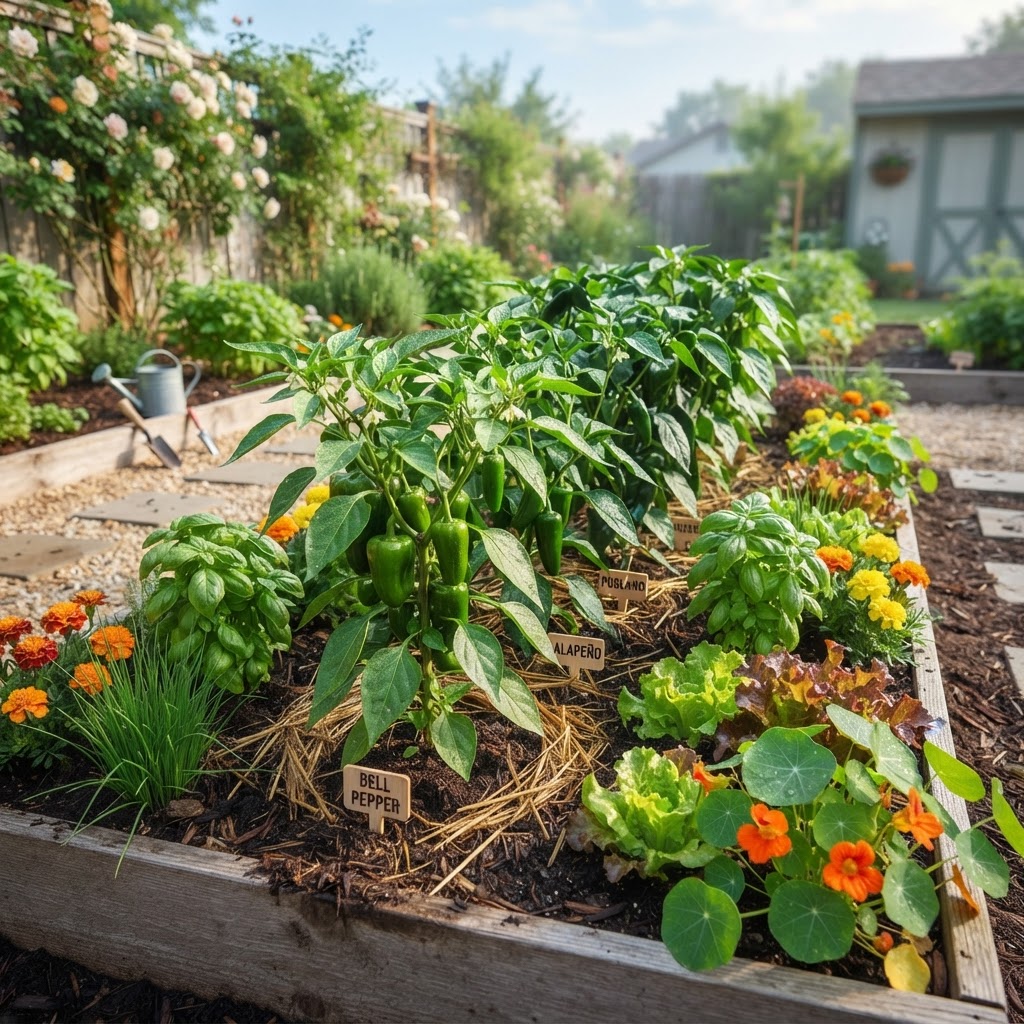
Best Companion Plants for Peppers: Easy Garden Pairings for Healthier Plants
Peppers are one of the most rewarding vegetables to grow at home, but they can be a little picky about space, warmth, and pests. The good news is that the right companion plants can help your pepper plants stay healthier, attract beneficial insects, and make better use of every inch of your garden.
Why This Topic Matters
Companion planting is simply the practice of growing certain plants near each other because they work well together. In a home vegetable garden, that can mean fewer pest problems, better airflow, more pollinator visits, or smarter use of small spaces.
Peppers benefit from thoughtful neighbors because they like steady moisture, warm soil, and consistent feeding. When they are crowded by the wrong plants or shaded too much, they often produce less and become more stressed.
It also helps beginners avoid a common mistake: planting vegetables wherever there is room without thinking about how they interact. A good companion setup will not solve every garden problem, but it can make your pepper patch easier to manage.
Quick Answer
The best companion plants for peppers are herbs, flowers, and small vegetables that attract beneficial insects, repel or distract pests, and do not compete too heavily for space.
Great companion plants for peppers include:
- Basil for a compact, easy herb partner
- Chives, onions, and garlic for their strong scent and small footprint
- Marigolds to add color and attract beneficial insects
- Nasturtiums as a trap crop for aphids and a pollinator favorite
- Parsley, cilantro, and dill to attract hoverflies and parasitic wasps
- Lettuce and spinach to act as living mulch around young peppers
- Carrots and radishes to use root space below the pepper canopy
- Beets for efficient spacing in larger beds
- Oregano and thyme as low-growing herbs for warm, sunny borders
- Calendula to support pollinators and beneficial insects
Plants that are usually not the best neighbors for peppers include:
- Fennel, which tends to be a poor companion for many vegetables
- Large sprawling squash or pumpkins, which can crowd and shade peppers
- Corn, which can compete for nutrients and reduce airflow
- Anything planted too closely, even if it is considered a good companion
If you want one simple beginner-friendly combination, try peppers + basil + marigolds + onions. It is easy to plant, looks great, and works well in raised beds, in-ground rows, or large containers.
Step-by-Step Guide
1. Start with what pepper plants need most
Before choosing companion plants, make sure you understand the basic needs of peppers. They grow best in full sun, warm soil, rich but well-drained soil, and steady moisture.
That means the best companions are usually plants that enjoy similar conditions. Cool-season crops that need constant shade or heavy-feeding giants that take over the bed are usually not the best fit.
2. Choose companions based on your goal
Different companion plants help peppers in different ways. Some attract pollinators, some fill empty space, and some may help reduce pest pressure by bringing in beneficial insects.
Ask yourself what your pepper bed needs most:
- Better pest management
- More pollinator activity
- Improved use of small spaces
- Ground cover to keep soil from drying out
- A mix of edible crops and flowers in one bed
3. Use herbs that stay compact and useful
Basil
Basil is one of the easiest and most popular companion plants for peppers. It enjoys the same sunny, warm conditions and stays small enough that it usually does not compete too much.
Plant basil around the edge of your pepper bed or between pepper plants with enough room for airflow. As a bonus, you get two summer favorites from the same space.
Chives, onions, and garlic
Alliums such as chives, onions, and garlic are great because they take up little space and can tuck neatly between peppers or along the bed border. Their strong scent is one reason many gardeners like pairing them with peppers.
Chives are especially beginner-friendly because they return in many gardens and produce flowers that attract pollinators. Bulb onions also work well if you give both crops enough room.
Oregano and thyme
These low-growing herbs fit well near the front of a sunny bed. They help cover bare soil, attract pollinators when flowering, and do not usually overpower pepper plants.
Keep them trimmed so they do not crowd the pepper stems. In small raised beds, one or two herb plants are usually enough.
4. Add flowers that support beneficial insects
Marigolds
Marigolds are a classic vegetable garden companion for a reason. They are easy to grow, cheerful, and a simple way to mix flowers into a food garden.
Plant them at the corners of a pepper bed or in small clusters nearby rather than packing them tightly around every pepper. This gives you the insect-attracting benefit without reducing airflow.
Nasturtiums
Nasturtiums are especially helpful in beginner gardens because they grow quickly and attract plenty of pollinators. Many gardeners also use them as a trap crop because aphids often gather on them first.
Give nasturtiums a little room to spill outward instead of into the center of the pepper bed. Bush types are easier to manage than trailing ones in tight spaces.
Calendula
Calendula is another useful flower for pepper beds. It is easy to direct sow, flowers for a long time, and brings beneficial insects into the garden.
Use calendula along the edges of raised beds or near pathways. It adds color and keeps the bed looking lively even before peppers fully size up.
5. Fill open space with small, quick crops
Lettuce and spinach
Young pepper plants leave a lot of soil exposed early in the season. Fast-growing greens like lettuce and spinach can fill that gap before the peppers get big.
This works especially well in spring. By the time the peppers need more space, you will often be harvesting the greens anyway.
Radishes and carrots
Radishes are one of the easiest intercrops for peppers because they mature quickly and do not take much room. Carrots are slower, but they use underground space while peppers grow above.
These pairings are helpful in raised beds where every square foot matters. Just avoid sowing so densely that the pepper roots have to compete for water.
Beets
Beets can also work beside peppers if spacing is generous. They are best in larger beds where the peppers are not packed too closely together.
Harvest beet greens early if things start to feel crowded. The goal is cooperation, not competition.
6. Invite helpful insects with flowering herbs
Parsley, cilantro, and dill are excellent companions when allowed to flower. Their blossoms attract beneficial insects such as hoverflies, lacewings, and tiny parasitic wasps.
These insects can help keep common garden pests in check. If you have the space, let a few herb plants bolt naturally near your peppers instead of pulling them out right away.
Dill can grow taller than expected, so place it where it will not shade your peppers. Parsley is a better fit for tighter beds.
7. Plan your spacing carefully
Even the best companion plants stop being helpful when they are packed too close. Peppers need good airflow to dry off after rain or watering and to reduce stress during hot weather.
A simple rule is to give each pepper plant its normal spacing first, then fit companion plants around it. Many pepper varieties do well with about 18 to 24 inches between plants, though compact types can sometimes be a bit closer.
Good ways to space companion plants include:
- Planting herbs at the front edge of the bed
- Tucking onions or chives between peppers with breathing room
- Growing flowers at corners or along the outside edge
- Sowing quick crops like radishes between young peppers early in the season
8. Match watering and feeding needs
Peppers like steady moisture but do not love soggy soil. Most of their best companions also prefer consistent watering, which makes care much simpler for beginners.
Use compost before planting and mulch once the soil is warm. This helps the whole bed hold moisture more evenly and reduces weed pressure around both peppers and their companions.
Avoid pushing lots of nitrogen fertilizer just to keep companions extra leafy. Too much nitrogen can give you big green pepper plants with fewer fruits.
9. Watch and adjust through the season
Companion planting is not a set-it-and-forget-it system. The best gardens are observed and adjusted as plants grow.
If a companion begins shading your peppers, trim it back or harvest it. If your pepper bed feels crowded by midsummer, remove the shortest-value plant and give the peppers more breathing room.
That flexibility is part of what makes companion planting work so well in home gardens. You do not need a perfect layout from day one.
Common Beginner Mistakes
One of the biggest mistakes is overcrowding. Gardeners hear that two plants are good companions and assume they should be planted almost touching, but peppers still need sun, airflow, and root space.
Another common mistake is choosing companions that grow much faster or larger than expected. A small nasturtium or dill plant can quickly become a space hog if you are not paying attention.
Beginners also sometimes treat companion planting like a cure-all. Helpful neighbors can support pepper health, but they do not replace proper watering, fertile soil, mulching, and regular pest checks.
It is also easy to forget that plants must share similar conditions. A cool-weather crop may do fine beside young peppers in spring, but struggle once the bed heats up in summer.
Finally, avoid poor matches such as fennel or sprawling vines that smother the bed. When in doubt, choose compact herbs, flowers, and quick root crops over anything big and aggressive.
Best Tips for Success
Start simple instead of trying ten companion plants at once. A few reliable choices, such as basil, marigolds, and onions, are easier to manage and still give excellent results.
Use mulch after planting. Straw, shredded leaves, or untreated grass clippings help keep soil evenly moist and reduce the stress that often shows up in pepper plants during hot weather.
Harvest companions regularly. Snipping basil, pulling radishes, or trimming oregano keeps the bed open and prevents competition.
Plant flowers on the outside edge of the bed when possible. This makes it easier for pollinators and beneficial insects to find them while keeping the center of the bed less crowded.
Take notes on what worked. If peppers grew well with basil but struggled next to dense greens, you will know exactly how to improve next season.
Recommended Supplies or Tools
You do not need fancy equipment for successful companion planting, but a few basic tools make the job easier:
- Hand trowel for transplanting herbs and flowers
- Garden fork or cultivator for loosening soil between plants
- Compost to feed peppers and companions before planting
- Organic mulch such as straw or shredded leaves
- Soaker hose or drip irrigation for steady watering
- Plant labels so you remember where quick crops are sown
- Pruners or herb snips for trimming basil, oregano, and flowers
- Tomato cage or small stake if your pepper varieties need support
If you grow in containers, choose a large pot for each pepper and add only one or two compact companions, such as basil or chives. Containers fill up faster than garden beds.
Frequently Asked Questions
What are the best flowers to plant with peppers?
Marigolds, nasturtiums, and calendula are three of the best flowers to plant with peppers. They are easy for beginners, attract pollinators and beneficial insects, and fit nicely into raised beds or in-ground gardens.
Can I plant basil next to peppers?
Yes, basil is one of the best companion plants for peppers. Both plants enjoy warm weather, full sun, and regular watering, which makes them easy to care for together.
What should not be planted near peppers?
Fennel is one plant to avoid near peppers because it is widely considered a poor companion for many vegetables. Large sprawling crops, such as pumpkins or oversized squash vines, can also crowd peppers and reduce sunlight and airflow.
Can tomatoes and peppers grow together?
They can, because they like similar growing conditions. However, they are in the same plant family and can share some pests and diseases, so many home gardeners prefer giving them a little separation and practicing crop rotation carefully.
Final Thoughts
The best companion plants for peppers are the ones that support pepper growth without stealing too much space, light, or water. For most beginners, that means compact herbs, useful flowers, and small quick crops that fit around peppers rather than competing with them.
If you want an easy place to start, plant peppers with basil, marigolds, and a border of onions or chives. Keep the bed mulched, avoid overcrowding, and adjust as the season unfolds, and you will be well on your way to a healthier, more productive pepper garden.