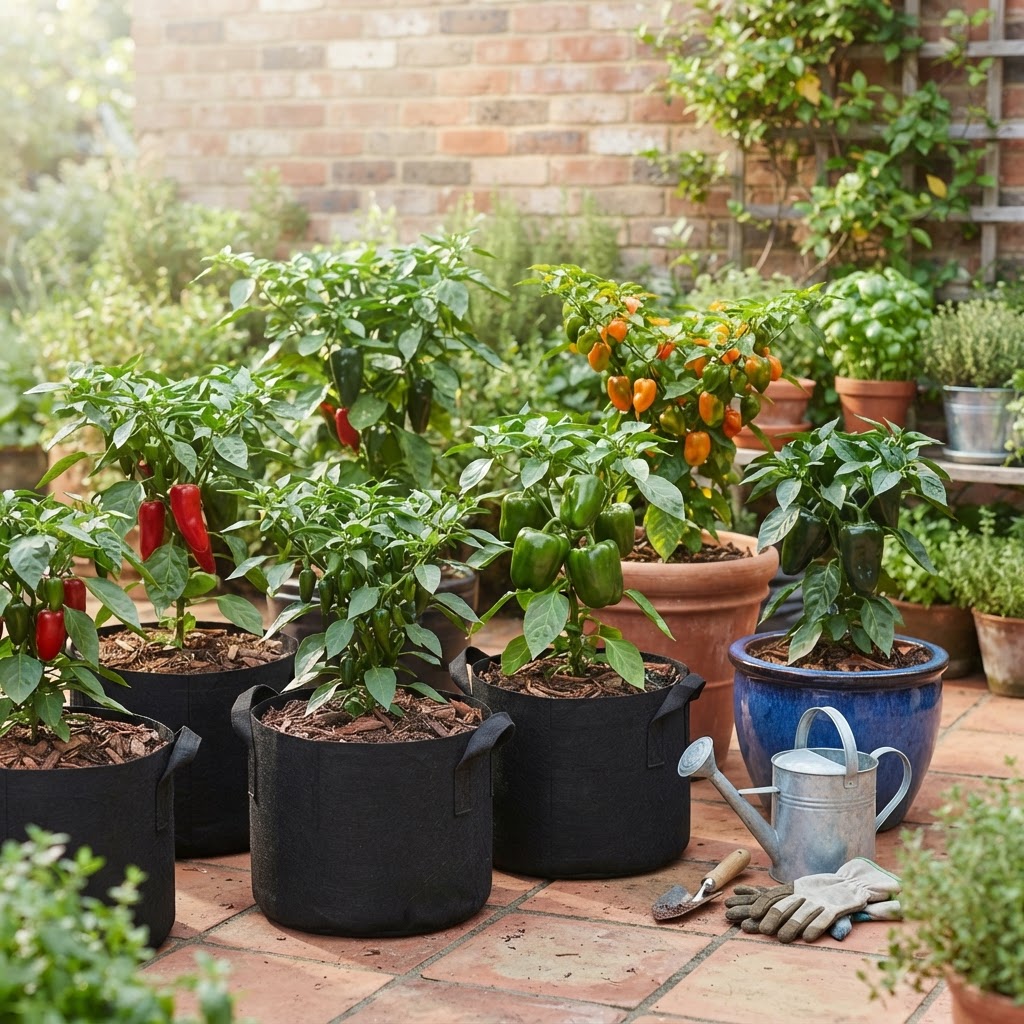
Best Containers for Growing Peppers Outdoors: Sizes, Materials, and Easy Tips
Growing peppers in containers is one of the easiest ways to start a productive vegetable garden at home. If you choose the right pot, even a small patio, deck, or sunny balcony can produce colorful bell peppers, jalapeños, shishitos, or hot chiles all season.
The tricky part for beginners is knowing which container actually works best outdoors. Size, material, drainage, and heat all matter, and the right setup can make pepper plants much easier to care for.
Why This Topic Matters
Pepper plants are very well suited to container gardening, but they do have a few specific needs. They like warm soil, steady moisture, excellent drainage, and enough root space to support flowers and fruit.
When the container is too small, plants often stay stunted, dry out too fast, or drop blossoms. When the pot holds water for too long, roots can struggle and growth slows down.
Choosing the right container from the start helps you avoid many common problems. It also makes watering, feeding, and moving plants around much simpler.
This matters even more outdoors, where sun, wind, summer heat, and sudden rain can affect container plants faster than garden beds. A good container gives you better control over those changing conditions.
For beginners, that means healthier plants and a better chance of harvesting peppers instead of troubleshooting all summer.
Quick Answer
The best containers for growing peppers outdoors are usually 5-gallon fabric grow bags or sturdy pots that are at least 12 to 14 inches wide and 12 inches deep, with several drainage holes.
For most pepper plants, here is a simple size guide:
- Small hot peppers: 3-gallon container minimum
- Most jalapeños, banana peppers, and similar types: 3 to 5 gallons
- Bell peppers and larger productive plants: 5 gallons or more
- Extra-large varieties or gardeners who want less frequent watering: 7 gallons
If you live in a very hot climate, light-colored plastic pots, resin pots, or fabric grow bags can work especially well because they help reduce extreme root heat. If you live in a cooler area, black nursery pots can warm up faster in spring, but they may need closer watering in peak summer.
The best overall choice for many beginners is a 5-gallon fabric grow bag because it offers great drainage, enough root room, and is easy to move. A heavy plastic or resin pot is another excellent option if you want something that holds moisture a little longer.
Step-by-Step Guide
1. Choose the right size container
Container size is the first decision to get right. Pepper roots do not need an enormous pot, but they do need more room than many beginners expect.
A tiny container may hold one plant for a while, but it usually leads to frequent watering and limited growth. Larger containers give roots more space, hold moisture longer, and make nutrient management easier.
Use this beginner-friendly rule:
- Grow one pepper plant per container.
- Use at least 3 gallons for small or compact pepper varieties.
- Use 5 gallons for most outdoor pepper plants.
- Go up to 7 gallons if you want a larger plant or less stress during hot weather.
If you are unsure, choose the bigger container. That extra soil volume gives you a wider margin for error.
2. Pick the best container material
Not all containers behave the same way outdoors. The material affects soil temperature, drainage, weight, and how often you will need to water.
Fabric grow bags
Fabric grow bags are one of the best choices for peppers. They drain very well, allow air to reach the roots, and help prevent roots from circling.
They are especially helpful if you tend to overwater. The trade-off is that they can dry out faster in hot, windy weather.
Plastic or resin pots
Plastic and resin containers are another strong option. They are lightweight, affordable, and hold moisture better than fabric.
These are great for gardeners in hot climates or for anyone who cannot water twice on very hot days. Choose a thick, sturdy pot that will not crack easily in sun exposure.
Glazed ceramic pots
Glazed ceramic pots can work beautifully for peppers. They often hold moisture well and look attractive on patios.
The downside is weight. Once filled with soil, they can be hard to move, so place them where they will get enough sun from the beginning.
Terracotta pots
Terracotta has a classic garden look, but it is not always the easiest choice for beginners. It dries out quickly because the clay is porous.
That can be useful in rainy or humid climates, but in hot summer weather it often means extra watering. If you use terracotta, choose a larger size and watch soil moisture closely.
3. Make sure drainage is excellent
Peppers like moisture, but they do not like soggy roots. Any container you choose must have good drainage holes in the bottom.
If a pot has only one tiny hole, it is usually not enough. Water needs to move through freely so the root zone stays moist but airy.
A few quick drainage tips:
- Avoid containers without holes unless you drill them yourself.
- Do not add rocks in the bottom to “improve” drainage.
- Set pots on pot feet, bricks, or a plant stand if drainage holes get blocked on a flat surface.
- Empty saucers after heavy rain if water collects for long periods.
4. Use a high-quality potting mix
Outdoor peppers do best in a loose, high-quality potting mix rather than garden soil. Garden soil compacts too easily in containers and can lead to poor drainage.
Look for a mix made for containers. A good blend usually contains materials like compost, coco coir or peat, and perlite or pumice for airflow.
For many beginners, a simple mix works well:
- 1 bag quality potting mix
- A little finished compost
- Optional extra perlite if you want faster drainage
Fill the pot so there is about an inch of space below the rim. That small gap makes watering easier and helps prevent runoff.
5. Match the container to your pepper variety
Pepper size matters when picking a pot. A compact ornamental pepper does not need the same root space as a full-size bell pepper.
Here is a practical guide:
- Compact patio peppers: 2 to 3 gallons
- Jalapeños and serranos: 3 to 5 gallons
- Banana peppers and poblanos: 5 gallons
- Bell peppers: 5 to 7 gallons
- Very large or long-season plants: 7 gallons or more
If the plant tag says “compact,” “dwarf,” or “container variety,” you may be able to stay on the smaller end. For anything full size, 5 gallons is the safest starting point.
6. Put containers in the sunniest spot possible
Peppers love warmth and sunshine. Outdoors, they generally need at least 6 to 8 hours of direct sun, and more is often better.
Watch your space for a full day before placing containers. A spot that seems bright in the morning may turn shady in the afternoon.
One of the biggest advantages of containers is mobility. If your plants are not getting enough light, you can often move them to a better spot.
7. Water deeply and consistently
Pepper plants in containers need steadier watering than peppers in the ground. Outdoor pots heat up quickly, especially during windy or dry weather.
The goal is even moisture, not constantly wet soil. Let the top inch of potting mix dry slightly, then water thoroughly until excess runs out the bottom.
In summer, you may need to water:
- Every 1 to 2 days during warm weather
- Daily during heat waves
- Twice a day for small pots in extreme heat
Mulch can help a lot. A thin layer of straw, shredded leaves, or untreated fine bark can slow evaporation and keep roots cooler.
8. Feed regularly once plants start growing
Container peppers use nutrients faster than peppers in garden beds. Frequent watering also washes nutrients out of the pot over time.
Start with fresh potting mix, then feed with a balanced fertilizer according to label directions. Once plants begin flowering and setting fruit, many gardeners switch to a fertilizer that still includes nitrogen but is not overly high in it.
Too much nitrogen can lead to lots of leaves and fewer peppers. A steady, moderate feeding routine is usually better than heavy doses.
9. Support larger plants if needed
Some pepper plants stay neat and compact. Others become top-heavy once fruits start forming.
A small stake, bamboo cane, tomato clip, or simple cage can keep branches from bending or snapping. It is easiest to add support early, before the plant is full of foliage.
10. Watch for heat, wind, and storms
Outdoor containers are more exposed than raised beds. On very hot patios, the root zone can heat up quickly, especially in dark pots.
If temperatures are extreme, move containers where they get morning sun and a little afternoon shade. In stormy weather, gather pots near a wall or sheltered area so they do not topple over.
This flexibility is one of the biggest benefits of container gardening. You can respond to the weather instead of hoping plants can handle it.
Common Beginner Mistakes
One of the most common mistakes is choosing a container that is too small. A pepper seedling may look fine in a tiny pot at first, but the plant will outgrow it quickly.
Another frequent problem is poor drainage. Without enough holes, roots stay too wet and growth often stalls.
Beginners also sometimes use garden soil instead of potting mix. In containers, that usually creates dense, compacted soil that is hard for roots to grow through.
Here are a few more mistakes to avoid:
- Planting more than one pepper in a small container
- Letting pots dry out completely between waterings
- Using black pots in intense heat without monitoring soil temperature
- Forgetting to fertilize during the growing season
- Putting peppers in a spot with only partial sun
- Waiting too long to stake heavy plants
It is also easy to underestimate how fast containers dry out outdoors. A pot that looked moist yesterday can become dry by afternoon during a hot, windy spell.
Best Tips for Success
If you want the simplest path to healthy container peppers, keep things basic. Start with one healthy plant in one properly sized container, use fresh potting mix, and place it in full sun.
These tips can make a big difference:
- Choose 5-gallon containers for most pepper varieties
- Pick fabric grow bags if overwatering is your habit
- Pick plastic or resin pots if underwatering is more likely
- Use mulch to slow moisture loss
- Check soil moisture with your finger before watering
- Feed lightly but regularly through the season
- Rotate pots occasionally if one side gets more sun
- Harvest often to encourage more production
If you live in a hot climate, try light-colored containers or place dark pots inside a larger decorative planter to reduce root heat. If you live in a cooler climate, darker pots can help warm the soil earlier in the season.
The best container is not always the prettiest one. It is the one that gives your pepper plant enough root space, steady moisture, and good drainage.
Recommended Supplies or Tools
You do not need a long shopping list to grow peppers outdoors in containers. A few well-chosen basics are enough.
Here are the most useful supplies:
- 5-gallon fabric grow bags or sturdy 5-gallon pots
- High-quality potting mix for containers
- Compost for extra organic matter
- Balanced vegetable fertilizer
- Mulch such as straw or shredded leaves
- Watering can or hose with a gentle nozzle
- Plant labels if growing more than one variety
- Bamboo stakes or small cages for support
- Pot feet or bricks to improve drainage under containers
If you are just starting out, buy fewer containers and do them well. Two or three healthy pepper plants often teach you more than a crowded patio full of struggling pots.
Frequently Asked Questions
Can I grow peppers in a 12-inch pot?
Yes, many pepper plants can grow well in a 12-inch pot if it is also deep enough and holds about 3 to 5 gallons of potting mix. For bell peppers and larger plants, a container closer to 5 gallons is usually the better choice.
Are fabric grow bags better than plastic pots for peppers?
Neither is always better in every climate. Fabric grow bags provide excellent drainage and root airflow, while plastic pots hold moisture longer and may be easier in very hot, dry weather.
How many pepper plants can I put in one container?
For beginners, the best approach is one pepper plant per container. Even if two small plants fit at planting time, crowding usually reduces airflow, root space, and long-term productivity.
Do peppers need deep or wide containers?
Peppers benefit from both depth and width, but a medium-deep container with enough overall soil volume matters most. Aim for at least 12 inches deep and wide, with a total size of 3 to 5 gallons minimum for most varieties.
What color container is best for peppers outdoors?
That depends on your climate. In hot areas, light-colored pots can keep roots cooler, while in cooler climates, darker pots may help soil warm up faster in spring.
Final Thoughts
The best containers for growing peppers outdoors are the ones that balance root space, drainage, and manageable watering. For most home gardeners, that means starting with a 5-gallon fabric grow bag or a sturdy plastic, resin, or glazed pot with plenty of drainage holes.
If you keep things simple and consistent, peppers are one of the most rewarding vegetables to grow in containers. Pick a sunny spot, use a roomy pot, and your outdoor pepper garden can be both easy and productive.