How to Improve Clay Soil for Vegetable Gardens: Simple Steps for Healthier Plants
Clay soil can feel frustrating when you’re trying to grow vegetables. It gets sticky when wet, hard as a brick when dry, and seems to fight your shovel at every turn. The good news is that clay soil is not bad soil—it simply needs the right approach.
With a few steady improvements, clay soil can become rich, productive ground that grows strong, healthy vegetables. If you’ve been wondering how to improve clay soil for vegetable gardens, this guide will walk you through exactly what to do, step by step.
Why This Topic Matters
Many home gardeners struggle with clay soil, especially in new garden spaces and suburban yards. It drains slowly, compacts easily, and can make roots work harder than they should.
But clay also has an upside. It holds nutrients better than sandy soil, which means once you improve its structure, it can become wonderfully fertile.
Understanding how to work with clay instead of against it can help you:
- Improve drainage without stripping away nutrients
- Reduce compaction and crusting
- Make it easier for vegetable roots to spread
- Support soil life like earthworms and microbes
- Build a garden that gets better each season
For beginners, this matters because soil health is the foundation of everything else. Better soil leads to healthier plants, fewer problems, and more reliable harvests.
Quick Answer
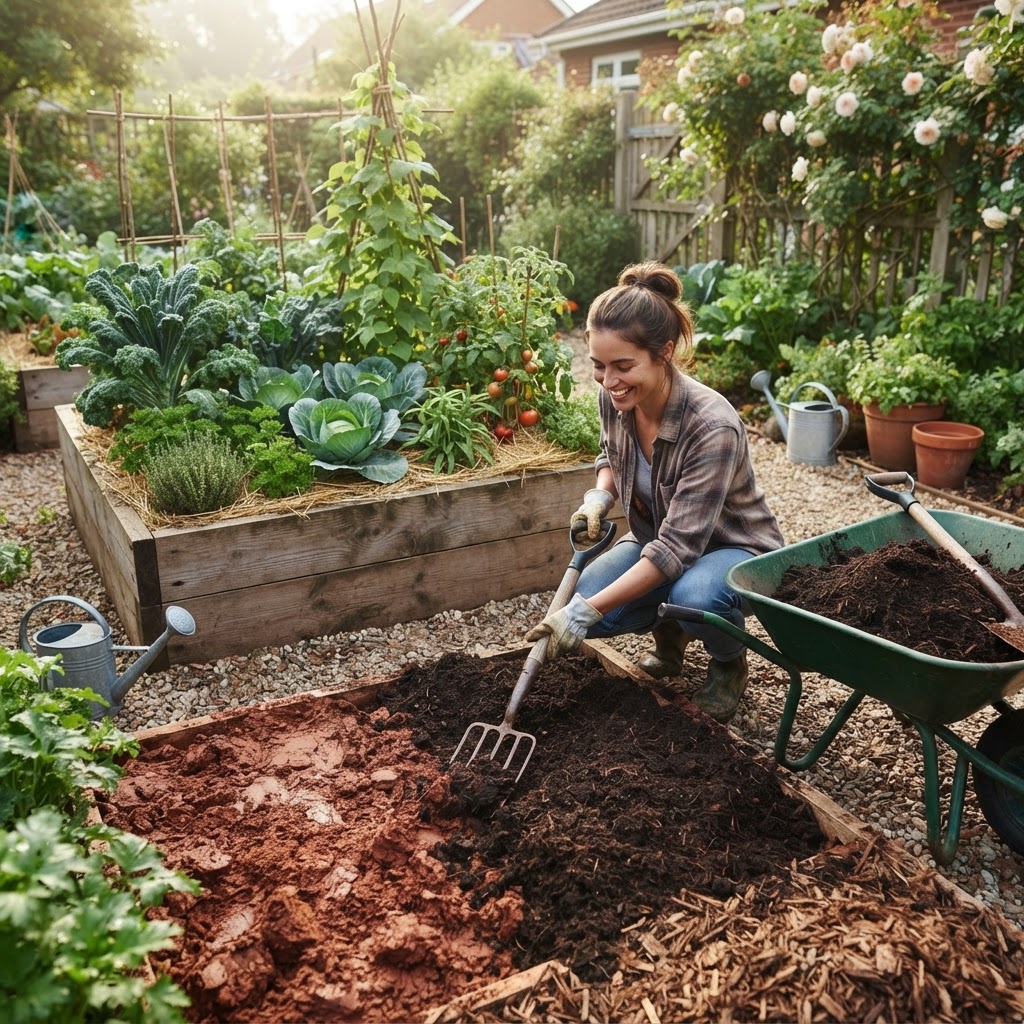
The best way to improve clay soil for vegetable gardens is to add large amounts of organic matter over time. Compost, shredded leaves, aged manure, leaf mold, and other natural materials help loosen dense clay, improve drainage, and create better air spaces for roots.
Start by top-dressing your garden with 2 to 3 inches of compost and gently mixing it into the top 6 to 8 inches if you’re preparing a new bed. Then keep adding organic matter every season, mulch the surface, avoid working wet soil, and minimize compaction by staying off planting beds.
If your clay is especially heavy, raised beds and cover crops can speed up the improvement process. The key is patience and consistency, not one quick fix.
Step-by-Step Guide
1. Check Your Soil When It’s Slightly Moist
Before improving clay soil, get a feel for what you’re working with. Pick up a handful of soil when it’s slightly moist.
If it forms a sticky ribbon that holds together tightly, you likely have a high clay content. That dense texture is exactly why drainage and root growth can be a challenge.
Avoid digging or testing when the soil is soaking wet. Wet clay compacts easily, and working it at the wrong time can make the structure worse.
2. Start with Organic Matter
Organic matter is the most important tool for improving clay soil. It helps separate tiny clay particles, creating pores for water, air, roots, and beneficial organisms.
Good materials to add include:
- Finished compost
- Aged animal manure
- Shredded dry leaves
- Leaf mold
- Grass clippings in thin layers
- Straw that is free of weed seeds
- Partially broken-down plant matter
For a new bed, spread 2 to 3 inches of compost over the surface. Mix it into the top 6 to 8 inches of soil if possible.
For established beds, it’s often better to top-dress with compost and let worms and weather help move it down naturally. This is gentler on soil life and helps preserve structure.
3. Add Organic Matter Every Season
One application is helpful, but repeated applications are what truly transform clay soil. Improvement happens gradually as organic materials break down and feed the soil ecosystem.
A simple schedule works well:
- Add compost in early spring before planting
- Mulch during the growing season
- Add chopped leaves or compost again in fall
- Plant a cover crop if the bed will rest over winter
This regular cycle slowly turns hard, dense ground into more crumbly, workable soil. Think of it as building soil, not fixing it overnight.
4. Use Mulch to Protect the Surface
Clay soil often forms a crust on top, especially after heavy rain or hot sun. That crust can block water, reduce airflow, and make it harder for seedlings to emerge.
Mulch helps prevent that. A 2- to 3-inch layer of organic mulch protects the surface and supports steady improvement.
Good mulch choices include:
- Straw
- Shredded leaves
- Untreated grass clippings, applied lightly
- Pine needles in moderation
- Finished compost as a thin top layer
Keep mulch a little away from stems to reduce rot and pest issues. As mulch breaks down, it feeds the soil and improves texture over time.
5. Avoid Digging in Wet Soil
This is one of the biggest mistakes beginners make with clay. When clay is wet, digging, stepping, or tilling can squeeze out air pockets and create hard clumps that dry like concrete.
A good rule is this: if the soil sticks heavily to your shovel or forms shiny, slick lumps, wait. Let it dry until it is moist and workable, not muddy.
Working at the right moisture level protects the structure you’re trying to build.
6. Reduce Compaction
Clay soil compacts more easily than many other soil types. Repeated foot traffic can undo your hard work quickly.
To avoid compaction:
- Create permanent paths between beds
- Never step directly in planting areas
- Use wide boards if you must kneel or reach across a bed
- Avoid heavy equipment in the garden
- Limit unnecessary tilling
If you can, make beds narrow enough that you can reach the center from either side. Beds about 3 to 4 feet wide are practical for most home gardeners.
7. Consider Raised Beds for Faster Results
If your native clay is extremely dense or poorly drained, raised beds can make vegetable gardening easier right away. They allow you to create a better root zone above the hardest ground.
You can fill raised beds with a mix of:
- Topsoil
- Compost
- Leaf mold
- Other organic materials suited for gardens
Raised beds do not mean you have to ignore the soil underneath. Over time, roots, worms, and added organic matter can still help improve the clay below.
8. Grow Cover Crops
Cover crops are one of the most overlooked ways to improve clay soil for vegetable gardens. Their roots help open up dense soil, add organic matter, and protect the surface from erosion.
Good beginner-friendly cover crop options include:
- Cereal rye
- Crimson clover
- Oats
- Field peas
- Annual ryegrass
Some cover crops have deep or fibrous roots that help create channels in compacted soil. When cut down and left on the bed or lightly incorporated, they add more organic matter.
9. Plant the Right Vegetables at First
While your soil is improving, it helps to grow crops that can tolerate heavier ground better than others. This gives you success while your garden gets stronger.
Vegetables that often do reasonably well in improved clay soil include:
- Kale
- Cabbage
- Broccoli
- Beans
- Squash
- Potatoes
- Swiss chard
Root crops like carrots and parsnips may struggle in dense clay unless the soil is deeply loosened and rich in organic matter. If you want straighter roots, grow them in raised beds or spots with extra compost worked in.
10. Be Careful with Soil Amendments Like Sand
Many beginners hear that adding sand will loosen clay. In small amounts, it usually does not help. In some cases, mixing clay and sand can create a concrete-like texture.
If you use sand at all, it takes a very large amount and careful balancing with organic matter to make a meaningful difference. For most home vegetable gardens, compost and other organic materials are the simpler and better choice.
Gypsum is another amendment people often mention. It can help in certain clay soils, especially where sodium is a problem, but it is not a universal fix for all clay. A soil test can tell you whether it makes sense for your garden.
11. Test Your Soil if You Can
Improving structure is important, but nutrient balance matters too. A basic soil test can tell you your pH and whether your soil is low or high in key nutrients.
This helps you avoid guessing. Clay soil often holds nutrients well, so adding too much fertilizer without a test may create imbalance rather than improvement.
If your local extension office offers soil testing, that is often the most affordable and useful place to start.
12. Keep Going Year After Year
The most productive clay-soil gardens are rarely built in a single season. They improve because gardeners keep adding compost, protecting the surface, growing roots in the soil, and avoiding compaction.
The encouraging part is that clay can become excellent garden soil. Once it develops a better structure, it often holds moisture and nutrients beautifully during the growing season.
Common Beginner Mistakes
Clay soil responds best to steady, gentle improvement. These common mistakes can slow progress.
Working the Soil Too Soon
Digging when the ground is wet can create hard clods and serious compaction. Always wait until the soil is moist, not muddy.
Adding Too Little Organic Matter
A thin sprinkle of compost won’t do much in heavy clay. Be generous and consistent, especially at the start.
Rototilling Over and Over
Tilling can seem helpful at first, but frequent tilling may break down structure and increase compaction below the tilled layer. Use it sparingly, if at all.
Walking on Garden Beds
Stepping where vegetables grow presses dense clay even tighter. Keep feet on paths and protect bed structure.
Expecting Instant Results
Clay soil improves over time. Don’t get discouraged if it still feels heavy after one round of compost.
Using Sand Without a Plan
This is a classic mistake. Sand is not a simple cure and may make things worse unless used in very large, well-balanced amounts.
Best Tips for Success
If you want the biggest payoff with the least frustration, focus on a few reliable habits.
Feed the Soil, Not Just the Plants
Healthy soil life helps transform clay from dense and sticky into loose and productive. Compost, mulch, roots, and rest periods all support that process.
Keep Soil Covered
Bare clay bakes hard, erodes in rain, and forms crusts easily. Use mulch or cover crops whenever possible.
Build Beds and Paths
A clear garden layout prevents compaction and makes maintenance easier. Permanent paths are especially helpful in clay-heavy yards.
Add Compost Often
Even 1 to 2 inches a few times a year can make a noticeable difference. Small, repeated improvements are powerful.
Match Crops to Conditions
Grow easier vegetables first while your soil improves. Save the fussier root crops for later or grow them in raised beds.
Watch Drainage After Rain
Notice where water sits and how long it takes to soak in. These clues help you decide whether you need more organic matter, a raised bed, or better path design.
Recommended Supplies or Tools
You do not need fancy equipment to improve clay soil, but a few basic tools can make the job much easier.
Helpful tools
- Digging fork: Great for loosening dense soil without over-pulverizing it
- Garden rake: Useful for leveling compost and mulch
- Wheelbarrow or garden cart: Makes moving compost much easier
- Shovel or spade: Good for bed prep and edging paths
- Soaker hose or drip irrigation: Helps water slowly and evenly in heavier soil
- Mulch materials: Such as straw or shredded leaves
- Compost bin: Helps you create your own organic matter over time
Nice extras for beginners
- Raised bed frame: Helpful if drainage is poor or soil is very compacted
- Soil test kit or extension soil test: Useful for understanding pH and nutrients
- Broadfork: A good option for larger gardens with compacted soil
If you buy supplies online, choose sturdy, simple tools that will last for years. Clay soil can be tough on lightweight equipment.
Frequently Asked Questions
Can clay soil be good for vegetable gardens?
Yes. Clay soil can become very productive because it holds nutrients well. The main challenge is improving its structure so roots, water, and air can move more freely.
How long does it take to improve clay soil?
You may notice some improvement in one season, especially after adding compost and mulch. Bigger changes usually happen over several seasons of regular organic matter, reduced compaction, and careful bed management.
Should I add sand to clay soil?
Usually, no. Small amounts of sand often do not help and can create a hard, dense texture. Organic matter is the safer and more effective choice for most home gardens.
Is gypsum good for clay soil?
Sometimes, but not always. Gypsum can help certain soils, especially if sodium is an issue, but it is not a universal solution. A soil test is the best way to know whether it is useful in your garden.
What vegetables grow best in clay soil?
Vegetables that often perform well in improved clay include kale, broccoli, cabbage, beans, squash, and potatoes. Root crops usually need looser soil for best results.
Final Thoughts
Clay soil may be stubborn, but it is far from hopeless. In fact, with the right care, it can become some of the richest soil in your garden.
If you remember just one thing, make it this: add organic matter regularly and protect the soil structure you’re building. Over time, those simple steps will improve drainage, reduce compaction, and create a healthier home for your vegetables.
Start small, stay consistent, and give your soil time to change. Each season of compost, mulch, and smart garden habits brings you closer to the kind of soft, productive vegetable bed every beginner hopes for.