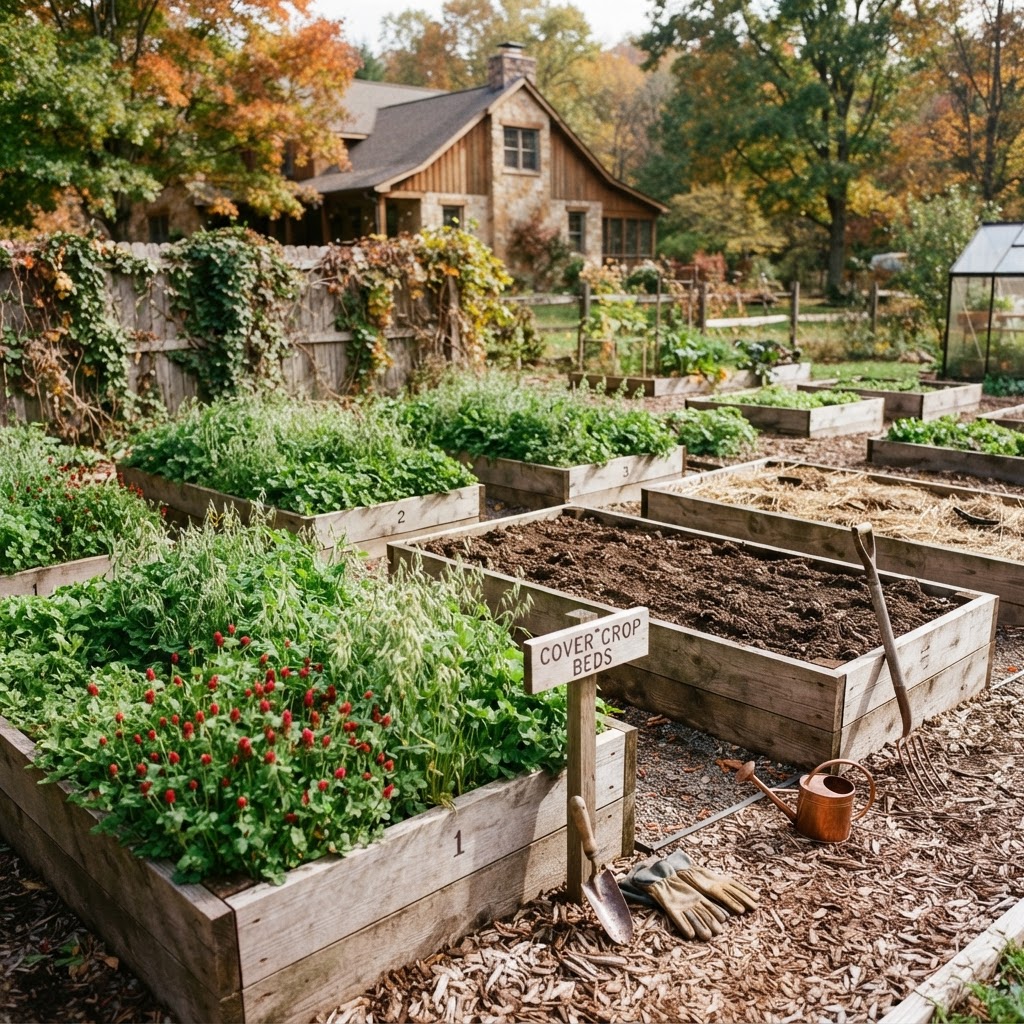
Best Cover Crops for Raised Bed Vegetable Gardens: Easy Choices for Healthier Soil
If your raised beds sit empty between seasons, you’re missing a simple way to improve your soil with very little effort. The best cover crops for raised bed vegetable gardens can help protect the surface, reduce weeds, add organic matter, and even feed your soil over winter.
The good news is that cover crops are not just for big farms. Even a few small raised beds can benefit from the right planting at the right time, and beginners can absolutely do this successfully.
Why This Topic Matters
Raised beds make vegetable gardening easier, but they also dry out faster and can lose nutrients over time. When a bed is left bare, rain can wash away topsoil, weeds can move in, and soil life has less to feed on.
Cover crops act like a living mulch. They keep roots in the soil, protect the bed from erosion, and create biomass that can be cut and left in place or lightly worked in later.
For home gardeners, this matters because healthy soil usually means better vegetables. Tomatoes, peppers, beans, lettuce, and root crops all grow better in beds with good structure, active microbial life, and steady organic matter.
Cover crops can also help reduce the amount of compost or fertilizer you need to add each season. They won’t replace good garden care, but they are one of the smartest low-cost tools for building better soil naturally.
Quick Answer
The best cover crops for raised bed vegetable gardens are usually the ones that are easy to manage in a small space. For most beginners, these are the top choices:
- Crimson clover for adding nitrogen and attracting pollinators
- Austrian winter peas for nitrogen and soft spring growth
- Buckwheat for fast summer coverage and weed suppression
- Oats for quick fall cover that winter-kills in cold climates
- Annual ryegrass for dense roots and soil improvement, if you can manage it carefully
- Winter rye for strong weed suppression and lots of biomass in larger raised beds
If you want the easiest beginner option, start with oats in fall or buckwheat in summer. If you want to add nitrogen before heavy-feeding vegetables, crimson clover and winter peas are great choices.
Step-by-Step Guide
1. Choose the right cover crop for the season
Not every cover crop fits every time of year. The easiest way to choose is to match the crop to the season and your goal.
Best cover crops for fall and winter
These are good when your raised beds will be empty after summer vegetables:
- Oats: Fast-growing and beginner-friendly. In colder areas, oats usually die back in winter, leaving an easy mulch layer.
- Crimson clover: A great choice if you want a legume that adds nitrogen and blooms beautifully in spring.
- Austrian winter peas: Soft stems and good nitrogen contribution. Often easier to cut down than tougher grain crops.
- Winter rye: Excellent for soil protection and weed suppression, but it grows vigorously and needs timely termination.
Best cover crops for spring or summer gaps
If a raised bed will be empty for just a month or two, these options work well:
- Buckwheat: One of the best quick cover crops for home gardens. It grows fast, shades out weeds, and flowers quickly.
- Annual ryegrass: Useful for improving soil structure with lots of roots, though it can be persistent if allowed to mature too long.
2. Match the crop to your goal
Different cover crops do different jobs. Ask yourself what your raised bed needs most.
If you want to add nitrogen
Choose legumes such as:
- Crimson clover
- Austrian winter peas
These plants work with soil bacteria to help capture nitrogen. They are especially useful before crops like tomatoes, squash, corn, or brassicas.
If you want to suppress weeds
Choose dense, fast growers such as:
- Buckwheat
- Oats
- Winter rye
These cover the soil quickly and make it harder for weeds to get established.
If you want to improve soil structure
Choose crops with strong root systems such as:
- Annual ryegrass
- Winter rye
- Oats
Their roots help loosen and hold soil, which can be especially helpful in older raised beds where the mix has settled over time.
3. Clear the bed and prep the surface
After your vegetables are finished, remove diseased plant material and large stems. You can leave healthy roots in place, since they help feed soil organisms as they break down.
Use a hand rake to smooth the surface. You do not need to deeply till a raised bed for cover crops. In fact, minimal disturbance is often better for soil structure.
If the soil is very dry, water lightly before sowing. Seeds germinate better when there is steady surface moisture.
4. Sow the seeds thickly and evenly
Most cover crops are broadcast over the bed rather than planted in neat rows. Scatter the seed as evenly as you can across the surface.
Then lightly rake it in so the seeds have good contact with the soil. Cover them with a thin layer of soil or compost if needed, following the packet depth recommendations.
For small raised beds, it is often better to plant a little thick rather than too thin. A dense stand gives better weed control and stronger soil coverage.
5. Water until established
After sowing, water gently so you do not wash seeds into the corners of the bed. Keep the top inch of soil lightly moist until the seedlings are up and growing.
Once established, many cover crops need very little care. In cool weather, rainfall may be enough. In warmer or drier conditions, you may need occasional watering.
6. Cut down the cover crop at the right time
Timing matters a lot. For most raised bed gardeners, the best time to cut a cover crop is before it sets mature seed.
If you let it go too long, it can become harder to chop, slower to break down, or even reseed where you do not want it.
Here’s a simple guide:
- Buckwheat: Cut when it starts flowering, usually within 4 to 6 weeks.
- Oats: In cold climates, winter often kills them. If not, cut before seed heads form.
- Crimson clover: Cut at early bloom for good biomass and easier breakdown.
- Winter peas: Cut at flowering or before vines get too tangled.
- Winter rye: Cut before pollen shed and before stems become tough.
- Annual ryegrass: Cut while still young and tender.
7. Decide how to handle the residue
In raised beds, the easiest method is usually “cut and mulch.” Cut the crop at the base and leave the tops on the bed surface.
This layer protects the soil and slowly breaks down. You can also chop the material into smaller pieces to speed decomposition.
If you prefer, you can lightly mix some residue into the top couple of inches of soil. Avoid deep digging, especially in established raised beds.
8. Wait before planting vegetables
Freshly cut cover crops need a little time to break down. For most raised beds, waiting about 2 to 3 weeks before planting vegetables is a good rule.
This waiting period is especially important for heavier residues like rye. It gives the soil time to settle and keeps seedlings from struggling in freshly decomposing material.
9. Plant your next crop
Once the residue has started breaking down, your bed is ready for vegetables again. Add compost if needed, but you may find the soil already looks darker, looser, and more alive.
At that point, plant as usual and notice how the bed holds moisture and supports root growth. Over time, regular cover cropping can make a big difference in raised bed performance.
Common Beginner Mistakes
Planting the wrong crop for the season
One of the most common mistakes is sowing a cool-season cover crop too late or a warm-season cover crop too early. Always check whether the crop prefers cool or warm conditions.
Buckwheat loves warmth but hates frost. Oats, clover, and peas do much better in cooler weather.
Letting the cover crop go to seed
This is a big one. A cover crop can turn into a weed problem if you let it mature and drop seed into your raised bed.
Mark your calendar when you plant so you remember when to cut it down. A simple reminder on your phone can save a lot of work later.
Choosing a crop that is too aggressive
Winter rye and annual ryegrass can be excellent tools, but they are more work to manage than oats or buckwheat. In small raised beds, beginners often do better with softer, easier crops first.
If you are new to cover cropping, start simple. You can always try more vigorous options later.
Not leaving enough time before planting vegetables
A thick cover crop does not disappear overnight. If you cut it down and plant vegetables immediately, the bed may feel messy and the residue can get in the way.
Build in a small gap between termination and replanting. Even 2 weeks helps a lot.
Using too little seed
A sparse cover crop leaves open space for weeds. Since the goal is to cover the soil, thin seeding often defeats the purpose.
Buy enough seed for your square footage and sow evenly. Full coverage is what makes cover crops work well.
Best Tips for Success
Start with the easiest options
If this is your first season, choose one bed and try either:
- Buckwheat for a warm-season gap, or
- Oats for a fall-planted cover crop
Both are forgiving and easy to remove. That makes them ideal for learning.
Use mixes carefully
Many gardeners like combining a grass and a legume, such as oats plus crimson clover. This can give you the benefits of both biomass and nitrogen.
But for beginners, a single crop is often easier to manage. Once you understand timing, trying a simple mix can be a great next step.
Keep roots in the soil as much as possible
Even after cutting down the top growth, leaving roots in place is helpful. The roots feed soil organisms and improve soil structure as they decompose.
This is one reason cover crops are so useful in raised beds. They do work both above and below the surface.
Think of bare soil as a missed opportunity
Whenever a raised bed will sit empty for more than a few weeks, ask whether a cover crop makes sense. Not every gap needs one, but many do.
A fast crop like buckwheat can fit into surprisingly small windows. A fall cover crop can protect a bed all winter with very little work.
Observe and adjust each season
Every garden is different. Your climate, bed size, planting schedule, and favorite vegetables all affect which cover crop works best.
Pay attention to what grows easily, what breaks down well, and what fits your routine. Over time, you will find a rhythm that works for your garden.
Recommended Supplies or Tools
You do not need much to use cover crops successfully in raised beds. A few simple tools make the job easier.
- Cover crop seed suited to your season and goals
- Hand rake for smoothing soil and lightly covering seed
- Garden scissors, hedge shears, or pruners for cutting down tender crops
- Watering wand or gentle hose nozzle for careful watering after sowing
- Garden gloves for cleanup and handling residue
- Buckets or a tarp if you want to move extra plant material to compost
Helpful but optional:
- Soil thermometer for checking seasonal planting conditions
- Seed spreader for larger raised bed setups
- Mulch knife or serrated garden tool for chopping residue into smaller pieces
If you buy supplies online, make sure seeds match your climate and intended planting season. Read packet directions closely, since timing and seeding rates vary by crop.
Frequently Asked Questions
Can I use cover crops in small raised beds?
Yes. Cover crops work very well in small raised beds, especially easy options like oats, buckwheat, crimson clover, and winter peas.
The key is choosing crops that are easy to cut down and that fit your planting schedule. In very small beds, avoid letting vigorous crops get too tall or mature.
What is the easiest cover crop for beginners?
For many beginners, oats are the easiest fall cover crop and buckwheat is the easiest summer cover crop. Both establish quickly and are simple to manage.
Oats often winter-kill in cold climates, which makes spring prep easy. Buckwheat grows fast and can be cut before it becomes a problem.
Do cover crops add nutrients to the soil?
Yes, but in different ways. Legumes like crimson clover and winter peas can help add nitrogen, while grasses and grains mostly add organic matter and improve soil structure.
All cover crops support soil life, which helps nutrient cycling over time. Think of them as soil builders rather than instant fertilizer.
Do I need to till cover crops into my raised bed?
No. In most home raised beds, you can simply cut the cover crop and leave it on the surface as mulch or lightly mix a little into the top layer.
Deep tilling is usually unnecessary and can disrupt soil structure. Minimal disturbance is often the better choice.
When should I plant vegetables after a cover crop?
A good general rule is to wait about 2 to 3 weeks after cutting down the cover crop. This gives the residue time to start breaking down.
For lighter materials like buckwheat or oats, the wait may be shorter. For heavier rye residue, waiting a bit longer can help.
Final Thoughts
Using the best cover crops for raised bed vegetable gardens is one of the simplest ways to grow healthier soil over time. Instead of leaving beds bare between crops, you can turn those empty weeks or months into a chance to protect, feed, and improve your garden.
If you are just starting out, keep it easy. Try oats in fall or buckwheat in summer, learn how they behave in your beds, and build from there.
Small steps really do add up in the garden. A single season of cover cropping can help, and a few seasons of it can completely change the quality of your raised bed soil.