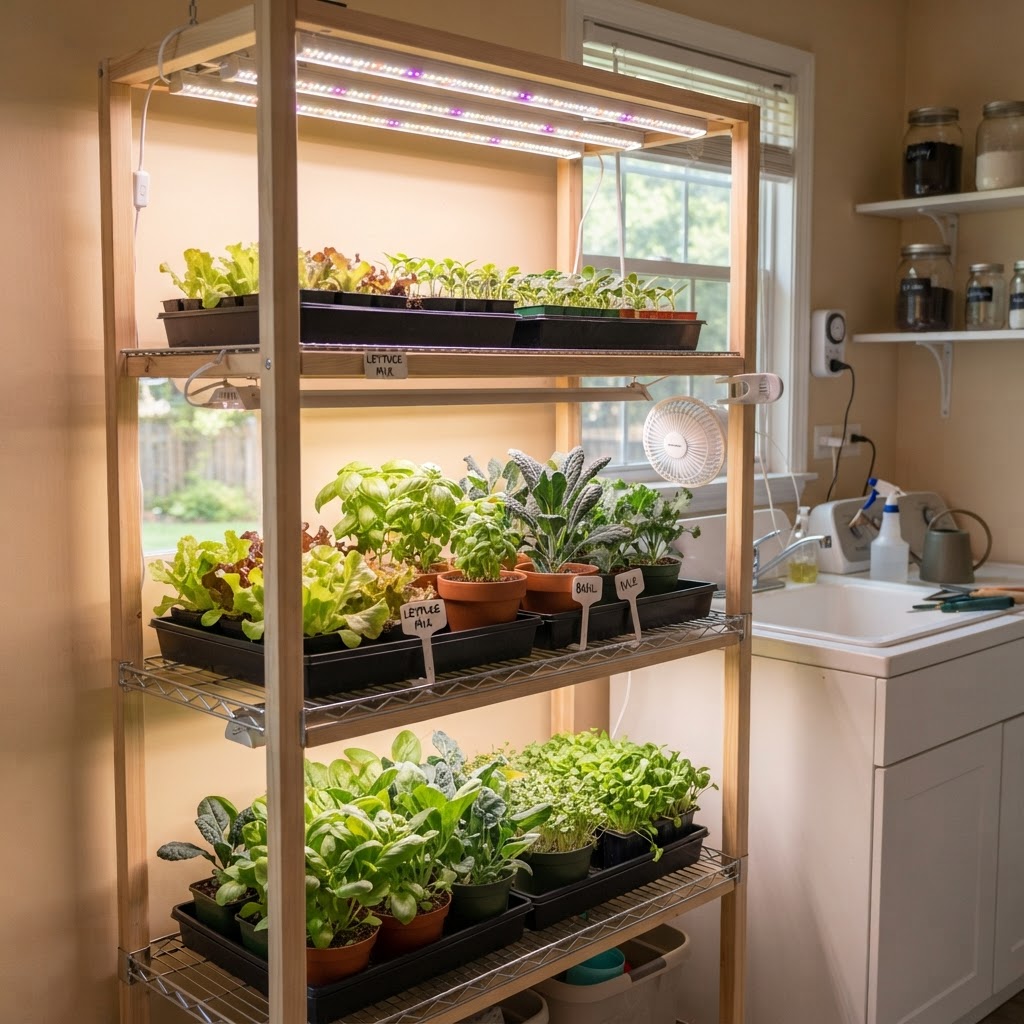
Best Grow Lights for Indoor Vegetable Gardens: A Beginner-Friendly Guide
Growing vegetables indoors gets much easier when your plants have the right light. If you have ever watched seedlings stretch toward a window or struggle through winter, a good grow light can make the difference between weak plants and healthy harvests.
Why This Topic Matters
Vegetables need more light than most houseplants. A sunny windowsill may work for a few days or for very small herbs, but it usually does not provide enough consistent energy for sturdy seedlings, leafy greens, or fruiting crops.
That is especially true in winter, in apartments, or in homes with shaded yards. Even a bright room can be too dim once you compare it to the amount of light plants receive outdoors.
The right grow light helps you start seeds earlier, grow food year-round, and keep plants compact instead of leggy. It also makes indoor gardening more predictable, which is a big confidence boost for beginners.
Choosing a light can feel confusing at first because there are so many terms, including watts, spectrum, PPFD, coverage, and hanging height. The good news is that you do not need a commercial setup to grow vegetables successfully at home.
Quick Answer
For most beginners, the best grow lights for indoor vegetable gardens are full-spectrum LED fixtures. They are energy efficient, produce less heat than older styles, and work well for seedlings, herbs, and many leafy vegetables.
Here is the simple version:
- For seed starting, look for LED strip or bar lights that can hang close to trays.
- For lettuce, spinach, kale, and herbs, choose full-spectrum LED shop lights or bar fixtures with good shelf coverage.
- For tomatoes, peppers, cucumbers, and other fruiting plants, use a stronger LED panel or board-style fixture made for higher light needs.
When comparing lights, focus on these features first:
- Full-spectrum output
- Enough coverage for your growing area
- Adjustable hanging height
- Low heat output
- Compatibility with a timer
- Clear information from the manufacturer about plant distance and light footprint
If you want one safe beginner rule, buy a full-spectrum LED light that matches the size of your shelf or table, keep it close to the plants, and run it on a timer every day. That simple setup works better than a weak light used inconsistently.
Step-by-Step Guide
1. Decide what you want to grow
The best grow light depends on your goal. Starting tomato seedlings for spring transplanting is very different from growing lettuce indoors all winter.
Leafy greens and herbs need moderate light. Fruiting vegetables like peppers and tomatoes need stronger light for good growth and production.
If you are brand new, start with easy crops such as:
- Lettuce
- Arugula
- Spinach
- Kale
- Basil
- Cilantro
- Parsley
- Green onions
These crops are more forgiving and usually perform well under a basic LED setup.
2. Choose the right fixture style
There are a few common types of grow lights for home gardeners. Each one can work, but some are easier to use than others.
LED bar or strip lights
These are great for seed trays, shelves, and small greens. They spread light evenly across a rectangular area and are easy to mount under wire shelving.
They are often the most practical choice for beginners because they fit neatly into small indoor spaces.
LED shop-light style fixtures
These look similar to utility lights for garages, but plant-ready full-spectrum versions can work very well for vegetables. They are useful for raising seedlings and growing herbs or greens on a budget.
Make sure you choose a true grow light or a bright full-spectrum fixture with enough output, not just a dim decorative light.
LED panels or boards
These are stronger lights designed for crops that need more intensity. They are often better for a single larger container of peppers or tomatoes than for a long shelf of seedlings.
If you want to grow fruiting vegetables indoors, this style is usually the better fit.
3. Pay attention to light strength, not just marketing words
A common beginner mistake is buying a light because the box says super bright or 1000W equivalent. Those phrases do not always tell you how well the light will grow vegetables.
Instead, look for practical clues like actual power draw, coverage area, and hanging recommendations. If the company lists PPFD values, that is helpful, but you do not need to become a lighting expert to make a good choice.
As a simple guide:
- Seedlings need gentle to moderate light, but it must be close and consistent.
- Leafy greens grow best with moderate light spread evenly across the canopy.
- Fruiting crops need stronger light and better penetration.
If a fixture does not clearly say what area it covers for seedlings, greens, or fruiting plants, that is a sign to be cautious.
4. Pick a full-spectrum light
Most beginners should choose full-spectrum LEDs. These lights are designed to provide a broad range of wavelengths that support plant growth without the harsh pink or purple glow older grow lights often had.
Purple lights can still grow plants, but full-spectrum fixtures are usually nicer to live with inside your home. They also make it easier to spot plant problems like yellowing leaves or pests.
5. Match the light to your growing space
Before you buy, measure the exact area where you plan to garden. A strong light over a tiny pot can be wasteful, while a small light over a wide shelf leaves the corners too dim.
Think about these questions:
- Are you lighting one tray, one shelf, or a whole rack?
- Can you hang the light from chains or brackets?
- Do you need the setup to fit in a kitchen, spare room, basement, or closet?
- Is there a nearby outlet and safe way to manage cords?
A light that fits your space well is usually more useful than a more expensive light that does not.
6. Hang the light at the correct height
Distance matters almost as much as the light itself. A good LED placed too high can perform like a poor one.
For many low- to medium-power LED bars used with seedlings, keeping the light about 2 to 4 inches above the tops of the plants works well. For stronger panel lights, the ideal distance may be 12 to 24 inches, depending on the model.
Always use the manufacturer guidance as your starting point. Then watch your plants and adjust.
Signs the light is too far away include:
- Tall, thin, stretched stems
- Pale leaves
- Slow growth
- Seedlings leaning hard toward the brightest area
Signs the light may be too intense or too close include:
- Bleached patches on leaves
- Crispy leaf edges
- Plants staying unusually tiny or stressed
7. Set a daily light schedule
Vegetables need enough light every day, but they also need a dark period. Running a grow light 24 hours a day is not better.
A timer makes this easy. In most home setups, these schedules work well:
- Seedlings: 14 to 16 hours per day
- Leafy greens and herbs: 12 to 16 hours per day
- Fruiting vegetables: around 14 to 16 hours per day, depending on plant size and light strength
Try to keep the schedule consistent. Plants respond well to routine.
8. Watch the plants and fine-tune
No chart is better than observing your plants for a week or two. Healthy growth usually means compact stems, steady leaf production, and rich color.
If growth seems weak, lower the light slightly, lengthen the daily schedule a little, or upgrade to a stronger fixture. If leaves look stressed, raise the light or shorten the exposure.
Indoor gardening improves quickly when you make one small adjustment at a time.
Common Beginner Mistakes
Many indoor gardening problems come from setup issues rather than bad seeds or bad luck. These are the mistakes I see most often.
- Using regular room lighting as plant lighting: Most household lamps are too weak to grow vegetables well.
- Hanging the light too high: Even decent lights lose effectiveness fast when they are far from the leaves.
- Trying to light too large an area: One small fixture cannot evenly support a big shelf of plants.
- Skipping the timer: Inconsistent lighting leads to inconsistent growth.
- Growing high-light crops under weak fixtures: Tomatoes and peppers need much more light than lettuce or basil.
- Ignoring airflow and heat: Plants under lights still need air movement to stay healthy and sturdy.
- Buying based only on watt claims: Actual coverage and plant performance matter more than flashy labels.
The good news is that every one of these mistakes is fixable. Once your light is close enough, bright enough, and on a timer, things often improve fast.
Best Tips for Success
A strong grow light is important, but the small details make the whole system work better.
- Use white walls, a light-colored shelf, or reflective material around the growing area to bounce more light back to the plants.
- Keep plant tops at a similar height so the canopy gets even light.
- Raise short pots on boxes or trays if needed.
- Rotate plants every few days if the center of the fixture is brighter than the edges.
- Clean dust from the light regularly so output stays strong.
- Add a small fan nearby for airflow and stronger stems.
- Water carefully, because plants under lights can dry out differently than plants in a sunny window.
- Start simple with greens and herbs before moving on to heavy-feeding fruiting crops.
If you build your setup around easy vegetables first, you will learn much faster and spend less money correcting mistakes.
Recommended Supplies or Tools
You do not need a complicated indoor garden, but a few tools make the process easier.
- Full-spectrum LED grow light: Choose one sized for your shelf, tray, or container area.
- Adjustable hanging chains or rope ratchets: These make it easy to keep the right distance from the plants.
- Outlet timer or smart plug: This keeps the daily light schedule consistent.
- Shelving unit or sturdy table: Helpful for organizing multiple trays or containers.
- Seed trays or containers with drainage: Good lighting works best when roots are healthy too.
- Small fan: Improves airflow and helps prevent weak stems.
- Thermometer and hygrometer: Useful for tracking temperature and humidity.
- Surge protector: A simple safety upgrade for any indoor growing area.
- Optional light meter or app: Not essential, but helpful if you want to compare areas of your setup.
Buy the best light your budget allows, then keep the rest of the setup simple and safe.
Frequently Asked Questions
Are LED grow lights better than fluorescent lights for vegetables?
In most home gardens, yes. LEDs are usually more energy efficient, last longer, and produce less heat while still giving vegetables the light they need.
How many hours a day should grow lights stay on?
Most vegetables do well with 12 to 16 hours of light per day. Seedlings and leafy greens often thrive around 14 to 16 hours, followed by a dark period for rest.
How close should grow lights be to vegetable plants?
It depends on the fixture. Many bar-style LEDs can sit just a few inches above seedlings, while stronger panel lights may need to hang much higher.
Can I grow tomatoes and peppers indoors under grow lights?
Yes, but they need stronger light than herbs or lettuce. Dwarf or compact varieties are usually the best choice for indoor growing.
Can I use regular LED bulbs instead of grow lights?
You can use very bright household LEDs for some seedlings or herbs in a pinch, but purpose-built grow lights are usually more reliable. They provide better coverage, easier mounting, and clearer guidance for plant distance.
Final Thoughts
The best grow lights for indoor vegetable gardens are the ones that match your space, your crops, and your experience level. For most beginners, that means a full-spectrum LED fixture placed close to the plants and run on a timer every day.
Start small, watch how your plants respond, and adjust as you learn. A simple indoor lighting setup can give you healthier seedlings, better greens, and much more confidence as a home vegetable gardener.