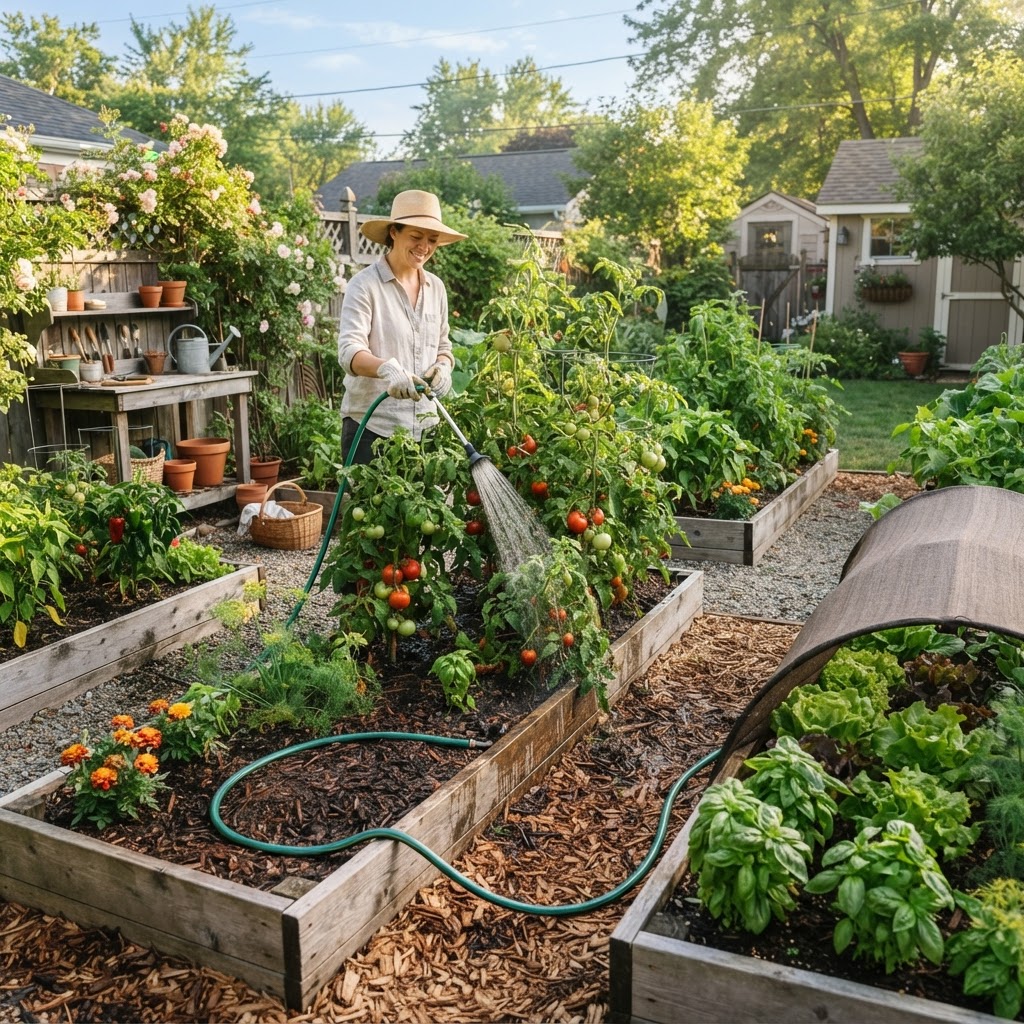
How to Keep Raised Bed Soil Moist in Summer: Simple Ways to Prevent Dry, Stressed Plants
Hot summer weather can turn a thriving raised bed into dry, dusty soil in just a day or two. If your vegetables wilt by afternoon, the soil pulls away from the edges, or watering never seems to last, you are not alone.
The good news is that keeping raised bed soil moist in summer does not require fancy systems or constant guesswork. With the right mix of watering habits, mulch, soil improvements, and bed design, you can help your garden stay evenly moist and much easier to manage.
Why This Topic Matters
Raised beds are wonderful for growing vegetables, especially for beginners. They warm up quickly in spring, drain well, and are easy to work with.
But that same good drainage can become a problem in summer. Raised beds dry out faster than in-ground gardens because more soil is exposed to sun, wind, and heat on the sides and surface.
When soil dries too fast, vegetables struggle. Plants may wilt, blossom drop can increase, and fruits like tomatoes, cucumbers, and peppers can become stressed.
Uneven moisture also creates bigger problems than simple thirst. It can lead to cracked tomatoes, bitter lettuce, woody radishes, poor germination, and reduced harvests.
For beginners, this often feels frustrating because it seems like you are watering a lot but not getting results. In many cases, the issue is not just how much you water, but how you water and how well your soil holds moisture between waterings.
Learning how to keep raised bed soil moist in summer helps you:
- Reduce plant stress during heat waves
- Spend less time watering every day
- Improve vegetable quality and yield
- Keep seedlings and shallow-rooted crops alive
- Build healthier soil over time
The goal is not soggy soil. The goal is steady, even moisture that supports strong roots and healthy growth.
Quick Answer
To keep raised bed soil moist in summer, water deeply and consistently, add a 2 to 4 inch layer of mulch, mix in compost to improve water retention, and water early in the morning so moisture soaks in before the heat of the day. Shade cloth, drip irrigation, and planting closely enough to cover the soil surface can also help reduce evaporation.
In most gardens, the best approach is a combination of methods instead of relying on one fix. Moisture control works best when your soil can hold water well and your garden loses water more slowly.
Step-by-Step Guide
1. Check How Dry Your Soil Really Is
Before changing your routine, find out what is happening below the surface. The top inch of soil can look dry even when deeper layers are still moist.
Stick your finger 2 to 3 inches into the soil. If it feels dry at that depth, it is time to water. If it still feels cool and slightly damp, you can usually wait.
You can also use a simple moisture meter, but your finger works surprisingly well for a beginner garden. Check in a few spots, especially near larger plants and along the edges of the bed, where soil often dries faster.
2. Water Deeply Instead of Lightly
A quick sprinkle on the surface often does more harm than good. It encourages shallow roots and leaves the deeper soil dry.
Instead, water slowly and deeply so moisture reaches the root zone. Most vegetables do best when water soaks several inches down into the bed.
A good rule is to water until the soil feels moist 6 inches deep for established plants. This may take longer than you expect, especially in beds filled with dry soil or fresh compost-heavy mixes.
3. Water Early in the Morning
Morning is usually the best time to water raised beds in summer. Cooler temperatures mean less water is lost to evaporation, and plants can take up moisture before the hottest part of the day.
Watering in the evening can also work if mornings are not possible. But consistently wet leaves overnight can sometimes increase disease pressure, especially in humid climates.
Try to avoid watering in the middle of the day unless plants are truly stressed. Much of that water can evaporate before it soaks in well.
4. Add Mulch Right Away
Mulch is one of the easiest and most effective ways to keep raised bed soil moist in summer. It acts like a protective blanket over the soil surface.
Mulch helps by:
- Reducing evaporation
- Keeping soil cooler
- Preventing crusting on the soil surface
- Slowing weed growth that competes for water
- Protecting soil from hard sun and wind
For vegetable beds, good mulch options include:
- Straw
- Shredded leaves
- Untreated grass clippings in thin layers
- Pine needles
- Fine bark or wood chips on pathways, not directly around tiny seedlings
Apply 2 to 4 inches of mulch around established plants, but keep it a little away from plant stems. For seedlings, wait until they are a bit larger so you do not bury them.
5. Improve Soil with Compost
If your raised bed soil dries out very quickly, the soil mix may not be holding enough moisture. This is common in beds filled with too much coarse material, bagged soil that is mostly bark, or mixes with a lot of peat that became dry and hard to re-wet.
Adding compost improves both water retention and soil structure. Compost helps sandy or loose mixes hold moisture longer while also keeping heavier soils from becoming compacted.
Work 1 to 2 inches of finished compost into the top few inches of soil when replanting or between crops. You can also top-dress around plants and let watering carry nutrients and organic matter down slowly.
6. Use Drip Irrigation or Soaker Hoses
Hand watering works, but it is easy to apply water unevenly or too quickly. Drip irrigation and soaker hoses are excellent for raised beds because they deliver water slowly right where plants need it.
This method helps reduce waste and keeps the soil more consistently moist. It also keeps foliage drier than overhead watering.
If you want a simple setup, place a soaker hose in loops across the bed and cover it with mulch. A basic timer can make summer watering much easier, especially during hot spells or vacations.
7. Water Long Enough for the Whole Bed
Raised beds can be tricky because water does not always spread evenly. Sometimes the center gets water while the corners stay dry, or the top gets wet while deeper layers remain dusty.
To fix this, water slowly in zones and check multiple spots after watering. If water runs off the surface, pause for a few minutes, then water again.
Dry soil can become hydrophobic, which means it resists absorbing water at first. Slow soaking is the best solution.
8. Shade the Bed During Extreme Heat
In very hot climates or during heat waves, even well-watered soil can dry out fast. Temporary shade can make a huge difference.
Use shade cloth, especially 30% to 50%, over hoops or supports during the hottest part of summer. This is especially helpful for leafy greens, herbs, seedlings, and shallow-rooted crops.
Even a few hours of afternoon shade can reduce moisture loss and plant stress. Taller crops can also provide natural shade for smaller ones if you plan your bed layout carefully.
9. Plant a Little Closer for Living Shade
Bare soil loses water quickly. When plants are spaced appropriately and leaves begin to cover the bed, they naturally shade the soil and help hold moisture.
This does not mean overcrowding. It simply means using efficient spacing so the soil surface is not exposed for long periods.
Lettuce, basil, bush beans, and other compact vegetables can help create a fuller canopy. Interplanting also helps make better use of space in a raised bed.
10. Protect the Sides of the Bed
The sides of raised beds can heat up in direct sun, especially if the bed is made of metal, thin wood, or dark materials. This can increase drying.
If possible, mulch heavily, grow trailing plants near the edges, or add temporary shading to the sunniest side. In very hot areas, bed material and location make a bigger difference than many beginners realize.
11. Avoid Overfilling Beds with Fast-Draining Materials
Some raised bed mixes are marketed as light and fluffy, but they may dry out too quickly in summer. A mix that contains too much coarse wood product or too little finished compost can be hard to keep evenly moist.
A balanced raised bed soil usually includes:
- Topsoil or mineral soil for structure
- Compost for water retention and nutrients
- Aeration materials in moderation
If your current mix dries rapidly, improve it gradually with compost rather than replacing everything at once.
12. Rehydrate Very Dry Beds Slowly
If your raised bed has become extremely dry, one watering may not fix it. Water can run straight through cracks or down the sides without fully soaking the soil.
To restore moisture:
- Water the bed lightly to dampen the surface.
- Wait 15 to 30 minutes.
- Water slowly and deeply.
- Check the moisture several inches down.
- Add mulch once the bed is evenly moist.
This slow approach works much better than flooding the bed all at once.
Common Beginner Mistakes
Watering a Little Every Day
Small daily watering often wets only the top layer. This can train roots to stay shallow, making plants more vulnerable when heat rises.
Deep, less frequent watering is usually better than frequent light watering. The exact schedule depends on your weather, soil mix, and crops.
Leaving Soil Bare
Bare soil in summer is almost guaranteed to dry out quickly. Without mulch or plant cover, the sun pulls moisture out fast.
Even a thin layer of organic mulch can make a noticeable difference within days.
Assuming Wilting Always Means Dry Soil
Plants can wilt in intense afternoon heat even when the soil is still moist. This temporary wilt is sometimes a heat response rather than a true lack of water.
Check the soil before watering again. Overwatering can become a problem if you react to every wilted leaf without checking moisture first.
Using the Wrong Soil Mix
Raised beds filled with poor-quality bagged mix or too much fluffy organic material may drain too quickly. Some mixes look rich but actually struggle to hold water evenly.
Amending with compost and observing how your soil behaves will help you improve it over time.
Watering Too Fast
If water is applied faster than the soil can absorb it, it may run off the surface or down the sides. The bed may look wet briefly while the root zone stays dry.
Slow application is key, especially in dry or compacted spots.
Forgetting About Wind
Sun gets most of the blame, but wind dries raised beds quickly too. Beds in exposed locations often need more mulch, more frequent checks, or wind protection.
Best Tips for Success
If you want the biggest improvement with the least effort, start with the basics and stay consistent. A few simple habits usually work better than complicated changes.
Here are the best tips to remember:
- Water early in the morning whenever possible
- Water deeply enough to reach the root zone
- Mulch all open soil with 2 to 4 inches of organic material
- Add compost regularly to improve water retention
- Use drip irrigation or soaker hoses for steady moisture
- Check soil by touch before watering again
- Give sensitive crops afternoon shade during heat waves
- Keep weeds out so they do not steal moisture
- Group plants with similar water needs together
- Watch containers and bed edges extra closely because they dry faster
It also helps to keep notes. If one bed dries faster than another, or tomatoes need different timing than lettuce, a simple garden journal can help you adjust faster next season.
Recommended Supplies or Tools
You do not need a lot of equipment to solve summer moisture problems in raised beds. But a few basic tools can make the job easier and more consistent.
Helpful supplies include:
- Mulch: Straw, shredded leaves, or clean grass clippings
- Compost: Finished compost for top-dressing or soil improvement
- Watering wand or nozzle: Helps apply water gently and slowly
- Soaker hose or drip kit: Great for even, low-waste watering
- Hose timer: Useful if you want a simple automated schedule
- Shade cloth: Helpful during extreme heat
- Moisture meter: Optional, but useful for beginners learning their soil
If you buy supplies online, choose durable basics rather than complicated gear. Simple systems are easier to maintain and more likely to get used.
Frequently Asked Questions
How often should I water raised beds in summer?
It depends on your climate, crops, soil mix, and bed size. In hot weather, many raised beds need deep watering every 1 to 3 days, but the best method is to check the soil 2 to 3 inches down and water when it feels dry there.
What is the best mulch for keeping raised bed soil moist?
Straw is one of the best all-around choices for vegetable beds because it is light, easy to spread, and good at reducing evaporation. Shredded leaves and untreated grass clippings can also work very well.
Why does my raised bed dry out so fast even after watering?
Common reasons include a fast-draining soil mix, lack of mulch, shallow watering, strong sun, wind exposure, or soil that has become so dry it resists absorbing water. Deep watering, compost, and mulch usually help a lot.
Is it possible to overwater a raised bed in summer?
Yes. Even in hot weather, raised beds can be overwatered if the soil stays constantly soggy. Check below the surface before watering and aim for evenly moist soil, not saturated soil.
Does shade cloth really help keep soil moist?
Yes, especially during extreme heat. Shade cloth lowers sun intensity and reduces evaporation, which helps the soil stay cooler and moist for longer.
Final Thoughts
Keeping raised bed soil moist in summer is really about combining smart watering with better soil protection. If you water deeply, mulch well, add compost, and pay attention to how quickly your bed dries, you can make summer gardening much less stressful.
Start with one or two changes if you feel overwhelmed. In many gardens, adding mulch and switching to slower, deeper watering makes an immediate difference.
Your raised bed does not need perfect conditions every day. It just needs steady moisture, healthy soil, and a gardener who is willing to observe and adjust as the season heats up.