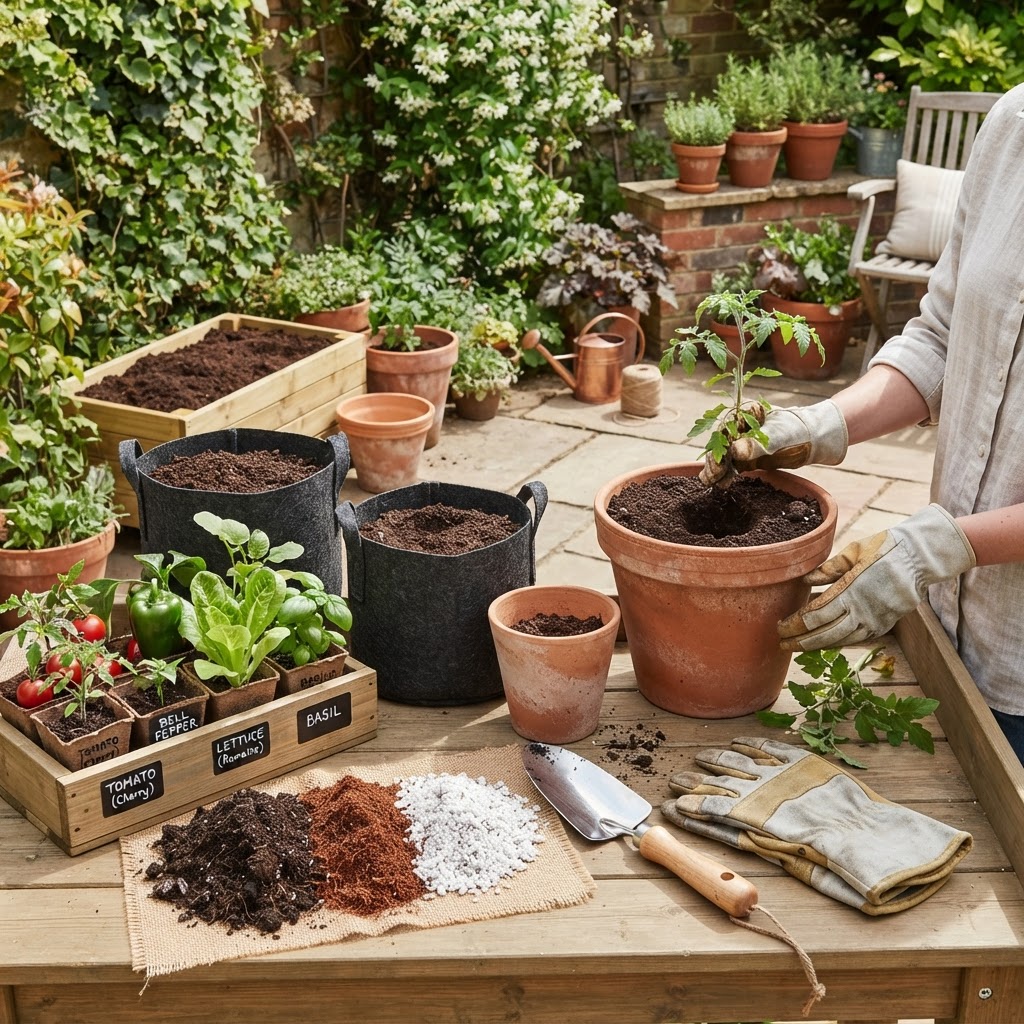
Best Soil Mix for Container Vegetable Gardening: A Simple Recipe for Healthy Plants
If you want healthy vegetables in pots, the soil mix you use matters more than almost anything else. A good container mix helps roots breathe, holds the right amount of moisture, and gives your plants the nutrients they need to grow strong.
Why This Topic Matters
Container vegetable gardening looks simple at first. You fill a pot, plant a seedling, and water it when the soil feels dry.
But many beginner problems actually start below the surface. Wilting plants, yellow leaves, poor growth, and soggy roots often happen because the soil mix is too heavy, too dry, or too low in nutrients.
The best soil mix for container vegetable gardening is different from the soil in your yard. Garden soil may work well in raised beds, but it usually becomes compacted in containers.
When soil gets compacted, water stops draining well and roots struggle to get oxygen. That can lead to stunted plants, disease, and disappointing harvests.
A proper container mix does three important jobs at the same time:
- Holds enough moisture for plant roots
- Drains excess water so roots do not rot
- Provides air pockets and nutrients for steady growth
Once you understand that balance, growing vegetables in containers becomes much easier. The right mix can help tomatoes, peppers, lettuce, herbs, cucumbers, and even carrots thrive in a small space.
Quick Answer
The best soil mix for container vegetable gardening is a light, fluffy, well-draining mix made for pots, not for in-ground gardens. For most vegetables, a simple homemade blend works very well:
- 50% high-quality potting mix
- 25% finished compost
- 15% coco coir or peat moss
- 10% perlite or pumice
This mix gives you a strong balance of water retention, airflow, drainage, and nutrition. It is easy for beginners to use and works for most common vegetables grown in containers.
If you want an even simpler option, start with a good organic potting mix and improve it with a few extras:
- Compost or worm castings for nutrients
- Perlite or pumice for drainage
- Slow-release organic fertilizer for long-term feeding
The one thing to avoid is using straight garden soil in containers. It is usually too dense and can lead to poor drainage and weak root growth.
Step-by-Step Guide
Step 1: Start with a quality potting mix
Your base should be a potting mix labeled for containers. This is the foundation of your soil blend.
A good potting mix is usually made from ingredients like peat moss, coco coir, composted forest products, bark fines, and perlite. These materials stay lighter than garden soil and are designed to work well in pots.
Look for a mix that feels loose in the bag, not muddy or packed down. If it seems very heavy, it may hold too much water for vegetables.
Step 2: Add compost for nutrients
Compost helps feed your plants and improves the texture of the mix. It also supports beneficial microbes that help roots access nutrients.
For most container vegetables, compost should make up about one-quarter of the blend. That gives plants a steady nutrient boost without making the mix too dense.
If you have homemade compost that is fully finished and crumbly, that is great. Bagged compost also works well if it is high quality and has an earthy smell.
Step 3: Include moisture-holding material
Coco coir or peat moss helps the mix hold moisture evenly. This is especially helpful in containers because pots dry out much faster than garden beds.
Coco coir is a popular sustainable option because it rehydrates easily and resists becoming hard when dry. Peat moss also works, but it can be harder to rewet if it dries completely.
A small amount is usually enough. You want your mix to stay moist, not soggy.
Step 4: Improve drainage with perlite or pumice
Vegetable roots need oxygen as much as they need water. Perlite and pumice create tiny air spaces in the mix so water can drain and roots can breathe.
Perlite is lightweight and common in potting mixes. Pumice is heavier, which can help keep tall containers more stable in windy areas.
If your potting mix already contains a lot of perlite, you may not need to add much more. But if the mix looks fine-textured and dense, extra aeration is a smart move.
Step 5: Mix in a gentle fertilizer
Even rich soil mixes do not feed vegetables forever. Fast-growing crops in containers use nutrients quickly.
Before planting, mix in a balanced slow-release organic fertilizer according to the package directions. This gives your plants a steady supply of nutrients over time.
You can also add a small amount of worm castings for extra microbial life and mild nutrition. Worm castings are especially nice for leafy greens and herbs.
Step 6: Use the right mixing ratio
Here is a simple container vegetable soil recipe that works for most crops:
- 5 parts potting mix
- 2 1/2 parts compost
- 1 1/2 parts coco coir or peat moss
- 1 part perlite or pumice
- Slow-release organic fertilizer, added as directed
You can measure with any container you have, such as a scoop, bucket, or small pot. What matters is keeping the ratio roughly the same.
If you are growing heavy feeders like tomatoes, peppers, zucchini, or cucumbers, add a little extra compost or plan to fertilize more often. If you are growing root crops, make sure the mix stays loose and stone-free.
Step 7: Moisten the mix before filling containers
Dry potting ingredients can be hard to wet once they are inside a container. It is much easier to add water while mixing.
Place your ingredients in a wheelbarrow, large tub, or tarp and mix them well. Add water slowly until the mix feels evenly damp, like a wrung-out sponge.
This step helps your containers start out evenly moist from top to bottom. It also reduces dry pockets that can make watering frustrating later.
Step 8: Fill containers correctly
Fill your container almost to the top, but leave about 1 to 2 inches of space below the rim. This space helps catch water when you irrigate.
Do not pack the soil down firmly. Lightly settle it with your hands so the mix stays airy.
Roots need room to move through the soil. If you compress the mix too much, you undo the benefit of making a fluffy blend.
Step 9: Match the mix to the crop when needed
Most vegetables do fine in the basic mix, but you can make small adjustments based on what you are growing.
For moisture-loving plants, try slightly more water retention:
- Lettuce
- Spinach
- Basil
- Cucumbers
For these, add a bit more coco coir or compost.
For plants that dislike soggy roots, increase drainage a little:
- Peppers
- Rosemary
- Thyme
- Eggplant
For these, add a bit more perlite or pumice.
For large fruiting crops, boost fertility:
- Tomatoes
- Zucchini
- Squash
- Cabbage
For these, add extra compost and stay consistent with feeding.
Step 10: Refresh the soil between seasons
Container soil does not stay perfect forever. Over time, it breaks down, settles, and loses nutrients.
At the end of a growing season, remove old roots and loosen the mix. Add fresh compost, a little new potting mix, and more aeration material if it seems compacted.
If the soil had major disease issues, it is safer to replace it rather than reuse it for the same crop family.
Common Beginner Mistakes
Using garden soil in containers
This is one of the most common mistakes. Soil from the ground often becomes heavy and sticky in pots.
It may drain poorly, crust over, or carry weed seeds and soil-borne disease. Containers need a special mix that stays light.
Choosing the cheapest bag without checking the texture
Not all potting mixes are equal. Some are mostly wood products and break down too quickly or dry out unevenly.
If a mix looks dusty, compacted, or very fine, your vegetables may struggle. A better mix usually saves time and frustration later.
Skipping compost or fertilizer
A plain potting mix may not have enough nutrients for vegetables to grow well all season. Plants in containers depend on you for nearly everything.
If leaves turn pale or growth slows early, the mix may simply be underfed. Adding compost and fertilizer from the beginning helps prevent this.
Overwatering a dense mix
Beginners sometimes assume wilted plants always need more water. But in a poorly draining mix, extra water can make things worse.
Soggy roots cannot take up oxygen properly. That can cause yellow leaves, drooping, and root rot.
Reusing old soil without refreshing it
Used potting mix often looks fine at a glance, but its structure may have broken down. Old roots, salt buildup, and missing nutrients can all create problems.
Refreshing the mix each season keeps it productive and easier to manage.
Best Tips for Success
Use containers with drainage holes every time. Even the best soil mix cannot fix a pot that traps water at the bottom.
Mulch the soil surface with straw, shredded leaves, or fine bark. This helps reduce evaporation and keeps moisture more even.
Water deeply instead of lightly sprinkling the top. Deep watering encourages stronger roots and helps the whole container stay evenly moist.
Feed regularly once plants are growing fast. Container vegetables often need extra nutrients, especially after flowering begins.
Check the soil with your finger before watering. The surface may look dry while the lower part of the pot is still moist.
Group plants with similar water needs together. That makes watering simpler and helps prevent stress.
If your climate is hot and dry, use slightly more compost or coco coir to hold moisture longer. If your climate is rainy or humid, add a bit more perlite or pumice for airflow.
Recommended Supplies or Tools
You do not need fancy equipment to make a great container soil mix. A few basic supplies can make the job easier.
Here are the most useful items:
- High-quality organic potting mix
- Finished compost
- Coco coir or peat moss
- Perlite or pumice
- Worm castings
- Slow-release organic vegetable fertilizer
- Large mixing tub, bucket, tarp, or wheelbarrow
- Hand trowel or small shovel
- Watering can or hose with a gentle spray nozzle
- Gloves if you prefer clean hands while mixing
If you are growing larger crops like tomatoes or peppers, sturdy containers matter too. Fabric grow bags and large nursery pots both work well as long as they drain freely.
Frequently Asked Questions
Can I use regular garden soil in containers for vegetables?
It is not a good idea. Garden soil usually becomes too compacted in containers and may not drain well enough for healthy roots.
A container mix is lighter and better balanced for air, moisture, and drainage.
What is the best store-bought soil for container vegetables?
A high-quality potting mix labeled for containers is the best starting point. For best results, improve it with compost, perlite, and a slow-release organic fertilizer.
If the mix already contains plenty of aeration material, you may only need to add compost and fertilizer.
How often should I replace container soil?
You do not always have to replace it completely every season. Many gardeners refresh it by removing roots and adding new compost, potting mix, and fertilizer.
If the soil became diseased, severely compacted, or salt-heavy, replacing it is the safer option.
Is compost alone enough for container vegetables?
No, compost alone is usually too dense for containers and may not provide the right balance of drainage and airflow. It is best used as part of a mix.
Blending compost with potting mix and aeration materials gives better results.
Which is better, coco coir or peat moss?
Both can work well. Coco coir is often easier to rewet and is a popular choice for gardeners who want a renewable ingredient.
Peat moss holds moisture well too, but it can become hard to moisten if it dries out completely.
Final Thoughts
Finding the best soil mix for container vegetable gardening does not have to be complicated. Start with a quality potting mix, add compost, improve drainage, and give your plants steady nutrition.
That simple approach solves many common beginner problems before they start. With the right soil under them, your container vegetables will have a much better chance of growing into healthy, productive plants.