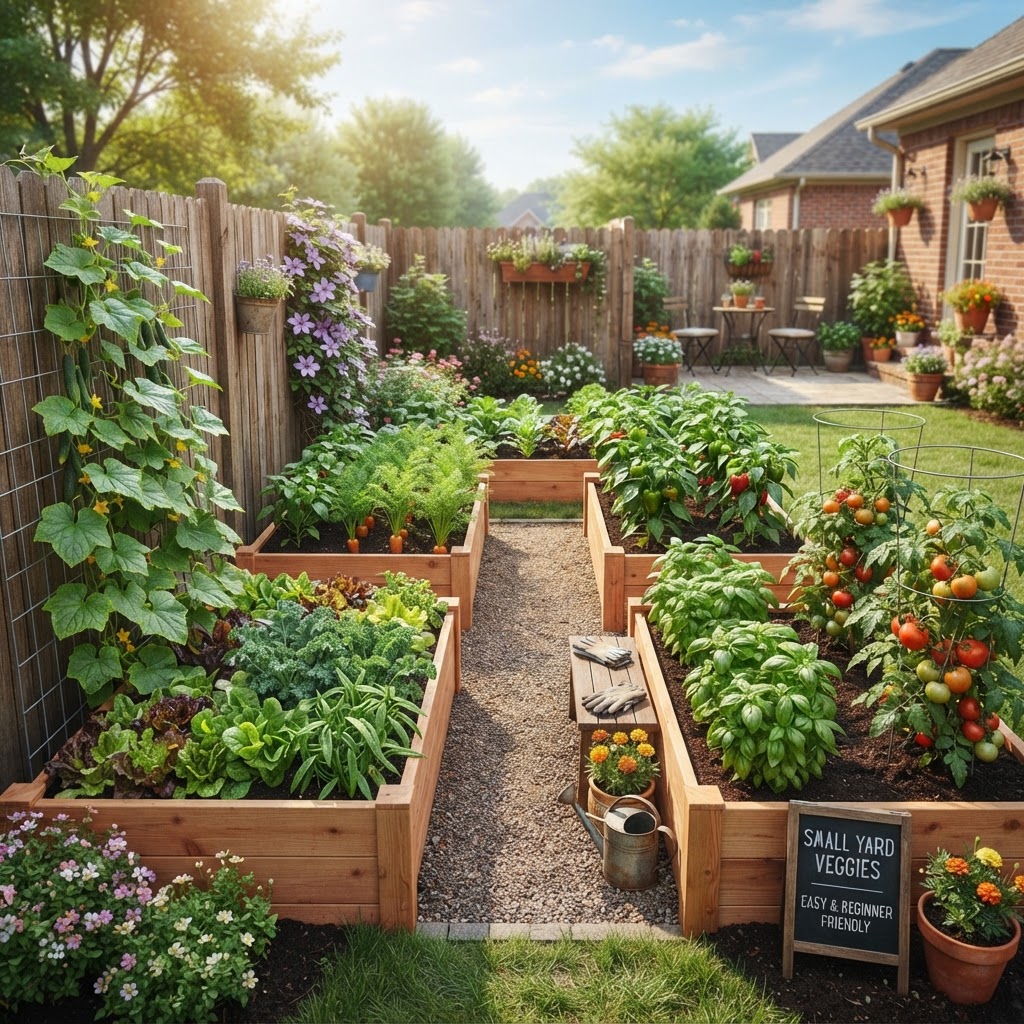
Best Vegetables for Small Backyards: 15 Easy Crops for a Productive Garden
A small backyard can grow a surprising amount of food when you choose the right crops. If you want a garden that feels manageable, productive, and beginner-friendly, the key is picking vegetables that earn their space.
The best vegetables for small backyards are compact, reliable, and useful in the kitchen. With a smart layout and a few simple habits, even a tiny growing area can provide fresh harvests for months.
Why This Topic Matters
Many new gardeners assume they need a large yard to grow enough food to make gardening worthwhile. That idea stops a lot of people before they even begin.
In reality, a small backyard can be one of the easiest places to learn. A compact space is faster to water, easier to weed, and less overwhelming to maintain.
It also encourages better planning. When every square foot matters, you naturally focus on vegetables that produce well, fit neatly into small beds, and give you multiple harvests instead of just one.
That is why choosing the best vegetables for small backyards makes such a difference. You are not just looking for plants that can survive in limited space. You want crops that make the most of your sun, your soil, and your time.
The right choices can help you harvest salad greens, tomatoes, beans, carrots, and more without turning your yard into a full-scale farm. For beginners, that balance of simplicity and productivity is exactly what makes vegetable gardening enjoyable.
Quick Answer
The best vegetables for small backyards are crops that are compact, productive, easy to manage, and worth harvesting often. In most home gardens, the top choices include:
- Lettuce
- Spinach
- Kale
- Radishes
- Carrots
- Beets
- Bush beans
- Cherry tomatoes
- Determinate tomatoes
- Peppers
- Green onions
- Cucumbers on a trellis
- Peas on a trellis
- Swiss chard
- Compact zucchini varieties
These vegetables work well because they either stay small, grow vertically, mature quickly, or keep producing over time. That means you get more food from a limited area.
If you are brand new, start with a mix of fast crops and steady producers. A simple beginner combination might be lettuce, radishes, bush beans, cherry tomatoes, peppers, carrots, and cucumbers on a trellis.
That mix gives you a little of everything: quick harvests, summer staples, and plants that do not need a huge amount of room. It also spreads your risk, so if one crop struggles, you still have plenty growing.
Step-by-Step Guide
1. Check how much sun your backyard gets
Before choosing vegetables, pay attention to sunlight. Most vegetables grow best with at least 6 to 8 hours of direct sun each day.
If your backyard gets full sun, you can grow almost everything on the list. If you only have 4 to 6 hours, focus on leafy greens, radishes, green onions, peas, and beets, which are often more forgiving than fruiting crops like tomatoes and peppers.
Watch your space for a day or two and notice where the sun falls in the morning, midday, and afternoon. A backyard can have sunny pockets even when part of it is shaded by fences, trees, or the house.
2. Pick vegetables that give a high return for the space
In a small backyard, every plant should be there for a reason. Some vegetables take up a lot of room but only produce a little, while others keep giving for weeks.
Here is how to think about your options:
Best leafy vegetables
Leafy greens are some of the smartest crops for small gardens because they grow quickly and can be harvested a little at a time.
Good choices include:
- Lettuce
- Spinach
- Kale
- Swiss chard
You can harvest outer leaves and let the plants keep growing. That makes them more productive than crops that are pulled once and finished.
Best root vegetables
Root crops do not need much room above ground, so they fit nicely into tight beds.
Top picks include:
- Radishes
- Carrots
- Beets
- Green onions
Radishes are especially helpful for beginners because they mature fast. Carrots and beets take longer, but they use space efficiently and store well after harvest.
Best fruiting vegetables
Fruiting plants usually need more sun, but they can still work beautifully in a small backyard if you choose compact types.
Best options include:
- Cherry tomatoes
- Determinate tomatoes
- Peppers
- Compact zucchini
Cherry tomatoes often give the biggest reward in a small space. A single healthy plant can produce heavily over a long season.
Best vertical vegetables
Vertical growing is one of the easiest ways to expand a small backyard garden without adding more beds.
Great vertical crops include:
- Cucumbers
- Peas
- Pole beans if you have room for a tall support
A trellis keeps these plants off the ground, improves airflow, and makes harvesting easier. It also frees up ground space for shorter vegetables underneath or nearby.
3. Use a simple layout that fits your yard
You do not need a complicated garden design. For beginners, a few well-planned beds or rows are easier than trying to squeeze plants everywhere.
Raised beds are popular because they help define the space and make soil improvement simple. In-ground beds can work just as well if your soil drains well and you can keep weeds under control.
A practical layout for a small backyard looks like this:
- Tall crops on the north side so they do not shade shorter plants
- Trellised crops along a fence or support
- Leafy greens and root crops in the front or center
- Paths wide enough to reach every plant without stepping on the soil
Aim for neat spacing instead of overcrowding. It is tempting to plant extra seedlings, but crowded plants compete for light, water, and nutrients.
4. Match vegetables to the season
One reason small gardens can be so productive is that you can replant as the seasons change. Instead of growing the same things all year, rotate crops based on weather.
In cool weather, focus on:
- Lettuce
- Spinach
- Kale
- Radishes
- Carrots
- Beets
- Peas
In warm weather, switch to:
- Tomatoes
- Peppers
- Bush beans
- Cucumbers
- Zucchini
- Swiss chard
This simple seasonal approach keeps your garden active longer. When one crop finishes, another can take its place.
5. Plant for steady harvests, not one giant harvest
A common beginner mistake is planting everything at once. That can leave you with too much food for two weeks and then very little afterward.
Instead, sow small amounts in stages. This works especially well for lettuce, radishes, carrots, bush beans, and green onions.
Try this beginner-friendly pattern:
- Plant your first round.
- Wait 1 to 2 weeks.
- Plant a second round.
- Repeat with quick crops through the season.
This method is called succession planting, and it is perfect for small spaces. It helps you keep the garden full and productive without feeling crowded.
6. Keep care simple and consistent
Small backyard gardens do best with regular attention. You do not need long work sessions, but you do need consistency.
Check your garden a few times each week for watering needs, pests, yellowing leaves, and ripe vegetables. Catching small problems early is much easier than fixing big ones later.
A layer of mulch around plants can help hold moisture and reduce weeds. Water deeply rather than sprinkling lightly every day, especially once plants are established.
Harvest often, too. Beans, cucumbers, greens, and tomatoes all tend to produce better when you pick them regularly.
Common Beginner Mistakes
Small spaces leave less room for error, so a few common mistakes can affect the whole garden quickly. The good news is that they are easy to avoid once you know what to watch for.
Here are the biggest ones:
- Planting oversized crops everywhere. Large pumpkins, sprawling winter squash, and full-size corn can overwhelm a tiny backyard.
- Ignoring sunlight. Tomatoes and peppers will struggle if they are tucked into a shady corner.
- Overcrowding plants. Seed packets and plant tags may seem conservative, but proper spacing improves airflow and growth.
- Growing too much of one crop. A huge bed of zucchini sounds fun until you realize how much room it takes.
- Forgetting vertical support. Cucumbers and peas take up far less space when trained upward.
- Starting with too many varieties. A smaller mix of reliable vegetables is easier to manage than a long wish list.
- Skipping harvest time. Overripe beans, cucumbers, and greens can slow future production.
If you are unsure, start smaller than you think you need. It is better to succeed with a few crops than to get overwhelmed by too many.
Best Tips for Success
A productive small backyard garden is less about size and more about smart choices. These tips can help you get better results without making gardening feel complicated.
- Grow what you actually like to eat.
- Choose compact or bush varieties when possible.
- Use trellises, cages, or stakes to save ground space.
- Mix quick crops with long-season crops for continuous harvests.
- Improve the soil before planting with compost.
- Water at the base of plants to reduce disease problems.
- Mulch to hold moisture and cut down on weeds.
- Harvest often and replant empty spaces quickly.
- Keep notes on what grew well and what felt like a poor use of space.
One of the best beginner habits is simply observing your garden. Notice which bed dries out fastest, which plants get shaded in late afternoon, and which vegetables keep producing the longest.
Those small observations will help you make much better choices next season. In a small backyard, thoughtful adjustments can lead to a big improvement in harvests.
Recommended Supplies or Tools
You do not need a huge collection of gear to grow vegetables in a small backyard. A few basic tools and supplies will cover most of what you need.
Helpful essentials include:
- Hand trowel
- Garden gloves
- Watering can or hose with gentle spray nozzle
- Compost
- Mulch such as straw or shredded leaves
- Tomato cages or stakes
- A simple trellis or netting for cucumbers and peas
- Pruners or garden snips
- Plant labels
- A notebook or garden journal
If your soil is poor or your yard is paved in places, containers or raised beds are also excellent options. They make it easier to control soil quality and fit gardening into tight spaces.
Frequently Asked Questions
What are the easiest vegetables to grow in a small backyard?
Some of the easiest choices are lettuce, radishes, bush beans, cherry tomatoes, peppers, and green onions. They are beginner-friendly, productive, and do not require a lot of room.
If you want quick confidence, start with radishes and lettuce for fast harvests, then add bush beans or cherry tomatoes for longer production.
How many vegetables can I grow in a small backyard?
That depends on your sunlight, layout, and whether you grow vertically. Even a very modest backyard can often support several beds with a mix of greens, roots, beans, tomatoes, peppers, and cucumbers.
The key is to avoid oversized crops that sprawl aggressively. A small garden with the right vegetables can feel much more productive than a large garden planted without a plan.
Are raised beds better for small backyard vegetable gardens?
Raised beds are often helpful, but they are not required. They can improve drainage, reduce soil compaction, and make garden planning easier in a tight space.
However, in-ground beds can work just as well if the soil is healthy and you can reach your plants comfortably. Choose the option that fits your budget, space, and maintenance style.
What vegetables grow well in partial shade?
Leafy greens and some root crops are usually your best bet in partial shade. Lettuce, spinach, kale, radishes, beets, and green onions are all good choices.
Fruit-heavy plants like tomatoes, peppers, and cucumbers generally need more sun to produce their best harvests.
Should I grow vegetables from seeds or transplants?
Both options work, and many gardeners use a mix of the two. Seeds are affordable and great for radishes, carrots, beets, beans, peas, and lettuce.
Transplants are often easier for tomatoes, peppers, kale, and cucumbers because they give you a head start. For beginners, using a few transplants can make the first season feel much simpler.
Final Thoughts
The best vegetables for small backyards are the ones that give you strong harvests without taking over your space. Compact greens, tidy root crops, productive beans, and vertical growers can turn a modest yard into a very satisfying kitchen garden.
Start with a few reliable favorites, pay attention to sunlight, and use your space intentionally. You do not need a big backyard to grow real food at home. You just need the right vegetables and a simple plan.