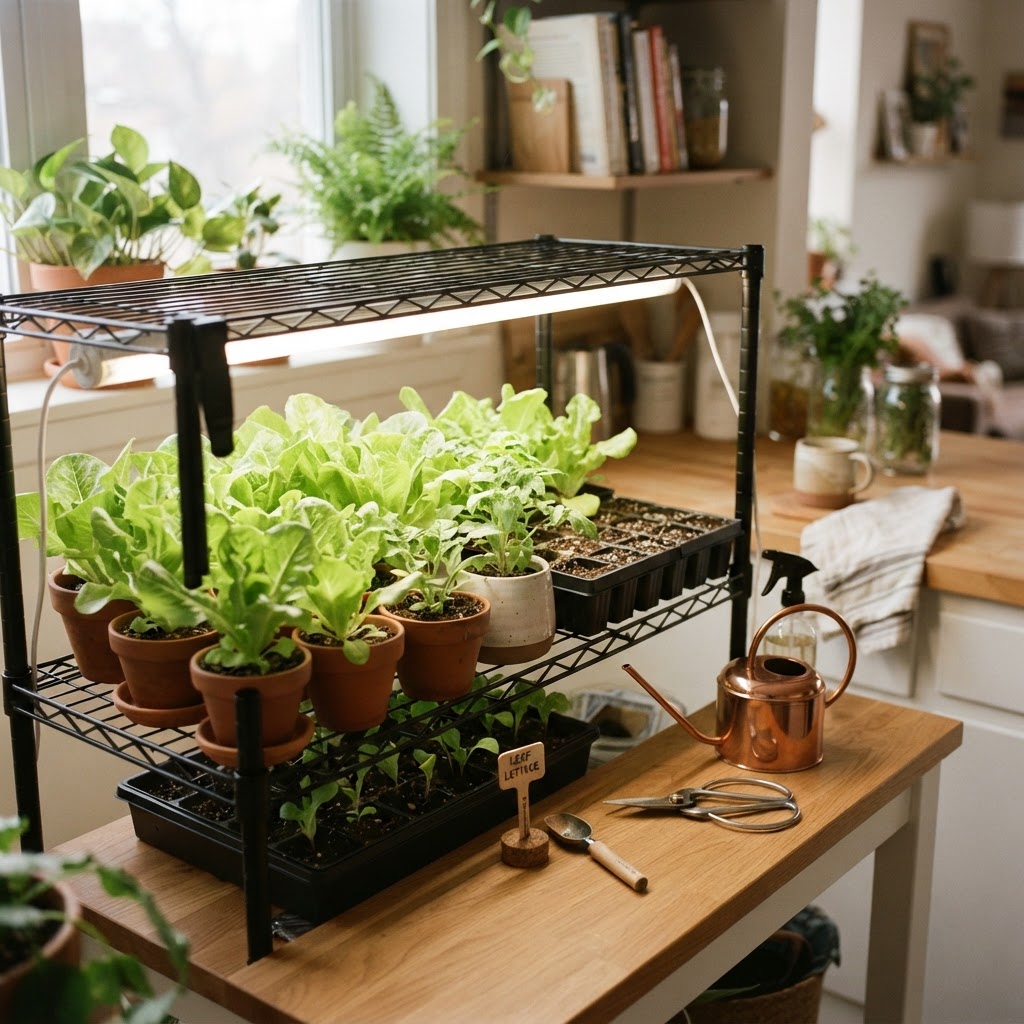
Can Lettuce Grow Without Sunlight? What Beginners Need to Know
If you want to grow lettuce indoors, you may be wondering: can lettuce grow without sunlight? It is a smart question, especially if your home has limited window light or you want to grow greens year-round. The good news is that lettuce is one of the easiest vegetables to grow with low light compared to many other crops.
Still, there is an important catch. Lettuce cannot grow well in complete darkness, but it can grow successfully without direct sunlight if you give it enough artificial light.
Why This Topic Matters
Lettuce is often one of the first vegetables beginners try to grow. It grows fast, does not need a huge container, and can produce fresh leaves for salads, sandwiches, and wraps in a small space.
Many home gardeners assume all vegetables need strong outdoor sun all day long. That idea can stop people from trying indoor gardening, apartment gardening, or winter growing.
Lettuce is different from sun-loving crops like tomatoes, peppers, and cucumbers. It tolerates cooler conditions and lower light better than fruiting plants, which makes it a great choice for beginners.
This topic matters because poor light is one of the biggest reasons indoor lettuce struggles. Seedlings may become tall and floppy, leaves may stay small, or plants may taste bitter if conditions are not right.
Once you understand what lettuce actually needs, it becomes much easier to grow. You do not need a greenhouse or a fancy setup to harvest healthy leaves at home.
Quick Answer
No, lettuce does not grow properly without any light at all. It may sprout from seed without light in some cases, but once it emerges, it needs light to keep growing and producing healthy green leaves.
Yes, lettuce can grow without sunlight if you replace sunlight with artificial light. A simple LED grow light can give lettuce the energy it needs for steady growth.
For best results, think of the question this way: lettuce does not need direct sun from a window or garden bed, but it does need a reliable light source. If you can provide 12 to 16 hours of quality light each day, lettuce can do very well indoors.
Loose-leaf varieties are usually the easiest choice for low-light or indoor growing. Romaine and butterhead can also work, but head-forming types often want more consistent conditions and a little more patience.
Step-by-Step Guide
1. Choose the right type of lettuce
Start with a beginner-friendly lettuce variety. Loose-leaf lettuces are usually the easiest because they grow quickly and let you harvest outer leaves instead of waiting for a full head.
Good options include:
- Black Seeded Simpson
- Green leaf lettuce
- Red salad bowl
- Buttercrunch
- Baby leaf mixes
If your goal is simple and steady harvests, baby greens are especially rewarding. They need less time, less space, and often handle indoor conditions better than full-size heads.
2. Pick the best growing spot
If you have a bright windowsill, lettuce may survive there, especially in spring. But many windows do not provide enough light for strong indoor growth, especially in winter or in north-facing rooms.
A shelf, table, or counter can work well if you add a grow light. This often gives better results than relying on a window alone because the light is more consistent.
Choose a spot that stays fairly cool. Lettuce prefers cooler temperatures than many other vegetables and usually grows best around 60 to 70 degrees Fahrenheit.
3. Use containers with drainage
Lettuce does not need a deep pot, but it does need good drainage. Shallow containers, seed trays, window boxes, and small pots can all work well.
Aim for containers that are at least 4 to 6 inches deep. Drainage holes are important because soggy soil can lead to weak roots and disease problems.
If you are growing baby lettuce, you can plant more densely. If you want larger plants, give each one a bit more room.
4. Fill with a light potting mix
Use a quality potting mix rather than garden soil. Potting mix is lighter, drains better, and is much better suited for containers.
A mix that holds some moisture but still allows airflow around the roots is ideal. Heavy soil can stay too wet indoors and make lettuce struggle.
5. Sow seeds the simple way
Lettuce seeds are small, so plant them shallowly. Sprinkle seeds on the soil surface and cover them with only a thin layer of potting mix, about 1/8 inch deep.
Water gently so you do not wash the seeds away. A spray bottle or a watering can with a fine rose helps a lot at this stage.
Keep the soil evenly moist during germination. Lettuce usually sprouts fairly quickly, often within 7 to 10 days depending on temperature and variety.
6. Give seedlings enough light right away
This is the step that matters most if you are not using sunlight. As soon as seeds sprout, place them under a grow light or in the brightest light available.
Without enough light, lettuce seedlings become leggy. That means they stretch toward the light, grow thin stems, and usually stay weak.
Most indoor lettuce does best with:
- 12 to 16 hours of light per day
- A timer for consistency
- Lights positioned close enough to the plants to be effective
For many LED grow lights, keeping the light about 6 to 12 inches above the plants works well. Always follow the instructions for your specific light, since stronger fixtures may need more distance.
7. Thin the seedlings
It is tempting to leave every sprout in place, but crowded lettuce does not grow as well. Thin seedlings once they have a couple of true leaves.
For baby greens, you can leave them fairly close together. For larger leaf lettuce, spacing plants about 4 to 6 inches apart gives them room to fill out.
Thinning feels wasteful at first, but it leads to healthier plants. You can even snip the extras and use them as tiny salad greens.
8. Water carefully
Lettuce likes consistent moisture, but not soaked soil. Check the potting mix with your finger and water when the top layer starts to feel slightly dry.
Indoor containers often dry out more slowly than outdoor beds, especially in cool rooms. Overwatering is just as common as underwatering, so do not water on a rigid schedule without checking first.
A good rule is to keep the soil lightly moist, not muddy. If water collects in a saucer, empty it so roots are not sitting in it.
9. Feed lightly
Lettuce is not a heavy feeder, but container-grown plants can benefit from a gentle fertilizer. A diluted liquid fertilizer every couple of weeks is often enough.
Do not overdo it. Too much fertilizer can lead to fast but weak growth and may affect flavor.
If you are using fresh potting mix and harvesting baby greens quickly, you may not need much feeding at all. For longer-growing plants, light feeding is more helpful.
10. Harvest often
One of the best things about lettuce is how easy it is to harvest. You do not always need to pull up the whole plant.
For loose-leaf types, harvest the outer leaves first and let the center keep growing. This is often called the “cut-and-come-again” method.
For baby greens, use clean scissors and snip leaves when they are a few inches tall. Regular harvesting encourages more tender growth and keeps plants productive.
Common Beginner Mistakes
Expecting lettuce to grow in a dark room
This is the biggest misunderstanding. Lettuce can handle less light than some vegetables, but it still needs light to make food and grow.
A room with no bright window and no grow light is usually not enough. If the plant looks pale, stretched, or weak, lack of light is often the reason.
Using a weak windowsill alone
A sunny window sounds ideal, but indoor light is often weaker than people expect. Glass, seasonal changes, and the angle of the sun all reduce how much usable light reaches the plant.
If your lettuce leans hard toward the window or grows slowly, it may need supplemental lighting.
Overwatering small containers
Beginners often worry that lettuce needs constant wet soil. In reality, soggy roots can cause more trouble than slightly dry soil.
Poor drainage can lead to yellow leaves, root issues, and fungus gnats. Always use containers with drainage holes.
Growing in a room that is too warm
Lettuce is a cool-season crop. In hot conditions, it may grow poorly, taste bitter, or bolt more quickly.
Avoid placing it near heating vents, hot appliances, or intense lamps that create too much heat.
Choosing the wrong variety first
Head lettuce can be a little less forgiving indoors. For a first attempt, loose-leaf or baby leaf types are usually easier and more rewarding.
Success builds confidence, so start simple.
Best Tips for Success
If you want indoor lettuce to thrive without sunlight, focus on consistency more than perfection. Steady light, steady moisture, and cool temperatures matter more than complicated methods.
Here are some of the best beginner-friendly tips:
- Use an LED grow light instead of relying only on a window
- Put the light on a timer for 12 to 16 hours a day
- Choose loose-leaf lettuce for easier harvests
- Keep plants in a cool room if possible
- Water only when the top of the soil starts to dry slightly
- Harvest outer leaves regularly to encourage regrowth
- Start new seeds every couple of weeks for a continuous supply
Succession sowing is especially helpful. Instead of planting everything at once, sow a small batch every 1 to 2 weeks so you always have fresh greens coming along.
It also helps to watch the plants closely. Lettuce gives clear signals when something is off.
Common signs to notice include:
- Long, floppy stems: not enough light
- Pale leaves: weak light or nutrient issues
- Bitter taste: too much heat or stress
- Wilting with wet soil: possible overwatering
- Tiny leaves: crowding or low light
Small adjustments can make a big difference. Moving the light closer, thinning seedlings, or watering less often can quickly improve growth.
Recommended Supplies or Tools
You do not need a large budget to grow lettuce indoors. A simple setup is enough for most beginners.
Useful supplies include:
- Lettuce seeds, especially loose-leaf or baby leaf blends
- Small pots, trays, or shallow containers with drainage
- Quality indoor potting mix
- LED grow light
- Timer for the light
- Watering can or spray bottle
- Small scissors for harvesting
- Diluted liquid fertilizer, if needed
If you want to keep things extra simple, start with one tray of baby lettuce under a basic grow light. That setup takes very little space and gives quick results.
As you gain confidence, you can expand to multiple containers or try different lettuce varieties. Indoor salad gardening can stay small and still be very productive.
Frequently Asked Questions
Can lettuce germinate without sunlight?
Yes, lettuce seeds can germinate without direct sunlight. But once seedlings emerge, they need light right away to grow into healthy plants.
How many hours of artificial light does lettuce need?
Most indoor lettuce grows well with 12 to 16 hours of light each day. A timer helps keep the schedule consistent and makes care easier.
Can I grow lettuce indoors with no windows?
Yes, as long as you use a suitable grow light. In many cases, lettuce grown under a good grow light performs better than lettuce grown in a weak window.
What is the easiest lettuce to grow without sunlight?
Loose-leaf lettuce is usually the easiest choice. Baby leaf mixes are also great for beginners because they grow quickly and do not need perfect conditions.
Will lettuce taste different if grown under grow lights?
It can, but usually the bigger factors are variety, temperature, watering, and harvest timing. Lettuce grown well under artificial light can still be tender, crisp, and flavorful.
Final Thoughts
So, can lettuce grow without sunlight? Not in total darkness, but yes, it can grow very well without natural sunlight if you provide enough artificial light.
That is great news for apartment gardeners, winter gardeners, and anyone with limited outdoor space. With a simple container, good potting mix, and a reliable grow light, you can grow fresh lettuce almost anywhere.
If you are just getting started, choose a loose-leaf variety and keep your setup simple. A small success with lettuce can be the perfect first step into sustainable indoor vegetable gardening.