Can You Overwater Raised Beds? Signs, Fixes, and Watering Tips for Healthy Vegetables
If you grow vegetables in raised beds, it is easy to assume more water is always better. After all, raised beds drain faster than in-ground gardens, so many beginners worry more about underwatering than overwatering.
But yes, you absolutely can overwater raised beds. Too much water can stress roots, invite disease, and slow down the healthy growth you are hoping for.
Why This Topic Matters
Raised beds are often recommended because they improve drainage, warm up faster in spring, and make gardening easier to manage. Those benefits are real, but they can also give new gardeners a false sense of security.
A raised bed does not magically protect plants from watering mistakes. If the soil stays soggy for too long, roots can run out of oxygen and begin to struggle.
Vegetable plants need a balance of water, air, and nutrients in the soil. When the pore spaces in the soil stay filled with water, the roots cannot breathe properly.
That can lead to yellow leaves, weak growth, splitting fruit, root problems, and more disease pressure. Seedlings are especially vulnerable because they have small root systems and can decline quickly in wet soil.
Understanding how overwatering happens helps you avoid one of the most common beginner problems. It also makes it easier to water with confidence instead of guessing every day.
Quick Answer
Yes, you can overwater raised beds.
Even though raised beds usually drain better than traditional garden rows, they can still stay too wet if you water too often, use heavy soil, have poor drainage at the bottom, or get frequent rain.
The most common signs of overwatered raised beds include:
- Yellowing leaves, especially lower leaves
- Wilted plants even though the soil is wet
- Slow growth or stunted plants
- Mushy stems or root rot
- Fungus gnats, mold, or algae on the soil surface
- Cracked tomatoes or split root crops
The fix is usually simple: check the soil before watering, improve drainage if needed, and water deeply but less often.
Step-by-Step Guide
1. Check the soil before you water
The easiest way to avoid overwatering is to stop watering on a schedule without checking the soil first. A hot, windy day can dry a bed quickly, but a cloudy week can leave the same bed wet for days.
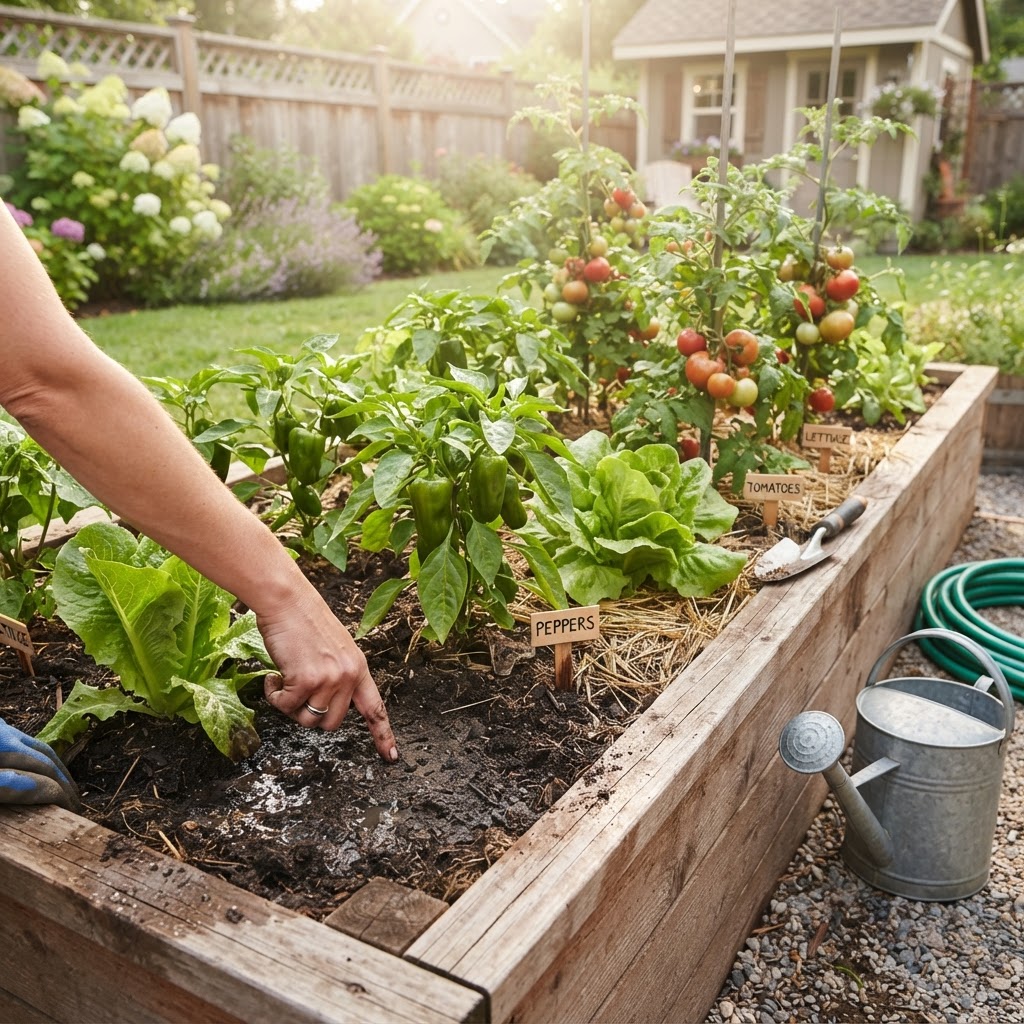
Push your finger 2 to 3 inches into the soil. If it still feels moist at that depth, most vegetables can wait.
For a more accurate check, use a moisture meter or a small hand trowel to look below the surface. The top inch can dry out while the root zone underneath stays damp.
2. Learn what “moist” should feel like
Many beginners confuse moist soil with dry soil. Healthy garden soil should feel cool and slightly damp, not muddy, sticky, or waterlogged.
If you squeeze a handful and water drips out, it is too wet. If it forms a hard clump that stays slick and dense, drainage may be poor.
Good raised bed soil should crumble apart easily while still holding some moisture. That balance matters more than watering every day.
3. Look for signs in the plants
Plants often tell you when watering is off, but the signs can be confusing. Both overwatered and underwatered plants may wilt.
The difference is in the soil. If the plant looks droopy and the soil is dry, it likely needs water. If the plant looks droopy and the soil is wet, too much water is a more likely cause.
Watch for these overwatering clues:
- Leaves turning pale green or yellow
- Edges of leaves softening instead of crisping
- New growth staying small
- Lower leaves dropping early
- Stems near the soil line becoming soft
4. Check how well your raised bed drains
Most raised beds drain well, but not all of them. If your bed sits on compacted clay, landscape fabric, or another barrier, water may drain more slowly than expected.
A bed can also become too dense over time if it is filled with heavy topsoil instead of a loose raised bed mix. Compost is helpful, but too much fine material can also reduce airflow if the mix becomes compacted.
To test drainage, water the bed thoroughly and come back a few hours later. The soil should be moist, not swampy.
If puddles remain on the surface or the bed stays soggy for more than a day or two in warm weather, drainage needs improvement.
5. Adjust your watering method
How you water matters almost as much as how often you water. Light daily watering keeps the top layer wet and encourages shallow roots.
A better approach is usually deep, slower watering that reaches the root zone, followed by time for the soil to partly dry before the next watering. This encourages stronger root systems.
Best methods for raised beds include:
- Drip irrigation
- Soaker hoses
- Watering by hand at soil level
- Timers used carefully, not blindly
Overhead watering is not always a problem, but it can increase leaf disease and makes it harder to judge how much water is actually reaching the soil.
6. Match watering to the crop
Not all vegetables need the same amount of moisture. Lettuce, cucumbers, and celery like consistently moist soil.
Tomatoes, peppers, beans, and herbs generally prefer the soil to dry slightly between waterings. If you water every crop exactly the same way, some plants may suffer.
Shallow-rooted crops need more frequent checks. Deep-rooted crops often do better with less frequent, deeper watering.
7. Pay attention to weather
Rain counts. Cool weather counts. Shade counts too.
A raised bed may need daily watering during a summer heat wave, then almost none during a stretch of rainy or mild days. One of the biggest reasons gardeners overwater is forgetting to adjust when the weather changes.
After a soaking rain, skip irrigation until the soil actually needs it again. If you use a timer, pause it manually or use a rain sensor.
8. Fix an overwatered raised bed
If you think you have overwatered, do not panic. Many plants recover well once the soil returns to a healthier moisture level.
Start with these steps:
- Stop watering until the top few inches of soil begin to dry.
- Remove any saucers, barriers, or liners that trap water.
- Gently loosen compacted surface soil without disturbing roots.
- Mulch only lightly if the bed is already holding too much moisture.
- Trim badly damaged leaves if they are yellow or rotting.
- Improve airflow around crowded plants.
If the problem is ongoing, you may need to rebuild the soil over time with compost plus a coarse, airy material that improves structure. In severe cases, replanting into a better-draining mix may be the best long-term fix.
9. Build better soil for the future
The best raised bed soil holds moisture without staying soggy. That usually means a blend that is rich in organic matter but still loose and airy.
A simple beginner-friendly goal is soil that drains well, crumbles easily, and does not form a dense brick after watering. Adding finished compost each season helps, but balance it with materials that keep the mix open.
Avoid filling raised beds with straight garden soil from the yard if it is heavy clay. That often leads to compaction and poor drainage.
Common Beginner Mistakes
Watering every day “just in case”
This is one of the most common habits in new gardeners. It feels responsible, but it often keeps the root zone too wet.
Most vegetables do better when watered thoroughly and then allowed to use some of that moisture before the next watering.
Judging moisture by the surface only
The top of a raised bed can look dry even when the soil below is still wet. Sun and wind dry the surface quickly.
That is why finger checks, a trowel, or a moisture meter are so helpful. The roots care about what is happening below the top inch.
Using dense or poor-quality soil
Raised beds need a good soil mix. If the bed is filled with heavy soil that packs down, water can linger around roots much longer than expected.
Plants may then show overwatering symptoms even if you are not watering very often.
Forgetting rainfall and shade
A bed in full sun dries much faster than one that gets afternoon shade. A week of cloudy weather can cut water needs dramatically.
Ignoring those changes leads to unnecessary watering.
Relying too much on timers
Timers are convenient, especially in summer. But they can become a problem if you set them once and stop checking the soil.
A timer should support observation, not replace it.
Mulching too heavily in cool, wet conditions
Mulch is useful for conserving moisture and reducing weeds. But if the weather is already cool and rainy, a thick mulch layer can slow drying too much.
Use mulch thoughtfully based on the season and your soil conditions.
Best Tips for Success
The good news is that raised beds are still one of the easiest ways to grow vegetables well. A few simple habits can prevent most overwatering issues.
Here are the best beginner-friendly tips:
- Check soil moisture before every watering session.
- Water deeply instead of lightly sprinkling every day.
- Use drip irrigation or a soaker hose when possible.
- Group crops with similar water needs together.
- Add compost regularly, but keep the soil mix loose and airy.
- Watch plants for changes in color, growth, and wilting.
- Pause irrigation after meaningful rain.
- Adjust watering as temperatures change through the season.
- Leave enough spacing for airflow between plants.
- Keep notes so you learn how fast your beds dry in different weather.
One of the most helpful habits is simply slowing down. Before you grab the hose, take 30 seconds to feel the soil and look closely at the plants.
That small pause can save you from many common watering mistakes.
Recommended Supplies or Tools
You do not need fancy equipment to water raised beds well. A few basic tools can make the job easier and more accurate.
Helpful tools for managing moisture
- Moisture meter: Useful if you are unsure how to judge soil by feel.
- Hand trowel: Great for checking moisture a few inches down.
- Watering wand or nozzle: Helps you water gently at the soil line.
- Soaker hose or drip line: Delivers slow, targeted watering.
- Rain gauge: Lets you track how much natural water your garden received.
- Mulch: Straw or shredded leaves can help maintain even moisture when used properly.
- Compost: Supports better soil structure over time.
Nice-to-have options
- Timer with rain delay: Convenient if you use irrigation, as long as you still monitor soil.
- Garden notebook or app: Helps you track weather, watering, and plant response.
If you only choose one extra tool, a simple moisture meter or hand trowel is often enough to improve your watering decisions right away.
Frequently Asked Questions
Can raised beds get waterlogged?
Yes, they can. Raised beds usually drain better than in-ground gardens, but they can still become waterlogged if the soil is too dense, drainage is blocked, or you water too often.
How often should I water a raised bed vegetable garden?
There is no perfect one-size-fits-all schedule. It depends on weather, crop type, bed size, soil mix, mulch, and plant size.
Many raised beds need water more often in hot summer weather and much less often in cool or rainy periods. Check the soil first instead of following a strict daily routine.
What does an overwatered tomato plant look like?
An overwatered tomato may have yellowing leaves, drooping stems, slow growth, or fruit that cracks. The soil is often wet at the same time, which helps separate overwatering from drought stress.
Should I put rocks in the bottom of a raised bed for drainage?
Usually no. In most cases, rocks do not improve drainage the way people expect.
A better approach is using a well-structured soil mix and making sure the bed is not sitting on a barrier that traps water.
Is it better to water raised beds in the morning or evening?
Morning is usually best. It gives plants access to water before the heat of the day and allows foliage to dry more quickly if it gets splashed.
Evening watering can work when needed, but wet leaves overnight may increase disease risk.
Final Thoughts
So, can you overwater raised beds? Yes, and it is more common than many beginners realize.
The good news is that it is also very fixable. Once you start checking the soil before watering, improve drainage where needed, and adjust for weather, your raised bed garden becomes much easier to manage.
Try to think of watering as observation, not a routine chore on autopilot. When you learn what healthy moisture feels like, your vegetables will reward you with stronger roots, steadier growth, and fewer problems all season long.