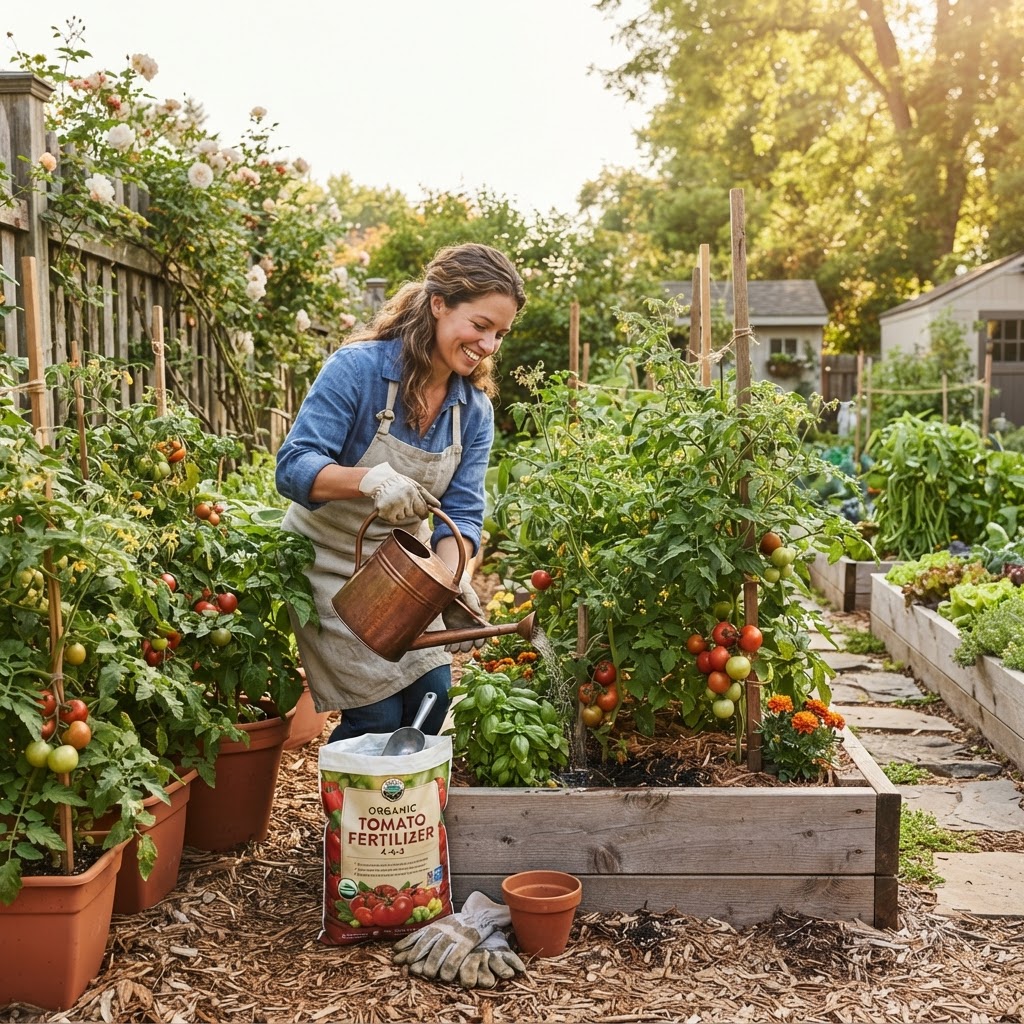
How Often Should I Fertilize Tomatoes? A Simple Schedule for Bigger, Healthier Plants
Tomatoes are hungry plants, but that does not mean more fertilizer is always better. If you have ever wondered, “how often should I fertilize tomatoes,” the good news is that a simple schedule can keep your plants productive without causing problems.
In this guide, you will learn when to feed tomatoes, how often to repeat it, and how to avoid the common mistakes that lead to lots of leaves but very little fruit. Whether you grow tomatoes in raised beds, in-ground, or in containers, this beginner-friendly plan will help you get started.
Why This Topic Matters
Tomatoes use a lot of energy to grow stems, leaves, flowers, and fruit all in one season. Because they grow fast and produce heavily, they can use up nutrients in the soil faster than many other garden crops.
When tomatoes do not get enough nutrition, they may grow slowly, produce fewer flowers, or develop small fruit. On the other hand, too much fertilizer can be just as harmful. Overfed tomato plants often become tall, dark green, and leafy while producing fewer tomatoes.
That is why timing matters so much. A steady, moderate feeding plan supports healthy growth and better harvests without overwhelming the plant.
It also helps you save money and avoid waste. Instead of guessing every week, you can follow a clear routine based on the plant’s growth stage.
Quick Answer
Here is the short version: most tomato plants should be fertilized at planting, then again when the first flowers or small fruits appear, and every 2 to 4 weeks after that during the main growing season.
The exact timing depends on the type of fertilizer and where your tomatoes are growing:
- In-ground tomatoes: usually every 3 to 4 weeks after flowering begins
- Raised bed tomatoes: often every 2 to 4 weeks, depending on soil quality
- Container tomatoes: usually more often, such as every 1 to 2 weeks with a diluted liquid fertilizer, because nutrients wash out faster
- Slow-release fertilizers: often every 4 to 6 weeks, according to the label
- Liquid fertilizers: usually every 1 to 2 weeks at label rate, or weekly at half strength if plants are actively fruiting
In general, tomatoes need the most feeding support once they start flowering and setting fruit. Before that, too much fertilizer, especially high-nitrogen fertilizer, can encourage leaves instead of tomatoes.
Step-by-Step Guide
Step-by-Step Guide
1. Start with good soil before you fertilize
The best tomato feeding routine begins before the plant even goes into the ground. If your soil is poor, fertilizer alone will not fix everything.
Mix in compost or well-rotted organic matter before planting. This improves soil structure, water retention, and basic nutrient availability. It also makes later fertilizing more effective.
If you want to be extra careful, a soil test is helpful. It can show whether your soil already has enough phosphorus or potassium and whether you need to adjust pH.
2. Add a gentle feeding at planting time
At transplanting, tomatoes benefit from a light starter feeding. This can be compost, a balanced organic fertilizer, or a tomato fertilizer used at label directions.
Avoid dumping a large amount of strong fertilizer directly into the planting hole. Too much can stress young roots or push leafy growth too early.
A simple approach for beginners is:
- Mix compost into the planting area.
- Add a small amount of balanced fertilizer if your soil is average or poor.
- Water deeply after planting.
This gives the plant a solid start without overfeeding it.
3. Wait until flowering or early fruit set for regular feeding
This is the step many beginners miss. After planting, tomatoes often do not need constant feeding right away.
Once the plant starts producing its first flowers, or once you see tiny green tomatoes forming, it is time to begin a more regular fertilizer schedule. At this stage, the plant needs steady nutrients to support fruit production.
Look for a fertilizer that is balanced or slightly lower in nitrogen than phosphorus and potassium. You do not need to obsess over numbers, but try to avoid very high-nitrogen lawn-type fertilizers.
4. Follow a simple schedule based on the fertilizer type
Different fertilizers release nutrients at different speeds. That changes how often you should reapply them.
Here is an easy guide:
If you use liquid fertilizer
Liquid fertilizers work quickly but do not last long. Most are applied every 1 to 2 weeks.
For container tomatoes, many gardeners use a diluted liquid feed weekly once the plants begin fruiting. Containers lose nutrients faster because frequent watering washes them out.
If you use granular fertilizer
Granular fertilizers are often applied every 2 to 4 weeks during the growing season. Watering helps move the nutrients into the root zone.
Be careful not to pile fertilizer against the stem. Spread it around the root area and follow the label rate.
If you use slow-release fertilizer
Slow-release products feed for longer. Many only need reapplication every 4 to 6 weeks.
These can be a good option for beginners because they reduce the temptation to fertilize too often.
5. Adjust for where your tomatoes are growing
Not all tomato plants need the same schedule.
In-ground tomatoes
Tomatoes planted in the ground usually hold nutrients longer, especially if the soil has been improved with compost. These plants often do well with feedings every 3 to 4 weeks after flowering begins.
Raised bed tomatoes
Raised beds can dry out and drain faster than in-ground gardens, but they usually have better soil than containers. A schedule of every 2 to 4 weeks often works well.
Container tomatoes
Tomatoes in pots need the most attention. Each watering leaches nutrients out of the potting mix, and tomato roots quickly fill the container.
For many potted tomatoes, feeding every 1 to 2 weeks is normal once flowers appear. In hot weather, some gardeners switch to a weaker weekly liquid feed.
6. Watch the plant, not just the calendar
A schedule is helpful, but your tomato plant gives useful clues too. Healthy tomato plants should grow steadily, flower regularly, and set fruit without looking overly lush or weak.
Signs your plant may need feeding include:
- Slow growth despite warm weather
- Pale or light green leaves overall
- Few flowers or poor fruit set
- Small fruit on an otherwise healthy plant
Signs you may be overfertilizing include:
- Very dark green leaves
- Lots of leafy growth with few flowers
- Curled leaf tips or fertilizer burn
- Salt buildup on the surface of container soil
If the plant looks stressed, do not automatically add more fertilizer. Problems like inconsistent watering, cold nights, disease, or poor pollination can look similar.
7. Water properly with every feeding
Fertilizer works best when the plant is watered correctly. Dry soil can make fertilizer too strong around the roots, while uneven watering can lead to issues like blossom end rot.
Water your tomatoes deeply and consistently. If using granular fertilizer, water after applying it. If using liquid fertilizer, apply according to label instructions, usually to already moist soil unless the product says otherwise.
8. Ease up late in the season
As the season winds down, your plant needs less aggressive feeding. If frost is still far away and the plant is healthy, you can continue a light schedule while fruit is developing.
But if the plant is near the end of its life cycle or most of the fruit is already maturing, heavy feeding will not provide much benefit. At that point, focus more on watering, pruning only as needed, and harvesting.
Common Beginner Mistakes
Tomato fertilizing is not difficult, but a few mistakes show up again and again. Knowing them ahead of time can save you a lot of frustration.
Feeding too early and too often
Many new gardeners start fertilizing heavily right after transplanting and continue every week. This often creates big leafy plants that delay flowering.
Tomatoes do need nutrients, but they do better with timed feedings than constant feeding from day one.
Using too much nitrogen
Nitrogen helps leaves and stems grow, which sounds great at first. But too much nitrogen can lead to impressive plants with disappointing harvests.
If your tomato plant looks huge and healthy but barely makes flowers, excess nitrogen may be the reason.
Ignoring the fertilizer label
Even organic fertilizers can be overapplied. More is not better.
Always follow the label rate, especially for containers. Small root zones make potted plants easier to overfeed.
Fertilizing dry soil
Applying fertilizer to very dry soil can stress or burn roots. It is safer to fertilize when the soil is already slightly moist, then water as needed.
Trying to fix every problem with fertilizer
Yellow leaves do not always mean hunger. Sometimes the real issue is overwatering, underwatering, cool weather, root stress, or disease.
Before feeding, take a moment to check the whole plant and growing conditions.
Forgetting that containers need more frequent care
Container tomatoes are heavy feeders because they live in a limited amount of soil. If you use the same schedule for pots that you use for in-ground plants, container tomatoes may run out of nutrients quickly.
Best Tips for Success
If you want a simple tomato feeding plan that works for most beginners, keep these tips in mind.
Build soil first
Healthy soil makes everything easier. Compost does not replace every fertilizer need, but it creates a better foundation and helps nutrients stay available longer.
Use a tomato-friendly fertilizer
Choose a product meant for vegetables or tomatoes, or use a balanced fertilizer that is not extremely high in nitrogen. This supports flowering and fruiting without pushing all that growth into leaves.
Keep a simple garden note
Write down when you planted and when you fertilized. A quick note in your phone or garden journal helps you avoid double feeding or forgetting the last application.
Feed lightly but consistently
Tomatoes usually respond better to regular moderate feedings than to one heavy dose. Think of fertilizing as support, not force.
Adjust for rain and heat
Heavy rain can wash nutrients out of beds, and hot weather can increase water use in containers. During these times, container tomatoes especially may need more frequent but gentle feeding.
Mulch around plants
Mulch helps keep soil moisture even and reduces nutrient loss from repeated drying and watering. Straw, shredded leaves, or untreated grass clippings can all help.
Pay attention during fruiting
The fruiting stage is when tomatoes are using the most energy. If you are ever unsure when to prioritize feeding, this is the time.
A simple beginner schedule might look like this:
- Planting day: compost plus a light starter fertilizer if needed
- First flowers: begin regular feeding
- After that: every 2 to 4 weeks in beds, every 1 to 2 weeks in containers, depending on the product
- Late season: reduce or stop heavy feeding as the plant finishes up
Recommended Supplies or Tools
You do not need a lot of equipment to fertilize tomatoes well. A few basic supplies make the job easier and more consistent.
- Compost: improves soil and provides gentle nutrition
- Tomato or vegetable fertilizer: liquid, granular, or slow-release depending on your preference
- Watering can or hose with gentle spray: helps apply and wash in fertilizer
- Measuring scoop or spoon: prevents accidental overfeeding
- Garden gloves: useful when handling granular fertilizers or compost
- Mulch: helps hold moisture and support steady nutrient uptake
- Notebook or phone reminder: keeps your fertilizer schedule simple
- Large containers with drainage holes: important for potted tomatoes, since root health affects nutrient use
If you are a brand-new gardener, a slow-release fertilizer plus compost is often the easiest combination to manage. If you grow in containers, a liquid tomato fertilizer can be especially convenient.
Frequently Asked Questions
Should I fertilize tomatoes every week?
Usually not, unless you are using a diluted liquid fertilizer on container plants. Most tomatoes in the ground do better with feeding every 2 to 4 weeks once flowering starts.
Weekly feeding can be helpful for potted tomatoes during heavy fruit production, but it should usually be at a reduced strength and based on the product instructions.
When should I start fertilizing tomato plants?
Start with compost or a light starter fertilizer at planting time. Then begin regular feeding when the first flowers appear or when small fruits begin to form.
That timing supports fruit production without causing too much leafy growth early on.
Can I overfertilize tomatoes?
Yes, and it is very common. Too much fertilizer can lead to lush leaves, fewer flowers, root stress, or fertilizer burn.
If your plant is growing fast but not making many tomatoes, cut back and review the type of fertilizer you are using.
Do container tomatoes need more fertilizer than garden tomatoes?
Yes. Tomatoes in containers usually need more frequent feeding because nutrients wash out with regular watering.
Many container growers fertilize every 1 to 2 weeks once the plants are flowering and fruiting.
Is compost enough for tomatoes?
Sometimes, especially in rich soil and for smaller plants, but many tomatoes produce better with added fertilizer during the season. Compost is excellent for building soil, but heavy-producing tomato plants often benefit from extra nutrients once fruiting starts.
Final Thoughts
So, how often should you fertilize tomatoes? For most home gardeners, the best answer is this: feed lightly at planting, start regular fertilizing when flowers appear, and continue every 2 to 4 weeks in garden beds or more often for containers, depending on the fertilizer type.
The goal is not to push your tomatoes as hard as possible. It is to give them steady support at the right time so they can grow well, flower well, and produce a healthy harvest.
If you are unsure, start small and observe your plants. Tomatoes are generous teachers, and with a simple routine, you will quickly learn what works best in your garden.