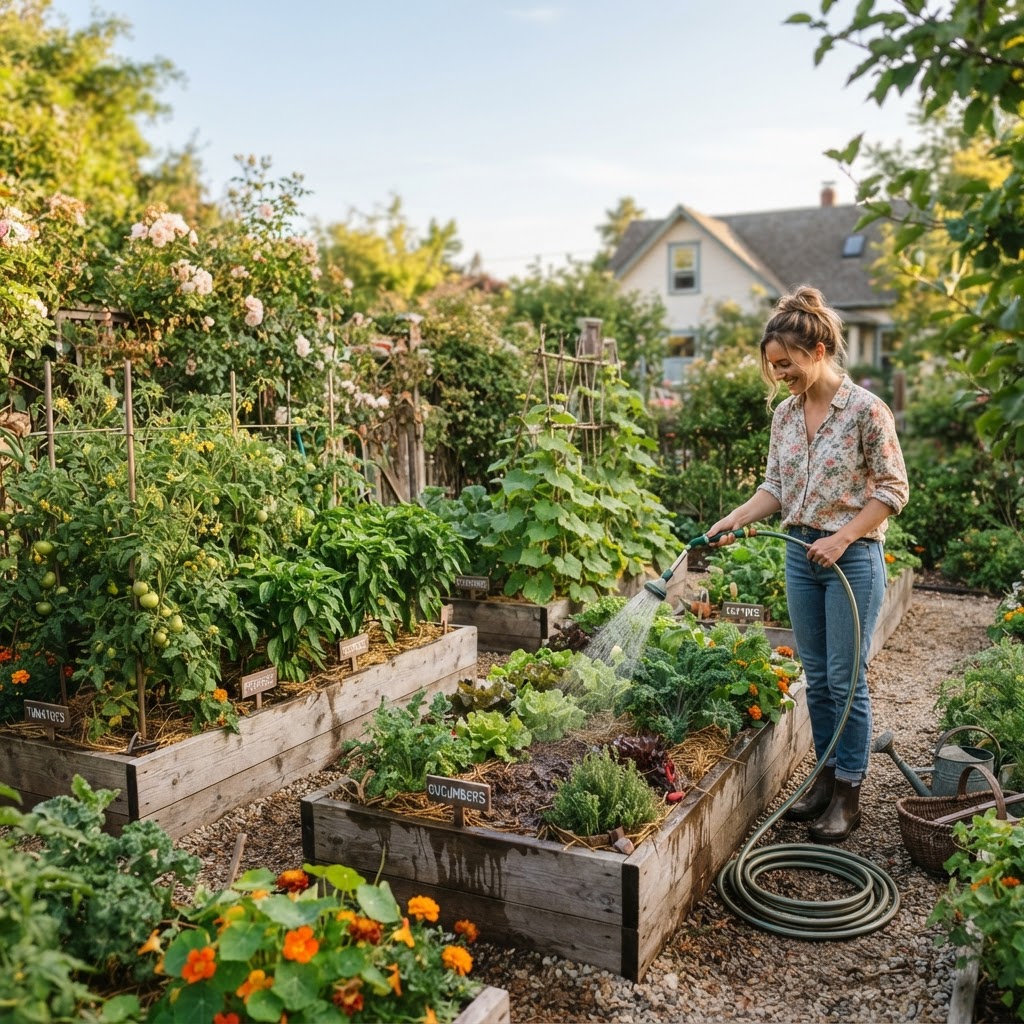
How Often Should I Water Raised Beds? A Beginner’s Guide to Healthy Vegetables
If you’ve been asking, how often should I water raised beds, you’re not alone. Raised beds dry out faster than in-ground gardens, so getting watering right can make the difference between thriving plants and stressed, disappointing crops.
The good news is that you do not need a complicated schedule. Once you learn what affects moisture in a raised bed and how to check the soil, watering becomes much easier.
Why This Topic Matters
Raised beds are wonderful for home vegetable gardening. They warm up faster in spring, drain well, and are easy to manage in small spaces.
But that extra drainage is also the challenge. Water moves through raised bed soil more quickly than heavy native ground soil, especially in hot, windy weather.
If you water too little, seedlings wilt, lettuce turns bitter, tomatoes crack, and roots stay shallow. If you water too much, roots can struggle for oxygen, plants may yellow, and disease problems become more common.
For beginners, watering is often the hardest part of gardening because there is no single rule that works every day. A raised bed in cool spring weather may stay moist for several days, while that same bed in midsummer may need water every day.
Understanding the right rhythm helps you:
- Grow stronger root systems
- Reduce plant stress
- Improve harvest quality
- Save water instead of guessing
- Avoid common beginner mistakes like shallow daily watering
In short, smart watering is one of the biggest skills you can learn for a productive vegetable garden.
Quick Answer
So, how often should I water raised beds?
For most vegetable gardens, raised beds need water about 1 to 3 times per week in mild weather and daily or every other day during hot, dry summer periods, especially when plants are large.
That said, the best rule is not to water by the calendar alone. Water when the top 1 to 2 inches of soil feel dry, and make sure the soil below that still gets deeply moistened.
A few quick guidelines can help:
- Newly seeded beds: Check daily and keep the surface consistently moist
- New transplants: Usually need water more often for the first 1 to 2 weeks
- Established vegetables: Often do best with deep watering a few times per week
- Hot weather: Beds may need water every day
- Rainy or cool weather: You may be able to skip watering for several days
Most vegetables need roughly 1 to 1.5 inches of water per week, but raised beds often need that water applied more carefully because they dry faster.
If you only remember one thing, remember this: check the soil, not just the leaves or the clock.
Step-by-Step Guide
1. Start by checking the soil moisture
Before watering, stick your finger into the soil about 2 inches deep. If it feels dry at that depth, it is probably time to water. If it still feels cool and slightly damp, wait and check again later.
This simple finger test is one of the best habits for beginner gardeners. It is more reliable than watering every morning just because it seems like the right thing to do.
You can also use a moisture meter if you prefer a tool, but your finger works surprisingly well.
2. Know what changes watering frequency
Raised beds do not all dry out at the same speed. Several factors affect how often you should water.
Bed size and depth
Shallower beds dry out faster than deeper beds. A 6-inch bed will usually need water more often than a 12- or 18-inch bed.
Small beds also lose moisture faster because they have less soil volume to hold water. Large, deep beds are more forgiving.
Weather
Hot sun, wind, and low humidity pull moisture out of the soil quickly. In cool or cloudy weather, beds stay moist much longer.
A breezy 85-degree day can dry a bed faster than a still 90-degree day. Wind matters more than many beginners realize.
Soil mix
A light, fluffy raised bed mix drains well, but some mixes dry out very quickly if they contain too much coarse material. Beds with plenty of compost usually hold moisture better.
If your soil seems to dry out almost immediately, it may need more finished compost to improve water retention.
Plant size and spacing
Tiny seedlings use very little water. A mature zucchini, tomato, cucumber, or squash plant can drink a lot in warm weather.
As your garden fills in, expect watering needs to increase.
Mulch
Mulch helps slow evaporation and keeps soil temperatures more even. A mulched raised bed can stay moist noticeably longer than bare soil.
Even a thin layer of straw or shredded leaves can help.
3. Water deeply instead of lightly
One of the most helpful watering habits is to water thoroughly enough that moisture reaches the root zone. Light surface watering encourages shallow roots, which makes plants more vulnerable to heat stress.
When you water, aim to moisten the soil several inches deep. For many raised beds, that means watering slowly enough that the soil can absorb the moisture instead of letting it run off the sides.
A deep watering is usually better than a quick daily sprinkle.
4. Water at the best time of day
Morning is usually the best time to water raised beds. The air is cooler, evaporation is lower, and plants have moisture available before the heat of the day.
Morning watering also allows foliage to dry fairly quickly, which can help reduce disease problems.
If you cannot water in the morning, late afternoon or early evening is usually fine. Try to avoid watering in the strongest midday sun when water is lost fastest.
5. Adjust for each stage of plant growth
Different growth stages need different watering habits.
Seeds
Seeds need consistent surface moisture to germinate. If the top layer dries out, germination can be uneven or delayed.
Check once or twice a day in warm weather, and use a gentle spray so you do not wash seeds away.
Seedlings and new transplants
Young plants have small root systems and need steady moisture while they establish. Water more often at this stage, but still avoid soggy soil.
For the first week or two, daily checking is smart.
Established plants
Once roots grow deeper, many vegetables do best with less frequent but deeper watering. This encourages stronger roots and better drought tolerance.
Fruiting plants
Tomatoes, peppers, cucumbers, eggplant, and squash often need more consistent moisture when flowering and fruiting. Big swings between very dry and very wet soil can lead to blossom end rot, cracking, or bitter flavor.
6. Use the plants as clues, but not the only clue
Plants can tell you a lot, but they should not be your only watering guide.
Some vegetables, especially on hot afternoons, may look droopy even when the soil is still moist. This temporary wilting can be a normal response to heat.
Always check the soil before reaching for the hose. If the soil is still damp a couple of inches down, wait until evening and see if the plants perk back up.
7. Build a simple seasonal watering routine
A simple routine is easier to follow than guessing every day.
Here is a beginner-friendly pattern:
- Spring: Check every 2 to 3 days. Water when the top 1 to 2 inches are dry.
- Early summer: Check daily or every other day as temperatures rise.
- Peak summer: Expect to water often, sometimes every day for shallow beds or thirsty crops.
- Late summer to fall: Reduce watering gradually as temperatures cool and plant growth slows.
This is only a starting point, but it gives you a practical rhythm.
8. Watch for signs of underwatering
If you are unsure whether your raised bed needs more water, look for these clues:
- Dry soil several inches down
- Wilting that does not improve in the evening
- Leaf edges turning brown or crisp
- Slow growth
- Small fruits or blossoms dropping
- Root crops becoming woody or misshapen
Consistent drought stress can reduce both yield and flavor.
9. Watch for signs of overwatering
Too much water can look a lot like too little water at first. That is why soil checking matters.
Signs of overwatering include:
- Constantly soggy soil
- Yellowing leaves, especially lower leaves
- Mushy stems near the base
- Fungus gnats or algae on the soil surface
- Plants that wilt even though the soil is wet
Raised beds usually drain well, but overwatering still happens when gardeners water on a strict schedule without checking conditions.
10. Make watering easier with the right method
The way you water matters almost as much as how often.
Good options include:
- Watering wand or hose nozzle: Great for hand watering gently and accurately
- Soaker hose: Delivers water slowly at the soil level
- Drip irrigation: Very efficient and easy to automate
- Watering can: Useful for seedlings or small beds
Soaker hoses and drip systems are especially helpful for raised beds because they reduce waste and keep foliage drier.
Common Beginner Mistakes
Many new gardeners struggle with watering because they are trying to be attentive. The intention is good, but a few habits can cause trouble.
Watering on a strict schedule no matter what
Beds do not need the same amount of water after rain, during a cool week, or in a heat wave. A fixed schedule without soil checks often leads to overwatering or underwatering.
Giving a little water every day
Frequent shallow watering keeps the surface damp but may not reach deeper roots. Plants then become more dependent on constant watering.
Ignoring mulch
Bare soil dries out much faster. Without mulch, you may end up watering much more often than necessary.
Watering only when plants look dramatic
By the time many plants visibly wilt from lack of water, they are already stressed. Soil moisture checks help you catch problems earlier.
Forgetting containers and raised beds behave differently
Beginners sometimes assume raised beds can be watered like in-ground gardens. Raised beds usually dry faster and need closer attention, especially in summer.
Best Tips for Success
If you want a simple way to succeed, focus on a few reliable habits.
- Check soil with your finger first before every watering
- Mulch the bed with straw, shredded leaves, or untreated grass clippings
- Water deeply so roots grow down instead of staying near the surface
- Water in the morning whenever possible
- Group thirsty plants together if you have multiple beds
- Add compost yearly to improve moisture retention
- Use drip irrigation or a soaker hose if hand watering becomes hard to keep up with
One more tip: keep a small garden notebook. Jot down when you watered, how hot the weather was, and how the plants responded. After one season, you will start to see patterns that make watering much easier.
Recommended Supplies or Tools
You do not need a lot of gear to water raised beds well, but a few simple tools can help.
Helpful basics
- Watering wand: Makes hand watering easier and gentler on seedlings
- Soaker hose: Good for slow, deep watering across longer beds
- Drip irrigation kit: Great for saving time and keeping moisture consistent
- Moisture meter: Optional, but useful if you are unsure how to judge soil by touch
- Mulch materials: Straw, shredded leaves, or clean grass clippings
- Rain gauge: Helps you track how much water your garden actually gets
Nice-to-have extras
- Timer for irrigation: Helpful during summer or vacations
- Hose splitter: Useful if you want multiple watering lines
- Bucket or watering can: Handy for spot watering young plants
If you are just starting out, the simplest combination is a watering wand plus mulch. That setup works well for many small home gardens.
Frequently Asked Questions
Should I water raised beds every day?
Not always. In mild weather, many raised beds only need water 1 to 3 times per week.
During hot summer weather, shallow beds or large plants may need daily watering. Always check the soil first.
How do I know if my raised bed has enough water?
The best test is to feel the soil 1 to 2 inches down. If it is dry there, it is time to water.
You want the soil to feel evenly moist below the surface, not dusty dry and not muddy.
Do raised beds need more water than in-ground gardens?
Usually, yes. Raised beds drain faster and warm up more quickly, so they often lose moisture sooner than in-ground beds.
That does not mean they need constant watering, but they do need more regular monitoring.
Is it better to water raised beds in the morning or evening?
Morning is usually best because plants can take up water before the day heats up. It also gives leaves time to dry.
Evening is acceptable if needed, especially if you water at the soil level instead of soaking the foliage.
Can I overwater a raised bed?
Yes. Even well-draining beds can stay too wet if watered too often.
If the soil stays soggy, roots may suffer and leaves may yellow or wilt. Check moisture before watering again.
Final Thoughts
If you have been wondering how often should I water raised beds, the simplest answer is this: water when the soil needs it, not just when the calendar says so. Most raised beds need more frequent attention than in-ground gardens, but with a quick soil check and a habit of deep watering, the process gets easier fast.
Start by checking your beds often, especially in hot weather. Before long, you will learn your garden’s rhythm and feel much more confident keeping your vegetables healthy and productive.