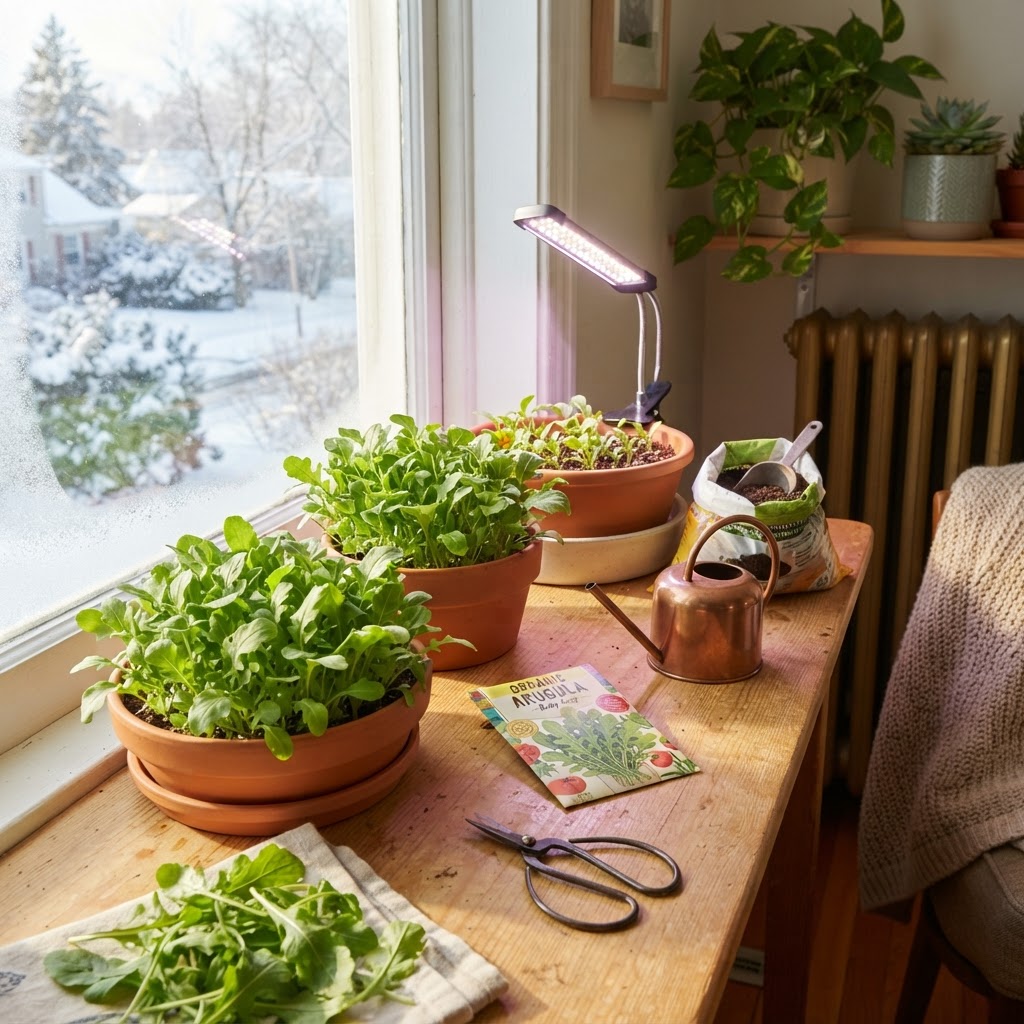
How to Grow Arugula Indoors in Winter: An Easy Beginner’s Guide
Fresh salad greens can feel like a luxury in the middle of winter, but arugula is one of the easiest vegetables to grow right inside your home. If you’ve been wondering how to grow arugula indoors in winter, the good news is that this fast-growing leafy green does very well in small containers, cool rooms, and simple indoor setups.
Even if you’re completely new to gardening, you can harvest peppery, tender leaves in just a few weeks. With the right light, soil, and watering routine, indoor arugula can keep producing when outdoor beds are frozen solid.
Why This Topic Matters
Winter gardening can feel discouraging when short days and cold temperatures limit what you can grow outside. Indoor growing gives you a practical way to keep gardening, save money on greens, and enjoy fresher harvests during the coldest months.
Arugula is especially beginner-friendly because it sprouts quickly and doesn’t require deep containers or complicated care. It also grows faster than many other salad greens, so you get results sooner.
Growing arugula indoors in winter also helps you control important conditions. You can manage temperature, moisture, and light much more easily indoors than in an outdoor winter garden.
For households that want more homegrown food with less waste, arugula is a smart choice. You can snip only what you need and let the rest continue growing.
Quick Answer
To grow arugula indoors in winter, plant seeds in a shallow container filled with quality potting mix, place the container in a bright window or under grow lights, keep the soil evenly moist, and maintain cool-to-mild indoor temperatures between 55 and 70 degrees Fahrenheit. Most arugula seeds germinate in about 5 to 10 days, and you can begin harvesting baby leaves in about 3 to 4 weeks.
For the best results:
- Use a container at least 4 to 6 inches deep
- Sow seeds thinly and cover lightly with soil
- Provide 10 to 14 hours of light daily
- Water gently to keep the soil moist but not soggy
- Harvest often to encourage new growth
Step-by-Step Guide
1. Choose the Right Variety
Most arugula varieties grow well indoors, but standard salad arugula is usually the easiest place to start. Look for seed packets labeled arugula, rocket, or wild rocket.
If you want quick harvests, common arugula varieties are ideal. Wild rocket often has a stronger flavor and narrower leaves, but it can also do well indoors with the same basic care.
2. Pick a Suitable Container
Arugula has relatively shallow roots, so you do not need a large or deep pot. A container that is 4 to 6 inches deep works well for baby greens, while a slightly deeper pot gives plants a little more room if you want repeated harvests.
Good container options include:
- Seed trays with drainage holes
- Window boxes
- Small rectangular planters
- Recycled food-safe containers with drainage added
Drainage matters more than pot style. Without holes at the bottom, excess water can collect and lead to root problems.
3. Use a Light, High-Quality Potting Mix
Do not use heavy garden soil from outside. It compacts easily indoors, drains poorly in containers, and may introduce pests or disease.
Instead, fill your container with a loose potting mix made for vegetables or indoor plants. A mix that holds moisture while still draining well is perfect for arugula.
If you want to improve the mix a bit, you can blend in a small amount of compost. Just avoid making the mix too dense.
4. Sow the Seeds Properly
Arugula is usually direct-sown rather than transplanted. It grows so quickly from seed that there’s no need to start it in separate pots first.
Follow these steps:
- Moisten the potting mix before planting so it is evenly damp.
- Sprinkle arugula seeds across the soil surface.
- Space them about 1 inch apart if possible, though a little closer is fine for baby greens.
- Cover the seeds with about 1/4 inch of potting mix.
- Mist or water very gently so you do not wash the seeds away.
If you want a steady winter supply, sow a new small container every 1 to 2 weeks. This is called succession planting, and it helps keep fresh greens coming.
5. Give Arugula Enough Light
Light is the biggest challenge for growing arugula indoors in winter. Short days and weak winter sun often are not enough on their own, especially in northern climates.
A bright south-facing window may work if it gets several hours of direct light each day. But in many homes, grow lights give more reliable results.
For healthy indoor arugula:
- Aim for 10 to 14 hours of light per day
- Keep grow lights a few inches above the plants
- Raise the light as the plants grow
- Use a timer to keep the schedule consistent
If your seedlings become thin, pale, or stretched, they likely need more light.
6. Keep Temperatures on the Cool Side
Arugula is a cool-season green, which makes it a great winter crop indoors. It prefers temperatures that are comfortable for most people but not overly warm.
Try to keep your growing area between 55 and 70 degrees Fahrenheit. Avoid placing containers right next to heating vents, radiators, or drafty windows.
Too much warmth can make arugula grow too fast and turn bitter earlier. Cooler indoor spots often produce better flavor.
7. Water Consistently but Gently
Arugula likes evenly moist soil, especially during germination and early growth. Letting the container dry out too much can stress the plants and lead to slow growth or stronger, more bitter leaves.
At the same time, soggy soil can cause fungal issues and weak roots. The goal is moist, not soaked.
A simple watering routine:
- Check the soil daily with your fingertip
- Water when the top surface just begins to feel dry
- Water slowly until a little drains from the bottom
- Empty saucers if water collects underneath
Young seedlings benefit from gentle watering with a spray bottle or small watering can.
8. Thin Seedlings if Needed
If your seeds germinate densely, thinning helps improve airflow and gives remaining plants enough room to grow. Crowded arugula can stay spindly and damp, which increases the risk of disease.
For baby leaf harvests, leave seedlings about 1 to 2 inches apart. If you want slightly larger plants, give them closer to 3 inches.
Do not toss the thinnings. Tiny arugula seedlings are edible and great in sandwiches or salads.
9. Feed Lightly, If Necessary
Arugula does not need heavy feeding, especially if you are harvesting it young. A quality potting mix often provides enough nutrition for one quick crop.
If plants look pale after a few weeks or you plan to keep cutting and regrowing them, use a diluted liquid fertilizer every 2 to 3 weeks. Choose a balanced fertilizer and apply it at half strength to avoid overfeeding.
Too much fertilizer can produce fast but weak leafy growth, so less is usually better.
10. Harvest the Right Way
One of the best parts about growing arugula indoors in winter is how quickly you can start picking leaves. Many gardeners begin harvesting baby greens when leaves are 2 to 4 inches long.
You can harvest in two main ways:
- Cut-and-come-again: Snip outer leaves first and let the center continue growing.
- Full harvest: Cut the entire container at about 1 inch above the soil line.
For the longest production, use the cut-and-come-again method. Regular harvesting encourages fresh new leaves.
Try not to let indoor arugula get too old before picking. Younger leaves are usually milder, more tender, and better for salads.
Common Beginner Mistakes
Not Giving Enough Light
This is the most common problem with indoor winter greens. Without enough light, arugula becomes leggy, floppy, and slow-growing.
If your plants lean strongly toward the window or look weak, move them to a brighter spot or add a grow light.
Overwatering
Beginners often assume indoor vegetables need frequent watering on a set schedule. But containers dry at different rates depending on temperature, light, and humidity.
Always check the soil before watering. Constantly wet soil can lead to yellowing leaves and poor growth.
Using the Wrong Soil
Heavy outdoor soil is a poor fit for indoor containers. It compacts, drains badly, and can cause root stress.
A quality potting mix is worth using from the start. It makes watering and root development much easier to manage.
Planting Too Densely
A thick carpet of seedlings may look promising at first, but overcrowding leads to competition for light, water, and nutrients. It also reduces airflow.
Thin as needed so the plants have space to develop sturdy leaves.
Keeping Plants Too Warm
Arugula does not enjoy hot, dry indoor conditions. If your container sits near a heater or warm appliance, growth may suffer and flavor may become stronger or bitter.
Choose a cool, bright location whenever possible.
Waiting Too Long to Harvest
Arugula tastes best when harvested young. If you wait too long, leaves can become tougher and more peppery than you may want.
Frequent cutting keeps the plant productive and gives you the best texture.
Best Tips for Success
If you want reliable indoor harvests all winter long, focus on a few simple habits instead of trying to create a perfect setup.
Here are the most helpful tips:
- Start with fresh seeds for better germination
- Use shallow, wide containers for easy sowing and harvesting
- Grow in batches every 1 to 2 weeks for continuous greens
- Supplement weak winter sunlight with LED grow lights
- Rotate containers near windows so growth stays even
- Keep leaves dry when possible to reduce disease issues
- Harvest baby leaves often for the mildest flavor
- Reseed when growth slows instead of forcing old plants to keep producing
It also helps to keep expectations realistic. Indoor arugula may not grow as fast as spring garden arugula, but it can still give you plenty of fresh greens with very little space.
Recommended Supplies or Tools
You do not need fancy equipment to grow arugula indoors in winter. A simple setup can work very well.
Useful supplies include:
- Arugula seeds
- A shallow container with drainage holes
- High-quality potting mix
- A tray or saucer to catch water
- Small scissors for harvesting
- A watering can or spray bottle
- LED grow light if natural light is limited
- Timer for grow lights
If you want to keep things especially beginner-friendly, a basic rectangular planter under a small grow light is often enough for several harvests.
When choosing tools, prioritize function over appearance. The best setup is one that makes it easy for you to water, monitor, and harvest regularly.
Frequently Asked Questions
Can arugula really grow well indoors in winter?
Yes, arugula is one of the better leafy greens for indoor winter growing. It tolerates cool conditions, grows quickly from seed, and does well in containers.
The main thing it needs is enough light. If your winter window is not bright enough, a grow light usually solves the problem.
How long does arugula take to grow indoors?
Arugula usually germinates in 5 to 10 days. You can often begin harvesting baby leaves in about 3 to 4 weeks, depending on light and temperature.
If conditions are cooler or darker, growth may be a little slower. Good light makes the biggest difference.
Does arugula need full sun indoors?
Arugula grows best with strong light, but indoors that does not always have to mean direct sun all day. A bright south-facing window can work, while grow lights often provide more dependable results in winter.
Aim for 10 to 14 hours of light daily for healthy growth.
How often should I water indoor arugula?
Water when the soil surface begins to dry slightly, but do not let the container dry out deeply. The exact schedule depends on your home conditions.
In many homes, checking once a day is enough. Always water based on the soil feel rather than the calendar.
Can I regrow arugula after cutting it?
Yes, arugula often regrows well after cutting, especially if you harvest outer leaves or cut the plant above the growing point. This is why the cut-and-come-again method works so well.
That said, repeated harvests eventually slow down. At that point, it is often easiest to sow a fresh container.
Final Thoughts
If you want a simple winter vegetable project, arugula is hard to beat. It is fast, compact, flavorful, and forgiving enough for beginners who are just getting started with indoor gardening.
Learning how to grow arugula indoors in winter is mostly about getting the basics right: light, moisture, cool temperatures, and timely harvesting. Once you have those in place, you can enjoy fresh homegrown greens even when the weather outside is freezing.
Start with one container, keep the process simple, and sow another batch soon after. Before long, you may have a steady rhythm of winter harvests right from your windowsill or shelf.