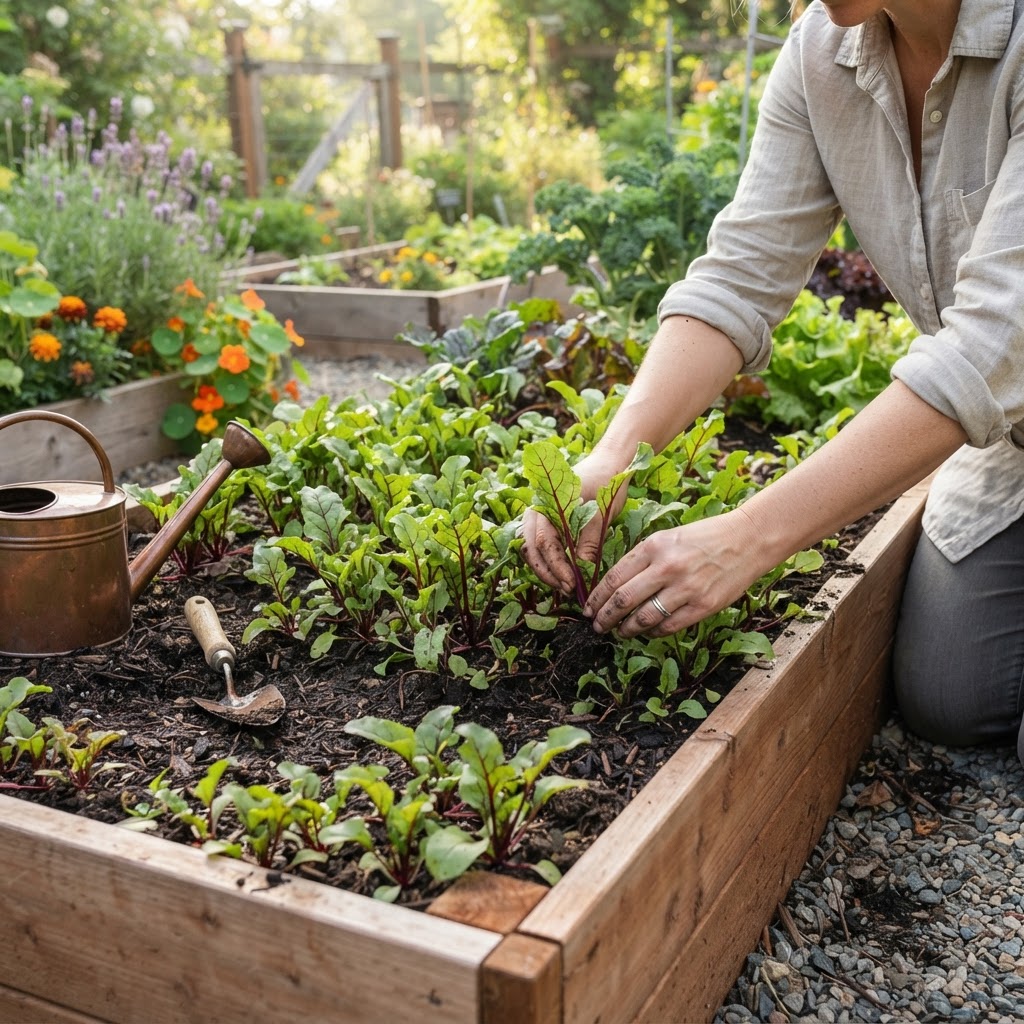
How to Grow Beets in Raised Beds: A Beginner-Friendly Step-by-Step Guide
Beets are one of the easiest root crops to grow at home, and raised beds make the process even simpler. If you want sweet, colorful roots without dealing with hard, compacted soil, learning how to grow beets in raised beds is a great place to start.
The good news is that beets do not need a lot of space or complicated care. With the right soil, steady moisture, and a little thinning, beginners can grow a productive beet crop in just a few weeks.
Why This Topic Matters
Beets are a smart choice for beginner gardeners because they grow quickly, tolerate cool weather, and give you two edible harvests in one plant: roots and greens. You can roast the roots, pickle them, or slice the young leaves into salads.
Raised beds help beets grow better because the soil stays loose and drains well. That matters for root crops, since heavy or rocky ground can lead to small, misshapen, or tough beets.
Another reason this topic matters is timing. Beets are one of the best vegetables for spring and fall gardens, which helps you extend your harvest beyond warm-season crops like tomatoes and peppers.
If you are trying to get more food from a small backyard, patio bed, or beginner garden plot, beets deserve a spot. They are productive, attractive, and easy to fit into a simple garden plan.
Quick Answer
To grow beets in raised beds, fill your bed with loose, well-draining soil enriched with compost, sow seeds about 1/2 inch deep, and keep the soil evenly moist until they sprout. Thin seedlings so roots have room to size up, give plants full sun or light shade, and harvest when roots are about 1 1/2 to 3 inches across for the best flavor and texture.
Beets grow best in cool weather, so plant them in early spring or late summer for a fall crop. In raised beds, spacing, steady watering, and avoiding too much nitrogen are the biggest keys to success.
Step-by-Step Guide
1. Choose the best time to plant
Beets prefer cool temperatures and usually grow best in spring and fall. In many climates, you can sow seeds 2 to 4 weeks before your last spring frost and again 6 to 8 weeks before your first fall frost.
If your summers are very hot, spring beets may turn woody if left too long in the bed. Fall planting often gives sweeter roots because cool nights improve flavor.
2. Pick a sunny raised bed location
Beets grow well in full sun, which means at least 6 hours of direct light each day. They can also handle a little afternoon shade, especially in warmer areas.
If you are growing for larger roots, more sun is better. If your bed gets only partial sun, you can still get a useful crop, but roots may stay smaller.
3. Prepare loose, fertile soil
This is one of the most important steps when learning how to grow beets in raised beds. Beets need soil that is soft enough for roots to expand easily.
Aim for soil that is:
- Loose and crumbly
- Free of large rocks and clumps
- Rich in compost but not overloaded with fresh manure
- Well-draining but able to hold some moisture
A soil depth of 8 to 12 inches is enough for most beet varieties. Before planting, mix in 1 to 2 inches of finished compost and smooth the surface.
If your soil is very dense, avoid stepping in the raised bed and do not overwork it when wet. Compacted soil is one of the fastest ways to get stunted roots.
4. Choose the right beet variety
Most beet varieties do well in raised beds, but some are especially beginner-friendly. Round beets are the easiest for most home gardeners, while cylindrical types are nice for slicing.
Good options include:
- Detroit Dark Red for reliable, classic red beets
- Chioggia for beautiful pink-and-white rings
- Golden beets for a milder taste and less staining
- Cylindra for long roots that slice evenly
If you are new to gardening, start with one dependable variety instead of planting too many types at once.
5. Sow seeds directly in the bed
Beets do not love being transplanted, so direct sowing is best. Plant seeds about 1/2 inch deep and 1 to 2 inches apart in rows.
In a raised bed, you can use either straight rows or block planting. A simple spacing plan is:
- Rows 12 inches apart, with seedlings thinned in the row
- Or blocks with plants spaced about 3 to 4 inches apart in all directions
Each “seed” is actually a seed cluster, so more than one seedling may come up from each spot. That is normal and is the reason thinning matters.
After sowing, cover seeds lightly with soil and water gently so you do not wash them out.
6. Keep the soil consistently moist during germination
Beet seeds can be a little slow and uneven to sprout, especially in dry soil. Most germinate in about 5 to 14 days.
Check the bed daily and keep the top layer of soil lightly moist. In raised beds, the soil can dry faster than in-ground gardens, so do not let the seed zone dry out completely.
A thin layer of straw or shredded leaves can help hold moisture after seedlings appear, but keep mulch light around very young plants.
7. Thin seedlings at the right time
This is the step many beginners skip, and it is one of the biggest reasons they end up with tiny beets. When seedlings are 2 to 3 inches tall, thin them so the strongest plants are about 3 to 4 inches apart.
If you want baby beets, you can leave them a little closer. For full-sized roots, proper spacing makes a big difference.
Use small scissors to snip extra seedlings at the soil line instead of pulling them out. That helps you avoid disturbing nearby roots.
Do not throw away the thinnings. Tender beet greens are edible and taste great in salads, omelets, or quick sautés.
8. Water deeply and evenly
Beets need consistent moisture to develop smooth, tender roots. Uneven watering can lead to slow growth, cracking, or woody texture.
A good goal is about 1 inch of water per week, though raised beds may need more during warm or windy weather. Rather than sprinkling lightly every day, water deeply when the top inch of soil starts to dry.
Try to keep the moisture level steady from planting to harvest. Big swings between dry and soggy conditions stress the plants.
9. Feed lightly, not heavily
Beets are not heavy feeders. Too much nitrogen can give you lots of leafy tops but small roots.
If you added compost before planting, that may be enough. If growth seems slow, use a balanced organic fertilizer sparingly and follow the label directions.
Avoid overdoing high-nitrogen products. With root crops, more fertilizer is not always better.
10. Weed gently and mulch if needed
Young beet seedlings do not compete well with weeds. Remove weeds early while they are still small.
Because beet roots grow near the soil surface at first, weed carefully so you do not disturb the plants. A light mulch layer can reduce weeds and help the bed hold moisture.
11. Watch for common pests and problems
Beets are usually low-maintenance, but they can still run into a few issues. Check the leaves every few days so you can catch problems early.
Common things to watch for include:
- Leaf miners creating pale trails inside leaves
- Flea beetles making tiny holes in foliage
- Poor germination in dry or crusted soil
- Small roots caused by overcrowding or compacted soil
Often, healthy soil and regular watering prevent the biggest problems. Damaged leaves are frustrating, but the roots may still grow well if the plant stays otherwise healthy.
12. Harvest at the right size
Most beets taste best when harvested young to medium-sized. A root diameter of about 1 1/2 to 3 inches is usually ideal.
You can brush aside a little soil near the crown to check size before pulling. If you leave them too long, some varieties become tougher and less sweet.
To harvest, loosen the soil gently and pull by the tops near the crown. Twist off the leaves, leaving about 1 inch of stem so the roots bleed less in the kitchen.
13. Succession plant for a longer harvest
Instead of planting all your beet seeds at once, sow a small section every 2 to 3 weeks during the planting window. This gives you a steady supply rather than one big harvest.
Succession planting works especially well in raised beds because space is easier to manage. After one crop comes out, you can replant with more beets or another cool-season vegetable.
Common Beginner Mistakes
One of the most common mistakes is skipping thinning. It feels wasteful at first, but crowded seedlings cannot form full roots.
Another mistake is planting in poor soil. Even in raised beds, beets need loose soil, not a heavy mix packed with chunks of wood or uncomposted material.
Inconsistent watering is another big issue. Beets grow best when soil moisture stays even, so long dry spells followed by soaking can reduce quality.
Some beginners also add too much fertilizer, especially nitrogen-heavy products. This often leads to beautiful leaves and disappointing roots.
Finally, many gardeners wait too long to harvest. Bigger is not always better with beets, and medium-sized roots are usually the sweetest and most tender.
Best Tips for Success
If you want an easy, productive beet harvest, focus on a few simple habits. These small choices make a big difference.
- Start with a stone-free, loose soil mix
- Plant in cool weather, not peak summer heat
- Keep seeds moist until germination
- Thin seedlings early to 3 to 4 inches apart
- Water consistently to prevent stress
- Harvest before roots get oversized
Another useful tip is to grow beets for both roots and greens. Even if a few roots stay small, the leaves still give you a valuable harvest.
It also helps to label your planting dates. That makes it easier to track which sowings performed best in spring or fall.
If your first round is not perfect, do not give up. Beets grow fast enough that you can learn from one planting and improve on the next within the same season.
Recommended Supplies or Tools
You do not need many tools to grow beets successfully, which makes them ideal for beginners. A few basic items can make planting and maintenance easier.
Helpful supplies include:
- A raised bed at least 8 inches deep
- Quality raised bed soil or a loose garden soil mix
- Finished compost
- Beet seeds suited to your climate and season
- A hand trowel or hand fork
- Garden gloves
- Plant labels
- A watering can or hose with a gentle spray setting
- Mulch such as straw or shredded leaves
- Small scissors for thinning seedlings
If you like to stay organized, a simple garden notebook is useful too. Recording planting dates, varieties, and harvest times helps you get better results each season.
Frequently Asked Questions
How deep should a raised bed be for beets?
A raised bed that is 8 to 12 inches deep is usually enough for beets. Deeper beds are fine too, but the key is having loose soil so roots can expand easily.
How many beets can I grow in a 4x4 raised bed?
That depends on spacing, but a 4x4 bed can hold quite a few beets. If plants are spaced about 4 inches apart, you can grow roughly 100 to 140 beets in an intensive layout, though many beginners prefer a little more room for easier access and harvesting.
Do beets need full sun?
Beets grow best in full sun, especially if you want larger roots. They can still do well with partial sun, but growth may be slower and root size may be smaller.
Why are my beet roots small?
Small roots are usually caused by overcrowding, compacted soil, or not enough sunlight. In some cases, too much nitrogen also encourages leafy growth instead of root development.
Can I grow beets in raised beds all summer?
In mild climates, you may be able to grow some beets through summer, but they generally prefer cool weather. In hot regions, spring and fall are the easiest and most reliable seasons.
Final Thoughts
If you have been wondering how to grow beets in raised beds, the simplest answer is this: give them loose soil, cool weather, steady water, and enough space. Those basics solve most beet-growing problems before they start.
Beets are a rewarding crop for beginners because they grow quickly, do not require much equipment, and fit beautifully into small raised beds. Start with one short row or one square section, and you will likely be surprised by how easy and satisfying they are to grow.