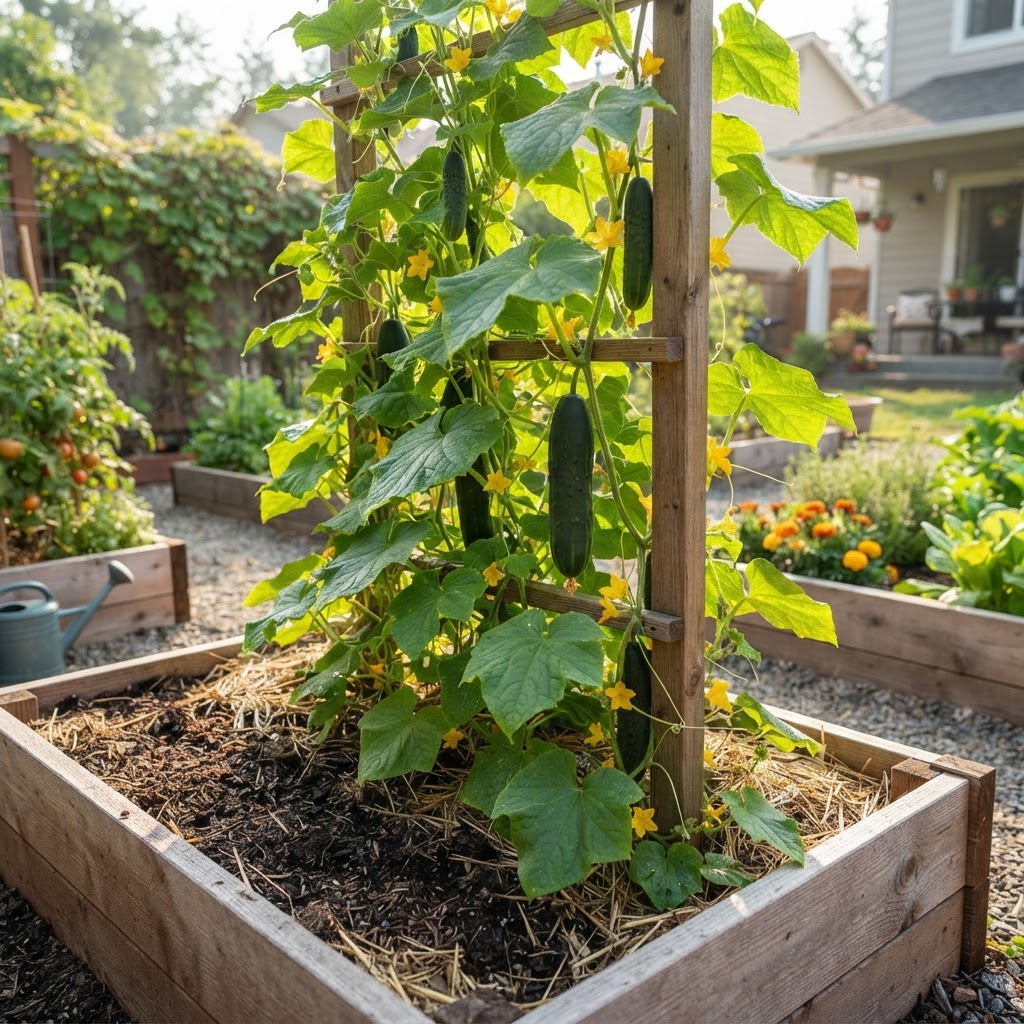
How to Grow Cucumbers in a Raised Bed: A Beginner-Friendly Step-by-Step Guide
Cucumbers are one of the most rewarding vegetables to grow at home, and raised beds make the process even easier. If you want crisp, productive plants without a lot of fuss, learning how to grow cucumbers in a raised bed is a smart place to start.
Why This Topic Matters
Cucumbers grow fast, produce heavily, and fit well into many home gardens. For beginners, they are exciting because you can often go from seed to harvest in just a couple of months.
Raised beds give cucumbers a strong head start. The soil warms faster in spring, drains better after heavy rain, and is easier to improve with compost and organic matter.
They also make day-to-day care simpler. You can water more efficiently, spot pest problems earlier, and add supports like trellises without stepping on the soil.
Another big benefit is plant health. Cucumbers are prone to issues like mildew, rot, and uneven growth when conditions are poor, but raised beds help create a more controlled environment.
If you are short on space, raised beds can be surprisingly productive. With vertical growing methods, even a small bed can provide a steady supply of slicing cucumbers or pickling cucumbers all season long.
Quick Answer
To grow cucumbers in a raised bed, choose a sunny location, fill the bed with rich well-draining soil, and plant cucumber seeds or seedlings after the danger of frost has passed. Space plants properly, keep the soil evenly moist, feed them with compost or a balanced fertilizer, and use a trellis to save space and improve airflow.
Most cucumber plants need:
- 6 to 8 hours of full sun daily
- Warm soil and warm air temperatures
- Consistent moisture
- Fertile, compost-rich soil
- Support for climbing varieties
- Regular harvesting to keep production going
For many beginners, the simplest setup is a raised bed with compost-rich soil and a sturdy trellis along the back side. That combination keeps plants healthier, fruit cleaner, and harvesting easier.
Step-by-Step Guide
1. Choose the right raised bed location
Cucumbers need warmth and sunlight to thrive. Pick a spot that gets at least 6 to 8 hours of direct sun each day, though more is often better.
Avoid areas with heavy shade from fences, trees, or buildings. Less light usually means weaker vines, fewer flowers, and smaller harvests.
Good airflow also matters. A spot with steady air movement can help reduce mildew and other fungal problems.
2. Start with healthy soil
Cucumbers are heavy feeders, so your raised bed soil should be loose, rich, and full of organic matter. A blend of topsoil, compost, and aerating material like coco coir or aged bark works well.
Before planting, mix in 2 to 3 inches of finished compost. This improves fertility, moisture retention, and soil life.
Aim for soil that drains well but does not dry out immediately. Cucumbers like steady moisture, not soggy roots.
If you want to check one more detail, a soil pH between about 6.0 and 7.0 is ideal. Most garden soils in raised beds perform well in that range.
3. Pick the best cucumber variety
Not all cucumbers grow the same way. Some are compact bush types, while others are vigorous vines that spread or climb.
For raised beds, vining cucumbers are often the best choice because they can grow upward on a trellis. That saves space and improves airflow.
Popular options include:
- Slicing cucumbers for fresh eating
- Pickling cucumbers for smaller fruits and preserving
- Bush varieties for very small raised beds
- Disease-resistant varieties if mildew or beetles are common in your area
If you are a beginner, look for seed packets labeled productive, disease-resistant, or suitable for trellising.
4. Wait for warm weather
Cucumbers do not like cold soil. Planting too early is one of the quickest ways to end up with weak plants or poor germination.
Direct sow seeds or transplant seedlings only after the last frost date has passed and the soil feels warm. Ideally, soil temperatures should be at least 70°F for quick germination, though they can sprout in slightly cooler soil more slowly.
If nights are still chilly, wait a little longer. A short delay often leads to faster growth than forcing plants into cold conditions.
5. Decide whether to sow seeds or use transplants
Both methods can work well in a raised bed.
Direct sowing is simple and often preferred because cucumber roots dislike disturbance. Seeds usually sprout quickly in warm soil.
Transplants can give you a head start, especially in short-season areas. If using seedlings, plant them carefully and avoid disturbing the root ball.
For direct sowing:
- Plant seeds about 1 inch deep.
- Water gently after planting.
- Thin seedlings once they emerge.
For transplants:
- Harden plants off for about a week.
- Plant at the same depth they were growing in the pot.
- Water well right after transplanting.
6. Space plants properly
Crowding is a common beginner problem. Cucumbers may start small, but healthy plants can quickly take over a bed.
A good general rule is:
- Trellised vining cucumbers: 12 to 18 inches apart
- Bush cucumbers: 18 to 24 inches apart
- Rows in larger beds: about 3 to 4 feet apart if growing more than one row
Always check your seed packet because spacing varies by variety. Giving each plant enough room improves airflow, helps leaves dry faster, and lowers disease pressure.
7. Install a trellis early
If you are growing vining cucumbers, add a support system at planting time. It is much easier to train young vines than to wrestle a tangled patch later.
A trellis offers several benefits:
- Saves valuable raised bed space
- Keeps fruit straighter and cleaner
- Improves airflow around leaves
- Makes harvesting easier
- Helps you spot pests and disease sooner
You can use cattle panels, netting, wooden frames, or metal garden trellises. Just make sure the structure is sturdy enough to hold mature vines and fruit.
As vines grow, gently guide them toward the support. Some varieties climb readily with tendrils, while others may need occasional tying with soft plant ties.
8. Water consistently
Cucumbers are mostly water, so uneven watering often leads to bitter fruit, misshapen cucumbers, or poor production. In raised beds, soil can dry out faster than in-ground gardens, especially in hot weather.
Give plants deep, regular watering rather than frequent light sprinkles. In many gardens, about 1 to 2 inches of water per week is a good baseline, but you may need more during heat waves.
A few watering tips:
- Water at the base of the plant, not over the leaves
- Check moisture a few inches below the surface
- Water in the morning when possible
- Do not let the bed swing from bone dry to soaking wet
Mulch can make a big difference here. A layer of straw or shredded leaves helps hold moisture and keeps soil from splashing onto foliage.
9. Feed plants as they grow
Cucumbers need steady nutrients to keep producing. If your raised bed was enriched with compost, that gives a great foundation, but heavy-bearing plants often benefit from extra feeding.
Use a balanced organic fertilizer or side-dress with compost once plants begin to vine and flower. Avoid overdoing high-nitrogen fertilizers, which can create lots of leaves but fewer fruits.
A simple feeding schedule might look like this:
- At planting: mix compost into the bed
- Early growth: apply a balanced fertilizer if needed
- Flowering and fruiting: add compost or a low-to-balanced organic feed
Follow product instructions carefully. More fertilizer is not always better.
10. Watch for pollination and flowering
Cucumber plants usually produce both male and female flowers. The male flowers often appear first, so do not panic if you do not see fruit right away.
Female flowers have a tiny immature cucumber behind the bloom. Once pollinated, that little fruit starts to enlarge.
To support pollination:
- Grow flowers nearby to attract bees
- Avoid spraying pesticides during bloom
- Plant more than one cucumber if space allows
Some cucumber varieties are parthenocarpic, meaning they set fruit without pollination. These can be especially useful in protected spaces or areas with low pollinator activity.
11. Manage pests and disease early
Healthy cucumber plants can still attract a few common problems. The key is catching them early before they spread.
Watch for:
- Cucumber beetles chewing leaves and spreading disease
- Squash bugs on stems and undersides of leaves
- Powdery mildew as a white coating on leaves
- Downy mildew causing yellowing and leaf decline
- Aphids clustering on tender growth
Beginner-friendly prevention steps include:
- Watering at the soil line
- Trellising for airflow
- Avoiding overcrowding
- Rotating crops each year
- Removing badly infected leaves promptly
- Checking plants several times a week
Floating row covers can help early in the season, but remove them when flowering begins unless you are hand-pollinating.
12. Harvest often
Cucumbers taste best when picked at the right size. If left too long on the vine, they become oversized, seedy, and less productive overall.
Check plants every day or two once harvest begins. Frequent picking encourages the plant to keep producing.
Use scissors or pruners to cut fruit off cleanly rather than pulling hard on the vine. This reduces plant damage.
Harvest size depends on the variety, but in general:
- Slicing cucumbers are often best at 6 to 8 inches
- Pickling cucumbers are usually harvested smaller
- Specialty varieties may have different ideal sizes
If a cucumber turns yellow, it is usually overripe. Remove it anyway so the plant can focus on new fruit.
Common Beginner Mistakes
One of the biggest mistakes is planting too early. Cucumbers love warmth, and cold weather slows them down from the start.
Another common issue is giving them too little sun. A plant may survive in partial shade, but it will rarely perform at its best.
Poor spacing causes trouble too. Crowded vines trap moisture, reduce airflow, and increase disease problems.
Inconsistent watering is another major problem. Long dry spells followed by heavy watering can lead to stress, bitterness, and split fruit.
Many beginners also skip the trellis. Letting vines sprawl is possible, but it takes up more room and often leads to dirtier fruit and more pest pressure.
Finally, some gardeners forget to harvest often enough. Large overripe cucumbers signal the plant to slow down, which reduces future production.
Best Tips for Success
If you want the easiest path to a healthy crop, focus on a few basics and do them well.
Keep the soil rich
Add compost before planting every season. Rich soil supports fast growth and steady fruit production.
Mulch after planting
A light mulch layer helps conserve moisture, reduces weeds, and keeps leaves cleaner after rain or watering.
Grow vertically when possible
Trellising is one of the best ways to improve cucumber health in a raised bed. It saves space and reduces disease pressure.
Check plants often
Spend a minute or two looking at leaves, flowers, and developing fruit several times a week. Small issues are easier to fix than large ones.
Harvest young and regularly
Tender, smaller cucumbers are usually the best tasting. Regular picking also keeps the plant productive.
Choose resistant varieties
If you have struggled with mildew or wilt in the past, disease-resistant varieties are worth seeking out.
Recommended Supplies or Tools
You do not need fancy equipment to grow cucumbers successfully, but a few basic tools can make the job much easier.
Helpful supplies include:
- A sturdy raised bed with at least 10 to 12 inches of soil depth
- High-quality compost
- Cucumber seeds or healthy seedlings
- A trellis or vertical support system
- Soft plant ties or garden clips
- Straw or leaf mulch
- A watering wand, hose, or drip irrigation setup
- Hand pruners or harvest scissors
- Organic balanced fertilizer if your soil needs it
If you are building a simple beginner setup, prioritize these three things first:
- Good compost-rich soil
- Reliable watering
- Strong vertical support
Those basics solve most cucumber-growing problems before they start.
Frequently Asked Questions
How many cucumber plants fit in a raised bed?
It depends on the bed size and whether you are trellising. In a typical 4x4 raised bed, you can often grow 2 to 4 vining cucumber plants comfortably on a trellis, depending on the variety.
Do cucumbers grow better on a trellis or on the ground?
In most raised beds, cucumbers grow better on a trellis. Vertical growth improves airflow, saves space, keeps fruit cleaner, and makes harvesting easier.
How often should I water cucumbers in a raised bed?
Check the soil frequently and water whenever the top few inches start to dry. During hot weather, raised beds may need watering more often than in-ground beds, sometimes daily in extreme heat.
Can I grow cucumbers and tomatoes in the same raised bed?
Yes, as long as the bed is large enough and both crops get enough space, sunlight, and support. Keep airflow in mind because both plants can become dense and crowded.
Why are my cucumber flowers falling off without making fruit?
This can happen when only male flowers are open at first, which is normal. It can also happen due to poor pollination, heat stress, irregular watering, or transplant shock.
Final Thoughts
Learning how to grow cucumbers in a raised bed is one of the best ways to enjoy a productive, beginner-friendly summer crop. With warm soil, full sun, steady watering, and a simple trellis, cucumber plants can thrive and reward you with plenty of crisp fruit.
Start with healthy soil, avoid overcrowding, and harvest often. Once you get the basics right, cucumbers are one of the most satisfying vegetables you can grow at home.