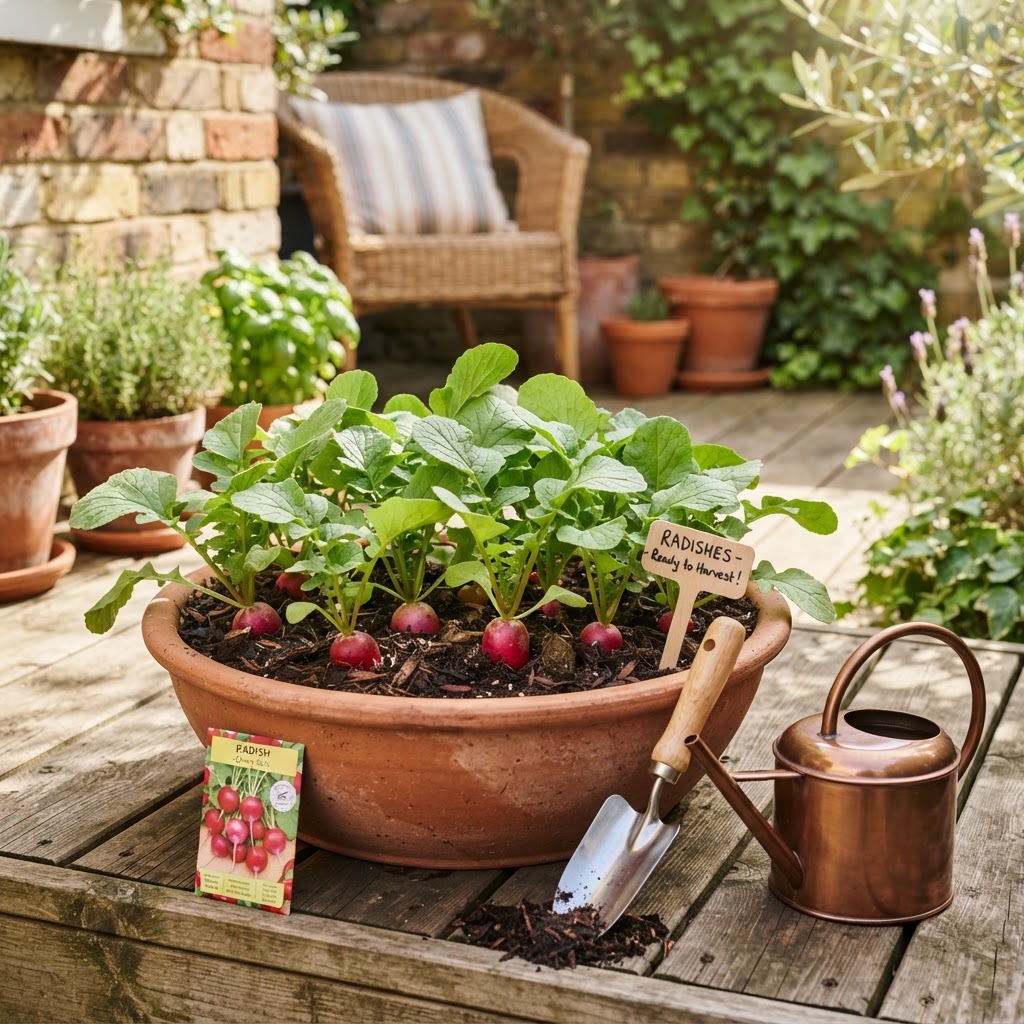
How to Grow Radishes in Containers Quickly: A Beginner-Friendly Guide
Radishes are one of the fastest and easiest vegetables you can grow, which makes them perfect for new gardeners. If you want a quick harvest from a patio, balcony, porch, or small backyard, learning how to grow radishes in containers quickly is a great place to start.
The best part is that radishes do not need much space, complicated care, or a long season. With the right container, loose soil, regular watering, and a sunny spot, you can often harvest crisp roots in as little as 3 to 5 weeks.
Why This Topic Matters
Container gardening helps more people grow food at home, even if they do not have a traditional garden bed. Radishes are especially useful for beginners because they germinate fast, grow quickly, and give visible results in a short time.
That quick turnaround builds confidence. When you harvest your first crunchy radish only a few weeks after sowing seeds, gardening starts to feel simple and rewarding.
Radishes are also a smart choice for sustainable vegetable gardening. They use little space, work well in cool seasons, and can fit into small-space growing plans alongside lettuce, spinach, or herbs.
Another reason this topic matters is timing. Many beginners want to know which vegetable will give them a fast win, and radishes are one of the best answers. They are ideal if you want something productive before slower crops like tomatoes or peppers are ready.
Quick Answer
To grow radishes in containers quickly, use a pot that is at least 6 inches deep, fill it with loose and well-draining potting mix, sow seeds about 1/2 inch deep and 1 inch apart, and place the container where it gets at least 6 hours of sun. Keep the soil evenly moist, thin seedlings early, and choose fast-growing round varieties such as Cherry Belle, French Breakfast, or Easter Egg.
Most radishes grow fastest in cool weather. In spring or fall, many varieties are ready to harvest in about 22 to 35 days.
Step-by-Step Guide
1. Choose a Fast-Growing Radish Variety
If your goal is speed, start with radish varieties known for quick maturity. Small globe-shaped radishes are usually faster than large winter radishes.
Good container-friendly options include:
- Cherry Belle
- French Breakfast
- Easter Egg
- Sparkler
- White Icicle
Check the seed packet for “days to maturity.” For the quickest harvest, look for varieties in the 22- to 30-day range.
2. Pick the Right Container
Radishes do not need a huge pot, but they do need enough depth for root development. A shallow container can lead to stunted, misshapen, or tiny radishes.
Choose a container that is:
- At least 6 inches deep for small round radishes
- 8 inches deep for longer types like French Breakfast or White Icicle
- Wide enough to space seeds properly
- Equipped with drainage holes
You can use nursery pots, window boxes, grow bags, or food-safe buckets. Wider containers usually work better than narrow ones because they allow you to grow more radishes at once.
3. Use Loose, Light Potting Mix
Heavy garden soil is one of the biggest reasons radishes grow slowly or form poor roots in containers. Radishes need soft, loose soil so the roots can expand easily.
Use a quality potting mix rather than soil from the ground. If you want to improve texture even more, mix in a little compost and perlite.
A simple container mix for radishes can include:
- 70 to 80% potting mix
- 10 to 20% compost
- 10% perlite or coarse sand for drainage
Avoid high-nitrogen fertilizers or overly rich mixes. Too much nitrogen encourages leafy tops instead of plump roots.
4. Plant Seeds Directly
Radishes do best when sown directly in the container. They do not usually benefit from transplanting because root disturbance can slow growth.
To sow radish seeds:
- Fill the container with moistened potting mix.
- Make shallow holes or furrows about 1/2 inch deep.
- Drop seeds about 1 inch apart.
- Cover lightly with soil.
- Water gently so you do not wash the seeds away.
If you want a larger harvest over time, sow a new small batch every 7 to 10 days. This is called succession planting and helps you enjoy continuous harvests instead of all your radishes maturing at once.
5. Place Containers in a Sunny Spot
Radishes grow best with full sun, especially in cool weather. Aim for at least 6 hours of direct sunlight a day.
If your space gets only partial sun, radishes can still grow, but they may take longer and develop smaller roots. In hot climates, a little afternoon shade can actually help keep them from getting stressed.
Good locations include:
- A south-facing patio
- A bright balcony
- A front porch with strong morning sun
- A deck railing planter with drainage
6. Water Consistently for Fast Growth
Fast growth depends on even moisture. If the soil dries out too much and then gets soaked, radishes can become woody, cracked, or extra spicy.
Check the soil daily by touching the top inch. Water when it starts to feel dry, but do not let the container stay soggy.
A helpful rule is to keep the soil consistently moist like a wrung-out sponge. Containers dry out faster than in-ground beds, so spring and fall winds may mean you need to water more often than expected.
7. Thin Seedlings Early
This step is hard for beginners, but it makes a big difference. If seedlings are crowded, the roots cannot size up properly.
Once the seedlings are about 1 to 2 inches tall, thin them so each plant has space. For most small radishes, leave about 2 inches between plants.
You can snip extras at the soil line with scissors instead of pulling them out. That helps avoid disturbing nearby roots.
8. Feed Lightly, if Needed
Radishes usually do not need much fertilizer, especially if your potting mix already contains some nutrients. Overfeeding is much more common than underfeeding.
If your mix is plain and the seedlings look pale, you can use a diluted balanced liquid fertilizer once after true leaves appear. Use it lightly and avoid repeated high-nitrogen feeding.
For most beginners, good soil and steady watering matter more than fertilizer.
9. Watch for Growth Problems
Radishes grow so fast that early small issues can quickly affect harvest size. Check containers every day or two.
Look for:
- Dry soil
- Crowded seedlings
- Yellowing leaves
- Pest chewing on leaves
- Bulbs pushing above the soil too early
Most radish problems in containers come from watering swings, heat stress, or overcrowding rather than serious pests or diseases.
10. Harvest on Time
If you want tender, crisp radishes, timing matters. Many beginners wait too long, thinking bigger is better, but older radishes often become pithy, woody, or too hot.
Start checking your radishes around the expected maturity date listed on the seed packet. Gently brush back the soil to see the size of the root shoulder near the surface.
Harvest when the roots are:
- About 1 inch across for small round types
- Smooth and firm
- Brightly colored, depending on the variety
Pull one and test it. If it tastes good, harvest the rest over the next few days.
Common Beginner Mistakes
Using a Container That Is Too Shallow
A pot that is too small limits root growth. Even quick crops like radishes need enough depth to develop properly.
If you are growing a longer variety, always give it extra space. Otherwise you may end up with lots of leaves and very little root.
Planting in Dense or Heavy Soil
Compacted soil slows root formation. It can also cause splitting, odd shapes, and disappointing harvests.
Always use a fluffy potting mix instead of digging soil from the yard into your container.
Overcrowding Seedlings
It is tempting to leave every seedling in place, especially when they all sprout well. But crowded radishes compete for water, nutrients, and root space.
Thinning is one of the easiest ways to improve speed and quality.
Letting the Soil Dry Out
Containers dry faster than most new gardeners expect. Inconsistent watering often leads to slow growth and tough roots.
Try to build a simple habit of checking containers at the same time each day.
Growing in Hot Weather
Radishes prefer cool conditions. In hot temperatures, they may bolt, become extra spicy, or fail to form nice roots.
For quick success, grow them in early spring or fall. In mild climates, they may also grow well through winter.
Waiting Too Long to Harvest
Radishes are best picked young. Once they sit too long in the container, texture and flavor decline.
When in doubt, harvest a little early rather than too late.
Best Tips for Success
If you want the quickest and best container radish harvest, focus on a few high-impact habits.
Start with the Right Season
Radishes are cool-season vegetables. For the fastest growth, plant when daytime temperatures are mild.
Ideal conditions are often around 50 to 70°F. In that range, plants grow steadily without heat stress.
Use Fresh Seeds
Old seeds can still sprout, but germination may be slower or uneven. Fresh seed gives you a better chance at fast, uniform growth.
If you have seeds left from previous years, sow a few extra to make up for lower germination.
Succession Plant for a Continuous Harvest
Instead of sowing one huge batch, plant smaller batches every week or so. This keeps your harvests manageable and gives you repeated quick wins.
It also reduces the chance of wasting radishes that all mature at the same time.
Pair Radishes with Other Cool-Season Crops
Radishes fit nicely with other fast growers in containers. You can grow separate pots of:
- Lettuce
- Spinach
- Arugula
- Green onions
- Cilantro
This is a great way to build a simple, productive small-space garden.
Harvest the Greens Too
Radish greens are edible when young and tender. You can use them in sautés, soups, or pesto-style blends.
That means your container gives you two harvests from one crop: roots and greens.
Keep Notes
A small garden notebook or phone note can help you remember:
- Planting date
- Variety name
- Germination time
- Harvest date
- What worked well
This makes each new round of radishes easier and more successful.
Recommended Supplies or Tools
You do not need much to grow radishes in containers quickly, which is one reason they are so beginner-friendly. A few basic supplies are enough.
Here is a simple list:
- Radish seeds
- Container with drainage holes
- Quality potting mix
- Compost, optional
- Watering can or hose with gentle spray
- Plant label or marker
- Small scissors for thinning
Optional tools that can help include:
- A moisture meter if you tend to overwater or underwater
- A shallow tray under pots, if your growing area allows it
- Lightweight row cover if flea beetles are a problem in your area
If you are shopping online, look for food-safe containers and a light, well-draining potting mix. You do not need expensive gear to get a fast harvest.
Frequently Asked Questions
How long do radishes take to grow in containers?
Most small radish varieties take about 22 to 35 days from sowing to harvest. Weather, sunlight, watering, and variety all affect speed.
Cool temperatures and steady moisture usually lead to the quickest results.
Can radishes grow well in small pots?
Yes, radishes can grow very well in small pots as long as the container is deep enough and has drainage holes. For round radishes, aim for at least 6 inches of depth.
Wider containers are usually better than very narrow ones because they allow proper spacing.
Do radishes need full sun in containers?
Radishes prefer full sun, with at least 6 hours of direct light per day. They can tolerate partial sun, but growth may be slower.
In warmer regions, a little afternoon shade can help reduce heat stress.
Why are my radishes only growing leaves and no bulbs?
This is usually caused by overcrowding, too much nitrogen, hot weather, or not enough sun. Heavy soil can also make root formation difficult.
Thin seedlings, use loose potting mix, and grow during cool weather for the best chance of forming bulbs quickly.
Can I regrow radishes after harvesting?
Radishes do not regrow a full new bulb after harvest. Once you pull the root, that plant is finished.
The easiest way to keep harvests coming is to sow new seeds every 7 to 10 days.
Final Thoughts
If you are looking for a fast, easy vegetable to grow at home, radishes are hard to beat. They are compact, beginner-friendly, and often ready to harvest in less than a month.
To grow radishes in containers quickly, keep it simple: choose a fast variety, use a container with enough depth, fill it with loose potting mix, give it plenty of sun, and keep the soil evenly moist. Thin seedlings early and harvest on time, and you will be well on your way to a crisp, homegrown crop.
Start with one container this week. A small pot of radishes can be the perfect first step toward a more confident and sustainable vegetable garden.