How to Use Fish Emulsion Fertilizer on Vegetables: A Beginner-Friendly Guide
Fish emulsion is one of the easiest organic fertilizers for home gardeners to use, especially if you want a gentle, fast-acting boost for leafy growth and overall plant health. If you are new to vegetable gardening, learning how to use it correctly can help you feed your plants without overdoing it.
Why This Topic Matters
Vegetables need steady nutrition to grow well, produce harvests, and recover from stress. Many beginner gardeners focus on watering and sunlight but forget that soil nutrients are just as important.
Fish emulsion fertilizer is popular because it is simple to mix, easy to apply, and usually mild enough for regular feeding when diluted correctly. It can be especially helpful for seedlings, transplants, container vegetables, and fast-growing crops that use nutrients quickly.
Another reason this matters is that too much fertilizer can cause problems just as easily as too little. Knowing when, where, and how to apply fish emulsion helps you support healthy growth without burning plants or encouraging weak, overly lush leaves.
For gardeners trying to grow food more sustainably, fish emulsion can also fit nicely into an organic-style routine. It works best as part of a bigger plan that includes compost, healthy soil, mulch, and good watering habits.
Quick Answer
To use fish emulsion fertilizer on vegetables, dilute it according to the label, usually mixing a small amount with water, then apply it to the soil around the base of the plants or use it as a foliar spray if the product allows. Feed most vegetables every 1 to 2 weeks during active growth, preferably in the morning or evening, and avoid overapplying.
In simple terms, fish emulsion is best used as a gentle supplement rather than your only source of fertility. Pair it with compost-rich soil and pay attention to how your plants respond.
Step-by-Step Guide
What Fish Emulsion Fertilizer Is
Fish emulsion is a liquid fertilizer made from fish byproducts that have been processed into a nutrient-rich concentrate. It usually contains nitrogen along with smaller amounts of phosphorus, potassium, and trace minerals.
Most fish emulsion products are stronger in nitrogen than in phosphorus or potassium. That makes them especially useful for leafy growth, early plant development, and giving vegetables a quick green-up when they look pale or slow.
Know What It Does Best
Fish emulsion is not a magic fix for every garden problem. It works best when your plants need a mild, quick nutrient boost.
It is often a good choice for:
- Seedlings after they develop true leaves
- Newly transplanted vegetables
- Leafy greens like lettuce, kale, spinach, and chard
- Heavy feeders during early growth, such as tomatoes, peppers, cucumbers, and squash
- Container vegetables that lose nutrients faster with frequent watering
It is less useful if your soil has major nutrient imbalances that need long-term correction. In that case, compost and soil-building amendments are still the foundation.
Read the Label First
Before mixing anything, read the fertilizer label carefully. Different brands have different concentrations, and the right dilution can vary.
Look for:
- Mixing directions for soil drench and foliar spray
- How often to apply
- Whether it is safe for edible crops
- Any precautions about storage, smell, or application temperature
If the label gives a range, beginners should usually start with the weaker dilution. You can always increase slightly later if your plants seem to need more.
Gather Your Supplies
You do not need much to get started. A few simple tools make the job easier and cleaner.
Basic supplies include:
- Fish emulsion fertilizer
- Watering can, bucket, or pump sprayer
- Measuring spoon or measuring cup
- Gloves
- Clean water
- A small notebook or garden app for tracking feeding dates
Mix the Fertilizer Properly
Always dilute fish emulsion before using it unless the product label says otherwise. Applying concentrated liquid fertilizer directly to vegetables can stress or damage plants.
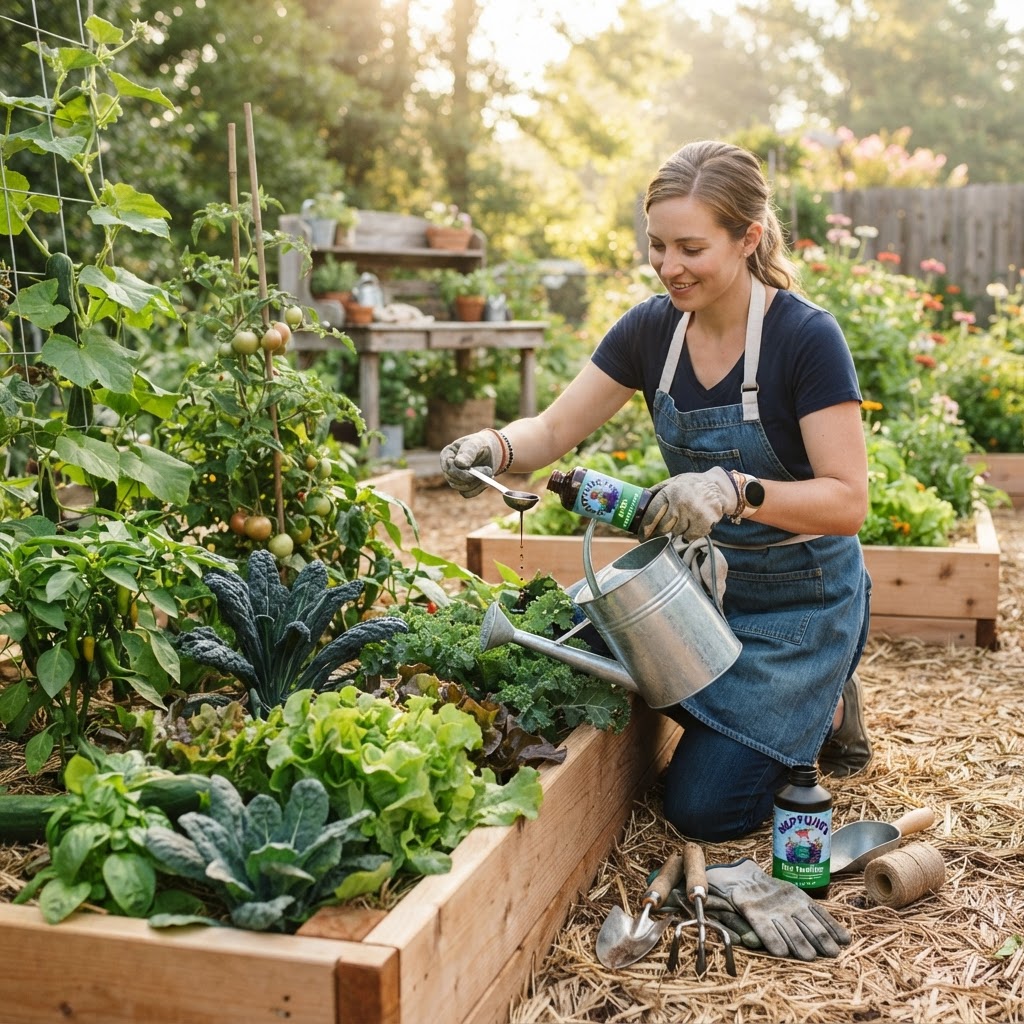
A common beginner approach is to fill a watering can with water first, then add the measured fish emulsion. Stir or shake gently so the fertilizer distributes evenly.
Mix only what you expect to use that day if possible. Liquid organic fertilizers can develop a stronger smell if left sitting too long.
Apply It to the Soil
For most beginners, a soil drench is the simplest and safest method. Pour the diluted fertilizer onto the soil around the base of the plant, not directly on the leaves unless you are intentionally doing a foliar application.
Try to keep the fertilizer a few inches away from the stem. This encourages roots to spread into the surrounding soil and lowers the chance of stem rot or irritation.
Apply enough solution to moisten the root zone but not so much that it runs off. Slow, even application works better than dumping it quickly.
Use as a Foliar Spray if Appropriate
Some fish emulsion products can also be sprayed on leaves. This can provide a quick nutrient boost, but it should be done carefully.
If the label allows foliar feeding:
- Mix at the recommended foliar dilution.
- Spray early in the morning or later in the evening.
- Coat the tops and undersides of leaves lightly.
- Avoid spraying during hot sun.
- Avoid spraying just before rain.
Foliar feeding is useful, but it should not replace building healthy soil. Think of it as an occasional extra tool.
Know When to Feed Vegetables
Timing matters almost as much as the fertilizer itself. Vegetables need different levels of nutrition at different stages of growth.
A simple schedule for beginners:
- Seedlings: Wait until they have a few true leaves, then use a very diluted solution.
- Transplants: Feed about a week or two after transplanting, once they begin settling in.
- Leafy vegetables: Feed regularly every 1 to 2 weeks during active growth.
- Fruiting vegetables: Use fish emulsion more heavily early on for vegetative growth, then avoid excessive nitrogen once plants are flowering and fruiting heavily.
- Containers: Feed more often than in-ground beds because nutrients wash out faster.
For tomatoes, peppers, eggplants, cucumbers, and squash, too much nitrogen later in the season can lead to lots of leaves but fewer flowers and fruits. If plants are dark green and growing huge leaves but not setting fruit well, cut back.
Water Before or After if Needed
If your soil is very dry, water lightly first before applying fertilizer. This helps roots take up nutrients more evenly and lowers the chance of stressing the plant.
After applying fish emulsion to the soil, some gardeners like to follow with a light rinse from the watering can to help carry nutrients into the root zone. Just do not overwater to the point of runoff.
Watch Plant Response
One of the best beginner habits is simply paying attention. Plants will tell you a lot if you look at them regularly.
Signs fish emulsion may be helping include:
- Greener leaves n- Steadier growth
- Better recovery after transplanting
- Healthier-looking leafy vegetables
Signs you may be overfeeding include:
- Very soft, floppy growth
- Lots of leaves but few flowers or fruits
- Strong fertilizer smell lingering in soggy soil
- Yellowing or stress after application from too-strong mixing
If something looks off, stop feeding for a bit and reassess watering, sunlight, and soil drainage too.
Pair It With Good Soil Practices
Fish emulsion works best when it supports a healthy garden system. It is not meant to carry the whole load by itself.
For better results, combine it with:
- Finished compost worked into beds
- Mulch to hold soil moisture
- Crop rotation when possible
- Consistent watering
- Occasional soil testing if plants struggle repeatedly
A rich soil base means your fertilizer becomes a helpful supplement rather than a rescue treatment.
Common Beginner Mistakes
Using Too Much
More fertilizer is not better. Fish emulsion is gentle compared with some synthetic products, but too much can still create problems.
Overfeeding often leads to lush leaf growth at the expense of flowers and fruit. This is especially common with tomatoes and peppers.
Ignoring the Label Dilution
Beginners sometimes assume all liquid fertilizers are mixed the same way. They are not.
Always follow the product instructions. A concentrated formula needs more dilution than a weaker one.
Fertilizing Stressed Plants in Harsh Conditions
Do not fertilize during the hottest part of the day or when plants are severely wilted and dry. This can add stress instead of helping.
If vegetables are drooping from lack of water, fix the watering issue first. Feed later once the plant has recovered.
Relying on Fish Emulsion Alone
Fish emulsion is great for quick feeding, but it does not replace compost and long-term soil improvement. Healthy vegetables grow best in soil with good structure, organic matter, and balanced nutrition.
Think of fish emulsion as one part of your routine, not the whole plan.
Feeding Fruiting Crops Too Often Late in the Season
Nitrogen is helpful early, but once fruiting plants are established, too much can delay or reduce harvests. If your tomato plant looks like a giant green bush with few tomatoes, too much nitrogen may be part of the issue.
Applying It Right Before Heavy Rain
A heavy rain can wash the fertilizer away before your plants benefit from it. Check the forecast and choose a calmer day if possible.
Best Tips for Success
Start Weak and Observe
If you are unsure how your plants will respond, start with a mild dilution and watch for a week. It is much easier to add another light feeding later than to undo overfertilizing.
Feed Regularly, Not Randomly
A light, consistent feeding schedule usually works better than occasional heavy doses. Mark feeding days on a calendar or in your phone.
Focus on Young Plants and Leafy Crops
Fish emulsion shines during early growth and with vegetables grown for their leaves. Use it strategically where it offers the most benefit.
Adjust for Containers
Container vegetables often need more frequent feeding because each watering flushes nutrients through the pot. Even then, use diluted fertilizer and do not assume more is better.
Mind the Smell
Fish emulsion can be smelly, which is normal. Apply it outdoors, rinse tools after use, and store the bottle tightly closed in a cool spot.
If neighborhood animals are a concern, avoid splashing it on paths, raised bed edges, or foliage unnecessarily. Applying directly to the soil helps reduce lingering odors.
Use Clean Tools
Rinse watering cans and sprayers after each use. This prevents clogging, smell buildup, and residue from affecting future applications.
Recommended Supplies or Tools
You do not need fancy equipment to use fish emulsion well. A few simple supplies can make feeding easier and more accurate.
Recommended basics:
- Liquid fish emulsion fertilizer: Choose one labeled for vegetables and follow its directions.
- Watering can: Great for applying diluted fertilizer to the soil around plants.
- Pump sprayer or hand sprayer: Useful if your product can be used as a foliar spray.
- Measuring spoons or small measuring cup: Helps avoid overmixing.
- Gloves: Handy if you do not want the smell on your hands.
- Garden journal or notes app: Track what you applied and when.
Optional but helpful:
- Compost bin or compost supply: Supports long-term soil fertility.
- Mulch: Helps retain moisture and improve soil health over time.
- Soil test kit: Useful if plant problems keep showing up despite regular feeding.
If you shop online, always compare product labels, nutrient ratios, and application directions rather than picking only by price.
Frequently Asked Questions
Can I use fish emulsion fertilizer on all vegetables?
Yes, fish emulsion can be used on most vegetables when diluted correctly. It is especially helpful for leafy greens, seedlings, transplants, and young plants.
For fruiting vegetables like tomatoes and peppers, use it more carefully later in the season so you do not encourage too much leafy growth.
How often should I use fish emulsion on vegetables?
A common beginner schedule is every 1 to 2 weeks during active growth, but the exact timing depends on the product label, your soil, and the type of vegetable.
Container plants may need more frequent light feeding than plants growing in rich garden beds.
Can fish emulsion burn plants?
Yes, it can if it is not diluted properly or if you apply too much. Even gentle organic fertilizers can stress plants when overused.
Always mix according to the label and start with the lower end of the recommended rate if you are unsure.
Is fish emulsion enough by itself for a vegetable garden?
Usually, no. Fish emulsion is best as a supplement to healthy soil, compost, and good garden care.
It provides a quick nutrient boost, but vegetables grow best when the soil also has organic matter, proper drainage, and balanced fertility.
Does fish emulsion smell bad?
It often has a strong smell, yes. That odor usually fades after application, especially when used outdoors and applied to the soil rather than sprayed broadly on leaves and surfaces.
Keeping containers sealed and rinsing tools right away helps a lot.
Final Thoughts
Learning how to use fish emulsion fertilizer on vegetables is a simple skill that can make a real difference in a home garden. It gives plants a gentle, fast-available nutrient boost and is especially useful for seedlings, leafy greens, transplants, and containers.
The key is to use it thoughtfully. Dilute it properly, apply it at the right time, and treat it as one part of a healthy soil-building routine rather than a cure-all.
If you start small, stay consistent, and pay attention to how your vegetables respond, you will quickly gain confidence. Beginner gardening does not have to be complicated, and fish emulsion can be one of the easiest tools to add to your routine.