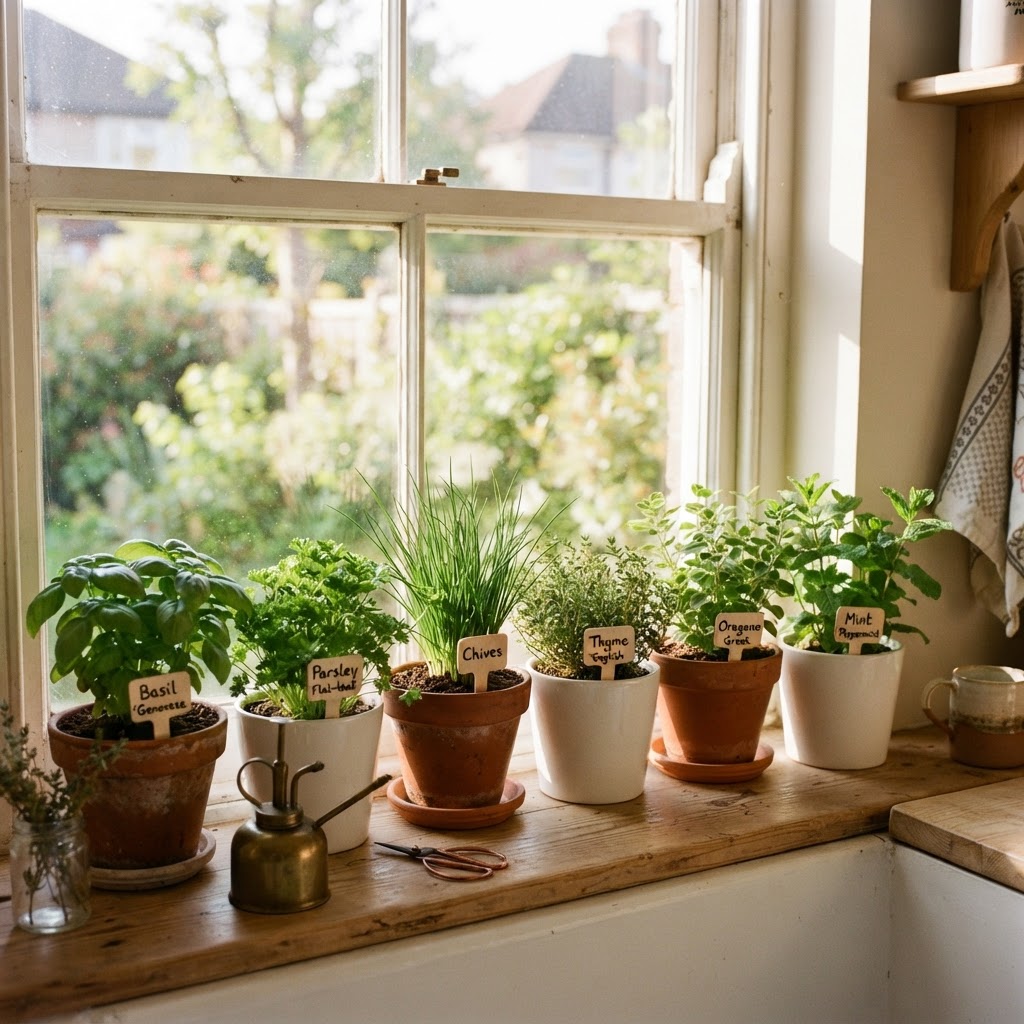
How to Grow Herbs on a Windowsill: A Beginner-Friendly Step-by-Step Guide
Fresh herbs can make simple meals taste better, and growing them indoors is easier than many beginners expect. If you have a bright window, a few small pots, and the right herb choices, you can create a productive little indoor garden right in your kitchen.
Why This Topic Matters
Learning how to grow herbs on a windowsill is one of the easiest ways to start gardening at home. Herbs take up very little space, grow well in containers, and give you quick rewards in the form of fresh leaves you can harvest often.
For beginners, windowsill herbs are a low-pressure way to build confidence. You do not need a yard, raised bed, or expensive setup to get started. A sunny window and a few basic supplies can be enough.
Indoor herb gardening also helps you waste less food. Instead of buying a bunch of parsley or cilantro and using only part of it, you can snip just what you need when cooking.
There is also a practical side. When herbs grow indoors, they are close at hand, easy to monitor, and less exposed to outdoor pests, strong winds, and weather swings.
If you want a simple first step into vegetable gardening, herbs are a smart place to begin. They teach you the basics of light, watering, container choice, and pruning without needing a large commitment.
Quick Answer
To grow herbs on a windowsill, choose a bright window that gets at least 6 hours of sunlight, plant easy herbs like basil, parsley, chives, mint, or thyme in pots with drainage holes, and use a light, well-draining potting mix. Water when the top inch of soil feels dry, rotate pots every few days, and harvest often to keep plants bushy and productive.
The easiest herbs for beginners are usually:
- Basil
- Parsley
- Chives
- Mint
- Thyme
- Oregano
- Cilantro, if your room stays fairly cool
If your window does not get enough direct light, you can still grow herbs successfully by adding a small grow light. Good light, careful watering, and regular trimming matter more than having a lot of space.
Step-by-Step Guide
1. Pick the best window in your home
Most herbs need plenty of light to stay healthy and flavorful. A south-facing window is usually best, while west-facing windows can also work well. East-facing windows may be enough for some herbs, especially in warmer months.
Try to give your herbs at least 6 hours of bright sun each day. If the plants become pale, leggy, or slow-growing, low light is often the reason.
If you do not have a sunny window, do not give up. A simple LED grow light placed a few inches above the plants can make a big difference.
2. Start with easy herbs
Some herbs adapt to indoor conditions better than others. Starting with reliable choices makes success much more likely.
Good herbs for a windowsill garden include:
- Basil: Loves warmth and bright light
- Parsley: Productive and useful in many dishes
- Chives: Compact, forgiving, and easy to harvest
- Mint: Vigorous and beginner-friendly, but best in its own pot
- Thyme: Likes drier soil and bright conditions
- Oregano: Compact, fragrant, and easy to trim
A few herbs can be trickier indoors. Rosemary often struggles if light is weak or air is too dry, and dill tends to get tall and floppy in small spaces.
3. Choose containers with drainage
The right pot matters more than many beginners realize. Herbs do not like sitting in soggy soil, so every container should have a drainage hole at the bottom.
Small pots, usually 4 to 6 inches wide, are fine for starting one herb plant. If you want a fuller windowsill display, use separate pots instead of crowding many herbs into one shallow container.
Separate pots make care easier because different herbs have different watering needs. Mint likes more moisture than thyme, for example, so they should not share the same pot.
4. Use a quality potting mix
Do not dig soil from the yard for indoor herb pots. Garden soil is usually too heavy for containers and may bring pests or disease indoors.
Use a lightweight potting mix that drains well. A mix designed for indoor containers works well, and you can add a little perlite if you want extra drainage.
Fill each pot so the soil sits about an inch below the rim. That space makes watering easier and helps prevent overflow.
5. Decide whether to grow from seeds or starter plants
You can grow windowsill herbs from either seeds or nursery transplants. Each method has benefits.
Starter plants are best if you want faster results. They let you begin harvesting sooner and reduce the wait that comes with seed starting.
Seeds are more affordable and give you more variety. Herbs like basil, parsley, cilantro, and chives can be started from seed indoors with good results.
For complete beginners, a mixed approach works well. Buy one or two starter plants for quick wins, then try seeds once you feel more confident.
6. Plant your herbs correctly
If planting seeds, follow the packet directions for depth and spacing. Herb seeds are often small, so avoid burying them too deeply.
If planting a starter herb, gently loosen the root ball if it is tightly packed. Place it in the pot at the same depth it was growing before, then fill in around it with potting mix.
After planting, water thoroughly until a little moisture drains from the bottom. This helps settle the soil around the roots.
7. Water carefully, not constantly
Overwatering is one of the most common reasons indoor herbs fail. Many beginners think small plants in small pots need water every day, but that often leads to root problems.
Instead of watering on a strict schedule, check the soil with your finger. If the top inch feels dry, it is usually time to water.
When you water, do it thoroughly. Let excess water drain away, and do not leave the pot sitting in a saucer full of water.
Keep in mind that different herbs dry out at different speeds:
- Mint and parsley usually like slightly more moisture
- Thyme and oregano prefer to dry a bit between waterings
- Basil likes evenly moist soil but not soggy roots
8. Give herbs the right temperature and airflow
Most common culinary herbs grow well in normal indoor temperatures. A range of about 65 to 75 degrees Fahrenheit works for many varieties.
Avoid pressing pots directly against icy winter glass or placing them near heating vents. Sudden temperature swings can stress plants and cause leaf drop or poor growth.
A little airflow helps too. You do not need a fan running constantly, but a stuffy corner can encourage mildew or weak stems.
9. Feed lightly
Herbs do not need heavy feeding, especially in small indoor setups. Too much fertilizer can cause weak, fast growth with less flavor.
If your potting mix does not contain nutrients, use a diluted liquid fertilizer every 3 to 4 weeks during active growth. A balanced organic houseplant or vegetable fertilizer is usually enough.
Always follow the label and use less rather than more. With herbs, steady growth is better than forced growth.
10. Harvest the right way
Regular harvesting helps herbs become bushier and more productive. If you let many herbs grow without trimming, they can become tall, sparse, and less useful.
Use clean scissors or pinch stems with your fingers. Cut just above a pair of leaves so the plant branches out from that point.
A few helpful harvesting rules:
- Do not remove more than one-third of the plant at a time.
- Harvest from the top to encourage branching.
- Remove flower buds early on herbs like basil if you want more leaf growth.
- Use herbs often, because frequent cutting usually improves their shape.
11. Rotate and observe your plants
Plants on a windowsill naturally lean toward the light. Turn each pot every few days so growth stays more even.
Get into the habit of checking your herbs often. Notice changes in leaf color, drooping, dry edges, or small pests before they become bigger problems.
Indoor gardening gets easier when you learn to read the plants. A quick daily glance can tell you a lot.
Common Beginner Mistakes
One of the biggest mistakes is choosing a window that looks bright to people but is not bright enough for herbs. If your herbs stretch, flop, or lose color, they likely need more light.
Another common issue is overwatering. Soggy soil can lead to yellow leaves, fungus gnats, and root rot, especially in containers without good drainage.
Beginners also tend to crowd too many herbs into one container. That can make watering harder, increase competition for roots, and create poor airflow around the plants.
Using the wrong herb for the space is another problem. Large or fussy herbs like rosemary may be less forgiving indoors, while easier choices like chives, parsley, and thyme usually perform better.
Many new growers forget to harvest. It feels scary to cut the plant at first, but regular trimming keeps herbs compact and healthy.
Finally, avoid placing herbs too close to cold glass in winter or too near heat sources. Indoor conditions can change quickly, and herbs notice those stresses sooner than you might think.
Best Tips for Success
Start small. Three healthy herb pots are easier to manage than ten struggling ones.
Match the herb to the window. Basil and oregano love strong light, while parsley and chives can handle slightly less.
Use saucers or trays under pots, but empty standing water after watering. This simple habit helps prevent root problems.
Keep herbs in separate containers when possible. It is much easier to meet each plant's watering and growth needs that way.
If natural light is limited, add a grow light early instead of waiting for plants to decline. A small supplemental light is often the difference between survival and steady growth.
Harvest often and cook with what you grow. The more you use your herbs, the more satisfying the windowsill garden becomes.
Recommended Supplies or Tools
You do not need a complicated setup to grow herbs on a windowsill. A few basic supplies can make the process easier and more reliable.
Helpful items include:
- Small pots with drainage holes
- Saucers or drip trays
- Indoor potting mix
- Herb seeds or starter plants
- A watering can or small cup with a spout
- Clean scissors or herb snips
- Plant labels
- A simple LED grow light if sunlight is limited
- Diluted liquid fertilizer for occasional feeding
If budget matters, start with the basics first: pots, potting mix, herbs, and a bright window. You can always add extras later.
Frequently Asked Questions
Can herbs really grow well on a windowsill?
Yes, many herbs grow very well on a windowsill if they get enough light. The best results usually come from bright windows, proper drainage, and regular harvesting.
Which herbs are easiest to grow indoors for beginners?
Basil, chives, parsley, mint, thyme, and oregano are all beginner-friendly choices. They are useful in the kitchen and generally adapt well to container life.
How often should I water windowsill herbs?
Water when the top inch of soil feels dry rather than following a strict daily schedule. Some herbs need more moisture than others, so always check the soil first.
What if my window does not get enough sun?
Use a small grow light to supplement natural light. Many indoor herb problems are really light problems, and a grow light is an easy fix.
Should I grow herbs from seeds or buy plants?
Both options work. Starter plants give you faster results, while seeds are cheaper and offer more variety, so many beginners enjoy using a mix of both.
Final Thoughts
If you have been wondering how to grow herbs on a windowsill, the good news is that you do not need much space or experience to succeed. Start with easy herbs, give them enough light, use pots with drainage, and water with care.
A windowsill herb garden is a small project that can teach you a lot about growing food at home. Once you snip your first handful of fresh basil, chives, or parsley, you may be surprised how quickly this simple habit turns into a favorite part of your kitchen.