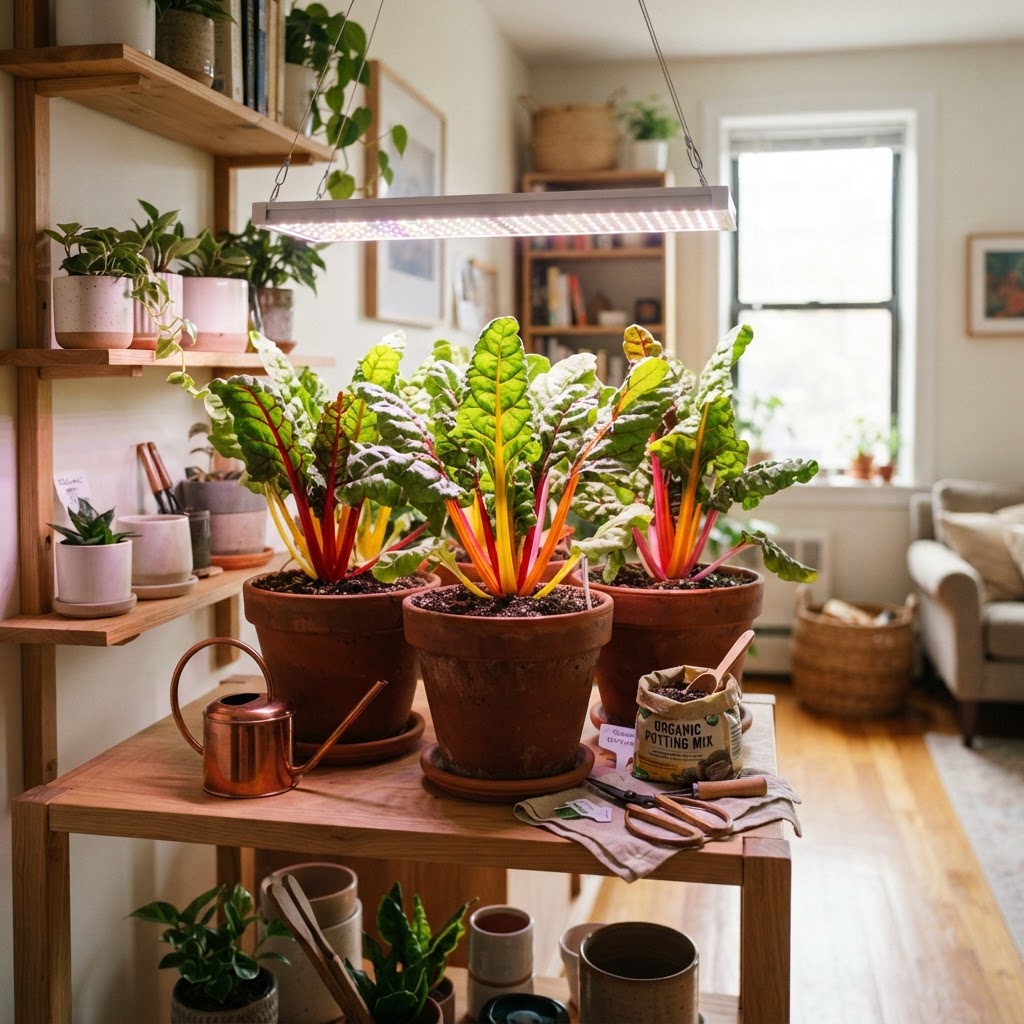
How to Grow Swiss Chard Indoors Under Lights: A Beginner-Friendly Step-by-Step Guide
Growing leafy greens inside is one of the easiest ways to keep fresh harvests coming all year, and Swiss chard is especially rewarding. If you want a colorful, productive vegetable that handles indoor conditions better than many other greens, Swiss chard is a smart place to start.
The good news is that learning how to grow Swiss chard indoors under lights does not have to be complicated. With the right container, steady moisture, and a simple grow light setup, even beginners can raise healthy plants and harvest tender leaves at home.
Why This Topic Matters
Swiss chard deserves more attention in indoor gardens. It is attractive, nutritious, and often more forgiving than head lettuce or spinach when conditions are not perfect.
For home gardeners, growing Swiss chard indoors under lights offers a few big advantages. You are not relying on the weather, you can harvest in every season, and you do not need a yard to enjoy fresh greens.
It is also a practical crop for beginners because it keeps producing after you start picking leaves. Instead of waiting for one full harvest, you can snip outer leaves and let the center continue growing.
Indoor growing also helps you avoid some common outdoor challenges, such as:
- Sudden heat waves
- Slug and snail damage
- Poor garden soil
- Limited space
- Short growing seasons
If you have a shelf, a spare corner, or a small table with a light above it, you can grow Swiss chard successfully indoors.
Quick Answer
To grow Swiss chard indoors under lights, plant seeds in a deep container filled with quality potting mix, keep the soil evenly moist, and place the plants under full-spectrum grow lights for about 12 to 14 hours per day. Keep temperatures around 60 to 75°F, thin seedlings so they have room to grow, and harvest outer leaves regularly once plants are established.
In short, Swiss chard needs five main things indoors:
- A container with drainage
- Rich, loose potting mix
- Bright grow lights placed close enough to the plants
- Consistent watering without soggy soil
- Light feeding and regular harvesting
Once those basics are in place, Swiss chard is usually easy to manage.
Step-by-Step Guide
1. Choose the right variety
Most Swiss chard varieties grow well indoors, but compact or standard types tend to be easier to manage than extra-large plants. Bright Lights is a popular choice because it gives you colorful stems in red, pink, yellow, orange, and white.
Fordhook Giant and Ruby Red can also do well indoors. If your space is limited, look for a variety described as productive, compact, or suitable for containers.
2. Pick a suitable container
Swiss chard has a stronger root system than many salad greens, so choose a pot that gives it enough depth. A container about 8 to 12 inches deep works well for a few plants.
Make sure the container has drainage holes. This is very important because Swiss chard likes moisture, but it does not like sitting in water.
Good container options include:
- Nursery pots
- Window boxes
- Rectangular planter boxes
- Fabric grow bags
- Deep seed trays for baby leaf production
If you want larger mature plants, leave enough room for spacing. If you want baby greens, you can sow more densely and harvest earlier.
3. Use a quality potting mix
Do not use garden soil from outside. It often compacts too much in containers and may introduce pests or disease indoors.
Instead, fill your container with a loose, high-quality potting mix. A mix that holds moisture while still draining well is ideal.
A good indoor growing mix usually includes:
- Peat moss or coco coir
- Perlite or pumice
- Compost or added organic matter
You can also mix in a small amount of balanced organic fertilizer before planting if your potting mix does not already contain nutrients.
4. Sow the seeds correctly
Swiss chard seeds are fairly easy to handle, which makes planting simple for beginners. Sow seeds about 1/2 inch deep and cover them lightly with potting mix.
After sowing, water gently so you do not wash the seeds out of place. Keep the soil consistently moist during germination.
Swiss chard often germinates in about 5 to 10 days under warm indoor conditions. Some seeds are actually seed clusters, so it is common to get more than one seedling from a single spot.
5. Thin seedlings early
Once seedlings are a few inches tall, thin them so each plant has enough room. This step is hard for beginners because healthy sprouts can be tough to remove, but crowded Swiss chard will stay small and struggle.
For full-size indoor plants, aim for about 6 to 8 inches between plants. For baby leaf harvests, you can keep them closer together.
If you do not want to pull seedlings, snip extras at the soil line with scissors. That avoids disturbing the roots of the seedling you want to keep.
6. Set up your grow lights
This is the key to growing Swiss chard indoors well. A bright window alone is often not enough, especially in winter or in homes with weak natural light.
Use full-spectrum LED grow lights or fluorescent grow lights. Position the lights close enough to give strong, even light without overheating the plants.
A general guideline is:
- LED grow lights: usually 6 to 12 inches above the tops of plants, depending on intensity
- Fluorescent lights: usually 2 to 6 inches above the plants
Follow the manufacturer's instructions for your specific light. If lights are too far away, seedlings become leggy and weak.
Keep the lights on for about 12 to 14 hours each day. A simple timer makes this much easier and keeps the schedule consistent.
7. Maintain the right temperature
Swiss chard is fairly adaptable, but it grows best indoors when temperatures stay moderate. Aim for roughly 60 to 75°F.
It can tolerate cooler conditions, but growth may slow. Very warm rooms combined with weak light can lead to stretched, floppy plants.
Avoid placing containers right next to:
- Heating vents
- Radiators
- Drafty windows
- Cold exterior doors
Stable conditions usually lead to stronger growth.
8. Water carefully and consistently
Indoor Swiss chard likes evenly moist soil, not soggy soil and not bone dry soil. Check moisture by sticking your finger into the top inch of the potting mix.
If the top inch feels dry, water thoroughly until extra water drains out the bottom. Then let the excess drain away fully.
A few watering tips help a lot:
- Water the soil, not the leaves
- Empty saucers if water collects for too long
- Adjust watering based on room temperature and light intensity
- Do not follow a rigid schedule without checking the soil first
Overwatering is one of the most common indoor gardening mistakes, so always check before watering.
9. Feed the plants lightly
Swiss chard is a leafy crop, so it benefits from steady nutrition. If your potting mix contains fertilizer, you may not need to feed right away.
After a few weeks of growth, use a diluted balanced liquid fertilizer or a gentle organic fertilizer according to label directions. Feeding every 2 to 4 weeks is often enough for container-grown chard.
Do not overdo it. Too much fertilizer can cause soft growth or salt buildup in the container.
10. Provide airflow if possible
Indoor plants often do better with gentle air movement. It helps reduce excess moisture on leaves and can lead to sturdier stems.
A small fan on a low setting nearby can help, especially if you are growing several plants under lights. The airflow should be gentle, not harsh enough to dry the plants out quickly.
11. Start harvesting the right way
Once the leaves are large enough to use, you can begin harvesting. For most indoor plants, that means waiting until outer leaves are around 6 to 8 inches long.
Use the cut-and-come-again method. Pick the older outer leaves first and leave the center growing point alone.
To harvest properly:
- Choose the largest outer leaves.
- Cut them near the base with clean scissors or garden snips.
- Leave the inner leaves untouched.
- Harvest a few leaves at a time rather than stripping the whole plant.
This method keeps the plant productive for a much longer time.
12. Replant when needed
Swiss chard can keep producing indoors for quite a while, but it will not last forever. Over time, growth may slow, leaves may become smaller, or plants may simply look tired.
A smart habit is to sow a new container every few weeks if you want a steady supply. Succession planting gives you young plants coming on as older ones slow down.
Common Beginner Mistakes
Indoor Swiss chard is beginner-friendly, but a few common mistakes can hold it back. The good news is that most are easy to fix once you know what to watch for.
Not giving enough light
This is the biggest problem in indoor vegetable gardening. If plants look pale, stretched, or floppy, they probably need stronger or closer light.
Swiss chard under weak lighting grows slowly and produces thin stems and small leaves. Keeping the grow light at the proper distance makes a big difference.
Overcrowding seedlings
It is tempting to leave every seedling in place, but crowded plants compete for light, water, and nutrients. That often leads to smaller harvests rather than bigger ones.
Thinning may feel wasteful, but it helps the remaining plants thrive.
Overwatering
Beginners often water on a fixed schedule instead of checking the soil first. Constantly wet soil can lead to root stress, fungus gnats, or poor growth.
Water when the top layer starts to dry, not just because it is "watering day."
Using a container that is too shallow
Swiss chard is not a tiny microgreen once mature. Shallow containers dry out quickly and can restrict root growth.
Choose a deeper pot if you want larger, longer-lasting plants.
Harvesting too much at once
If you remove too many leaves, the plant has less energy to keep producing. Always leave the center intact and avoid taking more than about one-third of the plant at a time.
Skipping fertilizer completely
Container plants use up nutrients over time. If your Swiss chard starts strong and then stalls, it may simply need a light feeding.
Best Tips for Success
If you want healthier plants and more reliable harvests, focus on consistency more than perfection. Swiss chard does not need a fancy setup, but it responds very well to steady care.
Here are some of the best practical tips:
- Use a timer for your grow lights so the schedule stays regular.
- Rotate containers every few days if one side gets more light than the other.
- Harvest often, but lightly, to encourage fresh growth.
- Sow a new batch every 3 to 4 weeks for continuous indoor greens.
- Keep leaves dry when watering to reduce disease issues.
- Watch for pale leaves, which can signal weak light or low nutrients.
- Clean trays, pots, and tools between plantings.
One especially useful tip for beginners is to start with more than one container. That way, if one pot grows slowly or has a problem, you still have backup plants.
Another smart idea is to decide early whether you want baby greens or mature leaves. Baby leaf production allows tighter spacing and quicker harvests, while mature plants need more room and a bit more patience.
Recommended Supplies or Tools
You do not need a complicated indoor garden to grow Swiss chard successfully. A few basic supplies are usually enough.
Here is a simple list to get started:
- Swiss chard seeds
- Containers with drainage holes
- Quality potting mix
- Full-spectrum grow light
- Light timer
- Watering can or small spouted container
- Liquid or organic fertilizer
- Scissors or garden snips for harvesting
- Optional small fan for airflow
If you are building a basic setup, prioritize these three first:
- Good seeds
- A proper potting mix
- A reliable grow light
Everything else makes the process easier, but those are the real essentials.
When choosing grow lights, look for models made for edible indoor plants rather than decorative houseplant lighting. Swiss chard does not need an extreme setup, but it does need dependable brightness.
Frequently Asked Questions
Can Swiss chard really grow well indoors?
Yes, Swiss chard can grow very well indoors if it gets enough light. It is one of the more adaptable leafy greens and handles container growing better than many beginners expect.
How many hours of light does indoor Swiss chard need?
Most indoor Swiss chard does well with about 12 to 14 hours of grow light each day. If growth seems slow, review both the number of hours and the distance between the light and the plants.
How long does Swiss chard take to harvest indoors?
You can often start picking baby leaves in about 3 to 4 weeks. Larger outer leaves for regular harvest usually take around 4 to 6 weeks, depending on variety, temperature, and light.
Does Swiss chard regrow after cutting?
Yes, it regrows very well when harvested correctly. Pick the outer leaves and leave the center growing point untouched so the plant can continue producing new leaves.
Why is my indoor Swiss chard leggy?
Leggy growth usually means the plants are not getting enough light. Move the grow light closer, improve light intensity, or increase daily light exposure within the recommended range.
Final Thoughts
If you have been wondering how to grow Swiss chard indoors under lights, the biggest takeaway is that success comes from getting the basics right. Give the plants a deep container, loose fertile soil, steady moisture, and enough bright light, and they will usually reward you with weeks of fresh harvests.
Swiss chard is a wonderful crop for beginner indoor gardeners because it is productive, beautiful, and forgiving. Start with one small setup, learn as you go, and you may find that this colorful leafy green becomes one of your favorite vegetables to grow indoors all year long.