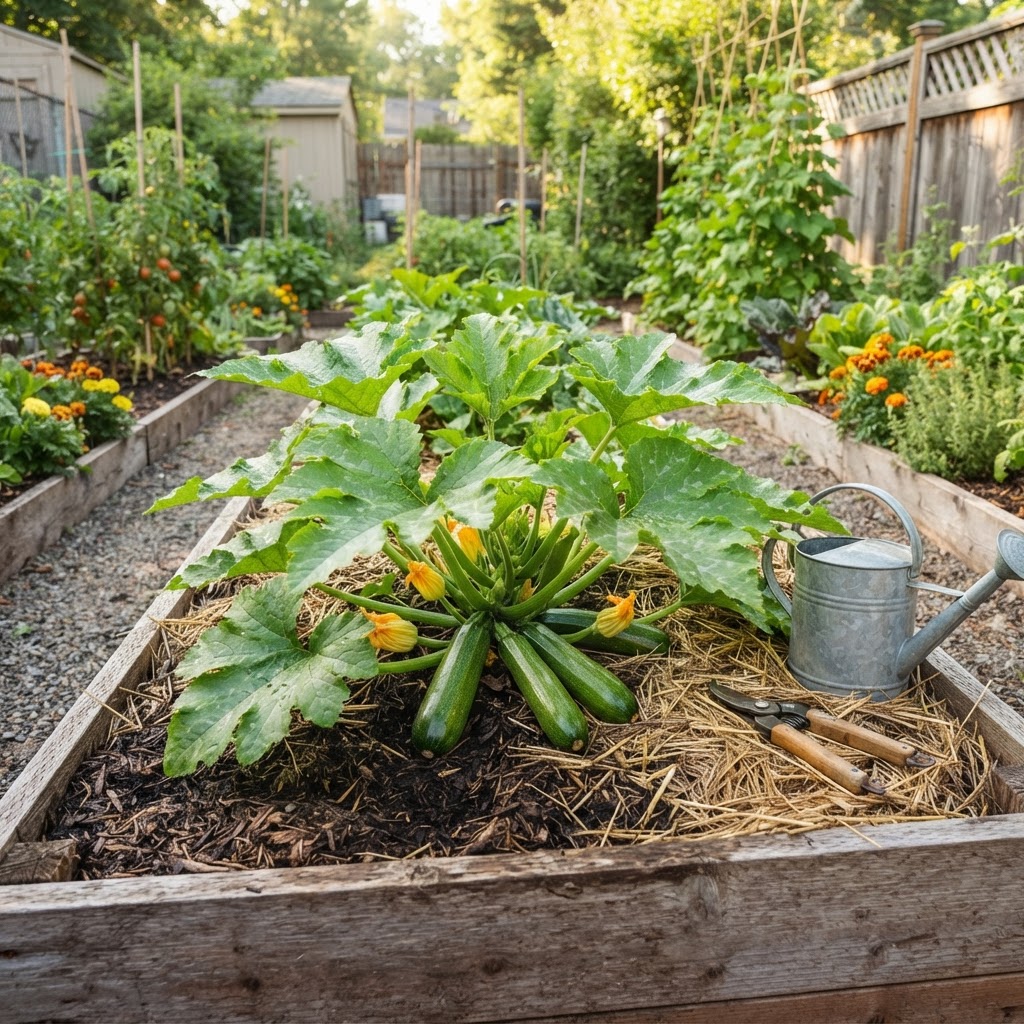
How to Grow Zucchini in a Raised Bed: A Simple Beginner’s Guide
Zucchini is one of the most rewarding vegetables for beginner gardeners. If you give it warm soil, steady water, and enough room, a single plant can produce a generous harvest over many weeks.
Growing zucchini in a raised bed makes the process even easier. You get better drainage, warmer soil in spring, and a more manageable growing space for this fast-growing summer squash.
Why This Topic Matters
Zucchini is often recommended to new gardeners for a reason. It sprouts quickly, grows fast, and usually starts producing before many other summer crops are ready.
But zucchini can also be surprisingly frustrating if you plant it in the wrong spot or crowd it too closely. Beginners often end up with huge leaves, few fruits, powdery mildew, or vines sprawling into nearby crops.
A raised bed helps solve many of these common issues. The soil warms earlier, drains better after heavy rain, and is easier to enrich with compost before planting.
Raised beds also make spacing and maintenance simpler. Instead of letting zucchini take over a large in-ground patch, you can give each plant a defined area and keep up with watering, mulching, and harvesting more easily.
If you want a productive, beginner-friendly vegetable that teaches you a lot in one season, zucchini is a great choice. Learning how to grow zucchini in a raised bed can help you get healthier plants, cleaner fruit, and a more organized garden.
Quick Answer
To grow zucchini in a raised bed, plant it in full sun after the soil has warmed and all danger of frost has passed. Use rich, well-draining soil mixed with compost, space plants generously, water deeply and consistently, and harvest fruits while they are still small to medium-sized.
For most raised beds, the sweet spot is:
- 6–8 hours of full sun daily
- At least 18–24 inches of space per plant, though more is better
- Soil enriched with compost
- 1–2 inches of water per week, more during hot weather
- Regular harvesting to keep plants producing
Bush zucchini varieties are usually the best fit for raised beds. They stay more compact than vining squash, though they still need plenty of elbow room.
Step-by-Step Guide
1. Choose the right raised bed location
Zucchini needs warmth and sun. Pick a spot that gets at least 6 to 8 hours of direct sunlight each day, with good air circulation around the plants.
Avoid planting zucchini in a shady corner or too close to tall crops like corn or trellised tomatoes. Less light usually means weaker growth and fewer flowers.
If possible, place your bed somewhere easy to reach with a hose or watering can. Zucchini grows quickly and needs steady moisture, especially once flowering begins.
2. Start with rich, loose soil
One of the biggest advantages of a raised bed is soil quality. Zucchini grows best in loose, fertile soil that holds moisture but does not stay soggy.
Before planting, mix in plenty of compost. A good starting point is 2 to 3 inches of compost worked into the top 6 to 8 inches of soil.
Aim for soil that feels crumbly, not compacted. If your raised bed mix is very lightweight, adding compost will help it hold water better.
If you have not refreshed the bed in a while, this is also a good time to add a balanced organic fertilizer. Follow the label directions rather than guessing.
3. Pick a zucchini variety suited to raised beds
Most gardeners do best with bush zucchini in raised beds. These varieties stay more upright and compact than sprawling squash types.
Good choices may include:
- Black Beauty
- Raven
- Dunja
- Astia
- Patio Star or other compact types
If your raised bed is small, look for varieties described as compact, bush, or container-friendly. Even compact zucchini still needs airflow and room for large leaves.
4. Plant at the right time
Zucchini is a warm-season crop. Wait until all danger of frost has passed and the soil is at least 60°F, though warmer is better.
Cold soil can slow germination and stunt young plants. In many climates, zucchini does best when planted a week or two after your last expected frost date rather than on the very first warm day.
You can either direct sow seeds or transplant seedlings. Direct sowing is simple and often works very well because zucchini grows quickly.
5. Sow seeds or transplant carefully
If you are planting seeds, sow them about 1 inch deep. Plant 2 seeds in each spot, then thin to the strongest seedling once they have a few true leaves.
If you are using transplants, handle the roots gently. Zucchini does not love root disturbance, so avoid breaking apart the root ball.
Water well right after planting. This helps settle the soil and gives the plant a strong start.
6. Space plants generously
This is one of the most important parts of growing zucchini in a raised bed. A zucchini plant may look small at first, but it can quickly spread 2 to 4 feet wide depending on the variety.
In most raised beds, use these spacing guidelines:
- 1 plant in a 2 x 2 foot area at minimum
- 18–24 inches between plants for compact bush types
- 24–36 inches between plants for larger varieties
- No more than 1–2 zucchini plants in a 4 x 4 raised bed
Overcrowding leads to poor airflow, more mildew, and harder harvesting. When in doubt, plant fewer zucchini plants than you think you need.
7. Mulch after the soil warms
Once seedlings are established and the soil is warm, add mulch around the base of the plants. Straw, shredded leaves, or untreated grass clippings work well.
Mulch helps conserve moisture, reduce weeds, and keep soil from splashing onto leaves. That can be especially helpful for reducing some disease problems.
Keep mulch a couple of inches away from the stem so it does not trap too much moisture right against the plant.
8. Water deeply and consistently
Zucchini likes even moisture. Inconsistent watering can cause poor growth, blossom-end issues, or misshapen fruit.
A good general goal is about 1 to 2 inches of water per week, including rainfall. During hot, dry weather, raised beds may need watering more often because they dry out faster than in-ground gardens.
Water at the base of the plant rather than overhead when possible. Wet leaves can encourage fungal issues, especially if air circulation is poor.
A simple routine works well:
- Check the soil with your finger.
- If the top inch feels dry, water deeply.
- Water in the morning so plants have moisture before the heat of the day.
- Avoid frequent light sprinkling, which encourages shallow roots.
9. Feed the plants as they grow
Zucchini is a fairly heavy feeder, especially in a productive raised bed. If you started with compost-rich soil, your plants may do well for several weeks before needing extra nutrients.
Once flowering begins, you can side-dress with compost or use a balanced vegetable fertilizer according to the package directions. Too much nitrogen can give you lots of leaves but fewer fruits, so avoid overfeeding.
Healthy zucchini leaves should look vigorous and green. Pale, slow-growing plants may need a nutrient boost, but always start with soil moisture and spacing before assuming fertilizer is the answer.
10. Watch for pollination problems
Zucchini plants make separate male and female flowers. The female flowers have a tiny baby zucchini behind the bloom, while the male flowers grow on plain stems.
If female flowers open but the tiny fruit shrivels instead of growing, poor pollination may be the issue. This often happens early in the season or during stretches of rainy weather when pollinators are less active.
To support pollination:
- Grow flowers nearby to attract bees
- Avoid spraying pesticides around blooms
- Harvest regularly so plants keep producing
- Hand-pollinate if needed using a small brush or by transferring pollen from a male flower to a female flower
11. Keep an eye out for pests and disease
Raised beds help, but zucchini can still run into a few common problems. Check plants every few days so you catch issues early.
Common concerns include:
- Squash bugs
- Cucumber beetles
- Squash vine borers in some regions
- Powdery mildew
- Rotting fruit from poor pollination or wet conditions
Remove damaged leaves when needed, but do not strip the plant bare. Good spacing, watering at soil level, crop rotation, and clean garden habits go a long way.
If powdery mildew appears late in the season, the plant may still continue producing for a while. Focus on keeping leaves as dry as possible and harvesting often.
12. Harvest often for the best flavor
Zucchini grows fast. One day the fruit looks perfect, and two days later it can seem oversized.
For the best texture and flavor, harvest zucchini when it is usually 6 to 8 inches long, depending on the variety. Smaller fruits are often more tender and help the plant stay productive.
Use a knife or pruners to cut the fruit from the plant rather than twisting hard on the stem. Regular harvesting signals the plant to keep making more zucchini.
Check plants every day or two once they start producing. It is easy to miss a fruit hiding under those big leaves.
Common Beginner Mistakes
Planting too many zucchini plants
This is probably the most common mistake. One or two healthy plants can produce plenty for a small household.
If you plant four or five in one raised bed, you may end up with crowded plants, more disease pressure, and more zucchini than you can use.
Not leaving enough space
Small seedlings can be misleading. Zucchini quickly develops broad leaves that shade nearby crops and trap humidity if planted too close together.
Watering too lightly
A quick daily sprinkle is usually not enough. Zucchini grows best with deep watering that reaches the root zone.
Overfeeding with nitrogen
More fertilizer is not always better. Too much nitrogen encourages leafy growth at the expense of flowers and fruit.
Waiting too long to harvest
Large zucchini are impressive, but they are often seedy and less tender. Leaving too many oversized fruits on the plant can also slow future production.
Ignoring airflow
Crowded beds and wet leaves create a friendlier environment for mildew. Pruning a few damaged leaves and spacing plants properly can make a big difference.
Best Tips for Success
If you want the easiest path to a strong zucchini harvest, keep these tips in mind:
- Grow bush varieties in raised beds whenever possible.
- Plant after the soil is truly warm, not just after the calendar says spring.
- Use compost generously to build fertile, moisture-holding soil.
- Mulch the bed to reduce watering stress and soil splash.
- Water deeply at the base instead of wetting the leaves.
- Harvest young and often for better flavor and more production.
- Check under leaves regularly so hidden fruits do not get oversized.
- Rotate crops each year instead of planting zucchini or other squash in the same exact spot every season.
One more simple tip: do not panic if the first few flowers fall off. Male flowers often appear first, and that is completely normal.
Recommended Supplies or Tools
You do not need a long shopping list to grow zucchini well. A few basic tools make the job easier.
Helpful supplies include:
- A raised bed at least 12 inches deep
- Quality raised bed soil or garden soil blended with compost
- Zucchini seeds or healthy seedlings
- Compost or a balanced organic vegetable fertilizer
- Straw or leaf mulch
- A watering can, hose, or drip irrigation setup
- Hand pruners or garden scissors for harvesting
- Plant labels if you are growing more than one variety
If pests are a regular problem in your area, you may also want lightweight row cover for young plants. Just remember to remove it once flowering begins, unless you plan to hand-pollinate.
Frequently Asked Questions
How many zucchini plants fit in a raised bed?
In a 4 x 4 raised bed, most beginners should grow only 1 or 2 zucchini plants. That may not sound like much, but healthy plants can become large and productive very quickly.
Can zucchini grow in a small raised bed?
Yes, especially if you choose a compact bush variety. The key is to avoid crowding and make sure the plant still gets full sun, rich soil, and regular watering.
Do zucchini plants need a trellis in a raised bed?
Most bush zucchini does not require a trellis, but some gardeners use stakes or supports to keep plants tidier. A support can improve airflow and make harvesting easier, but it is optional for most varieties.
Why is my zucchini flowering but not making fruit?
This is often a pollination issue. If bees are not visiting the flowers or if weather conditions are poor, female flowers may not get pollinated and the tiny fruit may shrivel.
How often should I water zucchini in a raised bed?
Watering frequency depends on heat, rainfall, and your soil mix, but zucchini usually needs deep watering whenever the top inch of soil dries out. In hot summer weather, raised beds may need water more often than in-ground gardens.
Final Thoughts
If you are looking for a productive summer vegetable that is beginner-friendly and satisfying to grow, zucchini is hard to beat. A raised bed gives you better soil control, easier maintenance, and a simple way to keep plants healthy from planting time to harvest.
Start with rich soil, give each plant enough space, water deeply, and harvest often. With those basics in place, you will be well on your way to growing zucchini in a raised bed with confidence.