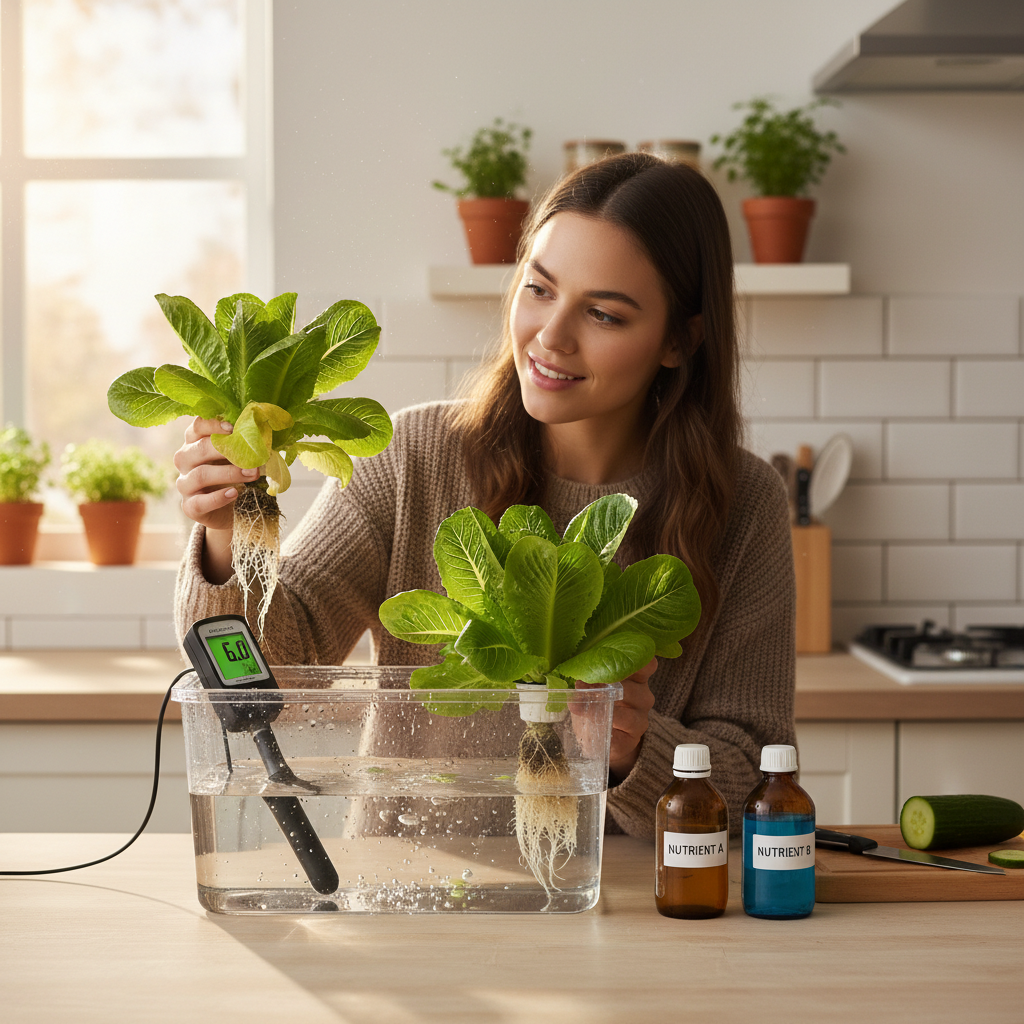
Hydroponic Lettuce Turning Yellow? Easy Fixes for Healthy Green Leaves
If your hydroponic lettuce is turning yellow, don’t panic. Yellow leaves are one of the most common signs that something in your system needs adjusting, and the good news is that lettuce usually responds quickly once you fix the cause.
In most cases, the problem comes down to nutrients, pH, lighting, temperature, or root health. Let’s walk through how to figure out what’s wrong and get your lettuce back to a healthy green.
Why This Topic Matters
Lettuce is one of the easiest crops for beginners to grow in hydroponics, which is why yellowing leaves can feel so frustrating. You set up the system, mix the water, and expect fast growth, but then the leaves start fading instead of thriving.
Yellowing matters because it is an early warning sign. Your plants are telling you they are stressed, and if you catch the issue soon, you can often save the crop before growth stalls or the leaves become bitter and weak.
Healthy lettuce should have:
- Even green color
- Crisp leaves
- Steady new growth from the center
- White, fresh-looking roots
When leaves turn yellow, your lettuce may struggle to photosynthesize, absorb nutrients, and produce the soft, full heads most gardeners want. Learning to read those signals will make you much more confident with hydroponics.
Quick Answer
Hydroponic lettuce turning yellow is usually caused by one or more of these issues:
- Nutrient imbalance or weak nutrient solution
- pH outside the ideal range
- Root problems from low oxygen, heat, or disease
- Too much or too little light
- Water temperatures that are too warm
- Natural aging of older outer leaves
For most lettuce systems, aim for these basic targets:
- pH: 5.5 to 6.5
- Water temperature: 65 to 72°F (18 to 22°C)
- Air temperature: 60 to 75°F (16 to 24°C)
- EC: about 0.8 to 1.4 for many lettuce varieties
- Light: 12 to 16 hours of good grow light daily
If only the oldest outer leaves are yellowing while the center looks healthy, the plant may simply be dropping older leaves. But if yellowing spreads quickly, affects new growth, or comes with drooping, brown roots, or stunted plants, it is time to troubleshoot.
Step-by-Step Guide
Step 1: Look at which leaves are turning yellow
Before changing anything, study the pattern. The location of yellowing often gives you your first clue.
Older outer leaves yellow first
This often points to:
- Mild nitrogen deficiency
- Low overall nutrient strength
- Normal aging of older leaves
If the plant center is still growing well and looks green, your lettuce may not be in serious trouble. Remove the oldest leaves and monitor the new growth.
New inner leaves yellow first
This can suggest:
- Iron deficiency
- pH problems blocking nutrient uptake
- Root stress
When the newest leaves lose color, it usually means the plant cannot access nutrients properly, even if nutrients are present in the reservoir.
Yellow leaves with brown edges or spotting
This can be related to:
- Potassium deficiency
- Heat stress
- Salt buildup
- Disease issues
Take note of leaf texture too. Soft, limp leaves point to water, root, or temperature stress. Dry, crispy edges often suggest environmental problems or nutrient imbalance.
Step 2: Check and adjust the pH
If there is one number beginner hydroponic growers should never ignore, it is pH. Even a well-fed plant can turn yellow if the pH drifts too high or too low.
Lettuce generally grows best in a pH range of 5.5 to 6.5, with many growers aiming around 5.8 to 6.2.
When pH drifts out of range:
- Iron may become unavailable
- Nitrogen uptake can suffer
- Calcium and magnesium balance may shift
- Leaves can pale or yellow even when nutrients are present
What to do
- Test the reservoir with a reliable pH meter or liquid test kit.
- If pH is above 6.5, slowly lower it using a pH-down product.
- If pH is below 5.5, raise it with pH-up.
- Recheck after mixing and again a few hours later.
Make small changes, not big swings. Sudden pH corrections can stress the plants too.
Step 3: Review your nutrient solution
Yellow lettuce often means the nutrient solution is too weak, out of balance, or old. Lettuce is not a heavy feeder, but it still needs a complete hydroponic nutrient blend with the right macro- and micronutrients.
Signs your nutrients may be the problem
- Pale overall color
- Slow growth
- Older leaves yellowing first
- Reservoir has not been changed in a long time
- You mixed nutrients at a very low dose
Use a complete hydroponic nutrient made for leafy greens or general hydroponic vegetables. Lettuce usually prefers a lower EC than fruiting crops.
General EC range for lettuce
- Seedlings: 0.5 to 0.8 EC
- Young plants: 0.8 to 1.2 EC
- Mature lettuce: 1.0 to 1.4 EC
If your EC is much lower than that, your lettuce may simply be underfed. If it is too high, roots can struggle and yellowing may also appear.
What to do
- Measure EC or TDS if possible
- Replace old reservoir water with fresh nutrient solution
- Mix according to the product label for lettuce or leafy greens
- Do not guess or add extra nutrients “just in case”
More nutrients are not always better. Overfeeding can damage roots and cause leaf burn or lockout.
Step 4: Inspect the roots
Healthy roots are one of the best signs of a healthy hydroponic plant. If the leaves are yellowing, lift the net pot or inspect the root zone if your system allows it.
Healthy roots look like
- White or cream colored
- Firm, not slimy
- Fresh smelling
Unhealthy roots may be
- Brown or tan
- Slimy or mushy
- Bad smelling
- Sparse or weak
Poor root health can come from:
- Warm water
- Low oxygen levels
- Dirty equipment
- Root rot pathogens
What to do
- Improve aeration with an air stone and air pump if needed
- Keep water temperatures in the safe range
- Remove dead plant material from the system
- Clean the reservoir and lines between crops
- Consider a reservoir change if the water is cloudy or stale
If root rot is advanced, badly affected plants may not fully recover. Still, correcting conditions can protect the rest of your crop.
Step 5: Check water temperature and airflow
Lettuce prefers cool, stable conditions. When temperatures climb, plants become stressed, roots hold less oxygen, and yellowing often follows.
Ideal temperature range
- Air: 60 to 75°F (16 to 24°C)
- Water: 65 to 72°F (18 to 22°C)
If your reservoir gets too warm, roots can suffocate or become vulnerable to disease. If grow lights or sun exposure overheat the plants, leaves may yellow and wilt.
What to do
- Move the reservoir out of direct sun
- Increase airflow with a small fan
- Raise grow lights if they are too close
- Use light-colored reservoir covers if heat buildup is a problem
- Grow lettuce during cooler seasons if possible
For many home growers, heat is an underrated cause of hydroponic lettuce problems.
Step 6: Evaluate your lighting
Lettuce needs enough light to stay green and grow full leaves, but too much intense light can also cause stress.
Too little light may cause
- Pale or yellow-green leaves
- Leggy growth
- Thin, weak plants
Too much light or heat from lights may cause
- Faded leaves
- Dry or scorched edges
- Wilting near the top of the plant
Most lettuce does well with 12 to 16 hours of light per day under suitable grow lights. Keep lights at the recommended distance from the plants based on the fixture type.
If you recently changed bulbs, moved plants outdoors, or lowered the lights, that change may explain the yellowing.
Step 7: Watch for overcrowding and poor spacing
When lettuce is packed too tightly, lower leaves get less light and airflow. That can lead to yellowing, weak growth, and increased disease risk.
Give each plant enough space for its mature size. Leaf lettuce may tolerate closer spacing than head lettuce, but every type needs room for leaves to spread.
What to do
- Thin crowded seedlings
- Harvest outer leaves regularly
- Improve airflow around mature plants
Sometimes the fix is as simple as giving the plants a little breathing room.
Step 8: Consider natural aging
Not all yellow leaves mean disaster. On mature lettuce, the oldest outer leaves may yellow as the plant puts energy into newer growth.
This is normal if:
- Only one or two outer leaves are affected
- The center remains green and vigorous
- Roots look healthy
- Growth is steady
In that case, gently remove the old leaves and continue regular care. The key is whether the problem is isolated or spreading.
Common Beginner Mistakes
Many new hydroponic gardeners make the same few mistakes when lettuce starts turning yellow. Recognizing them early can save time and prevent bigger setbacks.
1. Changing everything at once
It is tempting to add nutrients, adjust pH, move lights, and change water all in one day. The problem is that you will not know what actually helped, and too many sudden changes can stress the plant further.
2. Ignoring pH because the nutrients seem correct
A full reservoir does not help if the plant cannot absorb what is in it. pH lockout is one of the most common reasons beginners see yellow leaves.
3. Using the wrong nutrient product
Regular fertilizer for soil is not the same as a hydroponic nutrient. Hydro systems need water-soluble nutrients formulated to stay available in solution.
4. Letting the reservoir get too warm
Warm water lowers dissolved oxygen and increases the chance of root disease. This often happens in small systems near sunny windows or hot grow lights.
5. Overfeeding lettuce
Because yellowing can look like deficiency, some growers keep adding more nutrients. That can make the problem worse by increasing salt stress and damaging roots.
6. Skipping regular cleaning
Old organic debris, algae, and biofilm can all reduce system health. Clean systems are much easier to manage than neglected ones.
Best Tips for Success
If you want consistently green, productive hydroponic lettuce, focus on simple habits rather than constant correction.
Keep a short routine
Check these items several times a week:
- Water level
- pH n- Plant color and leaf shape
- Root appearance
- Reservoir temperature
Small observations help you catch problems before they spread.
Refresh nutrients on a schedule
Even if the water still looks clear, nutrient balance changes over time as plants absorb different elements. Replacing the reservoir regularly helps prevent hidden deficiencies.
A simple starting point is:
- Top off with plain water as needed between changes
- Replace the nutrient solution every 1 to 2 weeks, depending on system size and plant load
Start with fewer plants
A crowded system is harder to monitor. Beginners often do better growing a small batch first, learning what healthy lettuce looks like, and then expanding.
Choose lettuce varieties that handle heat better
If your growing area runs warm, try loose-leaf types rather than dense heading types. Some varieties are simply more forgiving in home systems.
Use good records
Write down:
- Date of nutrient changes
- pH readings
- EC readings
- Temperature highs and lows
- Any visible symptoms
A basic notebook or phone note can make troubleshooting much easier.
Recommended Supplies or Tools
You do not need a complicated setup to prevent yellowing, but a few basic tools make hydroponic lettuce care much easier.
Most helpful tools
- Digital pH meter: for accurate pH checks
- EC or TDS meter: to monitor nutrient strength
- Hydroponic leafy green nutrient: complete formula for lettuce
- Air pump and air stone: to improve oxygen in the root zone
- Thermometer: for checking room and water temperature
- Clean reservoir or bucket lids: to block light and reduce algae
- Measuring syringes or cups: for precise nutrient mixing
- Soft cleaning brush: for routine system cleaning
Nice extras for beginners
- pH calibration solution
- Small clip fan for airflow
- Light timer for consistent daily lighting
- Spare net pots and growing media
- Notebook or printable garden log
Reliable tools reduce guesswork, and less guesswork usually means healthier plants.
Frequently Asked Questions
Can yellow lettuce turn green again?
Sometimes, yes. Mild yellowing caused by low nutrients or pH issues can improve after the problem is corrected, especially in newer leaves. Completely yellow or damaged older leaves may not recover fully, but healthy new growth is a good sign.
Should I remove yellow leaves from hydroponic lettuce?
Yes, if the leaves are mostly yellow, damaged, or decaying. Removing them improves airflow and helps you monitor whether new yellowing is still happening.
How often should I change water for hydroponic lettuce?
Many home growers replace the nutrient solution every 1 to 2 weeks. Small systems with fast-growing plants may need more frequent changes than larger, more stable reservoirs.
Is yellowing always caused by nutrient deficiency?
No. Yellow leaves can also come from pH imbalance, root rot, warm water, low oxygen, lighting problems, or normal leaf aging. That is why it helps to inspect the whole system instead of assuming you need more fertilizer.
What pH is best for hydroponic lettuce?
A pH range of 5.5 to 6.5 works well for most hydroponic lettuce, with around 5.8 to 6.2 being a common target. Staying in range helps the plant absorb nutrients efficiently.
Final Thoughts
Seeing hydroponic lettuce turning yellow can be discouraging, but it is usually a fixable problem. In most cases, a careful check of pH, nutrient strength, root health, temperature, and light will reveal what your plants need.
Start with the basics, make one change at a time, and watch the new growth. Hydroponic lettuce grows quickly, so your plants often show improvement within days once conditions are back on track.
The more you observe your system, the easier it becomes to spot early warning signs. With a little practice, you’ll be able to keep your lettuce green, crisp, and thriving.