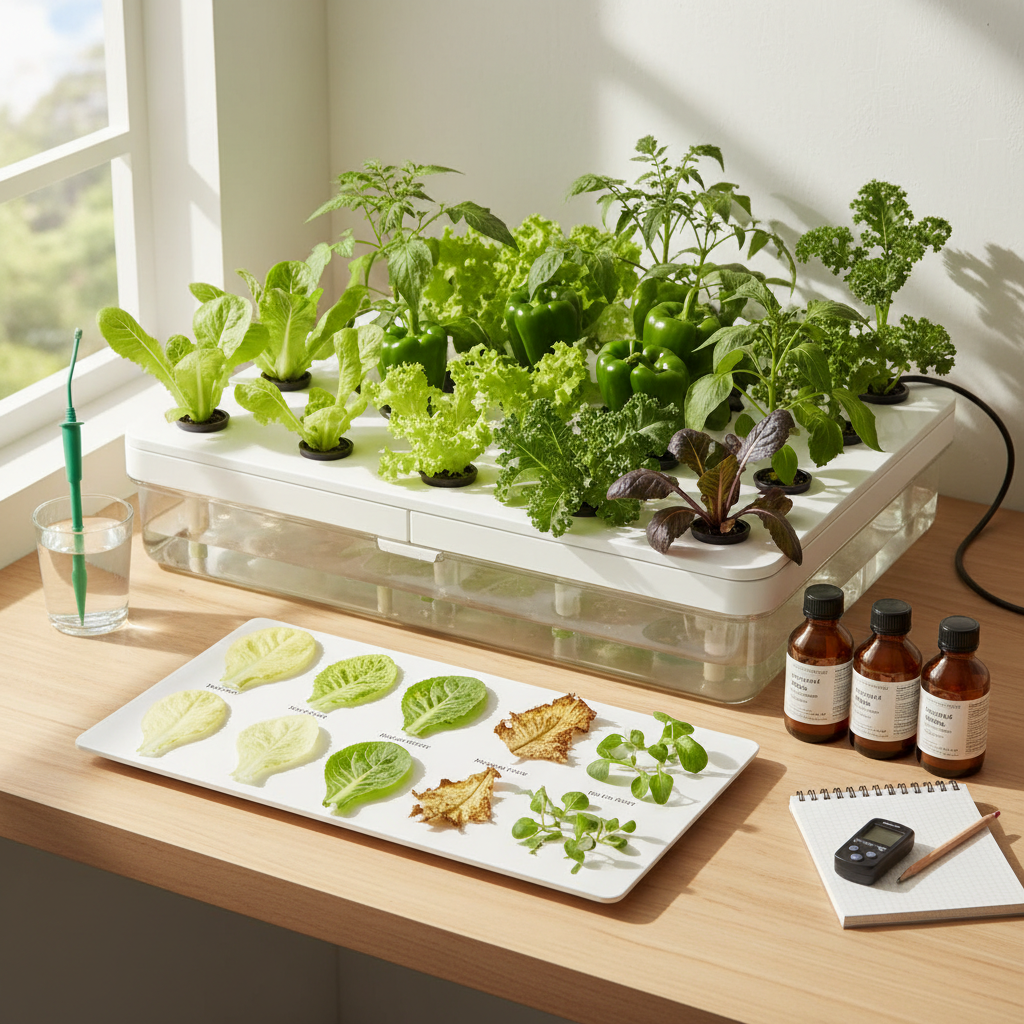
Hydroponic Nutrient Deficiency Chart for Beginners: Spot Problems and Fix Them Fast
If your hydroponic plants are turning yellow, curling, spotting, or slowing down, a hydroponic nutrient deficiency chart can help you figure out what is going wrong. The good news is that most issues are fixable once you learn how to read plant symptoms and check a few basic water conditions.
Why This Topic Matters
In soil gardening, plants often have a little buffer when nutrients drift out of balance. In hydroponics, the root zone is much more direct, so problems can show up faster.
That can feel stressful for beginners. One week your lettuce looks lush, and a few days later the leaves are pale or crispy around the edges.
A good hydroponic nutrient deficiency chart gives you a starting point. It helps you match leaf symptoms with likely causes, so you can make a smart fix instead of guessing.
It also helps you avoid a very common mistake: adding more nutrients when the real problem is pH lockout. In many home systems, the plants are not truly underfed. They simply cannot absorb what is already in the reservoir.
When you know what to look for, you can:
- spot issues earlier
- protect yields and plant health
- avoid wasting nutrients
- make smaller, safer adjustments
- build confidence as a hydroponic gardener
Quick Answer
The fastest way to use a hydroponic nutrient deficiency chart is to look at three things first: which leaves are affected, what the discoloration looks like, and whether your pH and EC are in range. Symptoms on older leaves often point to mobile nutrients like nitrogen or magnesium, while symptoms on new growth often point to calcium or iron problems.
Here is a simple beginner-friendly chart you can use as a reference.
| Nutrient | Common symptoms | Where symptoms show first | Quick fix | |---|---|---|---| | Nitrogen | Overall pale green or yellow leaves, slow growth | Older, lower leaves | Check EC, refresh reservoir, increase base nutrients slightly | | Phosphorus | Dark, dull foliage, purplish stems, slow growth | Older leaves | Check pH and root-zone temperature, use a complete nutrient mix | | Potassium | Yellow or brown leaf edges, leaf scorch, weak fruiting | Older leaves | Rebalance nutrients, check EC, make sure plants are not drying out | | Calcium | Twisted new growth, tip burn, blossom end rot | New leaves and growing tips | Stabilize pH, improve airflow, add calcium or Cal-Mag if needed | | Magnesium | Yellowing between veins while veins stay green | Older leaves | Add magnesium carefully, often through Cal-Mag or a light magnesium supplement | | Iron | New leaves turn yellow but veins stay green | Newest growth | Lower pH into range and use chelated iron if needed | | Sulfur | Uniform pale new growth, stunted plants | New growth | Use a complete hydroponic nutrient rather than a partial formula |
This chart is useful, but it is not a perfect diagnosis on its own. Similar symptoms can come from pH drift, salt buildup, poor roots, cold water, or overfeeding.
A simple rule helps a lot:
- Older leaves affected first usually means a mobile nutrient issue.
- New leaves affected first usually means an immobile nutrient issue.
- If symptoms are widespread and sudden, check pH and EC before adding anything.
For most leafy greens and many beginner crops, a pH range of 5.5 to 6.5 works well, with 5.8 to 6.2 being a reliable target. If pH moves too high or too low, nutrients can become harder for plants to absorb even when they are present.
Step-by-Step Guide
1. Compare the plant to the chart
Start by looking closely at the leaves. Is the plant yellow all over, yellow between the veins, brown on the tips, or curling on new growth?
Take a clear photo and compare it to your hydroponic nutrient deficiency chart. Photos help because symptoms can change quickly, and it is easier to notice patterns when you look back over a few days.
2. Check where the problem starts
This step matters more than many beginners realize. Nutrient problems are often easier to identify by location than by color alone.
If the oldest leaves are fading first, think about nitrogen, magnesium, potassium, or phosphorus. If the newest growth looks damaged first, calcium or iron is more likely.
3. Test pH before adding nutrients
This is the most important troubleshooting habit in hydroponics. If pH is outside the ideal range, plants may show deficiency symptoms even when the reservoir contains enough nutrients.
Use a reliable digital pH meter or liquid test kit. For most home systems, bring the reservoir back into a stable range rather than making large swings.
If you only remember one thing from this article, remember this: check pH first.
4. Check EC or PPM
EC tells you how strong your nutrient solution is. If EC is very low, your plants may truly need more feeding.
If EC is very high, the issue may be overfeeding, salt stress, or nutrient lockout. In that case, adding more fertilizer can make the problem worse.
As a beginner, it is often safer to use the recommended feeding range from your nutrient brand and stay in the middle rather than the maximum strength.
5. Look at the roots and reservoir
Healthy hydroponic roots are usually white to cream-colored and smell fresh or neutral. If roots are brown, slimy, or foul-smelling, the real problem may be low oxygen, heat, or root disease rather than a deficiency.
Also check water temperature. Many crops do best when nutrient solution stays around 65 to 72 F. Warm water holds less oxygen and can stress roots quickly.
6. Refresh the reservoir if multiple issues are showing
If several symptoms appear at once, a full reservoir change is often the cleanest fix. Top-offs are helpful, but over time the nutrient balance can drift away from what the label suggests.
A fresh batch resets the system. It gives you known pH, known EC, and a more balanced nutrient profile.
7. Make one correction at a time
Beginners often want to fix everything in one afternoon. That usually leads to overcorrection.
Instead, follow this order:
- Adjust pH.
- Confirm EC is reasonable.
- Replace or refresh the nutrient solution if needed.
- Add a specific supplement only if symptoms clearly match and basic conditions are already in range.
This approach makes it much easier to see what actually helped.
8. Watch new growth, not old damage
Damaged leaves often do not return to perfect health. A yellow or burned leaf may stay marked even after the plant recovers.
What you want to see is healthier new growth. If the newest leaves look better after a few days, your correction is probably working.
9. Match common symptoms with likely causes
Here is a quick practical guide beginners can use:
Pale lower leaves and slow growth
This often points to nitrogen deficiency or underfeeding. It can also happen if the reservoir is old and imbalanced.
Try refreshing the solution and slightly increasing feed strength if EC has been low.
Yellowing between veins on older leaves
This is a classic magnesium clue. It is common in fast-growing greens and fruiting plants.
Check pH first, then consider a small magnesium or Cal-Mag adjustment if your nutrient line allows it.
New leaves twisted or misshapen
Calcium is a likely suspect, especially in tomatoes, peppers, and lettuce tip burn. But calcium problems are often linked to inconsistent watering, poor airflow, or pH issues too.
Make sure the environment supports transpiration and the nutrient range is stable.
New leaves yellow with green veins
Iron deficiency commonly shows this pattern. High pH is a frequent cause.
Bring pH back into range before reaching for extra products.
Brown leaf edges or scorched margins
Potassium deficiency is one possibility, but salt stress can look similar. If your reservoir is very strong, plants may be suffering from too much, not too little.
That is why the chart should always be used alongside EC readings.
Common Beginner Mistakes
One of the biggest mistakes is treating every yellow leaf as a nitrogen problem. Yellowing can come from magnesium, iron, root stress, overwatering in passive systems, or pH lockout.
Another common mistake is adding supplement after supplement. A crowded nutrient routine can create more imbalance than it solves.
Watch out for these beginner errors:
- skipping pH testing and guessing based on leaf color alone
- using a hydroponic nutrient deficiency chart without checking where symptoms appear first
- making large pH changes all at once
- running the reservoir too warm
- ignoring root health
- raising nutrient strength too fast after seeing one bad leaf
- expecting damaged leaves to turn green again immediately
It is also easy to confuse deficiency with toxicity. Burned tips, dark leaves, and crispy edges can mean too much fertilizer rather than too little.
Best Tips for Success
Keep your system simple, especially when you are learning. A complete base nutrient, stable pH, and clean water solve most early problems.
These tips make a big difference:
- Use a complete hydroponic nutrient designed for your crop stage.
- Check pH regularly, especially after mixing a new reservoir.
- Track EC so you know whether plants are being underfed or overfed.
- Change the reservoir on a regular schedule instead of only topping off forever.
- Keep roots cool and oxygenated.
- Take weekly photos to catch small changes early.
- Learn the difference between old-leaf and new-leaf symptoms.
- Be patient after making a correction.
A simple notebook or phone note can help more than you think. Write down the date, pH, EC, water temperature, and what you changed.
Over time, your own records become a custom hydroponic nutrient deficiency chart for your garden.
Recommended Supplies or Tools
You do not need a shelf full of bottles to diagnose nutrient problems well. A few basic tools are usually enough.
Here are the most useful ones for beginners:
- Digital pH meter: The most important tool for spotting lockout before it gets worse.
- EC or TDS meter: Helps you see whether nutrient strength is too low or too high.
- pH up and pH down: For making small corrections after mixing your reservoir.
- Complete hydroponic base nutrient: A balanced formula prevents many deficiencies caused by incomplete feeding.
- Cal-Mag supplement: Useful in some systems, especially with reverse osmosis water or calcium-hungry crops.
- Reservoir thermometer: Helps you keep water in a root-friendly range.
- Air pump and air stone: Improves oxygen in many small reservoirs.
- Pruning scissors: Handy for removing badly damaged leaves and keeping plants tidy.
- Notebook or garden app: Great for tracking symptoms and changes over time.
If you are choosing just two tools to start, make it a pH meter and an EC meter. Those give you the clearest picture of what is happening in the root zone.
Frequently Asked Questions
How do I know if it is a true deficiency or pH lockout?
If your reservoir has nutrients in it but pH is out of range, the plant may look deficient because it cannot absorb certain elements properly. Always test pH first, then check EC, before assuming the plant needs more fertilizer.
Should I remove damaged leaves right away?
You can remove leaves that are mostly dead, crispy, or diseased. If a leaf still has a lot of green tissue, it can continue helping the plant while you fix the issue.
How fast do hydroponic plants recover from nutrient deficiencies?
It depends on the crop and the severity of the problem. In many cases, you can see healthier new growth within 3 to 7 days after fixing pH or refreshing the nutrient solution.
Can I use Epsom salt for magnesium deficiency?
Some gardeners use Epsom salt for magnesium, but it is best to use it carefully and only when you are reasonably sure magnesium is the issue. A balanced hydroponic supplement or Cal-Mag product is often easier for beginners to dose consistently.
Is one hydroponic nutrient deficiency chart enough for every plant?
A general chart is a great starting point, but crop differences matter. Lettuce, herbs, tomatoes, cucumbers, and peppers can show stress a little differently, so use the chart along with your crop's growth stage and normal feeding range.
Final Thoughts
A hydroponic nutrient deficiency chart is one of the most helpful troubleshooting tools a beginner can have, but it works best when paired with pH, EC, and root checks. Instead of reacting to every yellow spot with more fertilizer, slow down, observe the pattern, and make one smart correction at a time.
That steady approach will save you money, reduce stress, and help your hydroponic vegetables grow stronger with every cycle.