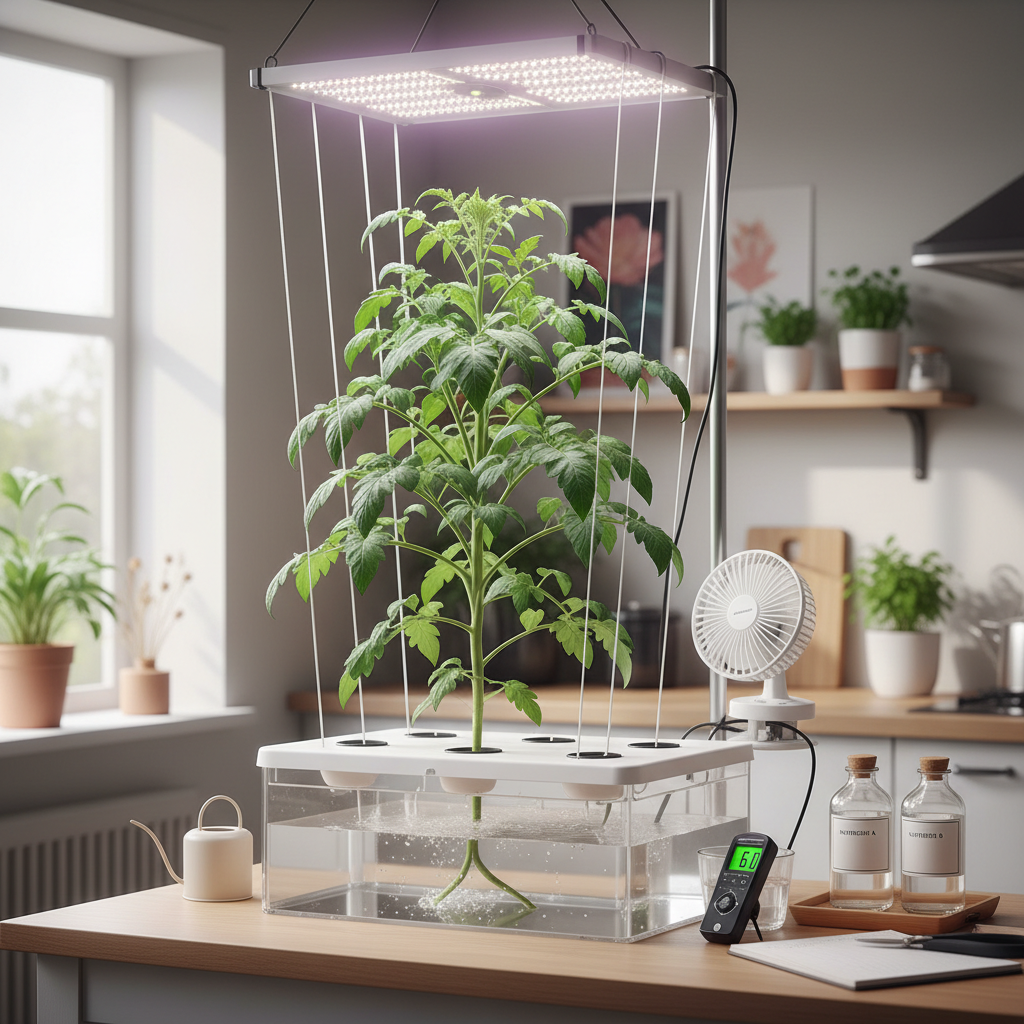
Hydroponic Tomatoes Not Flowering? 9 Beginner-Friendly Fixes That Work
If your hydroponic tomatoes are growing lots of leaves but still refuse to bloom, you are not alone. This is one of the most common problems beginners run into, and the good news is that it is usually fixable once you know what to check.
Tomato plants do not flower just because they are in a hydroponic system. They flower when light, nutrients, temperature, root health, and plant maturity all line up well enough to support reproduction.
Why This Topic Matters
When hydroponic tomatoes are not flowering, the whole growing timeline gets pushed back. No flowers means no fruit, and no fruit means all your effort goes into a plant that looks healthy but does not produce what you wanted.
This matters even more in hydroponics because plants grow fast. A small issue like weak light or too much nitrogen can quickly turn into a tall, leafy plant that keeps stretching instead of setting buds.
For beginners, the frustrating part is that the plant may not look sick. The leaves can be green, the stems can be thick, and the roots can seem fine. Yet flowering still does not start because tomatoes need the right balance, not just general growth.
Learning to spot the cause early helps you save time, nutrients, and space. It also helps you build better habits for future crops.
Quick Answer
If your hydroponic tomatoes are not flowering, the most likely causes are:
- not enough strong light
- too much nitrogen in the nutrient mix
- temperatures that are too hot or too cold
- plants that are still immature
- root zone stress from poor pH, low oxygen, or unstable water conditions
- a variety that naturally flowers later than expected
Start by checking the basics first. Make sure your tomatoes are getting intense light, a tomato-friendly nutrient formula, a pH around 5.8 to 6.3, and steady temperatures in the comfortable tomato range.
Also consider plant age. A small cherry tomato may flower fairly early, while larger slicing or beefsteak varieties often take longer, especially from seed.
Step-by-Step Guide
1. Confirm the plants are old enough to flower
Before changing everything, ask a simple question: are your plants mature enough yet?
Many tomato plants need several weeks of steady growth before they produce their first flower truss. Cherry tomatoes usually flower sooner than large-fruited types, and plants started from seed often take longer than transplants.
If your plant is still small, recently transplanted, or only has a few true leaf sets, it may just need more time. Patience is part of tomato growing, even in hydroponics.
2. Check whether your light is strong enough
This is the biggest issue for indoor hydroponic tomatoes.
Tomatoes are high-light plants. They do not need a special day length to flower, but they do need enough light intensity to build the energy required for budding and fruiting.
Weak grow lights often cause plants to become tall, pale, or stretched. They may keep producing leaves without moving into a strong flowering phase.
Look for these signs of low light:
- long gaps between leaf sets
- leaning stems
- thin, floppy growth
- slow overall growth
- lots of greenery but no buds
For most indoor setups, tomatoes need a strong full-spectrum LED grow light placed at the correct distance from the canopy. A timer helps keep lighting consistent each day.
3. Review your nutrient balance
If your tomato plant is lush, dark green, and growing lots of leaves but no flowers, excess nitrogen is a likely cause.
Nitrogen drives leafy growth. That is helpful early on, but too much of it can delay flowering. Tomatoes entering the flowering stage do better with a balanced nutrient program made for fruiting crops.
Check these points:
- Are you still using a leafy greens formula?
- Did you mix nutrients too strong?
- Are you adding extra boosters without measuring?
- Are calcium, magnesium, and trace minerals included?
Switching to a tomato or fruiting formula often helps. You do not need to chase extreme phosphorus levels. The goal is balance, not overload.
4. Test pH and EC instead of guessing
A nutrient solution can look fine and still cause problems if the pH is off.
Tomatoes in hydroponics generally do best with a pH around 5.8 to 6.3. When pH drifts too far out of range, plants can struggle to take up nutrients even if those nutrients are present in the reservoir.
Electrical conductivity, or EC, also matters. If the nutrient solution is much too weak, the plant may not have enough resources to flower. If it is too strong, roots can become stressed and growth can stall.
For beginners, the easiest approach is to check pH and EC regularly and adjust gradually. Big swings usually create more stress than small corrections.
5. Make sure temperatures stay in a tomato-friendly range
Tomatoes are productive plants, but they are picky about temperature.
If daytime temperatures stay too cool, growth slows and flowering can be delayed. If temperatures stay too hot, the plant may grow poorly and struggle to form or hold flowers.
A useful range for most hydroponic tomatoes is:
- daytime: about 70 to 82°F
- nighttime: about 62 to 70°F
Short swings are usually okay. Ongoing stress is the real problem.
Also check the root zone. Warm, stagnant nutrient solution can reduce oxygen at the roots, while very cold water can slow nutrient uptake.
6. Improve airflow and humidity
Indoor hydroponic systems often run in still air. That can create weak stems, excess humidity, and stressed growth.
Tomatoes prefer gentle airflow. A small oscillating fan helps strengthen stems, reduce disease pressure, and keep the environment more stable.
Humidity matters too. Very high humidity can interfere with normal plant function and encourage disease. Extremely dry air can also stress plants.
A moderate indoor humidity range is usually best. If your grow area feels damp, stuffy, or overly dry, correcting that may help your plants move toward flowering.
7. Look at the roots and reservoir health
Healthy roots should usually look light-colored and smell fresh, not sour or rotten.
If roots are brown, slimy, or poorly oxygenated, the plant may focus on survival instead of flowering. In deep water culture and similar systems, air stones, clean reservoirs, and stable water temperatures make a big difference.
Check for these issues:
- low dissolved oxygen
- dirty reservoir or biofilm buildup
- clogged lines or pumps
- root crowding in a too-small container
- nutrient solution that is overdue for replacement
A stressed root system often causes above-ground problems before the plant looks dramatically unhealthy.
8. Avoid over-pruning and other stress
It is easy to overmanage tomato plants, especially after watching a few pruning videos online.
Light pruning can be helpful, but removing too many leaves too early can slow the plant down. Leaves are the plant's energy factories, and your tomato needs that energy to produce flowers.
Other stressors can delay blooming too:
- rough transplanting
- frequent environmental changes
- unstable watering cycles in some hydro systems
- heavy training before the plant is well established
If your plant has been through several changes in a short period, give it a week or two of stable conditions before expecting improvement.
9. Consider the variety you are growing
Not all tomatoes flower on the same schedule.
Large indeterminate slicing tomatoes often take longer to mature than compact cherry or patio varieties. If you are growing indoors under lights, smaller and faster varieties are usually easier for beginners.
If this is your first hydroponic tomato crop, try comparing your plant to the seed packet or variety description. What feels late may still be normal for that type.
A simple troubleshooting order
If you want the fastest path forward, use this order:
- Check plant age and variety.
- Evaluate light strength and distance.
- Review nutrient formula, especially nitrogen levels.
- Test pH and EC.
- Confirm air temperature and reservoir temperature.
- Inspect roots, airflow, and general plant stress.
This keeps you from changing five things at once. When you make one smart correction at a time, it is much easier to see what actually helped.
Common Beginner Mistakes
One common mistake is assuming a green plant is a happy plant. In hydroponics, tomatoes can look lush while still being too nitrogen-heavy to flower well.
Another mistake is using grow lights that are fine for lettuce but too weak for tomatoes. Leafy greens are much more forgiving than fruiting crops.
Beginners also often ignore pH until a visible problem shows up. By then, the plant may have already spent days or weeks struggling to take up nutrients properly.
Here are a few more mistakes that delay flowering:
- choosing a large tomato variety for a very small indoor setup
- letting the reservoir get dirty or stale
- pruning aggressively on young plants
- keeping temperatures too hot in enclosed grow tents
- making constant adjustments instead of giving the plant time to respond
The best fix is usually consistency. Tomatoes do much better with steady, decent conditions than with constant tinkering.
Best Tips for Success
If you want hydroponic tomatoes to flower reliably, focus on the basics and keep them stable.
Helpful habits include:
- use a tomato-friendly nutrient formula once plants are established
- provide strong light every day with a timer
- keep pH in range and check it often
- maintain good airflow around leaves and stems
- support plants early with clips, string, or cages
- clean the system regularly to protect root health
- keep notes on temperature, pH, EC, and growth stage
A growing journal may sound simple, but it is one of the most useful tools for beginners. If flowering stalls again in the future, your notes can reveal patterns much faster than memory alone.
Recommended Supplies or Tools
You do not need a complicated setup to solve this problem. A few basic tools can help you diagnose most flowering issues quickly.
Useful supplies include:
- a strong full-spectrum LED grow light
- a timer for consistent light schedules
- a pH meter or pH test kit
- an EC or TDS meter
- a thermometer and hygrometer for air conditions
- an air pump and air stones for oxygenation in water-based systems
- clean pruning snips
- tomato clips, twine, or trellis support
- a hydroponic nutrient formula designed for tomatoes or fruiting crops
If you are only buying one diagnostic tool first, make it a reliable pH meter. If you can buy two, add an EC meter.
Frequently Asked Questions
How long does it take for hydroponic tomatoes to start flowering?
It depends on the variety, light levels, and whether you started from seed or from a transplant. Many tomato plants begin flowering after several weeks of healthy growth, with cherry types often blooming sooner than larger slicing tomatoes.
Can too much nitrogen stop tomatoes from flowering?
Yes. Too much nitrogen can push the plant to make lots of leaves and stems instead of flowers. This is one of the most common reasons hydroponic tomatoes stay vegetative for too long.
Do hydroponic tomatoes need hand pollination?
They may need help once flowers appear, especially indoors where there is no wind or insect activity. Hand pollination does not cause flowering, but it can improve fruit set after blooms open.
Will weak LED lights cause tomato plants not to flower?
Yes, weak light is a major cause of delayed flowering indoors. Tomatoes need much more light than lettuce, herbs, or many houseplants.
Should I change nutrients when buds start to form?
In most cases, yes. Once tomatoes are moving toward flowering and fruiting, a balanced nutrient formula made for tomatoes is usually a better fit than a leafy-growth formula high in nitrogen.
Final Thoughts
If your hydroponic tomatoes are not flowering, do not assume the crop is a failure. In most cases, the problem comes down to a few manageable factors like light, nutrient balance, temperature, or simple plant maturity.
Start with the basics, make one change at a time, and give your plants a little time to respond. Once conditions improve, tomatoes are often quick to reward you with buds, blooms, and eventually fruit.