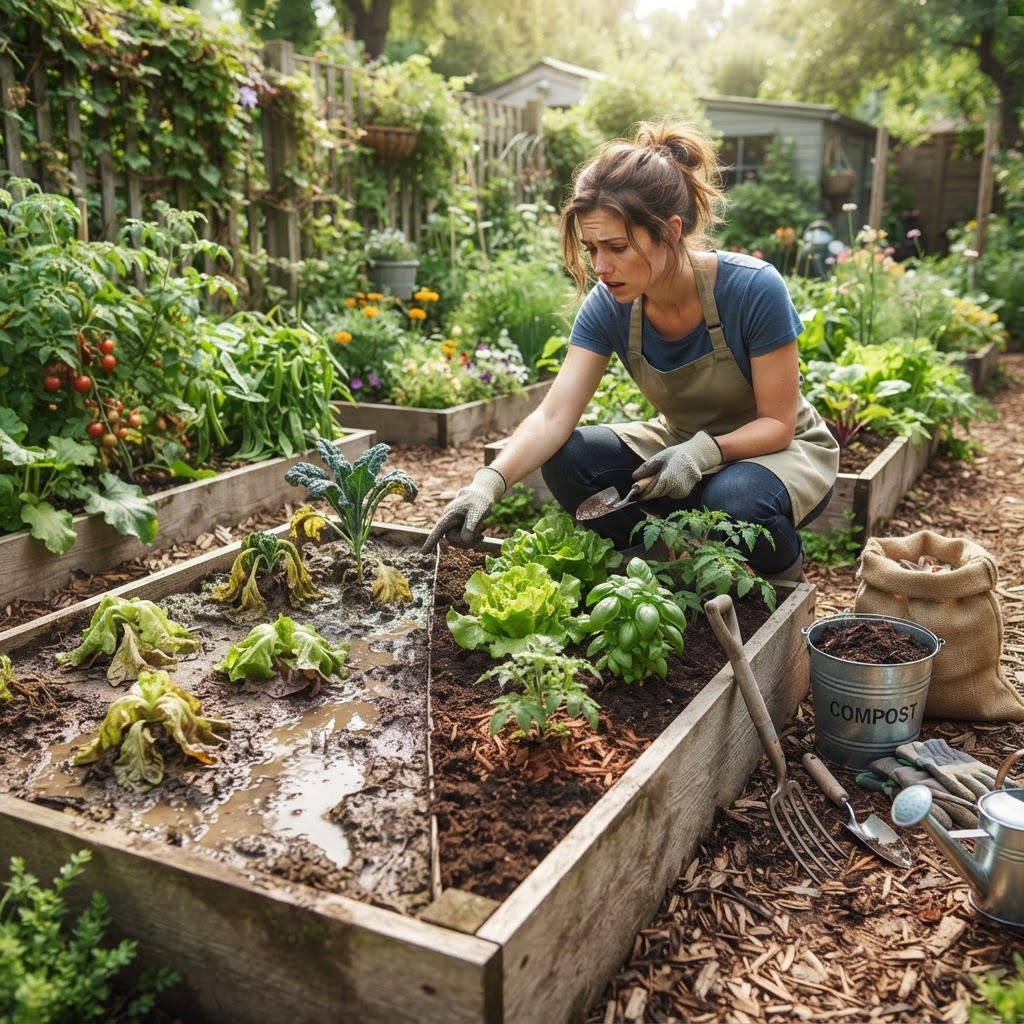
Raised Bed Soil Not Draining? Simple Fixes for Waterlogged Garden Beds
If your raised bed soil is not draining, you are not alone. Many beginner gardeners assume raised beds automatically solve drainage problems, so it can be frustrating to find puddles, soggy soil, and struggling plants.
The good news is that poor drainage in a raised bed is usually fixable. With a few simple checks and the right soil improvements, you can turn a wet, heavy bed into a healthy place for vegetables to grow.
Why This Topic Matters
Good drainage is one of the biggest keys to a productive vegetable garden. Plant roots need both water and air, and when soil stays too wet for too long, roots can begin to rot or stop growing well.
A raised bed with drainage issues can lead to several common problems:
- Yellowing leaves
- Stunted growth
- Wilting even when the soil is wet
- Root rot
- Fungus gnats and fungal diseases
- Seeds that fail to sprout
Poor drainage can also waste time and money. You may keep adding fertilizer or replacing plants when the real problem is that the roots are sitting in waterlogged soil.
For beginner gardeners, learning how to diagnose soggy raised beds early can save an entire season. It also helps you build better beds in the future.
Quick Answer
If your raised bed soil is not draining, the most common causes are a soil mix that is too dense, blocked drainage at the bottom of the bed, compacted soil, too much watering, or hard clay underneath the bed.
The fastest fix is to stop watering for a few days, check whether water can move through the bottom, and improve the soil with compost and coarse organic matter if it feels heavy and sticky. In severe cases, you may need to lift the bed, remove a barrier underneath, or rebuild the soil mix.
As a general rule, raised bed soil should feel loose, crumbly, and moist rather than muddy. If water sits on top for more than a few minutes or the bed stays soggy for days after rain, the drainage needs attention.
Step-by-Step Guide
1. Confirm that drainage is actually the problem
Sometimes plants look unhappy for reasons that seem like poor drainage but are really caused by underwatering, pests, or nutrient imbalance. Before making changes, do a quick check.
Push your finger 3 to 4 inches into the soil. If it feels sticky, slimy, or waterlogged several days after watering or rain, drainage is likely the issue.
You can also dig a small hole about 6 inches deep in an empty spot and fill it with water. Watch what happens:
- If it drains within 30 minutes to a few hours, drainage is probably acceptable.
- If water sits there for many hours, the bed is draining too slowly.
- If the hole fills and stays muddy the next day, there is a serious drainage problem.
2. Stop watering until the bed starts to dry
This sounds obvious, but many gardeners keep watering stressed plants because they look droopy. In waterlogged soil, drooping can happen because roots cannot take up oxygen.
Give the bed time to breathe. If rain is expected, consider covering the bed loosely with a tarp or plastic sheet held above the soil surface so extra water stays out while air can still move around the plants.
Do not work the soil while it is soaking wet. Wet soil compacts easily, and that can make the drainage even worse.
3. Check what is underneath the raised bed
A raised bed usually drains best when it sits directly on native ground. But sometimes there is a hidden barrier stopping water from moving down.
Look for these common problems under the bed:
- Landscape fabric that is too thick or clogged
- Cardboard that never fully broke down
- Plastic weed barrier
- Paving stones or compacted gravel underneath
- Extremely hard clay soil
If your bed has a solid or nearly solid bottom, that may be the main reason the soil is holding water. Vegetable raised beds need an open path for excess moisture to move downward.
If possible, gently inspect the bottom edge of the bed. If you find plastic or another non-breathable barrier, remove it.
4. Test the soil texture in the bed
The soil mix inside the raised bed matters just as much as what is under it. Many drainage issues happen because the bed was filled with topsoil alone, bagged garden soil that is too fine, or even native clay.
Grab a handful of moist soil and squeeze it.
- If it crumbles apart easily, that is a good sign.
- If it forms a sticky ball that stays hard, it is too dense.
- If it looks muddy or smooth with very little texture, it likely needs more organic matter.
A healthy raised bed mix usually contains a blend of:
- Topsoil or screened soil
- Compost
- Aerating material such as shredded leaves, coco coir, or pine fines
Many beginners think adding more soil is enough, but if the mix is wrong, the drainage problem stays.
5. Loosen compacted soil carefully
If the bed is compacted, roots and water both struggle to move through it. Once the soil is only slightly damp instead of soggy, use a garden fork or broadfork to loosen it.
Work gently around plant roots. Push the fork in deep and rock it back slightly to create air pockets without turning the whole bed over.
Avoid aggressive digging if you already have established vegetables growing. The goal is to relieve compaction, not destroy roots.
6. Improve the soil mix with compost and coarse organic matter
This is one of the best long-term fixes for raised bed soil that is not draining. Adding the right materials creates a looser structure so water can move through instead of pooling.
Good amendments include:
- Finished compost
- Leaf mold n- Aged shredded bark or pine fines
- Coco coir in moderation
- Chopped dry leaves
- Worm castings as a small booster, not the main fix
Mix the amendment into the top 6 to 10 inches if the bed is not full of mature plants. If plants are already growing, top-dress with 1 to 2 inches of compost and lightly work it into the surface where possible.
A simple target mix for raised beds is often close to:
- About 50% quality topsoil
- About 30% compost
- About 20% material that keeps the mix open and airy
You do not need to be exact. What matters most is avoiding a heavy, dense, clay-like blend.
7. Do not add a gravel layer at the bottom
This is a very common piece of advice, but it usually does not solve drainage in raised beds. In some cases, it can make drainage behave oddly by creating a barrier between soil textures.
Instead of adding gravel, focus on improving the soil itself and making sure the bottom of the bed is open to the ground. Better structure in the root zone is far more helpful than a rock layer.
8. If the bed sits on hard clay, create a transition zone
Sometimes the raised bed is filled with decent soil, but the ground underneath is dense clay that slows water movement. That can create a perched wet zone after heavy rain.
If you are building or rebuilding the bed, loosen the top few inches of native soil under the bed before filling it. This helps create a better transition between the bed mix and the ground below.
If the bed is already built, use a soil knife or long fork near the bottom edge to check whether the ground beneath has sealed shut. In severe cases, you may need to empty part of the bed, loosen the subsoil, and refill.
9. Consider bed height and location
A shallow raised bed can still act like a soggy basin if it is placed in a low area of the yard. If surrounding ground directs runoff toward the bed, extra water may keep flowing in.
Ask yourself:
- Is the bed in a natural low spot?
- Does water from a roof or path drain into it?
- Is the bed less than 8 to 10 inches deep?
If the answer is yes, drainage may improve by increasing the bed height or redirecting runoff. Even adding a few more inches of well-balanced soil mix can help roots stay above the wettest zone.
10. Adjust how you water
Sometimes the bed drains slowly because it is being watered too often. Raised beds dry faster than in-ground gardens in many situations, but not always.
Instead of watering on a fixed schedule, check the soil first. Water when the top few inches begin to dry, not every day just because it is summer.
Helpful watering habits include:
- Water deeply, then wait until the soil needs it again
- Use drip irrigation or a soaker hose instead of frequent shallow sprinkling
- Water in the morning
- Reduce watering after heavy rain
- Mulch the surface so the soil stays evenly moist without constant watering
11. Rebuild the bed if the soil is severely wrong
If the bed was filled with pure clay, construction fill, or a muddy soil product, small amendments may not be enough. In that case, a partial or full rebuild is often the best use of your time.
You do not always have to start from scratch. Remove some of the worst material, blend in quality compost and aerating ingredients, and refill the bed with a better mix.
It can feel like a big job, but it is easier than fighting a waterlogged bed year after year.
Common Beginner Mistakes
Using topsoil alone
Topsoil sounds like the right choice, but many products labeled topsoil are too dense for raised beds. On its own, it can compact and hold too much water.
Watering by habit instead of by feel
A schedule can be helpful, but it should never replace checking the soil. Wet beds often stay wet because gardeners keep adding water to already saturated soil.
Lining the bed with plastic
Some people line raised beds to block weeds or protect wood, but plastic prevents proper drainage. If you need a liner for the sides, use something breathable and keep the bottom open.
Adding sand to heavy soil without a plan
Mixing a little sand into clay-heavy soil can sometimes make it denser, almost like concrete. Compost and coarse organic matter are usually safer first choices for beginner gardeners.
Ignoring the ground below the bed
A raised bed is not completely separate from the soil under it unless it has a built bottom. Hardpan, clay, or buried debris underneath can still affect drainage.
Believing gravel will fix everything
Gravel is one of the most repeated drainage myths in gardening. Better soil texture and an open base matter much more.
Best Tips for Success
Build soil, not just beds
A raised bed frame is only the container. The real growing system is the soil inside it. Investing time in a balanced soil mix pays off more than almost any other improvement.
Add compost regularly
Top-dress your bed with compost once or twice a year. This helps maintain structure, supports soil life, and keeps the mix from becoming flat and compacted over time.
Mulch after fixing drainage
Once the bed is draining properly, add a light mulch such as shredded leaves or straw. Mulch helps regulate moisture so the soil does not swing from soggy to bone dry.
Grow crops that match the current condition
If one bed is still improving, avoid planting vegetables that hate wet feet. Crops like garlic, onions, and many root vegetables are less forgiving than some leafy greens.
Observe after every rain
One of the best habits in gardening is simply watching what your bed does after a storm. If water puddles, runs in from the side, or lingers too long, you will learn a lot about what needs adjusting.
Recommended Supplies or Tools
You do not need fancy equipment to fix a soggy raised bed. A few basic tools make the job much easier.
Helpful tools
- Garden fork or digging fork for loosening compacted soil
- Hand trowel for checking soil moisture and texture
- Soil knife for inspecting the bed edge and bottom area
- Wheelbarrow or garden cart for moving compost and soil
- Watering wand or drip system for gentler watering
Helpful materials
- Finished compost
- High-quality raised bed mix or garden soil blend
- Shredded leaves or leaf mold
- Pine fines or aged bark fines
- Straw or leaf mulch
If you are buying bagged soil, read the label. Look for mixes made specifically for raised beds rather than heavy topsoil products.
Frequently Asked Questions
Can raised beds still have drainage problems?
Yes. Raised beds usually drain better than in-ground beds, but they can still stay too wet if the soil mix is too dense, the bottom is blocked, or the bed sits on hard clay or in a low spot.
How long should raised bed soil stay wet after watering?
That depends on weather, bed depth, and soil mix, but the surface should not stay muddy for days. The soil should feel moist, not swampy, and excess water should move through within a reasonable time.
Should I drill holes in my raised bed?
If the bed is bottomless and sits on the ground, you usually do not need drainage holes. If the bed has a solid base, then it needs drainage openings or another redesign so water can escape.
Is compost enough to fix poor drainage?
Sometimes yes, especially if the problem is mild compaction or low organic matter. But if the bed has a plastic barrier, severe clay, or a badly designed soil mix, compost alone may not fully solve it.
What vegetables handle slightly wet soil better?
Some leafy greens may tolerate temporary extra moisture better than crops like carrots or onions. Still, most vegetables prefer evenly moist, well-drained soil, so improving the bed is the best long-term solution.
Final Thoughts
If your raised bed soil is not draining, do not assume you have failed as a gardener. This is a common problem, especially in newer beds or beds filled with heavy soil, and it can usually be improved with a few smart changes.
Start simple: stop overwatering, check for barriers underneath, and work on building a looser, compost-rich soil mix. Once the bed drains better, your vegetables will have a much easier time growing strong roots, staying healthy, and producing a better harvest.