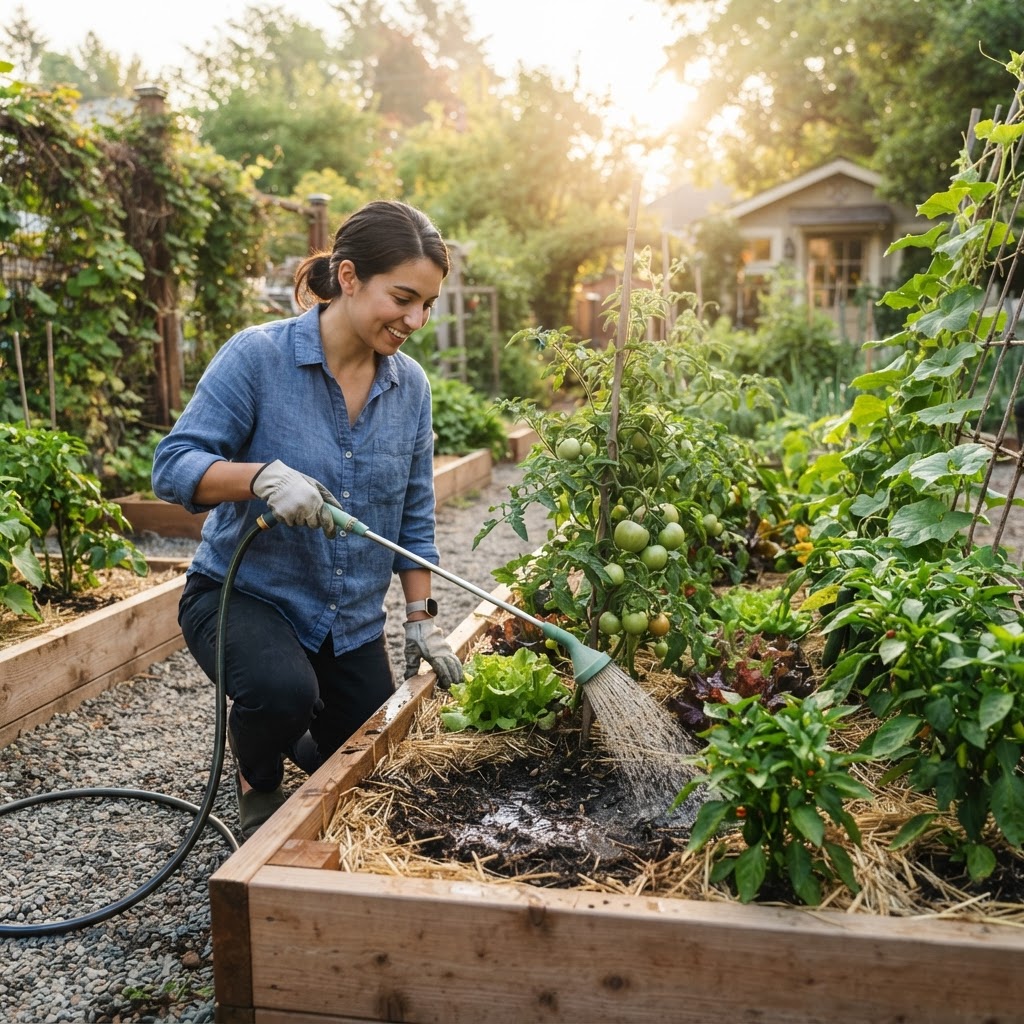
Raised Bed Watering Mistakes: 10 Simple Fixes for Healthier Vegetables
Raised beds make vegetable gardening easier, but watering them can be surprisingly tricky. If your plants look stressed even when you water regularly, a few common raised bed watering mistakes may be the real problem.
The good news is that most watering issues are easy to fix once you know what to watch for. With a few simple habits, you can help your vegetables grow deeper roots, stay healthier, and produce more.
Why This Topic Matters
Water is one of the biggest factors in a successful vegetable garden. In raised beds, it matters even more because the soil sits above ground level and usually drains faster than in-ground beds.
That fast drainage is helpful in wet weather, but it can also lead beginners to water too often, too lightly, or at the wrong time of day. Those habits can leave plants weak, stressed, and more likely to attract pests or develop disease.
When watering is done well, roots grow deeper and stronger. The soil stays evenly moist instead of swinging from soggy to bone dry, and vegetables are more likely to size up properly and taste better.
Learning how to avoid watering mistakes also saves time. Instead of guessing every day, you can check the soil, water with purpose, and build a routine that works for your climate, bed size, and crops.
Quick Answer
The most common raised bed watering mistakes are watering too often, watering too shallowly, watering on a fixed schedule without checking the soil, and wetting leaves instead of soaking the root zone. Raised beds usually need deep, targeted watering when the top 1 to 2 inches of soil begin to dry, not a quick daily sprinkle.
A good basic rule is to water slowly and thoroughly so moisture reaches the root area. Then let the top layer dry slightly before watering again.
Step-by-Step Guide
1. Check the soil before you water
Before turning on the hose, test the soil with your finger. Push down 1 to 2 inches near the base of a plant.
If the soil still feels moist at that depth, wait. If it feels dry, it is time to water.
This simple check is one of the best ways to avoid both overwatering and underwatering. Weather can change fast, and your garden may not need the same amount of water every day.
2. Water the root zone, not the whole bed surface
Vegetables do best when water reaches their roots directly. Aim water at the base of plants instead of spraying broadly over leaves, paths, and empty spaces.
This reduces waste and helps lower the risk of fungal problems. It also makes each watering session more effective.
Good options include:
- A watering wand with gentle flow
- Soaker hoses
- Drip irrigation lines
- A hose set to a slow trickle
3. Water deeply instead of lightly
Light, frequent watering only moistens the surface. That encourages shallow roots, which dry out quickly and make plants more vulnerable during hot weather.
Deep watering reaches farther into the bed, where roots should be growing. Plants with deeper roots are usually more resilient and better able to handle short dry spells.
As a general habit, water slowly long enough for moisture to sink several inches down. The exact time depends on your soil mix, the size of the bed, and the watering method you use.
4. Water in the morning when possible
Morning is usually the best time to water raised beds. The air is cooler, less water is lost to evaporation, and plants have time to dry off as the day warms.
Watering late in the evening is sometimes necessary, but leaves that stay damp overnight can increase disease pressure. Midday watering is not always harmful, but more moisture tends to evaporate before it can soak in well.
5. Use mulch to slow moisture loss
One reason raised beds dry out fast is that more soil surface is exposed to sun and wind. A layer of mulch helps hold moisture in place.
Straw, shredded leaves, untreated grass clippings, or fine wood chips around larger crops can all work well. Keep mulch a little away from plant stems to prevent rot.
Even 1 to 2 inches of mulch can make a noticeable difference. It can also help reduce weeds, which compete with vegetables for water.
6. Adjust for weather, bed size, and plant type
There is no perfect one-size-fits-all watering schedule. A shallow raised bed in full sun will dry faster than a deep bed with lots of compost and mulch.
Tomatoes, cucumbers, squash, and corn usually need more consistent moisture than herbs like rosemary or thyme. Seedlings also need closer attention than established plants.
During cool, cloudy weather, your bed may need less water. During heat waves or windy conditions, it may need more.
7. Watch for signs of watering problems
Wilting does not always mean the soil is dry. Plants can also wilt when roots are stressed by overwatering.
Look at the full picture:
- Dry, crumbly soil often points to underwatering
- Yellow leaves and limp growth can suggest overwatering
- Cracked tomatoes may result from uneven watering
- Bitter lettuce and bolting greens often happen in heat and moisture stress
- Blossom end rot in tomatoes and peppers is often linked to inconsistent watering
Checking soil moisture is more reliable than judging only by the leaves.
8. Keep a simple watering routine
A routine helps, but it should be flexible. Instead of watering every day automatically, use a pattern like this:
- Check soil moisture each morning.
- Water only the beds that need it.
- Water deeply and slowly.
- Recheck during hot spells in late afternoon.
- Add mulch and make small adjustments as the season changes.
This keeps you from reacting too quickly or ignoring the garden for too long.
Common Beginner Mistakes
Watering every day just because the bed looks dry
The top of raised bed soil can dry quickly, especially in sun and wind. But the soil underneath may still be moist.
If you water every day without checking below the surface, roots may sit in overly wet soil. That can reduce oxygen around the roots and slow growth.
Giving plants a quick sprinkle
A fast spray may make the garden look refreshed, but it often does very little for the roots. Surface-only watering disappears quickly and trains roots to stay near the top.
This leads to thirsty plants that struggle when temperatures rise. Fewer, deeper waterings are usually better than constant light ones.
Using the same schedule all season
Many beginners pick a schedule and never change it. But spring, summer, and fall can have very different watering needs.
Rainfall, humidity, wind, plant size, and temperature all affect how fast raised beds dry out. A fixed schedule is less helpful than a regular soil check.
Watering leaves instead of soil
Overhead watering is common, especially with a spray nozzle. While it is not always disastrous, it can waste water and increase disease problems for crops like tomatoes, cucumbers, and squash.
Try to direct water low and slow. Wet roots matter more than wet leaves.
Ignoring mulch
Bare soil loses moisture faster. Without mulch, you may find yourself watering more often than necessary.
Mulch also softens the effect of hot sun and helps keep soil conditions more stable. For many beginner gardens, this is one of the easiest improvements to make.
Not accounting for soil mix
Raised bed soil is not all the same. A mix that is very sandy or full of coarse material may drain quickly, while a mix with too much fine compost can stay wet longer than expected.
Healthy raised bed soil should hold moisture while still draining well. If water runs straight through or pools on top, your soil mix may need adjusting.
Letting beds swing from very dry to very wet
Inconsistent watering causes more problems than many beginners realize. Some vegetables respond badly when the soil goes from dusty dry to soaked.
This can lead to splitting fruit, poor root development, and nutrient uptake problems. Steady moisture is the goal.
Assuming all plants in the bed need the same amount
A mixed raised bed can be tricky. Large tomato plants and tiny lettuce seedlings do not use water at the same rate.
Group crops with similar needs when possible. That makes watering much easier and reduces stress on sensitive plants.
Forgetting containers dry out differently
Some gardeners use a mix of raised beds and pots in the same area. It is easy to treat them the same, but containers usually dry out much faster.
Keep your raised bed watering plan separate from your container plan so neither gets neglected.
Waiting for severe wilting
A little afternoon droop in hot weather is not always an emergency, but repeated severe wilting is a sign your routine needs adjusting. Plants recover best when moisture problems are corrected early.
Once vegetables are repeatedly stressed, growth and production can slow down even if you water later.
Best Tips for Success
Build healthy soil first
Good watering starts with good soil. Raised beds do best with a balanced mix that drains well but still holds moisture.
If your soil seems to dry too fast, mix in finished compost. If it stays soggy, improve texture and avoid packing it down.
Mulch early, not after plants are stressed
Do not wait until the hottest part of summer. Add mulch once seedlings are established and the soil has warmed.
This helps you conserve moisture before problems begin.
Water seedlings differently from mature plants
New seedlings have small root systems and need more frequent, gentle watering at first. Established plants can usually handle deeper, less frequent watering.
As plants grow, shift your routine so roots are encouraged to reach down.
Use a rain gauge or track rainfall
It is easy to overwater after a light shower that barely wets the surface. A simple rain gauge helps you understand how much water your garden actually received.
This is especially useful during unsettled weather.
Try the same spot check every time
Choose a few places in the bed to test regularly. One area near a large plant and another near the edge can give you a better picture than checking only the surface in one spot.
Consistency makes it easier to notice patterns.
Consider shade and wind exposure
Beds near fences, walls, or reflective surfaces may heat up faster. Windy locations also dry out more quickly.
If one raised bed seems harder to keep moist than another, the location may be the reason.
Keep notes for next season
A small garden notebook can save a lot of frustration. Record when beds dried out quickly, which crops struggled, and what changes helped.
Next year, you will be able to fine-tune your watering much faster.
Recommended Supplies or Tools
You do not need expensive equipment to water raised beds well. A few simple tools can make the job easier and more consistent.
Helpful basics
- Watering wand: Good for gentle, targeted watering around seedlings and mature plants
- Soaker hose: Delivers slow water near the soil surface with less waste
- Drip irrigation kit: Useful if you want a low-maintenance setup for one or more beds
- Mulch: Straw, shredded leaves, or other organic mulch to reduce evaporation
- Rain gauge: Helps you measure actual rainfall instead of guessing
- Garden trowel or your finger: For quick soil moisture checks
- Timer: Helpful if you use drip irrigation or tend to forget the hose
Nice extras
- Moisture meter: Can be useful for beginners, though hands-on soil checks still work well
- Hose shut-off valve: Makes watering easier to control without walking back to the spigot
- Notebook or garden app: Good for tracking weather, watering, and plant response
Pick the simplest setup you will actually use. Consistency matters more than having fancy tools.
Frequently Asked Questions
How often should I water a raised bed?
There is no single perfect schedule. Most raised beds need watering when the top 1 to 2 inches of soil feel dry, but the timing depends on heat, wind, rainfall, plant size, and soil mix.
In mild weather, that may mean every few days. In hot summer conditions, it may mean checking daily and watering more often.
Is it possible to overwater a raised bed?
Yes. Raised beds drain better than many in-ground gardens, but they can still stay too wet if watered too often.
Overwatering can cause yellowing leaves, slow growth, root stress, and more disease problems. Always check the soil before adding more water.
What is the best time of day to water vegetables?
Morning is usually best. It gives roots time to absorb moisture before the hottest part of the day and allows leaves to dry more quickly.
If morning is not possible, water when you can, but try to avoid keeping foliage wet overnight whenever possible.
Do tomatoes in raised beds need more water than other vegetables?
Tomatoes often need steady, consistent moisture, especially once they begin flowering and fruiting. They do not always need more water than every crop, but they do respond badly to uneven watering.
Deep watering and mulch are especially helpful for tomatoes.
Should I use drip irrigation for a raised bed?
Drip irrigation is a great option if you want efficient, targeted watering. It helps deliver water slowly to the root zone and can save time.
That said, it is not required. Many gardeners do very well with a hose, watering wand, and regular soil checks.
Final Thoughts
Most raised bed watering mistakes come down to one simple problem: watering by habit instead of by soil moisture and plant needs. Once you slow down, check the soil, and water deeply at the root zone, your garden becomes much easier to manage.
Do not worry if you have made some of these mistakes already. Every gardener does at some point.
Start with a few practical changes: mulch the bed, water in the morning, avoid shallow sprinkling, and check moisture before every watering. Those small steps can make a big difference in plant health, harvest quality, and your confidence as a home vegetable gardener.