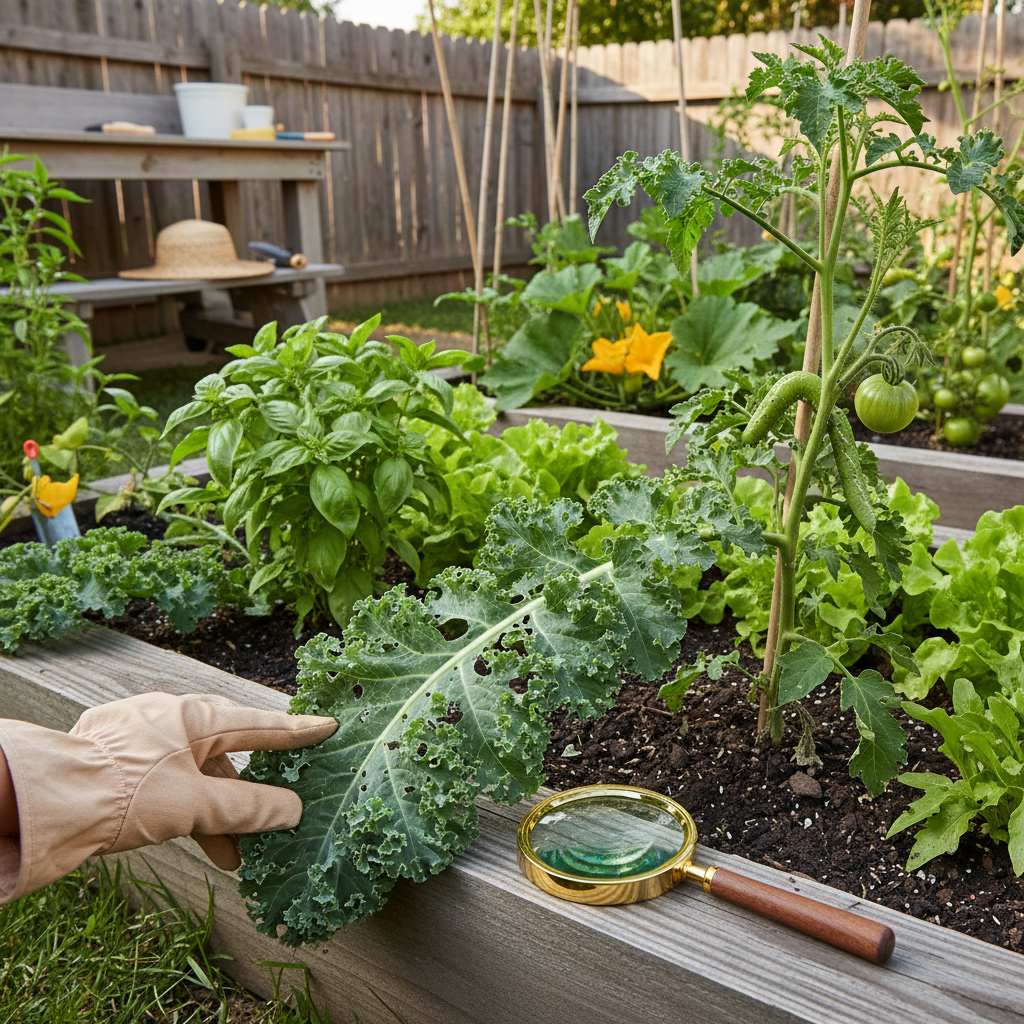
Vegetable Garden Pests Identification: A Beginner’s Guide to Common Garden Bugs
If your vegetable plants suddenly have holes, curled leaves, or sticky stems, pests may be the cause. The good news is that vegetable garden pests identification gets much easier once you know what signs to look for and how different insects damage plants.
Why This Topic Matters
Many beginner gardeners see damage and assume every bug is a problem. That can lead to spraying too soon, removing helpful insects, or missing the real cause altogether.
Correct identification matters because different pests need different solutions. Aphids, cabbage worms, flea beetles, and squash bugs do not behave the same way, and treating them all alike often wastes time.
It also helps you protect the good insects in your garden. Ladybugs, lacewings, parasitic wasps, ground beetles, and pollinators can do a lot of the pest control for you if you give them a chance.
When you learn to spot pest clues early, you can act before a small issue becomes a major infestation. That means healthier vegetables, less frustration, and fewer harsh treatments in your garden.
Quick Answer
Vegetable garden pests identification starts with three basic clues: what the damage looks like, where it appears on the plant, and whether you can find the insect itself or signs it leaves behind.
Here is a simple way to think about it:
- Chewed holes in leaves often point to caterpillars, beetles, slugs, or earwigs.
- Curled or distorted new growth often suggests aphids, whiteflies, or leafhoppers.
- Wilting plants with no clear chewing can mean squash vine borers, root pests, or disease.
- Sticky leaves or black sooty mold often indicate sap-sucking insects like aphids or whiteflies.
- Skeletonized leaves are commonly caused by beetles.
- Clusters of eggs under leaves can help you identify future pests before they hatch.
The fastest path to a correct answer is to inspect your plants closely in the morning or evening, check the tops and undersides of leaves, and compare the damage pattern to common vegetable garden pests.
Step-by-Step Guide
1. Start with the type of damage
Before looking for the insect, study the plant. Damage tells a story.
Ask yourself these questions:
- Are the leaves chewed, curled, spotted, or sticky?
- Is the damage on old leaves, new leaves, stems, flowers, or fruit?
- Is the whole plant affected or just one area?
- Did the problem appear suddenly or gradually?
For example, ragged holes in lettuce may suggest slugs or caterpillars. Tiny pinholes in eggplant leaves often point to flea beetles.
2. Check the whole plant, not just the top
A lot of beginners only look at the most visible leaves. Many pests hide underneath leaves, along stems, at the soil line, or inside blossoms.
Inspect these areas carefully:
- Leaf undersides
- Leaf joints and stems
- New growth tips
- Flower buds and blossoms
- Around the base of the plant
- The soil surface nearby
If possible, use a hand lens. Small pests like spider mites, thrips, and whitefly nymphs are easy to miss without one.
3. Match common pests to common vegetables
Certain pests strongly prefer certain crops. This helps narrow the possibilities quickly.
Pests often found on tomatoes and peppers
- Aphids: Small green, black, yellow, or gray insects clustered on tender stems and leaf undersides. They cause curling leaves and sticky residue called honeydew.
- Hornworms: Large green caterpillars that blend in well. They chew big chunks from tomato leaves and may damage fruit.
- Whiteflies: Tiny white insects that flutter up when disturbed. They suck sap and weaken plants.
- Spider mites: Very tiny pests that cause pale speckling, yellowing, and fine webbing in hot, dry weather.
Pests often found on cabbage family crops
This group includes cabbage, kale, broccoli, cauliflower, and Brussels sprouts.
- Cabbage worms: Velvety green caterpillars that chew irregular holes in leaves.
- Cabbage loopers: Green caterpillars that move in a looping motion and leave ragged chewing damage.
- Aphids: Often hide deep in leaf folds and can multiply quickly.
- Flea beetles: Tiny jumping beetles that make many small holes, almost like the leaves were hit with a pin.
Pests often found on squash, zucchini, cucumbers, and melons
- Squash bugs: Gray-brown bugs that gather on leaves and stems. Their feeding causes yellow spots, wilting, and plant decline.
- Squash vine borers: Larvae that tunnel inside stems, causing sudden wilting even when the leaves still look green at first.
- Cucumber beetles: Yellow or greenish beetles, often striped or spotted, that chew leaves and can spread disease.
- Aphids: May cluster on the undersides of leaves and on vines.
Pests often found on beans, peas, and leafy greens
- Bean beetles: Small beetles or larvae that chew leaves.
- Leaf miners: Larvae that create pale squiggly tunnels inside leaves.
- Slugs: Night feeders that leave irregular holes and slimy trails.
- Earwigs: Hide during the day and feed at night on tender leaves and seedlings.
4. Learn the most useful pest clues
You do not always need to catch the pest in action. The signs it leaves behind can be enough.
Chewed holes
Large or ragged holes usually come from caterpillars, beetles, slugs, or earwigs. If the damage appears overnight and you see slime, slugs are likely.
Tiny pinholes
This is classic flea beetle damage. Seedlings are especially vulnerable and can struggle if attacked early.
Sticky leaves
Aphids and whiteflies commonly leave honeydew. Black sooty mold may grow on top of that sticky surface.
Yellow stippling or fine speckles
Spider mites often cause this sandblasted look. If populations are high, you may also see thin webbing.
Sudden wilt
If one squash plant suddenly wilts while nearby plants look fine, inspect the stem near the base. Sawdust-like material can be a sign of squash vine borer.
Rolled or twisted leaves
Sap-sucking pests like aphids, thrips, or leafhoppers may be responsible. New growth often shows the damage first.
Frass and eggs
Frass is insect droppings, often seen as dark pellets. Caterpillars also leave eggs, usually on leaf undersides, which you can remove before they hatch.
5. Observe the garden at the right time of day
Some pests hide during bright daylight. You may get better results by checking at sunrise, dusk, or even with a flashlight after dark.
Night checks are especially helpful for:
- Slugs
- Earwigs
- Cutworms
- Some beetles
Morning checks can help you spot slower-moving caterpillars before the heat of the day changes their behavior.
6. Know the difference between pests and beneficial insects
This step saves a lot of beginner gardeners from accidental mistakes. Not every insect on a vegetable plant is harmful.
Helpful insects include:
- Ladybugs: Both adults and larvae eat aphids.
- Lacewing larvae: Excellent predators of soft-bodied pests.
- Parasitic wasps: Tiny wasps that attack caterpillars and other pests.
- Ground beetles: Feed on many garden pests.
- Hoverflies: Adults pollinate, and larvae often eat aphids.
If you see a bug you do not recognize, pause before removing it. Many beneficial insects look unusual in their immature stages.
7. Keep a simple pest journal
A notebook or phone note can make identification easier over time. Record what crop was affected, what the damage looked like, when you noticed it, and what insects you found.
Patterns will begin to stand out. You may notice that flea beetles arrive in spring, cabbage worms show up after butterflies appear, or aphids build up during dry weather.
8. Choose the mildest effective response
Once you identify the pest, start with the least disruptive control method. This is usually best for beginners and better for garden balance.
Common first steps include:
- Hand-picking larger pests like hornworms, squash bugs, and cabbage worms
- Spraying aphids off with a strong stream of water
- Removing heavily infested leaves
- Covering vulnerable crops with row covers
- Cleaning up weeds and plant debris that provide hiding places
- Encouraging beneficial insects
Accurate identification makes these simple actions much more effective.
Common Beginner Mistakes
One of the biggest mistakes is treating before identifying. If you do not know whether the issue is caused by insects, disease, weather stress, or nutrient problems, the wrong treatment will not help.
Another common mistake is checking only once. Pest populations can change fast, especially in warm weather, so regular observation matters more than one quick inspection.
Beginners also tend to overlook undersides of leaves. Aphids, whiteflies, eggs, and mites often stay out of sight until the problem becomes bigger.
It is also easy to confuse beneficial insects with pests. Killing ladybug larvae because they look strange is more common than you might think.
Here are a few more mistakes to avoid:
- Ignoring small early signs like speckling or tiny holes
- Waiting until plants are severely damaged to act
- Spraying broad-spectrum products that harm helpful insects
- Crowding plants, which makes inspection harder and can increase stress
- Forgetting that healthy plants tolerate minor pest damage better than weak plants
Best Tips for Success
Check your garden two or three times each week. Frequent short inspections are far more useful than rare long ones.
Start with the most vulnerable plants. Seedlings, leafy greens, and plants in hot or dry stress often attract damage first.
Use a simple routine each time you inspect:
- Look at the overall plant shape and color.
- Check damaged leaves closely.
- Turn over several leaves.
- Inspect stems and the soil line.
- Take a photo if you are unsure.
A few more practical tips can make vegetable garden pests identification much easier:
- Learn the top 5 pests in your area first. You do not need to memorize every insect at once.
- Use row covers early. Prevention is easier than treatment.
- Water consistently. Stressed plants are more vulnerable.
- Grow flowers nearby. They attract beneficial insects that help keep pests in check.
- Rotate crops. This can reduce recurring pest pressure in the same spot.
- Remove badly infested plant parts promptly. This slows spread.
It helps to accept that a perfect garden does not exist. A few holes in leaves are normal, and low levels of pest activity do not always require action.
Recommended Supplies or Tools
You do not need fancy equipment to identify pests well. A few basic tools make the job easier.
Helpful tools for beginners
- Hand lens or magnifying glass: Useful for mites, eggs, and tiny insects
- Garden gloves: Helpful for hand-picking pests
- Small bucket of soapy water: Good for dropping caterpillars or beetles into after removal
- Notebook or phone app: For tracking damage and pest patterns
- Plant labels: Helpful if you are monitoring several varieties
- Flashlight: Great for evening slug and earwig checks
- Yellow sticky traps: Can help monitor flying pests like whiteflies, though they should not be your only method
- Row covers: Useful for preventing certain insects from reaching crops
Optional but useful supplies
- A simple field guide for garden insects
- Pruners for removing infested leaves
- A spray nozzle that gives a strong stream of water for aphids
- A white tray or sheet of paper to shake insects onto for closer inspection
Keep your setup simple at first. Good observation is more important than buying lots of products.
Frequently Asked Questions
What is the easiest way to identify vegetable garden pests?
Start by matching the damage pattern to the most likely pest. Then inspect the plant closely, especially under leaves and around stems, to look for insects, eggs, frass, webbing, or sticky residue.
Are all bugs in a vegetable garden harmful?
No. Many insects are helpful predators or pollinators.
Ladybugs, lacewings, hoverflies, and parasitic wasps can reduce pest populations naturally. Try to identify insects before removing them.
When should I inspect my garden for pests?
Two or three times per week is a good habit for most home gardens. Early morning and evening are especially useful because some pests are easier to spot when temperatures are cooler.
What pest causes tiny holes all over leaves?
Tiny shot-like holes often suggest flea beetles. They are especially common on young seedlings, eggplant, radishes, and cabbage family crops.
What if I still cannot identify the pest?
Take clear photos of the insect, the damage, and the whole plant. Local extension offices, gardening groups, and region-specific resources can often help with identification.
Final Thoughts
Vegetable garden pests identification does not require you to become an insect expert overnight. It starts with slowing down, noticing patterns, and checking plants regularly.
The more you observe, the easier it becomes to tell the difference between chewing damage, sap-sucking pests, and harmless garden visitors. With a little practice, you will catch problems earlier, protect beneficial insects, and feel much more confident caring for your vegetable garden.