Will Tomatoes Grow Indoors? (Yes — Here's Everything Beginners Need to Know)
Affiliate Disclosure: This article contains affiliate links. If you make a purchase through one of them, we may earn a small commission at no extra cost to you. We only recommend products we genuinely believe will help your garden thrive.
If you've ever wondered will tomatoes grow indoors, you're not alone. It's one of the most searched questions in indoor gardening — and one of the most misunderstood. Most people assume tomatoes are strictly outdoor plants, too sun-hungry and space-hungry to survive inside an apartment or house. But that assumption is wrong, and it's keeping a lot of beginners from one of the most rewarding things you can grow at home.
The short answer: yes, tomatoes absolutely will grow indoors — and with the right setup, they'll produce real, flavorful fruit year-round. The longer answer involves choosing the right variety, providing enough light, and not skipping the one step most beginners miss (more on that later).
Let's break it all down.
Yes, Tomatoes Will Grow Indoors — Here's What You Need
Tomatoes are not magic or mysterious plants. They have straightforward needs, and all of those needs can be met inside your home:
- Enough light — 14–16 hours of bright, full-spectrum light per day
- Warmth — consistent temperatures between 65–80°F
- Good airflow — a small fan prevents weak stems and fungal issues
- Consistent watering — not too much, not too little
- The right container — large enough to support root growth
- Hand pollination — because there are no bees in your living room
Those six things are the whole framework. Everything else is just detail.
What Tomatoes Actually Need to Grow Indoors
Light
This is the biggest factor in whether your indoor tomatoes thrive or flounder. Tomatoes are high-light plants. Outdoors, they soak up 8–10 hours of direct sun per day. Indoors, even a bright south-facing window rarely delivers that kind of intensity — especially in fall and winter when the sun is low and days are short.
What nobody tells you upfront: a windowsill alone will almost always produce leggy, weak plants that don't flower or fruit well. The fix is a full-spectrum LED grow light, and it doesn't have to be expensive. A basic LED grow light running 14–16 hours a day on a timer transforms indoor tomato results completely.

Compact varieties like Tiny Tim and Red Robin grow well indoors with a good grow light setup.
Warmth
Tomatoes love warmth. They germinate best in soil around 70–80°F and grow best when air temperatures stay between 65–80°F. Cold drafts, cold floors, or air conditioning blowing directly on plants can slow growth significantly. Keep your indoor tomatoes away from drafty windows in winter.
Airflow
Outdoors, wind naturally strengthens tomato stems by causing the plant to flex and develop thicker cell walls. Indoors, without any air movement, you'll get tall, spindly stems that can barely support themselves, let alone fruit. A small desk fan running a few hours per day near your plants makes a real difference.
Watering
Container tomatoes need consistent moisture — not soggy, not bone dry. The most common watering mistake is going by schedule rather than checking the soil. Instead, press your finger an inch into the soil. If it's dry, water thoroughly. If it's still moist, wait.
Overwatering is the number one killer of indoor tomato plants. More love through water is actually less love for tomatoes.
Containers
Tomato roots need space to develop. Too small a container and the plant becomes rootbound quickly, stunting growth and reducing yield. As a general guide:
- Micro and dwarf varieties: 1–3 gallon containers
- Cherry tomatoes: 5-gallon containers or fabric grow bags
- Compact determinates: 7–10 gallon containers
Fabric grow bags are particularly good for indoor tomatoes — they drain well, air-prune roots to prevent rootbound issues, and are lightweight and easy to manage.
Pollination
Here's the step that trips up almost every beginner: tomatoes are self-fertile but still need vibration to release pollen. Outdoors, bees and wind handle this automatically. Indoors, you have to do it yourself.
Once a day when flowers are open, gently shake each flower cluster or run an electric toothbrush against the back of the flower stem for one to two seconds. This mimics bee vibration and triggers fruit set. Skip this step and your plants will flower endlessly without producing a single tomato.
Best Tomato Varieties for Indoor Growing
Variety selection is where most beginners go wrong. Planting a full-size indeterminate beefsteak tomato indoors is setting yourself up for frustration — it'll grow enormous, need constant pruning, and produce minimal fruit under indoor conditions.
Choose compact, container-friendly varieties instead.
Best Dwarf and Micro Varieties
- Tiny Tim — Stays 12–18 inches tall. Sweet cherry tomatoes, great for windowsills. A perfect beginner's first indoor tomato.
- Micro Tom — The world's smallest tomato plant at under 8 inches. Fun, productive, and incredibly space-efficient.
- Tumbling Tom Red/Yellow — Cascading growth habit, gorgeous in a hanging planter or shelf. Very productive.

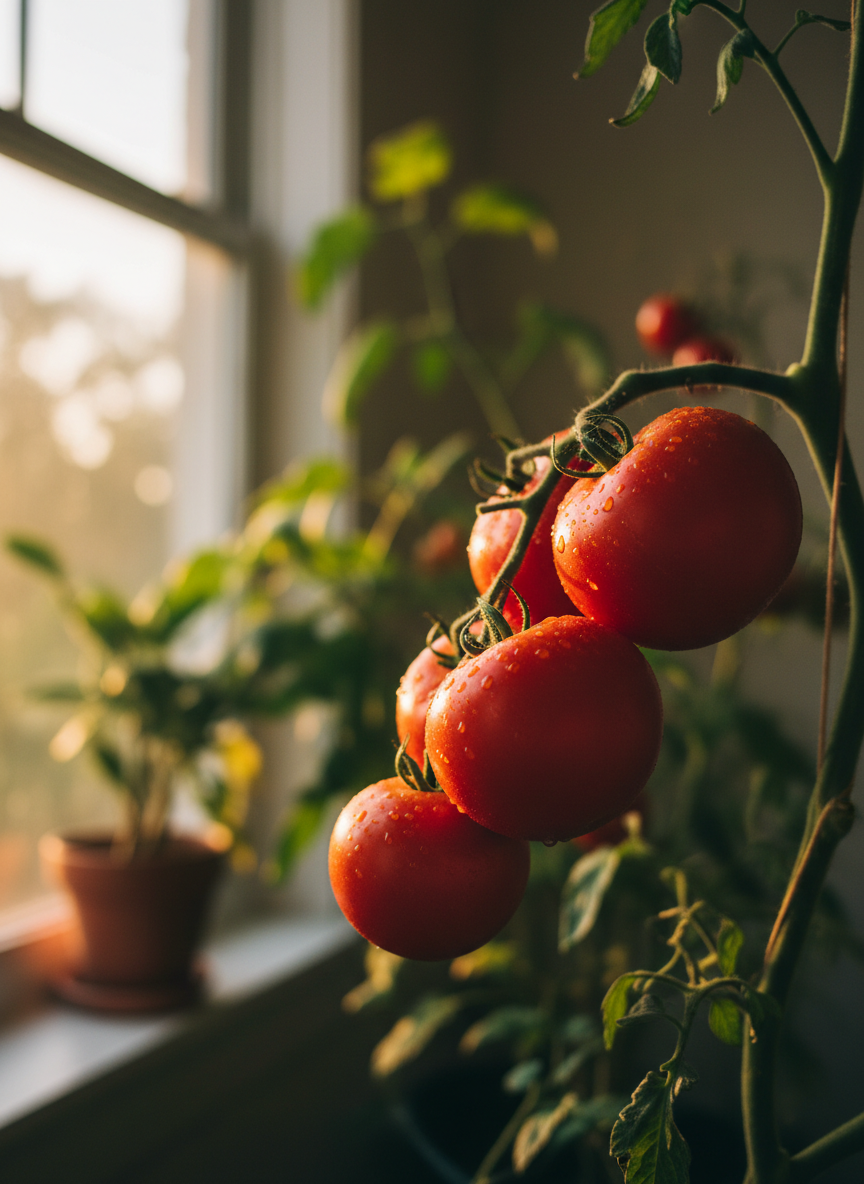
A south-facing window provides the most natural light for indoor tomato growing.
Best Cherry Tomatoes for Indoors
Cherry tomatoes are the sweet spot for indoor growing. They ripen faster, produce more fruit per plant, and are more forgiving of imperfect indoor conditions than large-fruited types.
- Sun Gold — Arguably the best-tasting cherry tomato available. Prolific and reliable under grow lights.
- Sweet Million — Produces long trusses of small, sweet tomatoes. Excellent for beginners.
- Black Cherry — Deeper, richer flavor. Stays reasonably compact.
Compact Determinate Varieties
- Patio F Hybrid — Bred specifically for containers. Stays around 2 feet tall.
- Bush Early Girl — Classic tomato flavor in a compact, manageable plant.
- Terenzo F1 — Developed for indoor and balcony growing, excellent flavor and yield.
Best Indoor Setups for Growing Tomatoes
Windowsill + Supplemental Grow Light
The most accessible entry point. A south-facing window plus a clip-on or hanging LED grow light gives you the light coverage tomatoes need without a big investment. Works best for dwarf and micro varieties.
Fabric Grow Bags Under an LED Panel
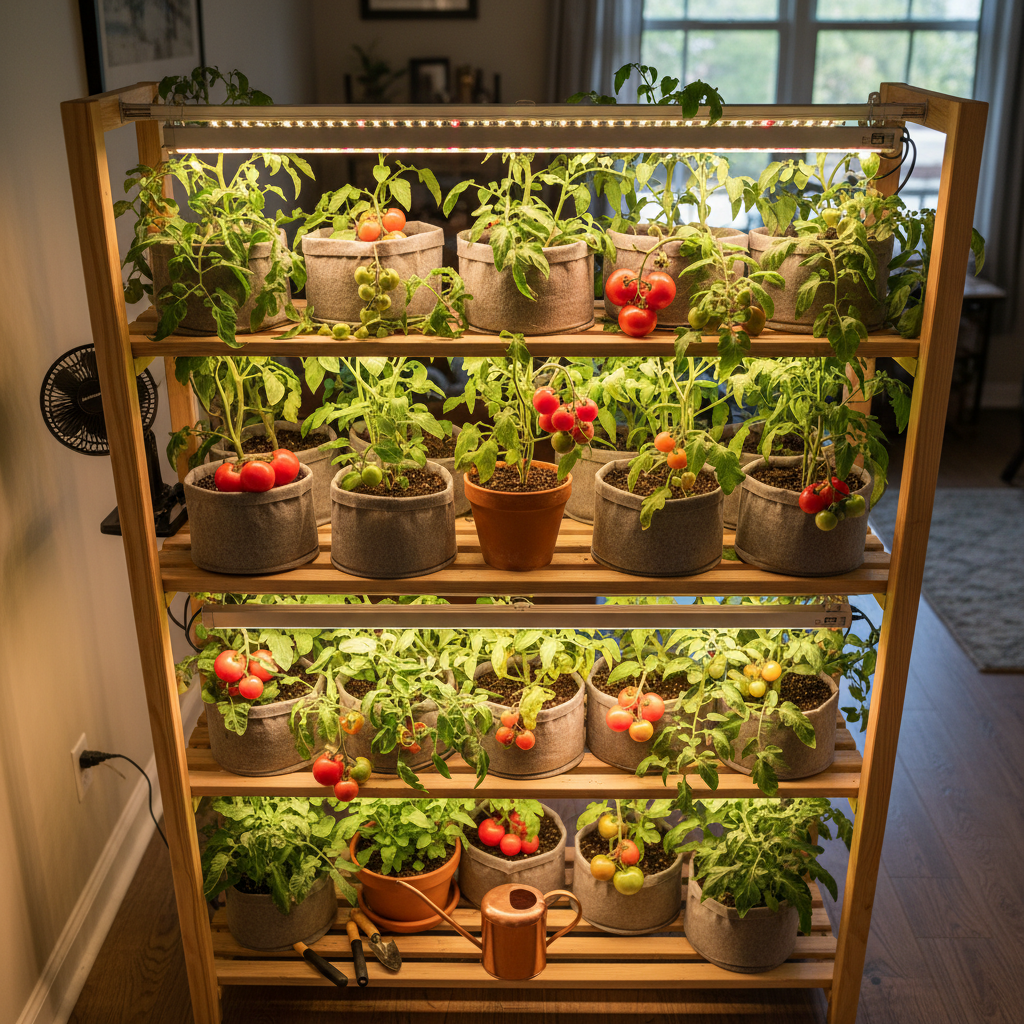
The most popular setup among serious home growers. Line up a few 5–7 gallon fabric grow bags under a panel-style LED grow light and you have a flexible, productive indoor tomato garden that's easy to rearrange and maintain.
Self-Watering Planters
Self-watering planters with a bottom reservoir are ideal for anyone who struggles with consistent watering. They deliver moisture from below on demand, keeping root-zone moisture steady and dramatically reducing the risk of flower drop and blossom end rot.
Countertop Hydroponic Systems
All-in-one systems like pod-style hydroponic gardens include built-in grow lights, nutrient delivery, and compact growing chambers. Great for micro and dwarf tomatoes. More expensive upfront but nearly hands-off once set up.
Grow Tents
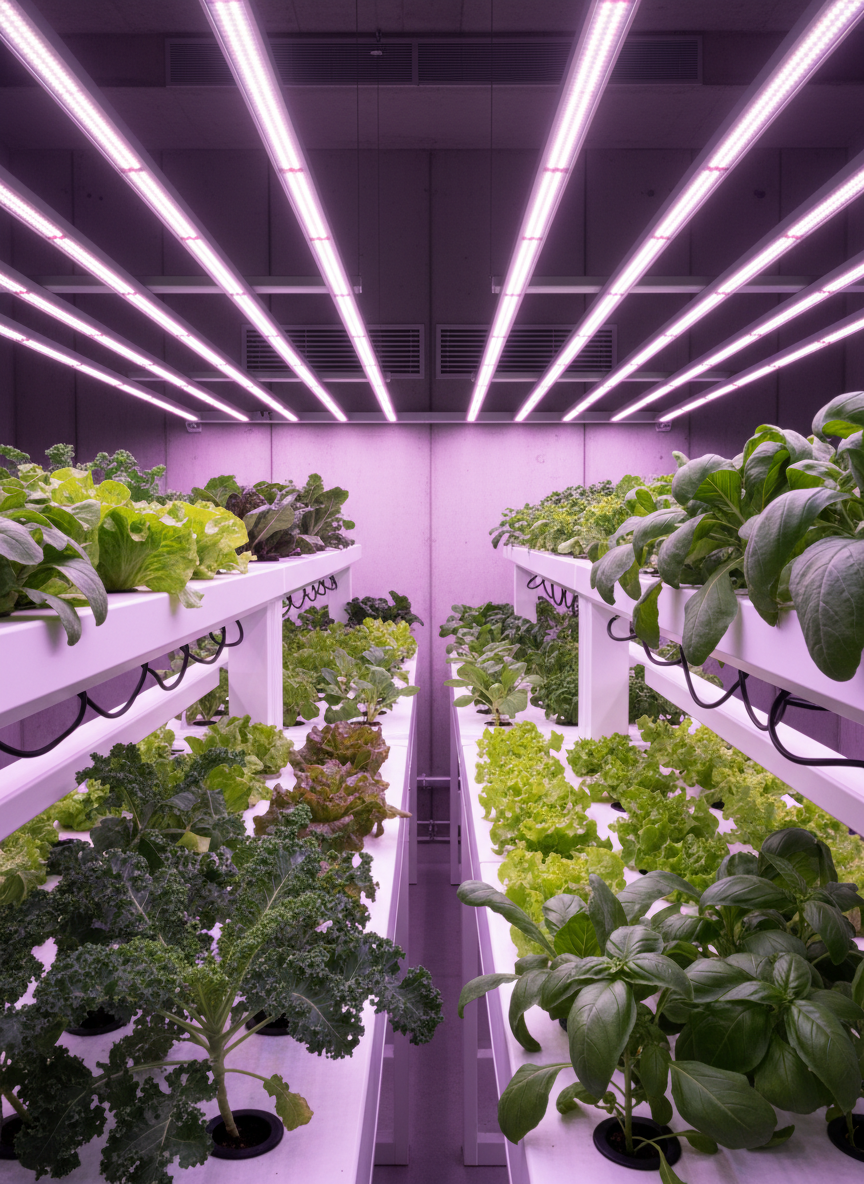
For the most serious indoor growers, a small grow tent (2×2 or 2×4 feet) with a dedicated LED grow light creates a controlled, light-reflective environment that maximizes efficiency. Ideal for year-round production of multiple plants.
How Much Light Do Indoor Tomatoes Need?
This is probably the most important section in this entire guide.
Tomatoes are among the most light-hungry vegetables you can grow. Outdoors, they want full sun — that means 8–10 hours of direct sunlight per day at minimum. Indoors, replicating that intensity requires a dedicated grow light.
The beginner mistake that kills indoor tomatoes: relying on window light alone. Even a bright south-facing window in late winter provides weak, low-angle light for only a few hours of real intensity. The result is always leggy plants — tall, stretched, pale, reaching desperately toward any available light. Leggy plants don't fruit well. They're weak and prone to snapping.
What to Look For in a Grow Light
- Full spectrum — look for lights that produce both blue wavelengths (for vegetative growth) and red wavelengths (for flowering and fruiting)
- At least 2000 lumens for small setups; more for larger growing areas
- LED technology — energy efficient, low heat, long-lasting
How to Use Your Grow Light
- Position the light 2–4 inches above the tops of your plants
- Run it for 14–16 hours per day using an outlet timer (set it and forget it)
- Give plants 6–8 hours of darkness — they need a rest cycle
- Raise the light as plants grow to maintain the 2–4 inch distance
Step-by-Step Beginner Guide to Growing Tomatoes Indoors
Step 1: Choose Your Variety and Gather Supplies
Pick a compact or dwarf variety (see recommendations above). Gather your container, potting mix, grow light, and a seedling heat mat if starting from seed.
Step 2: Start From Seed or Buy a Transplant
For seeds: fill a seed starting tray with seed starting mix, plant seeds ¼ inch deep, cover with a humidity dome, place on a heat mat at 70–80°F. Get your grow light on within hours of germination.
For transplants: skip ahead to Step 4.

Indoor cherry tomatoes taste just as good as outdoor grown ones when given proper care and light.
Step 3: Care for Seedlings
Keep your grow light 2–4 inches above seedlings. Water gently from the bottom by placing trays in a shallow tray of water. Thin to one seedling per cell once true leaves appear.
Step 4: Transplant Into Final Container
When seedlings reach 4–6 inches with 2–3 sets of true leaves, transplant to the final container. Bury the stem deep — up to two-thirds of it — and roots will grow along the buried section for a stronger plant.
Step 5: Water and Feed
Water when the top inch of soil is dry. Begin feeding once a week with a balanced liquid fertilizer. When flowers appear, switch to a tomato or bloom fertilizer higher in phosphorus and potassium.
Step 6: Add Support
Even small indoor tomatoes benefit from a small cage or bamboo stake. Add it early before roots are established to avoid damaging them later.
Step 7: Pollinate Daily
This is everything. When flowers open, gently shake clusters or vibrate them with an electric toothbrush once per day. Do this consistently and you'll see fruit forming within days.
Step 8: Prune Lightly
Remove suckers (shoots growing in the V between stem and branch) to redirect energy toward fruit. For micro varieties, minimal pruning is needed.
Common Problems Indoor Tomato Growers Face
Yellow Leaves
Usually overwatering or nutrient deficiency. Check soil moisture first — soggy soil with yellow leaves points to root issues. Yellow only on the lowest, oldest leaves is normal aging.
Curling Leaves
Leaves curling upward = heat stress or grow light too close. Leaves curling downward = overwatering.
Flowers Dropping
The most common and frustrating indoor problem. Causes: lack of hand pollination (most common), temperature extremes, inconsistent watering, or very dry air. Start with hand pollination — it solves this most of the time.
Weak or Slow Growth
Almost always a lighting issue. Confirm your grow light runs 14–16 hours per day and is positioned correctly.
Poor Pollination
You need to do it manually, every day when flowers are open. An electric toothbrush is the easiest and most effective tool.
Overwatering
Let the top inch dry between waterings. Bottom watering or self-watering planters help prevent this significantly.
Fungus Gnats
Those tiny flies hovering around your soil. Let the soil surface dry out more. Use yellow sticky traps. Bottom water to keep the top layer drier and break the breeding cycle.
Are Indoor Tomatoes Actually Worth It?
Honest answer: for most people, yes.
Flavorwise, homegrown indoor tomatoes — especially cherry varieties — are dramatically better than anything you'll buy at a grocery store in winter. They're picked ripe, not shipped unripe from hundreds of miles away.
Convenience-wise, having a productive plant on your kitchen counter means fresh tomatoes for salads, pastas, and snacking without a trip to the store.
Cost-wise, a basic indoor setup pays for itself over a single growing season, especially if you keep the plant producing for 6–12 months.
And enjoyment-wise? There's something genuinely satisfying about growing food inside your own home. Many people who start with one tomato plant end up expanding their indoor garden significantly.
Realistic yield expectations: A healthy cherry tomato plant indoors can produce dozens to hundreds of fruits over its productive life. Micro varieties produce smaller quantities but are proportionally impressive for their size. You won't replace your grocery shopping entirely, but you'll supplement it meaningfully.
Common Beginner Mistakes to Avoid
Not Enough Light
The number one reason indoor tomatoes fail. A window is not enough. Get a grow light.
Starting With the Wrong Variety
Planting a large indeterminate variety indoors is a recipe for a 5-foot plant with no fruit. Start with dwarf or cherry varieties.

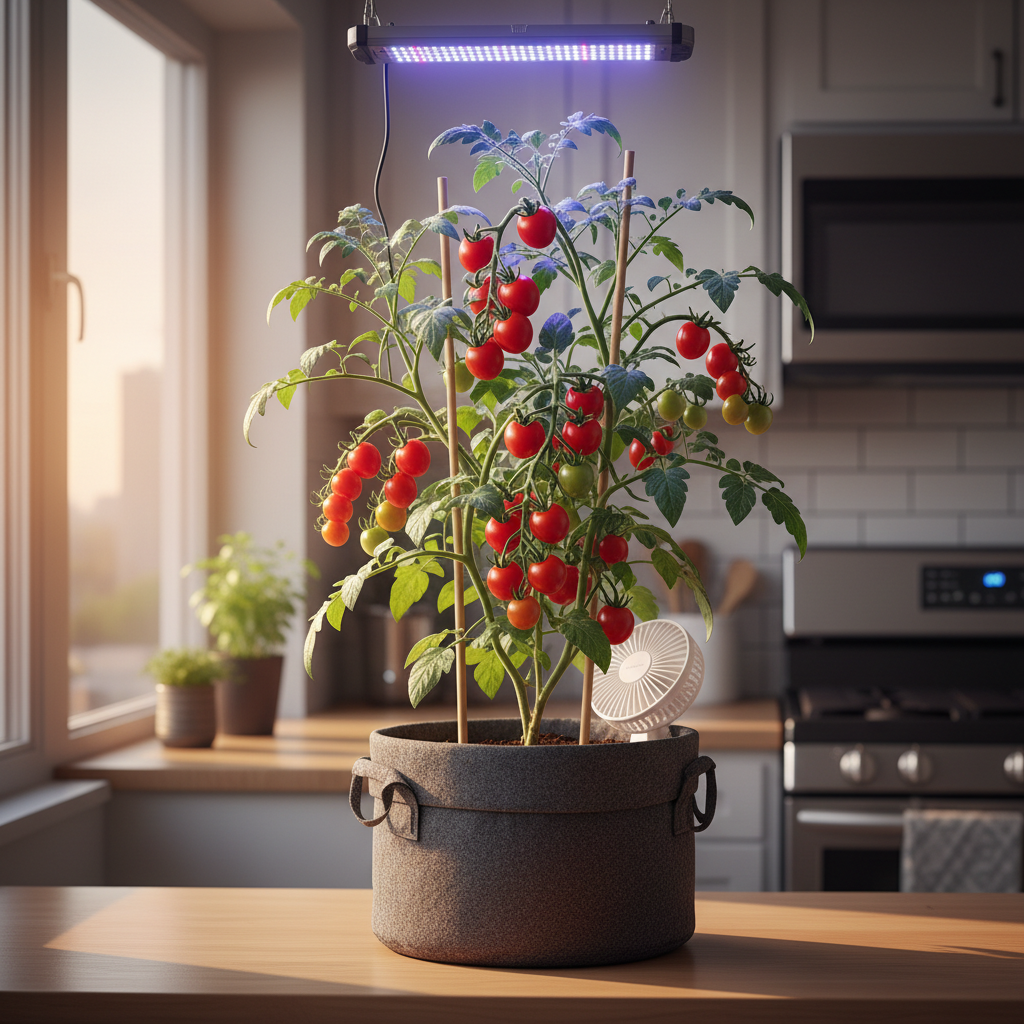
A quality grow light makes the difference between a productive indoor tomato plant and a struggling one.
Overwatering
More water does not mean more tomatoes. Water when the top inch of soil is dry — not on a schedule.
Skipping Hand Pollination
What nobody tells beginners: without bees, your tomatoes will flower forever and fruit never. Pollinate daily.
Poor Airflow
No fan = weak, floppy stems and fungal problems. Run a small fan for a few hours daily.
Using a Container That's Too Small
Rootbound plants don't produce well. Match container size to variety (see guide above).
Transplanting Too Early
Seedlings need to be 4–6 inches tall with several sets of true leaves before moving to their final container.
Frequently Asked Questions
Will tomatoes grow indoors without a grow light?
They can survive, but they won't thrive or produce meaningful fruit on window light alone in most homes. A full-spectrum LED grow light is the most important tool for successful indoor tomato growing.
How long does it take for indoor tomatoes to produce fruit?
Cherry and dwarf varieties typically produce first fruit 60–80 days from transplant. With consistent care, plants continue producing for 6–12 months.
What's the best tomato variety for growing indoors?
Tiny Tim, Tumbling Tom, and Sun Gold are the top recommendations for beginners. All stay compact, produce reliably, and are forgiving of minor care inconsistencies.
How do I pollinate indoor tomatoes?
Gently shake each open flower cluster with your finger, or hold an electric toothbrush against the flower stem for 1–2 seconds once per day. Do this consistently whenever flowers are open.
Can I grow tomatoes indoors year-round?
Yes. With a grow light and appropriate variety, indoor tomatoes aren't limited by outdoor seasons. Many growers maintain continuous production with staggered plantings.
Why do my indoor tomato flowers keep falling off?
Almost always a pollination issue. Start hand pollinating daily. Temperature extremes (below 55°F or above 85°F) and inconsistent watering also cause flower drop.
How often should I fertilize indoor tomatoes?
Every 7–10 days once plants are established. Use a balanced fertilizer before flowering, then switch to a tomato or bloom formula once flowers appear.
Go Grow Some Tomatoes
If you've read this far, you have everything you need to get started. Indoor tomatoes are not complicated — they just need the right setup and a little daily attention.
Get a compact variety. Set up a grow light on a timer. Water when the soil says to, not when the calendar says to. And when those flowers open, shake them.
That's genuinely the whole secret to growing tomatoes indoors. And the first time you pick a warm, ripe cherry tomato off a plant sitting in your kitchen in the middle of winter, you'll understand why so many people get hooked on indoor gardening.
You've got this.
Recommended Products
Looking for the right gear to get started? We've curated our top picks for sustainable vegetable gardening — from raised beds and grow lights to seed-starting kits and organic fertilizers — on our Recommended Products page.
Ready to Start?
If you're ready to gear up, check out our recommended raised beds and grow lights on Amazon — beginner-approved and built to last.
Ready to Start?
If you're ready to gear up, check out our recommended raised beds and grow lights on Amazon — beginner-approved and built to last.
Ready to Start?
If you're ready to gear up, check out our recommended raised beds and grow lights on Amazon — beginner-approved and built to last.
Ready to Start?
If you're ready to gear up, check out our recommended raised beds and grow lights on Amazon — beginner-approved and built to last.
Ready to Start?
If you're ready to gear up, check out our recommended raised beds and grow lights on Amazon — beginner-approved and built to last.
Ready to Start?
If you're ready to gear up, check out our recommended raised beds and grow lights on Amazon — beginner-approved and built to last.