What to Grow in a Beginner Garden: Easy Vegetables and Herbs to Start With
Affiliate Disclosure: This article contains affiliate links. If you make a purchase through one of them, we may earn a small commission at no extra cost to you. We only recommend products we genuinely believe will help your garden thrive.
Starting your first vegetable garden is exciting, but it can also feel overwhelming when you’re staring at seed packets and plant labels. The good news is that you do not need to grow everything at once to have a rewarding first season.
If you choose a few reliable, beginner-friendly crops, you can build confidence, enjoy fresh harvests, and learn the basics without making gardening feel complicated.
Why This Topic Matters
A lot of new gardeners quit too early because they start with plants that are fussy, slow, or poorly suited to their space. When your first garden includes easier crops, you are much more likely to see success quickly.
That early success matters. Harvesting your first lettuce leaves or pulling up your first radishes makes gardening feel practical, fun, and worth the effort.
Choosing the right crops also helps you avoid common beginner frustrations like overcrowding, pest problems, and disappointing yields. A simple plan gives you room to learn how sunlight, watering, soil, and seasons affect your plants.
A beginner garden should not be about growing the most impressive vegetables. It should be about growing a few dependable foods that teach you the basics and keep you motivated.
Quick Answer
If you are wondering what to grow in a beginner garden, start with easy, productive crops that grow well in average home conditions and do not need advanced care.
Great choices for beginners include:
- Leaf lettuce n- Spinach
- Radishes
- Bush beans
- Zucchini
- Cherry tomatoes
- Green onions
- Basil
- Parsley
- Mint in a pot
If you have room for only a few plants, a strong beginner mix is:
- Leaf lettuce
- Radishes
- Bush beans
- Cherry tomatoes
- Basil
These plants are popular with beginners because they either grow quickly, produce a lot, or are forgiving when you make small mistakes.

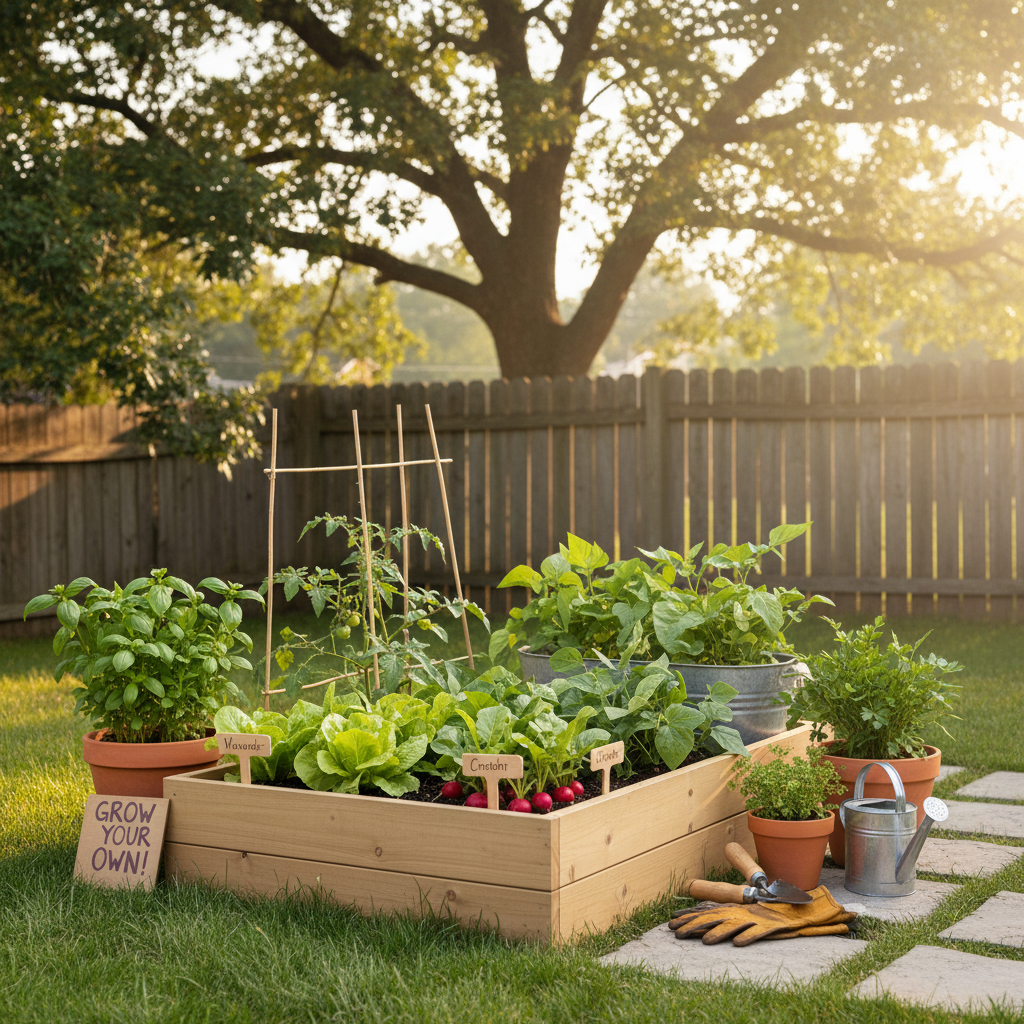
A well-planned raised bed can produce a surprising variety of beginner-friendly vegetables in a small space.
Step-by-Step Guide
1. Start by looking at your space
Before choosing plants, take a close look at where you want to garden. Most vegetables need at least 6 to 8 hours of sunlight each day, so the amount of sun you get will shape what grows best.
If your yard, patio, or balcony gets full sun, you can grow a wide range of vegetables. If you have partial shade, focus more on leafy greens and herbs rather than fruiting crops like tomatoes and peppers.
Ask yourself these questions:
- How many hours of direct sun does the area get?
- Are you planting in the ground, raised beds, or containers?
- How much time can you realistically spend watering and checking plants?
- Do you want quick harvests, or are you okay waiting longer?
A small, well-managed garden almost always does better than a large garden that feels like too much work.
2. Choose crops that match your climate and season
Not every vegetable grows well at the same time of year. Cool-season crops prefer mild weather, while warm-season crops need heat and should be planted after frost danger has passed.
Cool-season beginner crops include:
- Lettuce
- Spinach
- Radishes
- Green onions
- Peas
- Parsley
Warm-season beginner crops include:
- Bush beans
- Zucchini
- Cherry tomatoes
- Cucumbers
- Basil
If you are not sure when to plant, check your local last frost date and first frost date. That one piece of information helps you avoid planting too early or too late.
3. Keep your first garden small
One of the smartest things a beginner can do is limit the number of crops. Growing 4 to 6 easy vegetables and herbs is usually plenty for a first garden.
This helps you stay on top of watering, spacing, weeding, and harvesting. It also gives you a clearer picture of what worked well in your space.
A simple beginner garden plan might look like this:
- 1 cherry tomato plant
- 1 zucchini plant
- 1 short row of bush beans
- 1 patch of leaf lettuce
- 1 sowing of radishes
- 1 pot of basil or parsley
That is enough variety to make gardening interesting without becoming stressful.
4. Start with the easiest crops first
Here are some of the best choices when deciding what to grow in a beginner garden.
Leaf lettuce
Leaf lettuce is one of the best beginner crops because it grows quickly and does not require much space. You can harvest outer leaves as needed, which means one planting can keep producing for weeks.
It grows best in cooler weather and can do well in containers, raised beds, or small garden plots. If your summers are hot, grow it in spring and fall.
Radishes
Radishes are fast, fun, and satisfying for new gardeners. Many varieties are ready in about a month, so you get quick results.
They are also helpful for learning spacing and timing. Because they grow so fast, they are a great confidence booster.
Bush beans
Bush beans are simple, productive, and usually easier for beginners than pole beans because they do not need a trellis. They germinate quickly and produce a steady harvest in warm weather.
Pick them often to encourage more beans. They are also a good crop for children and families because they are easy to spot and harvest.
Zucchini
Zucchini is famous for being productive, which makes it rewarding for first-time gardeners. One or two plants are often enough for a household.
It needs sun, space, and regular picking. If you leave fruits on the plant too long, production slows down, so harvest when they are still small to medium sized.
Cherry tomatoes
Cherry tomatoes are often easier for beginners than large slicing tomatoes. They tend to be productive, tasty, and more forgiving in small gardens or containers.
Give them full sun, support, and consistent watering. A strong cage or stake makes care much easier.
Green onions
Green onions are low-maintenance and useful in the kitchen. They do not take up much room and can be tucked into corners of beds or containers.
They are a nice choice if you want something simple that can be harvested a little at a time.
Basil and parsley
Herbs are excellent for beginners because they add flavor, do not need much space, and are easy to use often. Basil loves warm weather and plenty of sun, while parsley handles milder conditions well.
If you want to grow mint, keep it in its own pot. It spreads aggressively and can take over a bed.
5. Build healthy soil before planting
You do not need perfect soil, but you do want soil that drains well and contains organic matter. Mixing in compost is one of the simplest ways to improve a beginner garden.
Healthy soil helps roots grow, improves moisture balance, and supports steady plant growth. If you are using containers, choose a quality potting mix rather than digging up garden soil.
A good beginner setup includes:
- Loose soil or raised bed mix
- Finished compost
- Mulch such as straw or shredded leaves
- Containers with drainage holes if growing in pots
6. Follow spacing guidelines
It is tempting to squeeze in extra plants, especially when seedlings look tiny. But overcrowding leads to poor airflow, more disease pressure, and smaller harvests.
Read plant labels or seed packets and give plants the room they need. A garden that looks a little sparse at planting time often fills in beautifully later.
7. Water consistently, not randomly
Beginners often overwater or underwater because they water on impulse instead of checking the soil. Most vegetables do best when the soil stays evenly moist but not soggy.
Water deeply at the base of the plant rather than spraying leaves whenever possible. Morning is usually the best time to water because leaves dry faster and plants have moisture for the day ahead.

Container gardening lets beginners grow vegetables on patios and balconies with just a few pots and good sunlight.
8. Harvest often
Many beginner-friendly crops produce better when you harvest regularly. Lettuce keeps growing, beans keep setting pods, basil branches more after cutting, and zucchini produces more when picked often.
Do not wait for vegetables to become oversized. Smaller, younger harvests are often more tender and flavorful anyway.
9. Keep notes for next season
A beginner garden is also a learning project. Write down what you planted, when you planted it, and how it performed.
Simple notes help you remember things like which tomato variety did best, whether the lettuce bolted early, or how much sun a bed really received. Those observations are valuable.

A first-season beginner garden can produce an impressive harvest of fresh vegetables and herbs.
Common Beginner Mistakes
Most first gardens run into a few problems, and that is completely normal. The goal is not to avoid every mistake but to learn from them.
Here are some of the most common beginner mistakes:
Planting too much
A large first garden sounds exciting, but it can become hard to maintain. Too many plants usually means missed watering, late harvesting, and more stress.
Start small and expand later if you want to.
Growing crops you do not actually eat
It is easy to pick vegetables because they look interesting in catalogs or stores. But if your household does not enjoy them, that space could be used for something more useful.
Choose crops you will be excited to harvest and cook.
Ignoring sunlight needs
Tomatoes, beans, cucumbers, and zucchini need strong sun to do their best. If you plant them in a shady spot, they may survive but not produce well.
Match the plant to the light you have instead of forcing full-sun crops into part shade.
Overcrowding plants
Crowded plants compete for light, nutrients, water, and airflow. This often leads to weak growth and more disease problems.
It may feel wasteful to leave space, but spacing is one of the keys to healthy plants.
Watering too lightly
A quick sprinkle often does not reach the root zone. Shallow watering can encourage weak roots and inconsistent growth.
Instead, water thoroughly and check the soil before watering again.
Waiting too long to harvest
Many new gardeners assume bigger means better. In reality, zucchini, beans, lettuce, cucumbers, and herbs are usually best when harvested regularly and not allowed to get oversized.
Frequent harvesting also encourages continued production.
Best Tips for Success
A beginner garden does not need to be perfect to be productive. A few simple habits make a big difference over time.
Use these tips to make your first season easier:
- Grow a mix of quick crops and longer crops so you stay motivated.
- Choose disease-resistant varieties when possible.
- Add mulch to help hold moisture and reduce weeds.
- Check your garden a few minutes each day instead of waiting for problems to build up.
- Harvest early and often.
- Plant herbs near the vegetables you use most in the kitchen.
- Replace failed crops without guilt. Gardening is always part experiment.
It also helps to define success realistically. A beginner garden is successful if you learn how plants grow, harvest a few useful crops, and enjoy the process enough to keep going.
Recommended Supplies or Tools
You do not need a shed full of equipment to start a vegetable garden. A handful of basic supplies is enough for most beginners.
Helpful tools and materials include:
- Hand trowel
- Watering can or hose with gentle spray nozzle
- Gardening gloves
- Compost
- Mulch
- Pruners or garden scissors
- Tomato cage or stakes
- Raised bed or containers if you do not have in-ground space
- Quality potting mix for containers
- Plant labels or a simple garden notebook
If your budget is limited, focus first on good soil, a watering method, and a few sturdy plants or seeds. Those basics matter more than fancy tools.
Frequently Asked Questions
What is the easiest vegetable to grow for a beginner?
Leaf lettuce, radishes, and bush beans are among the easiest vegetables for beginners. They grow quickly, do not need complicated care, and usually give reliable results in the right season.
How many vegetables should I grow in my first garden?
A good starting point is 4 to 6 crops. That gives you variety without creating more work than you can comfortably manage.
Is it better to start from seeds or starter plants?
For beginners, a mix of both works well. Fast, easy crops like radishes and beans are great from seed, while tomatoes and herbs are often simpler to start as nursery plants.
Can I grow a beginner garden in containers?
Yes, many beginner-friendly crops grow very well in containers. Lettuce, green onions, basil, parsley, bush beans, and cherry tomatoes can all do well in pots with enough sun and water.
What should I avoid growing in my first garden?
It is usually best to avoid crops that need a long season, lots of space, or more experience to manage well. For many beginners, that includes large pumpkins, corn, cauliflower, and sprawling melons.
Recommended Products
Looking for the right gear to get started? We've curated our top picks for sustainable vegetable gardening — from raised beds and grow lights to seed-starting kits and organic fertilizers — on our Recommended Products page.
Ready to Start?
If you're ready to gear up, check out our recommended raised beds and grow lights on Amazon — beginner-approved and built to last.
Ready to Start?
If you're ready to gear up, check out our recommended raised beds and grow lights on Amazon — beginner-approved and built to last.
Ready to Start?
If you're ready to gear up, check out our recommended raised beds and grow lights on Amazon — beginner-approved and built to last.
Ready to Start?
If you're ready to gear up, check out our recommended raised beds and grow lights on Amazon — beginner-approved and built to last.
Final Thoughts
If you are deciding what to grow in a beginner garden, keep it simple and choose crops that are easy, useful, and enjoyable to harvest. You do not need a perfect layout or a huge backyard to grow fresh food successfully.
Start with a few reliable vegetables and herbs, pay attention to sunlight and watering, and give yourself room to learn. Every season teaches something new, and even a small first garden can become the beginning of a lasting, rewarding habit.