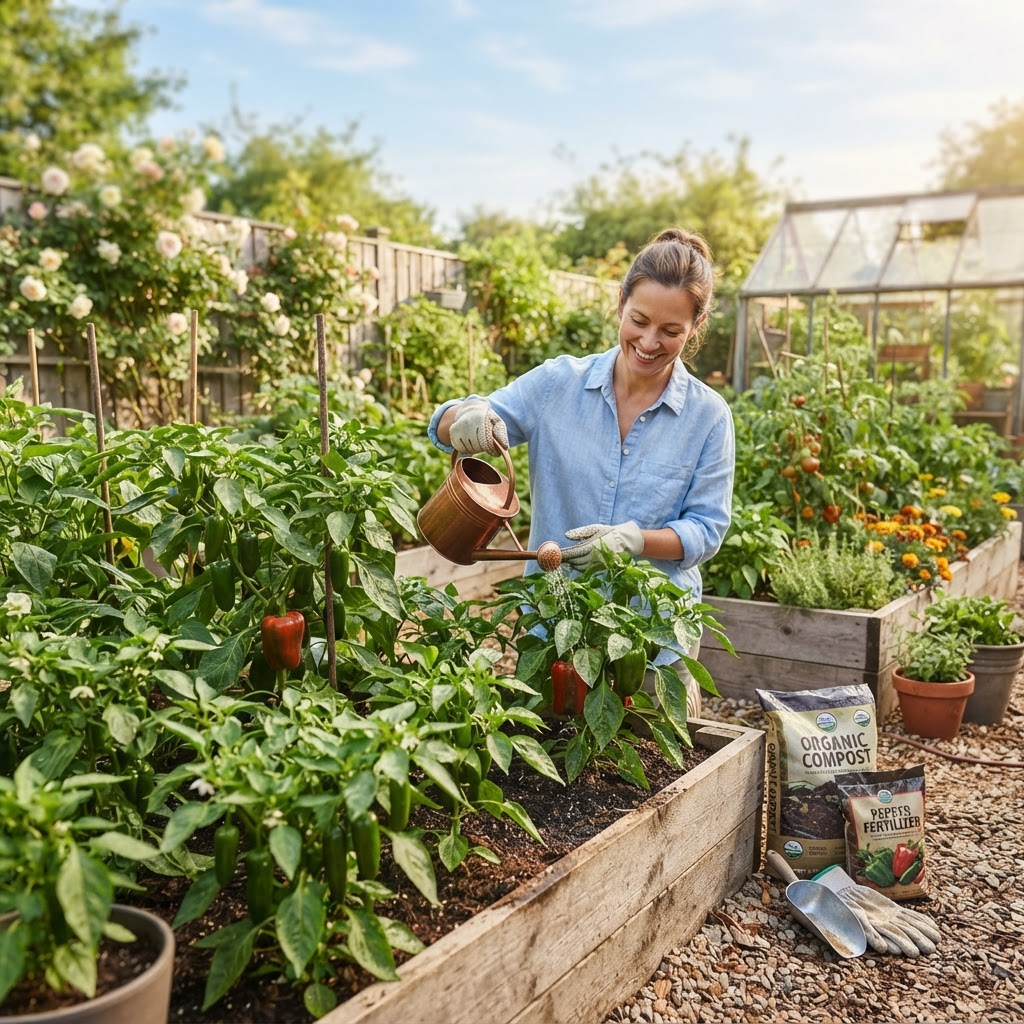
When Should I Fertilize Peppers? A Simple Feeding Schedule for Bigger Harvests
If you have ever stared at your pepper plants and wondered, when should I fertilize peppers, you are not alone. Peppers can be a little picky, and timing matters just as much as the fertilizer you choose.
The good news is that feeding peppers does not have to be complicated. With a simple schedule and a few beginner-friendly tips, you can grow strong plants, more flowers, and healthier fruit without overdoing it.
Why This Topic Matters
Pepper plants are heavy feeders compared to some other garden vegetables, but they do not like being pushed too hard. Too little fertilizer can lead to slow growth, pale leaves, and small harvests. Too much fertilizer can create big leafy plants with very few peppers.
That is why timing is so important. Fertilizing at the right stage helps peppers build roots early, grow sturdy stems and leaves, and then shift energy into flowering and fruiting.
Beginners often assume more fertilizer always means more peppers. In reality, peppers need the right nutrients at the right time, especially once they begin to flower.
Getting this basic rhythm right can make a big difference whether you are growing bell peppers, jalapeños, banana peppers, or hot peppers in containers or in-ground beds.
Quick Answer
If you want the short version, here it is:
- Before planting: Mix compost or a balanced slow-release fertilizer into the soil.
- After transplanting: Wait about 1 to 2 weeks, then begin light feeding once plants are settled.
- During early growth: Feed every 2 to 3 weeks with a balanced fertilizer if your soil is average.
- When buds and flowers appear: Switch to a fertilizer that is lower in nitrogen and a little higher in phosphorus and potassium.
- While fruit is developing: Continue feeding lightly every 2 to 4 weeks, depending on the product and growing conditions.
For most home gardeners, the best time to fertilize peppers is at planting, shortly after transplanting, and then regularly through flowering and fruiting in moderate amounts.
Step-by-Step Guide
1. Start with healthy soil before planting
The first feeding happens before your pepper plants even go into the ground. This step is easy to skip, but it gives your plants a strong start.
Work in compost or well-rotted organic matter a week or two before planting. If your soil is poor, you can also add a balanced vegetable fertilizer according to the package directions.
A balanced fertilizer is often labeled with similar N-P-K numbers, such as 5-5-5 or 10-10-10. This gives peppers access to nitrogen for leafy growth, phosphorus for roots, and potassium for overall plant health.
If you grow in containers, use a high-quality potting mix and consider blending in a slow-release fertilizer at planting time. Containers lose nutrients faster than garden beds, so this first step matters even more.
2. Wait briefly after transplanting
Many beginners feed peppers immediately after transplanting, but that can stress them. Freshly transplanted peppers need a little time to settle their roots.
Wait about 7 to 14 days after transplanting before giving a liquid or granular feeding. During that period, focus on watering deeply and protecting plants from cold nights or intense afternoon sun if needed.
Once you see fresh new growth, that is your sign the plant is ready to use extra nutrients well.
3. Feed during early vegetative growth
After peppers are established, they enter a stage of active leaf and stem growth. This is when a balanced fertilizer is usually most helpful.
For this stage, you can use:
- A balanced organic vegetable fertilizer
- Fish emulsion or seaweed-based liquid feed
- Compost tea, if you already use it successfully
- A slow-release granular fertilizer for vegetables
How often depends on the product:
- Liquid fertilizers: usually every 2 to 3 weeks
- Slow-release fertilizers: usually every 4 to 8 weeks
- Compost side-dressing: every few weeks as a gentle boost
Always read the label because application rates vary. More is not better, especially with peppers.
4. Change your approach when flowers appear
This is the stage many gardeners miss. Once pepper plants begin producing buds and flowers, it is time to ease off heavy nitrogen.
Too much nitrogen at this point encourages lots of leaf growth instead of fruit production. Your plant may look lush and beautiful but still produce very few peppers.
When flowers begin to appear, switch to a fertilizer that is:
- Lower in nitrogen
- Moderate in phosphorus
- Good in potassium
You do not need a “magic” bloom booster. You simply want a fertilizer that supports flowering and fruit set without pushing too much leafy growth.
5. Keep feeding lightly as peppers form
Once fruit starts forming, peppers still need nutrients, especially in containers or poor soil. Continue light, regular feeding rather than one heavy dose.
A gentle feeding every 2 to 4 weeks often works well through the harvest season. If you are using a slow-release product, follow the label schedule and supplement only if your plants look hungry.
At this stage, steady watering is just as important as fertilizer. Uneven moisture can lead to blossom end rot, poor fruit development, and stressed plants.
6. Watch the plant, not just the calendar
No fertilizer schedule is perfect for every garden. Weather, soil quality, container size, and pepper variety all affect how often plants need feeding.
Use the calendar as a guide, but also pay attention to plant signals.
Signs your peppers may need feeding:
- Pale or yellowing older leaves
- Slow growth during warm weather
- Small plants that are not filling out
- Poor flowering or weak fruit set
- Container plants drying out and exhausting nutrients quickly
Signs you may be overfertilizing:
- Very dark green leaves with lots of foliage
- Few flowers or fruit
- Burned leaf edges
- Crusty fertilizer buildup on container soil
- Wilting even when soil is moist, due to root stress
7. Adjust for containers vs. in-ground plants
Container peppers almost always need fertilizer more often than peppers planted in the ground. Watering washes nutrients out of pots quickly, especially in hot summer weather.
For container peppers, a common beginner-friendly plan is:
- Slow-release fertilizer mixed into potting soil at planting
- Liquid feeding every 2 to 3 weeks after plants are established
- Slightly more frequent checks during flowering and fruiting
For in-ground peppers, compost-rich soil may let you feed less often. If your beds are healthy and improved every season with compost, you may only need light supplemental feeding.
8. Stop pushing growth late in the season
Late in the season, especially 4 to 6 weeks before your expected first frost, it usually makes sense to slow down or stop regular fertilizing. At that point, the plant will not use heavy feeding efficiently.
Instead of trying to force lots of new growth, let the plant focus on ripening the peppers already forming. Continue watering consistently and harvest often.
Common Beginner Mistakes
Fertilizing too early after transplanting
Fresh transplants are already under stress. Feeding immediately can irritate roots instead of helping the plant settle in.
Using too much nitrogen all season
This is one of the most common pepper-growing mistakes. High-nitrogen fertilizer can create large, leafy plants with delayed flowering and fewer peppers.
Feeding on a strict schedule without checking the plant
A plant growing in rich garden soil may need less fertilizer than one growing in a small patio pot. Always let your plant’s growth and leaf color guide you.
Applying fertilizer to dry soil
Fertilizer can burn roots if the soil is bone dry. Water first or apply fertilizer when the soil is already slightly moist.
Ignoring the product label
Different fertilizers have different strengths. A liquid concentrate, granular synthetic fertilizer, and organic slow-release blend should not all be used the same way.
Thinking fertilizer can fix every problem
If your peppers are struggling, fertilizer may not be the answer. Cold temperatures, poor pollination, inconsistent watering, compacted soil, pests, or lack of sunlight can all reduce pepper growth and production.
Best Tips for Success
Focus on soil first
Healthy soil makes fertilizer more effective. Add compost each season to improve structure, moisture retention, and nutrient availability.
Use moderate, steady feeding
Peppers usually do better with small, regular feedings than with occasional heavy doses. Think of fertilizer as support, not a shortcut.
Switch fertilizers at the right time
Early growth needs balance. Flowering and fruiting need less nitrogen and more support for blooms and fruit development.
Water consistently
Even the best fertilizer cannot help a plant that swings between drought and soggy soil. Keep the soil evenly moist, especially once peppers start flowering and setting fruit.
Mulch around plants
A light mulch layer helps hold moisture, reduce stress, and support more even nutrient uptake. Straw, shredded leaves, or untreated grass clippings can work well.
Harvest often
Picking mature peppers regularly encourages many varieties to keep producing. It also helps you notice early signs of nutrient problems before they become serious.
Keep notes
Write down what fertilizer you used, when you applied it, and how your peppers responded. This simple habit makes each season easier and more productive.
Recommended Supplies or Tools
You do not need a huge collection of garden products to fertilize peppers well. A few basic supplies are enough.
Helpful supplies for beginners
- Compost: great for improving soil and feeding gently
- Balanced vegetable fertilizer: useful early in the season
- Low-nitrogen fertilizer for flowering plants or vegetables: helpful once buds appear
- Watering can or hose with a gentle setting: makes feeding and watering easier
- Mulch: helps maintain steady moisture
- Garden gloves: handy for mixing compost or granular fertilizer
- Notebook or garden app: useful for tracking feeding dates
Nice-to-have tools
- Soil test kit: helps you avoid guessing
- Measuring spoon or scoop: prevents over-application
- Liquid fertilizer sprayer or mixing jug: useful if you prefer liquid feeds
- Moisture meter: can help beginners avoid overwatering or underwatering container peppers
If you only buy one “extra” item, a simple soil test is often the most helpful. It can tell you whether your soil is actually low in nutrients or whether another issue is affecting your peppers.
Frequently Asked Questions
Can I fertilize peppers every week?
Usually, weekly feeding is too much unless you are using a very diluted liquid fertilizer and the product specifically allows it. Most pepper plants do better with feeding every 2 to 3 weeks during active growth.
What is the best fertilizer for pepper plants?
There is not one perfect product for every garden. A balanced fertilizer works well early on, and a lower-nitrogen fertilizer is often better once flowering begins.
Should I fertilize peppers when they are flowering?
Yes, but lightly and with the right type of fertilizer. Once peppers start flowering, avoid heavy nitrogen and choose a product that supports blooms and fruit set.
Do pepper plants in pots need more fertilizer?
Yes, usually. Container plants lose nutrients faster because watering flushes them out, so potted peppers often need more frequent feeding than in-ground plants.
Is compost enough for peppers?
In rich garden soil, compost may be enough for some pepper plants, especially if you improve your beds every year. In containers or less fertile soil, peppers usually benefit from extra fertilizer during the season.
Final Thoughts
If you have been asking, when should I fertilize peppers, the easiest answer is this: feed them a little before planting, wait until transplants settle in, support leafy growth early, and then switch to lighter, lower-nitrogen feeding once flowers appear.
The goal is not to feed constantly. It is to match your fertilizer timing to the plant’s stage of growth.
For beginners, a simple routine works best. Start with compost, use a balanced fertilizer carefully, avoid overdoing nitrogen, and watch how your plants respond.
With a little attention and steady care, your pepper plants can reward you with healthier growth, more flowers, and a much better harvest.