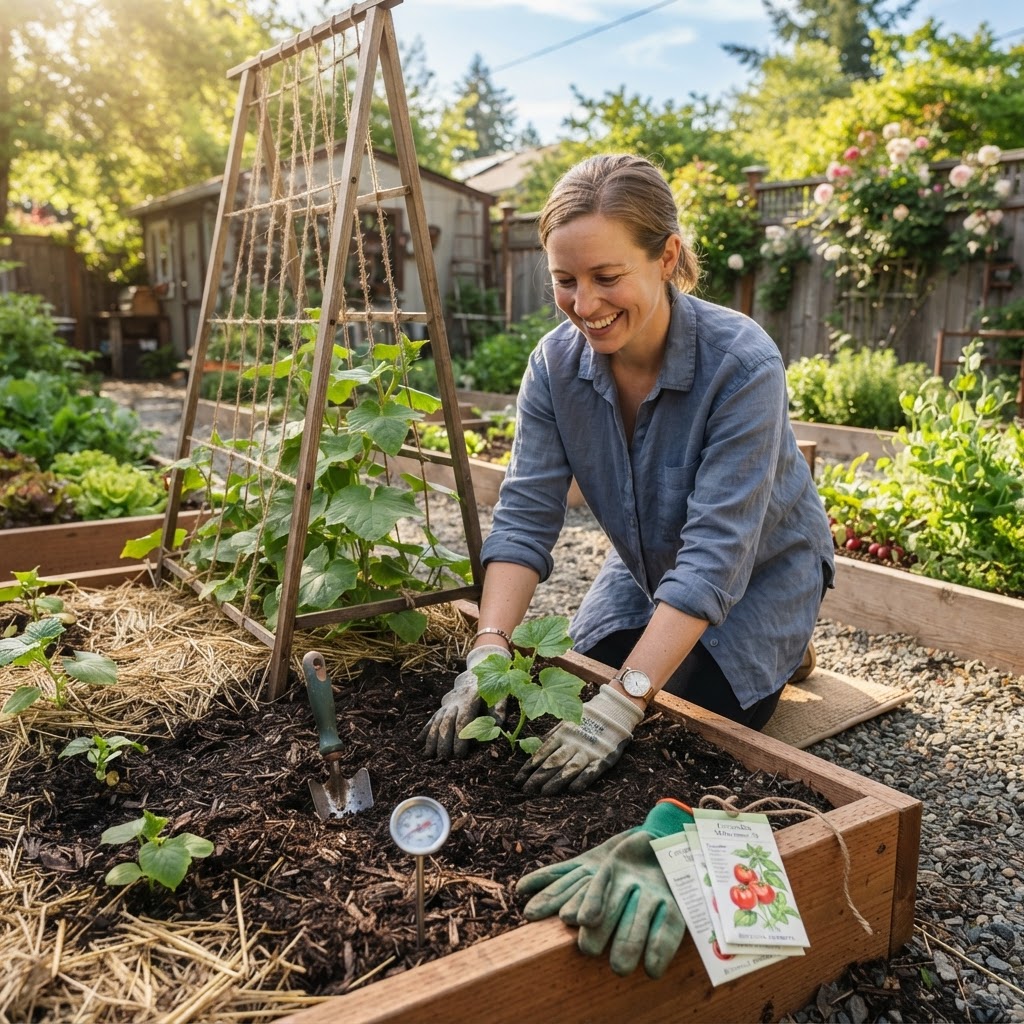
When Should I Plant Cucumbers? A Beginner’s Guide to Timing It Right
If you have been asking, when should I plant cucumbers, you are already thinking like a smart gardener. Cucumbers grow fast and reward you with crisp, refreshing harvests, but they can struggle if planted too early or too late.
The good news is that cucumber timing is not complicated once you know what to watch for. With the right planting window, warm soil, and a little planning, even beginners can grow strong, productive cucumber plants at home.
Why This Topic Matters
Cucumbers are warm-season vegetables, which means they do not like cold weather at all. If you plant them before the weather settles, seeds may rot in chilly soil or young plants may stall after a late frost.
On the other hand, waiting too long can shorten your harvest season, especially in areas with very hot summers or shorter growing seasons. Planting at the right time gives your plants the best chance to grow quickly, flower well, and produce plenty of cucumbers.
Timing also affects disease pressure and overall plant health. Cucumbers that start strong in warm conditions tend to grow faster and handle stress better than plants that sit in cold, damp soil.
For beginner gardeners, this matters because cucumbers often seem easy until timing problems show up. Knowing when to plant helps you avoid one of the most common reasons for disappointment.
Quick Answer
The best time to plant cucumbers is after your last spring frost, when the soil temperature is at least 60°F, and the air is consistently warm. For the strongest growth, many gardeners wait until the soil reaches 65°F to 70°F.
In most climates, that means planting cucumbers 1 to 2 weeks after the last frost date. If you are direct sowing seeds outdoors, warmer soil usually leads to faster germination and healthier seedlings.
If your growing season is short, you can start cucumber seeds indoors about 3 to 4 weeks before transplanting, but cucumbers do not love root disturbance. Because of that, many beginners find it easier to sow seeds directly into the garden once the weather is reliably warm.
A simple rule to remember is this:
- No frost risk
- Warm soil
- Warm nights
- Plenty of sun
When those four things line up, it is usually time to plant cucumbers.
Step-by-Step Guide
1. Find your last average frost date
Your last spring frost date is the starting point for cucumber planting. This is the average date when your area is expected to stop having freezing temperatures in spring.
You can find it through your local extension office, weather service, gardening apps, or online frost date calculators. It does not have to be exact to the day, but it gives you a useful target.
For example, if your last frost date is May 1, you would usually plant cucumbers outdoors sometime in early to mid-May. The exact day depends on how quickly the soil warms and how stable the weather becomes.
2. Check the soil temperature
This is one of the most important steps, and beginners often skip it. Cucumbers germinate best in warm soil, not just warm air.
Use a simple soil thermometer and test the top 2 to 4 inches of soil in the morning. If the reading is below 60°F, it is better to wait.
Here is a helpful guide:
- Below 60°F: Too cold for reliable planting
- 60°F to 65°F: Acceptable, but growth may be slower
- 65°F to 70°F: Ideal for fast germination and healthy growth
- Above 70°F: Excellent, as long as the soil is not drying out too quickly
Warm soil helps cucumber seeds sprout faster and lowers the risk of rotting. It also gives transplants a much easier start.
3. Watch the nighttime temperatures
Even if afternoons feel warm, cool nights can slow cucumber growth. These plants prefer nighttime temperatures above 50°F, and they really take off when nights are consistently warmer.
If your forecast still shows cold snaps, do not rush. A few extra days of waiting can make a big difference.
4. Decide whether to direct sow or transplant
Most home gardeners can direct sow cucumber seeds right into the garden. This is simple, low-stress, and often gives great results.
Direct sowing works especially well if:
- Your soil warms up well in spring
- You have a moderate or long growing season
- You want an easy beginner method
Transplanting can help if you live where spring arrives late or your summer season is shorter. If you start seeds indoors, use biodegradable pots or larger cells to reduce root disturbance.
Start cucumber seeds indoors only about 3 to 4 weeks before planting outside. If you start them too early, they can become leggy, root-bound, or stressed before transplanting time.
5. Prepare the planting area
Cucumbers need full sun, rich soil, and good drainage. Pick a spot that gets at least 6 to 8 hours of direct sunlight each day.
Before planting, mix compost into the soil to improve fertility and texture. Cucumbers like steady moisture, but they do not like sitting in soggy ground.
Raised beds and mounded rows are helpful if your soil drains poorly. Warm, loose soil gives cucumber roots the best environment.
6. Plant at the right depth and spacing
If you are direct sowing, plant seeds about 1 inch deep. Water gently after planting so the soil stays evenly moist while seeds germinate.
Spacing depends on the variety and whether you are growing on the ground or on a trellis. In general:
- Bush cucumbers can be spaced closer together
- Vining cucumbers need more room
- Trellised plants can be grown a bit tighter than sprawling plants
Always check the seed packet for the best spacing for your variety. Crowded plants are harder to air out and may have more disease problems.
7. Protect young plants if needed
If the weather turns unexpectedly cool after planting, use row covers, cloches, or lightweight fabric to hold in warmth. This can help seedlings settle in without stress.
Just remember to remove or open covers when plants begin flowering if pollinators need access. Cucumbers rely on bees and other insects for good fruit set unless you are growing a parthenocarpic variety.
8. Water consistently from the start
Newly planted cucumber seeds and transplants need even moisture. Do not let the soil dry out completely during germination or establishment.
Once plants are growing, deep watering is usually better than frequent shallow watering. Mulch around the plants after the soil warms to help hold moisture and reduce weeds.
9. Consider succession planting
You do not have to plant all your cucumbers at once. In many gardens, a second sowing 2 to 4 weeks after the first can extend the harvest and replace plants that fade later.
This is especially useful because cucumber plants can slow down in heat, develop mildew, or simply wear out after heavy production. A staggered planting keeps fresh plants coming.
10. Adjust for your climate
Cucumber planting time varies depending on where you live. Here are some general climate-based guidelines:
Cool or short-season climates
Wait until the soil is truly warm, even if that feels late. Black plastic mulch, row covers, and starting seeds indoors can help you gain time.
Mild spring climates
You may be able to plant soon after your frost date if the soil warms quickly. Keep an eye on unexpected cold rains or chilly nights.
Hot summer climates
Plant early enough that your cucumbers can establish before extreme heat arrives. In very hot regions, gardeners sometimes grow cucumbers as a spring crop and again for a late summer or fall crop.
Frost-free or very warm climates
Your cucumber season may start much earlier than in northern gardens. In these areas, focus more on avoiding cool soil and timing around your hottest months.
Common Beginner Mistakes
One of the biggest mistakes is planting by calendar date alone. Just because it is May or June does not automatically mean cucumber conditions are right.
Another common mistake is ignoring soil temperature. Warm days can trick gardeners into planting too early, but cold soil slows everything down.
Starting seeds indoors too early can also cause trouble. Cucumbers grow quickly, and oversized seedlings often transplant poorly.
Some beginners buy transplants and set them out before the weather is settled. Even healthy nursery plants can stall if nights are too cool.
Overwatering is another issue, especially in heavy soil. Cucumbers need moisture, but seeds can rot in soggy ground and roots can struggle without air.
Finally, many gardeners place cucumbers in partial shade because the space is available. These plants really do best in full sun, and low light often means fewer flowers and smaller harvests.
Best Tips for Success
If you want an easy win with cucumbers, focus on warmth first. Warm soil, warm nights, and full sun solve many beginner problems before they start.
Use this simple checklist before planting:
- Last frost has passed
- Soil is at least 60°F, preferably warmer
- Nights are staying above 50°F
- Bed is amended with compost
- A watering plan is ready
Trellising is another helpful trick, especially in small gardens. It saves space, improves airflow, and makes cucumbers easier to spot and harvest.
Mulch after the soil warms up. This helps keep moisture steady and reduces stress during hot weather.
Harvest often once cucumbers start coming in. Frequent picking encourages plants to keep producing, and fruits taste better when they are picked young and tender.
If you are not sure whether it is time yet, waiting a few more days is usually safer than rushing. Cucumbers catch up quickly in warm conditions.
Recommended Supplies or Tools
You do not need a lot of fancy equipment to grow cucumbers well. A few simple tools can make timing and care much easier.
Helpful supplies include:
- Soil thermometer: The easiest way to know if planting time has arrived
- Compost: Improves soil structure and fertility
- Mulch: Helps hold moisture and reduce weeds
- Trellis or garden netting: Great for vining types and small spaces
- Watering wand or hose with gentle spray: Prevents washing out seeds
- Row cover: Useful for early warmth and light pest protection
- Garden labels: Helps you track planting dates and varieties
If you are a beginner, the most useful tool on that list is the soil thermometer. It takes the guesswork out of cucumber planting.
Frequently Asked Questions
Can I plant cucumbers before the last frost?
It is not recommended. Cucumbers are very sensitive to frost, and even a light freeze can kill seedlings or badly damage young plants.
If you want an earlier start, begin seeds indoors a few weeks before planting time or use season-extending covers after the frost risk has mostly passed.
Is it better to start cucumbers indoors or direct sow them?
For many beginners, direct sowing is easier and often more successful. Cucumbers grow fast and do not like their roots disturbed.
Starting indoors can help in short-season areas, but keep the timing short and handle seedlings gently at transplanting.
What month do you plant cucumbers?
The month depends on your climate. In many areas, cucumbers are planted in May or June, but warmer regions may plant earlier and cooler regions may plant later.
Instead of choosing a month first, use your last frost date, soil temperature, and weather forecast to guide you.
How late is too late to plant cucumbers?
It depends on how many warm days you have left in the season and how long your variety takes to mature. Many cucumber varieties produce fairly quickly, often in about 50 to 70 days.
If you still have enough warm weather left, a later planting may work well. Just avoid planting so late that cool fall temperatures arrive before the plants can produce.
Final Thoughts
If you have been wondering when should I plant cucumbers, the simplest answer is this: plant them after frost is over and the soil is truly warm. That one decision can make cucumber growing much easier.
Do not feel pressured to plant early just because garden season has started. Cucumbers love warmth, and they usually reward patient gardeners with faster growth, healthier plants, and a better harvest.
Start with your frost date, check the soil temperature, and trust the weather more than the calendar. Once you get the timing right, cucumbers are one of the most satisfying vegetables to grow at home.