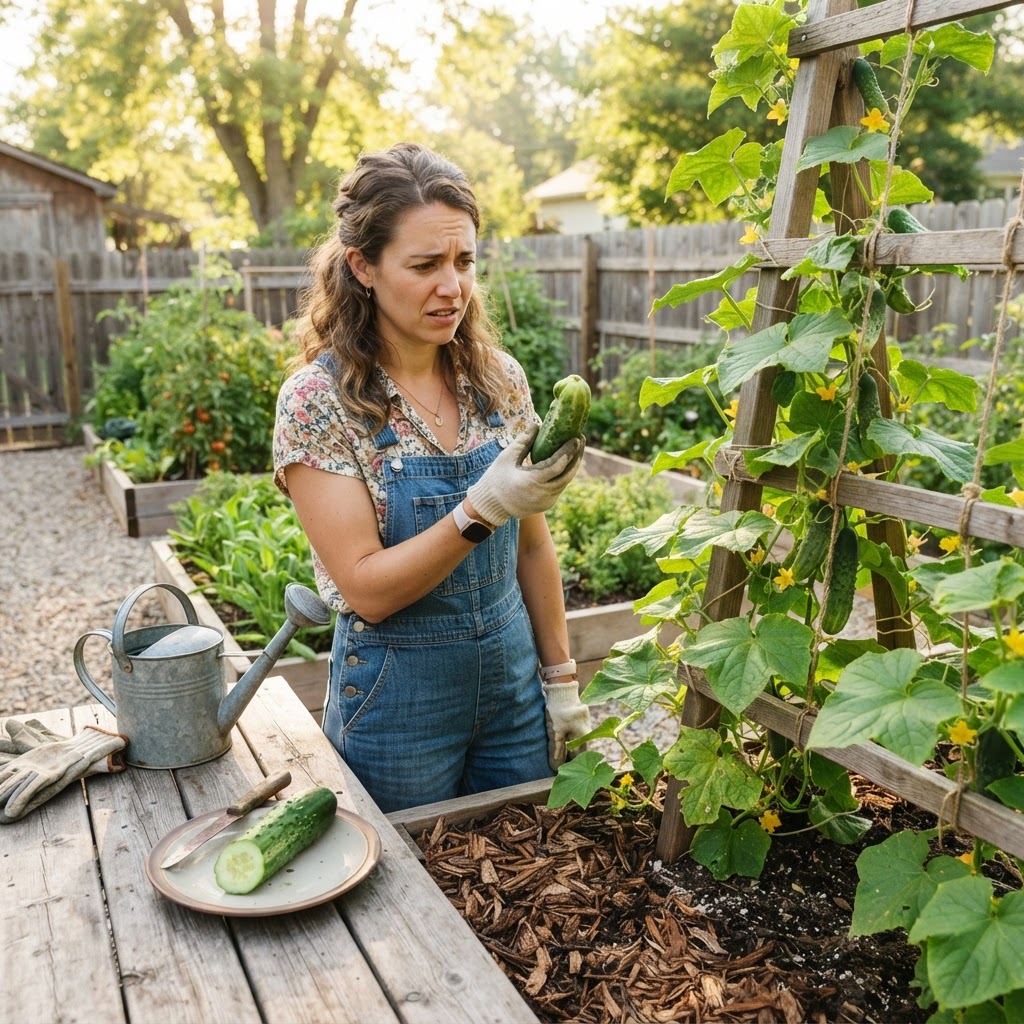
Why Are My Cucumbers Bitter? Causes, Fixes, and How to Grow Sweeter Cucumbers
Few things are more disappointing than harvesting beautiful cucumbers from your garden, slicing one up, and discovering a harsh, bitter taste. If you have been asking, “why are my cucumbers bitter,” the good news is that this is a very common gardening problem, and it usually comes down to plant stress.
The even better news is that bitter cucumbers are often preventable. With a few simple growing habits, you can help your plants produce crisp, mild, refreshing fruits more consistently.
Why This Topic Matters
Cucumbers are one of the most beginner-friendly vegetables to grow, but they can be a little dramatic when conditions are not right. A plant may look healthy enough from a distance and still produce fruit that tastes unpleasant.
That matters because gardening is not just about growing food. It is about growing food you actually want to eat. When your cucumbers turn bitter, it can feel like all your watering, weeding, and waiting was wasted.
Bitterness is usually linked to a natural compound called cucurbitacin. Cucumbers normally contain very small amounts of it, but when the plant is stressed, levels can increase, especially near the stem end and in the peel.
Understanding what causes that stress helps you fix the problem at the root. Instead of guessing, you can make small changes that improve flavor, plant health, and harvest quality.
Quick Answer
If you want the short version, here it is: cucumbers usually become bitter when the plant experiences stress.
The most common causes include:
- Irregular watering
- Hot weather or sudden temperature swings
- Poor soil conditions
- Overcrowding
- Pest or disease pressure
- Growing a variety that is naturally more prone to bitterness
- Letting fruits stay on the vine too long
In many cases, the bitterness is strongest in the skin and stem end. Peeling the cucumber and cutting off the first inch from the stem side can sometimes improve the taste.
But if your harvest keeps turning bitter, the real fix is to reduce plant stress while the cucumbers are growing. Consistent moisture, healthy soil, mulch, and timely harvesting make a big difference.
Step-by-Step Guide
1. Check your watering routine first
If your cucumbers are bitter, watering is the first thing to investigate. Cucumbers grow fast and contain a lot of water, so they need steady moisture to develop good flavor.
When the soil goes very dry and then gets soaked, the plant experiences stress. That stress can trigger more bitterness.
Aim to keep the soil evenly moist, not constantly soggy. In hot weather, this may mean watering more often, especially for plants grown in containers or raised beds.
A good beginner rule is to water deeply rather than lightly sprinkling every day. Deep watering encourages stronger roots and more stable growth.
2. Feel the soil instead of guessing
A simple finger test can tell you a lot. Stick your finger 1 to 2 inches into the soil near the plant.
- If it feels dry at that depth, it is probably time to water.
- If it feels cool and lightly moist, you can likely wait.
- If it feels muddy or sticky, hold off and let the soil drain.
This is much more reliable than watering on a rigid schedule. Rainfall, heat, wind, and soil type all change how quickly moisture disappears.
3. Add mulch to protect soil moisture
Mulch is one of the easiest ways to prevent bitter cucumbers. It helps the soil stay evenly moist, keeps roots cooler, and reduces stress during hot spells.
Good mulch options include:
- Straw
- Shredded leaves
- Untreated grass clippings in a thin layer
- Fine wood chips around pathways, not piled tightly against stems
Apply a 2- to 3-inch layer around the plants once the soil has warmed. Leave a little space around the main stem to prevent rot.
4. Think about heat stress
Cucumbers love warmth, but extreme heat can still cause problems. Long stretches of very hot weather, especially when paired with dry soil, often lead to bitterness.
This is especially common in midsummer gardens. Plants may continue producing, but the fruit quality drops.
If heat is intense in your area, try to reduce stress by:
- Watering consistently in the morning
- Using mulch
- Growing cucumbers where they get full sun but some afternoon relief in very hot climates
- Using shade cloth during heat waves if needed
You cannot control the weather, but you can help your plants handle it better.
5. Improve the soil
Poor soil makes cucumbers work harder than they should. If the roots struggle to find water and nutrients, the plant is more likely to produce bitter fruit.
Cucumbers do best in soil that is:
- Rich in organic matter
- Well-draining
- Moisture-retentive without staying waterlogged
- Slightly acidic to neutral, around pH 6.0 to 7.0
Before planting, mix in compost or well-rotted organic matter. This improves both drainage and moisture retention, which is a great combination for cucumbers.
If your soil is sandy, water may drain too quickly. If it is heavy clay, roots may stay too wet and stressed. Compost helps balance both extremes.
6. Avoid overfeeding with the wrong fertilizer
Too much fertilizer, especially high-nitrogen fertilizer, can create lush leafy growth without improving fruit quality. In some cases, nutrient imbalance adds to plant stress.
Use a balanced fertilizer or one designed for vegetables, and follow label directions. More is not always better.
A simple routine for beginners is:
- Add compost before planting.
- Feed lightly once plants are established.
- Feed again when flowering and fruiting begin, if needed.
Healthy, steady growth is the goal. Fast, forced growth often brings more problems.
7. Harvest cucumbers at the right time
Overripe cucumbers are more likely to taste bitter, have tougher skins, and contain larger seeds. A cucumber left on the vine too long can also slow down new production.
Check your plants every day or two during peak season. Cucumbers can go from just right to oversized surprisingly fast.
For most slicing cucumbers, harvest when they are firm, evenly colored, and still relatively young. Seed packets or plant tags usually list the ideal harvest size for that variety.
Do not wait for giant fruits unless you intentionally planted a variety meant for large harvests. Bigger is usually not better with cucumbers.
8. Look at the variety you are growing
Some cucumber varieties are simply less likely to become bitter than others. Plant breeding has improved flavor quite a bit, and many newer types are advertised as “burpless,” “sweet,” or “bitter-free” under good conditions.
If bitterness keeps happening year after year, your variety may be part of the issue.
For future seasons, look for varieties known for mild flavor and good heat tolerance. Local garden centers, extension services, and seed companies often note this in the variety description.
9. Check for crowding and airflow problems
Cucumber plants grow vigorously. When they are packed too closely together, they compete for water, nutrients, and light.
Crowding can also increase humidity around leaves, encouraging disease and adding even more stress.
Make sure plants have enough space based on the variety. Vining cucumbers often benefit from a trellis, which improves airflow, keeps fruit cleaner, and makes harvesting easier.
10. Watch for pests and disease
Anything that weakens the plant can affect fruit quality. Common cucumber problems include:
- Cucumber beetles
- Aphids
- Spider mites
- Powdery mildew
- Bacterial wilt
If leaves are yellowing, spotted, curling, or collapsing, do not ignore it. A stressed plant may still produce fruit, but the flavor may suffer.
Inspect plants regularly, especially the undersides of leaves. Catching problems early is much easier than trying to rescue a badly stressed plant later.
11. Harvest and taste strategically
If only some cucumbers are bitter, pay attention to patterns. This can help you identify the cause.
Ask yourself:
- Are the bitter ones from the hottest part of the garden?
- Did bitterness show up after a dry spell?
- Are older fruits more affected than younger ones?
- Is the bitterness strongest at the stem end?
This kind of observation is one of the best gardening skills you can build. Your plants often give clues if you know what to look for.
12. Use mildly bitter cucumbers wisely
If a cucumber is only slightly bitter, you may still be able to use it. Try:
- Peeling it
- Cutting off the stem end generously
- Removing seeds if they are large and tough
- Using it in a salad with a salty or creamy dressing
- Turning it into quick pickles or yogurt-based cucumber dishes
If a cucumber tastes strongly bitter, it is best to discard it. There is no point forcing yourself to eat something unpleasant, and severe bitterness usually means quality is poor.
Common Beginner Mistakes
One common mistake is assuming bitterness means you did something terribly wrong. Usually, it is just the result of inconsistent conditions, especially weather and watering.
Another mistake is watering too lightly and too often. This wets the surface but may not reach the root zone well. Cucumbers need deeper moisture to stay productive and less stressed.
Many beginners also wait too long to harvest. It is easy to miss the ideal picking window, especially when fruits are hidden under large leaves.
Planting in poor soil is another frequent issue. Cucumbers grow quickly, so they need a reliable supply of moisture and nutrients from the start.
Finally, some gardeners blame the whole crop after tasting one bitter fruit. Taste a few from different parts of the plant before deciding the season is a total loss.
Best Tips for Success
If you want sweeter, better-tasting cucumbers, focus on consistency. Cucumbers do best when growing conditions stay as steady as possible.
Here are the habits that help most:
- Water deeply and consistently
- Mulch the soil to reduce drying and temperature swings
- Grow in compost-rich soil
- Trellis vining types for airflow and easier harvest
- Pick fruits young and often
- Check plants every few days for pests or stress signs
- Choose varieties known for mild flavor
It also helps to garden with the season instead of against it. In very hot climates, a spring or fall cucumber crop may taste better than one grown through the harshest part of summer.
Keep notes on what worked. A simple gardening journal can help you remember which varieties stayed sweet, when heat waves hit, and how often you needed to water.
Recommended Supplies or Tools
You do not need fancy equipment to grow better cucumbers, but a few basic tools make it easier.
Helpful supplies include:
- A watering wand or hose nozzle for deep, gentle watering
- Mulch such as straw or shredded leaves
- Compost for improving soil
- A hand trowel for planting and side-dressing
- A moisture meter if you struggle to judge soil dampness
- A trellis, netting, or sturdy stakes for vining types
- Garden snips or pruners for clean harvesting
- Floating row cover if pests are a recurring problem early in the season
The best “tool,” though, is regular observation. A two-minute garden check each day can prevent many cucumber problems before they affect flavor.
Frequently Asked Questions
Can bitter cucumbers be made edible?
Sometimes. If the bitterness is mild, peeling the cucumber and cutting off the stem end can help. If it tastes strongly bitter even after that, it is better to compost it and focus on improving growing conditions.
Are bitter cucumbers caused by lack of water?
Lack of water is one of the most common reasons, but it is not the only one. Heat, poor soil, pests, disease, variety, and overripe fruit can all contribute.
Why are only some of my cucumbers bitter?
This usually means conditions were uneven. A few fruits may have developed during a hot, dry spell, or they may have stayed on the vine longer than others. Different parts of the plant can also experience slightly different stress levels.
Will watering more fix bitter cucumbers right away?
It can help prevent future bitterness, but it will not always improve cucumbers that are already bitter. Once a fruit develops that flavor, you usually cannot reverse it. The goal is to improve the next wave of harvests.
Are certain cucumber varieties less bitter?
Yes. Some varieties are bred for mild flavor and lower bitterness. If this keeps happening in your garden, try a variety described as sweet, burpless, heat-tolerant, or less prone to bitterness.
Final Thoughts
If you have been wondering why your cucumbers are bitter, the answer usually comes back to one word: stress. Cucumbers need steady moisture, healthy soil, timely harvesting, and protection from extreme conditions to produce their best flavor.
Do not get discouraged if this happened to your crop. Most gardeners deal with bitter cucumbers at some point, and small changes can make a big difference. With better consistency and close observation, your next harvest has a great chance of being crisp, cool, and delicious.