Why Are My Cucumbers Not Producing Fruit? 9 Common Causes and Easy Fixes
If your cucumber plants are full of leaves and flowers but still not giving you actual cucumbers, you are not alone. This is one of the most common beginner gardening problems, and the good news is that it is usually fixable.
In most cases, cucumber plants fail to produce fruit because of pollination problems, stress from heat or watering, too much nitrogen, or simply because the plant is still in an early growth stage. Once you know what to look for, you can often turn things around quickly.
Why This Topic Matters
Cucumbers are one of the most rewarding vegetables to grow at home. They grow fast, taste better fresh from the garden, and can produce heavily when conditions are right.
That is why it feels especially frustrating when a healthy-looking plant refuses to set fruit. Many beginners assume the plant is dying or that they did something terribly wrong, but that is usually not the case.
Understanding why your cucumbers are not producing fruit matters because the solution depends on the cause. A plant that needs more pollinators requires a different fix than one that is stressed by heat, crowding, or fertilizer.
The sooner you identify the issue, the better your chances of getting a real harvest before the season slips away. A few small changes can make a big difference.
Quick Answer
If your cucumbers are flowering but not producing fruit, the most likely reason is poor pollination. Cucumber plants usually make male flowers first, and female flowers need pollination before they can develop into fruit.
Other common causes include:
- too little sunlight
- uneven watering
- excessive nitrogen fertilizer
- hot or cold weather stress
- overcrowded plants with poor airflow
- pest or disease pressure
- plants that are still too young
Start by checking whether you have both male and female flowers, whether bees are visiting, and whether the plants are getting at least 6 to 8 hours of direct sun. Then review watering, feeding, and spacing.
Step-by-Step Guide
1. Check whether your plant is simply too young
Cucumber plants often produce male flowers first. This is normal and does not mean anything is wrong.
Those early male flowers open, help attract pollinators, and then drop off. Female flowers usually appear a little later, so if your plant is still young, patience may be the only fix you need.
Most cucumber varieties begin fruiting a few weeks after flowering starts, depending on weather and growing conditions. If the plant is growing well and looks healthy, give it a little more time before changing everything.
2. Learn the difference between male and female flowers
This is one of the most useful things a beginner can learn. If you can identify the flowers, you can diagnose fruiting problems much faster.
Male flowers grow on thin stems and do not have a tiny cucumber behind the bloom. Female flowers have a small swollen baby cucumber at the base of the flower.
If you only see male flowers, the plant may still be maturing. If you see female flowers but the tiny fruit shrivels and falls off, that usually points to poor pollination or plant stress.
3. Watch for pollination problems
Poor pollination is the top reason cucumber plants bloom without making fruit. Most outdoor cucumber varieties need bees and other pollinators to move pollen from male flowers to female flowers.
If pollination does not happen, the baby cucumber behind the female flower starts to form, then turns yellow, stops growing, and drops off. This can happen even when the plant looks lush and healthy.
Look for signs like these:
- lots of flowers but no enlarging cucumbers
- tiny cucumbers yellowing and falling off
- very few bees or insect visitors in the garden
- rainy, windy, or very hot weather during bloom time
If pollinators are scarce, you can hand-pollinate. Use a small soft paintbrush or cotton swab, gently collect pollen from a male flower, and brush it into the center of a female flower. You can also remove a male flower and touch its pollen-bearing center directly to the female bloom.
4. Make sure your plants get enough sunlight
Cucumbers are sun-loving plants. They need strong light to make flowers, support pollination, and grow fruit well.
If your plants are getting less than 6 hours of direct sunlight, fruit production may be weak. For best results, aim for 6 to 8 hours or more.
Shade from fences, trees, tomato plants, or even nearby cucumbers can reduce flowering and slow growth. If you are growing in containers, move the pot to a brighter spot if possible.
5. Review your watering routine
Cucumber plants need steady moisture to produce good fruit. Inconsistent watering can cause blossom drop, misshapen fruit, bitter cucumbers, or poor fruit set.
A common beginner pattern is letting the soil get bone dry, then soaking it heavily all at once. That kind of stress can interfere with the plant’s ability to hold flowers and develop fruit.
Try these watering basics:
- keep soil evenly moist, not soggy
- water deeply rather than giving quick shallow sprinkles
- aim for about 1 to 2 inches of water per week, more in hot weather
- water the soil, not the leaves, when possible
- use mulch to help hold moisture
Container cucumbers dry out faster than garden beds, so they may need water more often. Always check the soil with your finger before watering again.
6. Look at what fertilizer you are using
Too much nitrogen is a very common cause of cucumber plants with huge leafy growth and little fruit. Nitrogen helps plants make stems and leaves, but too much of it can delay flowering and fruiting.
If you used a lawn fertilizer, a high-nitrogen liquid feed, or lots of strong manure, that may be part of the problem. The plant may look beautiful but still fail to produce cucumbers.
Instead, feed cucumbers with compost and a balanced vegetable fertilizer. Once flowering begins, avoid pushing lots of extra nitrogen.
Good signs of excess nitrogen include:
- very dark green leaves
- fast vine growth
- lots of foliage but few female flowers
- poor fruit production despite a healthy appearance
7. Consider temperature stress
Cucumbers love warm weather, but they still have limits. Extreme temperatures can reduce flowering, interfere with pollination, and cause flowers or small fruits to drop.
When daytime temperatures climb above about 90°F, pollination becomes less reliable. Cool nights below about 55°F can also slow fruit production.
Weather-related fruiting problems are especially common during:
- heat waves
- long stretches of rainy weather
- sudden cold snaps
- strong wind during flowering
You cannot control the weather, but you can reduce stress. Water consistently, mulch around the base, and use shade cloth during intense heat if needed.
8. Check spacing and airflow
Overcrowded cucumber plants compete for light, water, and nutrients. They also have poorer airflow, which increases disease pressure and makes it harder for pollinators to find flowers.
If your plants are tangled together in a dense patch, fruit production may suffer. This is especially true in small raised beds and containers.
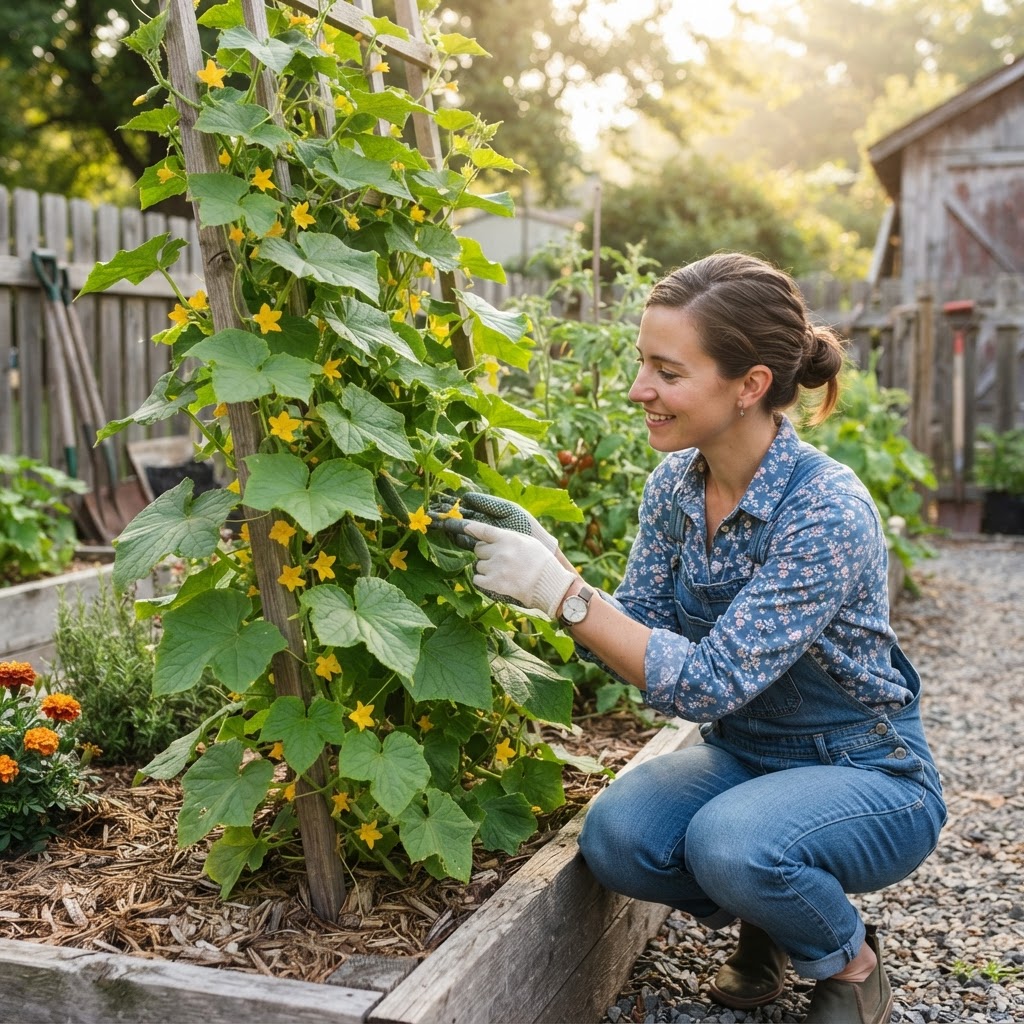
Training cucumbers up a trellis can help a lot. It improves light exposure, keeps leaves drier, and makes flowers easier to spot and pollinate.
9. Inspect for pests and disease
A stressed plant may put less energy into making cucumbers. Even if pests are not killing the plant, they can weaken it enough to affect production.
Check leaves, stems, and flowers for problems like:
- cucumber beetles
- aphids
- squash bugs
- powdery mildew
- wilted vines
- chewed flowers or leaves
If you spot an issue early, remove damaged leaves, hand-pick pests when possible, and use gentle organic controls if needed. Keeping plants healthy and unstressed helps them hold flowers and form fruit.
10. Think about variety and growing conditions
Most home garden cucumber varieties need pollination, but some greenhouse or parthenocarpic varieties are different. These special types can produce fruit without pollination.
If you are growing from a seed packet or plant label you no longer have, it helps to know what type you planted. Some varieties are more productive in containers, some handle heat better, and some are quicker to mature.
If you are growing cucumbers indoors, in a greenhouse, or under row covers, pollinators may not be reaching the flowers. In that case, hand-pollination becomes especially important unless the variety is self-fruiting.
11. Harvest regularly once fruiting starts
This step will not solve a total lack of fruit, but it does help once your plant begins producing. Overripe cucumbers left on the vine signal the plant to slow down.
Pick cucumbers when they are the right size for the variety and still tender. Frequent harvesting encourages the plant to keep flowering and setting more fruit.
Common Beginner Mistakes
Many cucumber problems come from a few simple mistakes that are easy to make when you are new to gardening. The good news is that they are also easy to correct.
Here are the most common ones:
- assuming every flower should become a cucumber right away
- not realizing male flowers appear before female flowers
- planting in too much shade
- overfeeding with high-nitrogen fertilizer
- watering inconsistently
- crowding plants too closely
- ignoring a lack of bees and other pollinators
- waiting too long to check for pests or disease
Another common mistake is changing too many things at once. Try to identify the most likely cause first, then make one or two targeted adjustments and watch how the plant responds.
Best Tips for Success
If you want better cucumber harvests, focus on consistency more than perfection. Healthy plants fruit best when their basic needs are met every day.
Use these simple tips:
- Plant cucumbers in full sun.
- Keep the soil evenly moist.
- Add compost and use a balanced fertilizer.
- Grow vines on a trellis when possible.
- Encourage pollinators with nearby flowers.
- Hand-pollinate if bees are scarce.
- Check plants every few days for pests, flowers, and baby fruit.
- Harvest often once cucumbers start coming in.
It also helps to keep notes. Write down when flowering starts, whether you see bees, and how often you water. Small observations can help you solve problems faster next season too.
Recommended Supplies or Tools
You do not need fancy equipment to fix cucumber fruiting problems. A few basic tools can make the job much easier.
Helpful supplies include:
- a hand trowel for planting and adding compost
- organic mulch such as straw or shredded leaves
- a watering wand, drip line, or soaker hose
- a balanced vegetable fertilizer
- a trellis, stakes, or netting for support
- soft plant ties or garden clips
- a small paintbrush for hand-pollination
- a notebook or garden journal
If you garden in containers, make sure the pot is large enough and has good drainage. Small containers dry out quickly and can limit fruit production.
Frequently Asked Questions
Why do my cucumber plants have flowers but no cucumbers?
This usually means the female flowers are not being pollinated, or the plant is under stress. Check for bee activity, identify male and female flowers, and review sunlight, watering, and fertilizer.
Why do my baby cucumbers turn yellow and fall off?
That is a classic sign of failed pollination. It can also happen during extreme heat, inconsistent watering, or other stress that prevents the plant from supporting developing fruit.
Do I need two cucumber plants to get fruit?
No. Most home garden cucumber plants have both male and female flowers on the same plant.
However, the female flowers still need pollination, usually by bees or by hand. If pollination does not happen, you will not get fruit even from a healthy plant.
Can I hand-pollinate cucumbers myself?
Yes. Use a small brush or cotton swab to move pollen from a male flower to a female flower.
This is especially helpful during rainy weather, in greenhouses, or in gardens with very few pollinators.
How long after flowering should cucumbers start forming?
Male flowers often appear first, with female flowers following later. Once female flowers are pollinated, you may see noticeable fruit growth within a few days.
If several female flowers appear and none develop, it is time to investigate pollination and plant stress more closely.
Final Thoughts
If you have been asking, “why are my cucumbers not producing fruit,” try not to panic. Most of the time, the cause is something manageable like poor pollination, uneven watering, too much nitrogen, or a plant that simply needs a little more time.
Start with the basics: sun, water, flowers, pollinators, and spacing. With a few careful adjustments, your cucumber plants can often recover and go on to produce a healthy harvest.