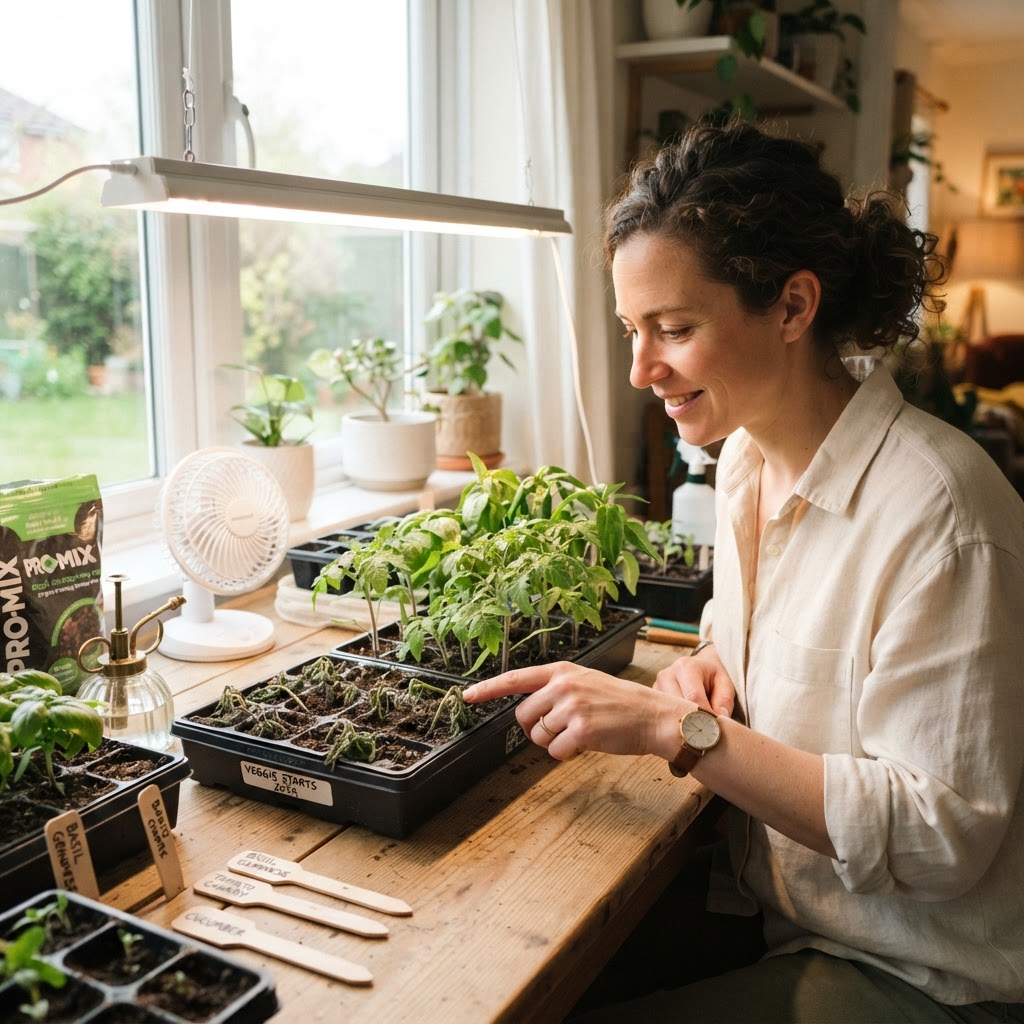
Why Are My Seedlings Falling Over? Causes, Fixes, and Prevention for Beginners
If your tiny seedlings looked healthy yesterday but are suddenly bent, limp, or collapsed today, you are not alone. Many beginner gardeners run into this problem, and the good news is that the cause is usually something you can identify and improve.
Why This Topic Matters
Seedlings are the most delicate stage of a vegetable plant’s life. A tomato, pepper, lettuce, or cabbage plant can look surprisingly strong once it is established, but in the first few weeks, it depends on the right balance of light, water, air flow, warmth, and clean growing conditions.
When seedlings start falling over, it often means they are under stress. Sometimes the problem is simple, like not enough light. Other times it is more serious, such as damping off, a disease that can kill a whole tray quickly.
Understanding the cause early matters because the fix depends on what you are seeing. A leggy seedling can often recover, but a seedling with a rotting stem at the soil line usually cannot. Knowing the difference helps you save the plants that still have a chance.
This is also an important skill for sustainable gardening. When you can raise strong seedlings at home, you waste fewer seeds, avoid replacing plants, and build confidence for the rest of the season.
Quick Answer
The most common reasons seedlings fall over are:
- too little light, which makes them tall, weak, and leggy
- damping off disease, which causes stems to pinch and collapse at the soil line
- overwatering or soggy soil, which weakens roots and encourages disease
- overcrowding, which reduces air flow and light
- sudden temperature stress or poor ventilation
- physical damage from handling, pets, or strong watering
Here is the fastest way to tell what is going on:
- If the stem looks thin, stretched, and leaning toward light, the problem is usually weak light.
- If the stem looks pinched, mushy, or rotten right at the soil surface, it is often damping off.
- If the soil stays wet for days and the seedlings wilt anyway, overwatering and root stress may be involved.
- If only a few seedlings are bent after watering or moving trays, they may simply be knocked over.
The sooner you check the stem, soil, and light source, the better your chances of fixing the problem.
Step-by-Step Guide
1. Inspect the stem at the soil line
Start by looking closely where the stem meets the potting mix. This is the most important clue.
If the stem is narrowed, brown, water-soaked, or looks like it has been cut, damping off is the likely cause. Unfortunately, seedlings affected by damping off usually do not recover.
If the stem is still green and firm but long and floppy, the seedling is more likely leggy rather than diseased. Those can often be improved.
2. Check whether the seedlings are stretching for light
Seedlings need strong light right from the start. A bright windowsill often looks sunny to us, but it may not be enough for sturdy vegetable seedlings.
Signs of not enough light include:
- long, thin stems
- seedlings leaning in one direction
- wide spacing between leaves
- pale or weak growth
Move grow lights close to the seedlings, usually about 2 to 4 inches above the tops, depending on the light type. Keep lights on for 12 to 16 hours a day.
If you are using a window, rotate trays daily and expect that some crops may still become leggy indoors without supplemental lighting.
3. Feel the soil before watering again
Beginner gardeners often water on a schedule instead of checking the soil. Seedlings need moisture, but they do not want to sit in constantly soggy mix.
Touch the surface and also check just below it. If the mix feels wet and heavy, wait before watering again.
Good watering habits include:
- using containers with drainage holes
- watering when the surface is just starting to dry
- emptying standing water from trays after bottom watering
- avoiding a constantly soaked seed-starting mix
Wet, stale conditions are one of the biggest reasons seedlings weaken and fall.
4. Rule out damping off
Damping off is a common fungal-like disease that affects seedlings in overly wet, crowded, poorly ventilated conditions. It often appears suddenly.
Common signs are:
- seedlings fall over overnight
- the stem is pinched near the soil line
- stems look soft or rotted
- patches of seedlings collapse in the same tray
If you suspect damping off:
- Remove affected seedlings right away.
- Discard the potting mix if many seedlings are affected.
- Clean trays and tools before reusing them.
- Improve air circulation and reduce overwatering.
- Start over with fresh seed-starting mix if needed.
Sadly, there is no reliable fix for seedlings already killed by damping off. Prevention is the best approach.
5. Thin crowded seedlings
When too many seedlings grow in one cell or pot, they compete for light, moisture, and airflow. That makes them weaker and more likely to flop.
If you sowed generously, trim extra seedlings with clean scissors instead of pulling them out. Pulling can disturb the roots of the ones you want to keep.
As a general rule, keep the strongest single seedling per cell for larger vegetables like tomatoes, peppers, squash, and brassicas.
6. Improve air circulation
Gentle airflow helps seedlings develop stronger stems. It also helps the surface of the soil dry a bit between waterings, which lowers disease risk.
A small fan on a low setting, placed nearby but not blasting directly at the tray, can make a big difference. You can also lightly brush your hand over the tops of seedlings once or twice a day to mimic natural movement.
This simple step is often overlooked, especially in warm indoor rooms with closed windows.
7. Review temperature conditions
Most vegetable seedlings like warmth for germination, but once they sprout, too much heat can encourage fast, weak growth. A seedling heat mat is useful at the beginning, but you may not need it after most seeds emerge.
Very warm rooms paired with low light create perfect conditions for legginess. Try to give seedlings bright light and moderate temperatures rather than heat alone.
Cool-season crops like lettuce, kale, cabbage, and broccoli especially prefer not to be overheated indoors.
8. Consider how you are watering
A strong stream of water from above can physically flatten tiny seedlings. This is especially common right after emergence, when stems are very slender.
Safer methods include:
- bottom watering for 10 to 20 minutes, then draining extra water
- using a spray bottle only for very early moisture needs
- watering gently with a narrow-spout can
If a seedling was simply knocked over but the stem is not damaged, mound a little extra seed-starting mix around the base to help support it.
9. Pot up leggy seedlings if appropriate
Some leggy seedlings can be rescued during transplanting. Tomatoes are the best example because they can form roots along buried stems.
If tomato seedlings are tall and floppy but still healthy:
- move them into a larger container
- bury part of the stem deeper
- improve the light right away
This trick does not work as well for every crop. Peppers and brassicas may tolerate slightly deeper planting, but many seedlings will not benefit from being buried too deeply.
10. Know when to start over
Sometimes restarting is the most practical choice. If most of the tray has damping off, the potting mix smells sour, or the remaining seedlings are severely weak, fresh sowing may save time in the long run.
That can feel discouraging, but it is part of gardening. Starting a second tray with better light, cleaner conditions, and more careful watering often leads to much stronger results.
Common Beginner Mistakes
A few small habits cause most seedling problems. The good news is that they are easy to correct once you know what to watch for.
Starting seeds too far from the light
If the light source is weak or too high above the tray, seedlings stretch almost immediately. They may look tall fast, but that growth is weak, not healthy.
Keeping the soil constantly wet
Seedlings need moisture, but roots also need oxygen. Soggy mix encourages disease and leads to shallow, unhealthy root systems.
Reusing dirty trays without cleaning
Old trays can carry disease spores from one season to the next. A quick wash and sanitizing step before sowing is worth the effort.
Sowing too many seeds in one space
Crowded trays trap moisture and reduce airflow. This makes disease, legginess, and weak stems more likely.
Leaving seedlings on a heat mat too long
Bottom heat helps germination, but once seedlings sprout, too much warmth can push fast, floppy growth. Many gardeners forget to remove the tray from the mat.
Best Tips for Success
You do not need fancy equipment to grow sturdy seedlings, but a few smart habits make a huge difference.
Give priority to light
If you improve only one thing, improve the light. Strong, close, consistent lighting is one of the best ways to prevent floppy seedlings.
Water based on need, not the calendar
Check the mix with your finger before watering. Slightly moist is ideal; soaked is not.
Use fresh seed-starting mix
A light, clean seed-starting mix drains better than heavy garden soil. It also reduces the risk of disease at this vulnerable stage.
Label trays and watch daily
A one-minute check each day helps you catch stretching, wilting, or disease early. Problems are much easier to fix in the first day or two.
Start with fewer trays
It is easier to manage one or two trays well than to overcrowd a whole shelf. Beginners often get better results by starting small.
Recommended Supplies or Tools
You can raise healthy seedlings with a simple setup. These tools are especially helpful if your seedlings have been falling over.
- LED grow light: Provides stronger, more reliable light than most windows.
- Seed trays or cell packs with drainage holes: Help prevent soggy roots.
- Bottom watering tray: Lets seedlings take up water gently from below.
- Fresh seed-starting mix: Clean, lightweight, and better draining than regular soil.
- Small fan: Improves air circulation and helps strengthen stems.
- Plant labels: Useful for tracking sowing dates and crop types.
- Clean scissors: Great for thinning crowded seedlings without disturbing roots.
- Heat mat with thermostat: Helpful for germination, especially for warm-season crops, but use it carefully.
If you are choosing just two upgrades, a good grow light and a well-draining seed-starting mix usually give the biggest improvement.
Frequently Asked Questions
Can fallen seedlings stand back up on their own?
Sometimes. If the seedling is simply bent from weak light or accidental watering damage, it may recover with better support, brighter light, and careful watering. If the stem is rotting at the base, it usually will not recover.
What does damping off look like?
Damping off usually shows up as a thin, pinched, wet-looking stem right at the soil line. The seedling often collapses suddenly, even if the leaves still look somewhat green at first.
Are leggy seedlings worth keeping?
Often yes, especially if you catch the issue early. Tomatoes are the easiest to rescue because they can be planted deeper, but any seedling will do better if you fix the light as soon as stretching begins.
How often should I water seedlings?
There is no perfect schedule for every home. Water when the seed-starting mix is starting to dry on the surface but still has slight moisture below, and always make sure extra water can drain away.
Is a sunny window enough for seedlings?
Sometimes for a short period, but often not for strong vegetable transplants. Many indoor seedlings grow sturdier under a simple grow light placed close above the plants.
Final Thoughts
If you have been asking, "why are my seedlings falling over," the answer is usually hidden in three places: the stem, the soil, and the light. Once you learn to read those clues, you can quickly tell whether the issue is legginess, overwatering, crowding, or damping off.
Do not let one wobbly tray discourage you. Seed starting has a learning curve, and every season gives you more experience. With cleaner setup habits, better light, and gentler watering, your next round of seedlings can grow short, sturdy, and ready for the garden.