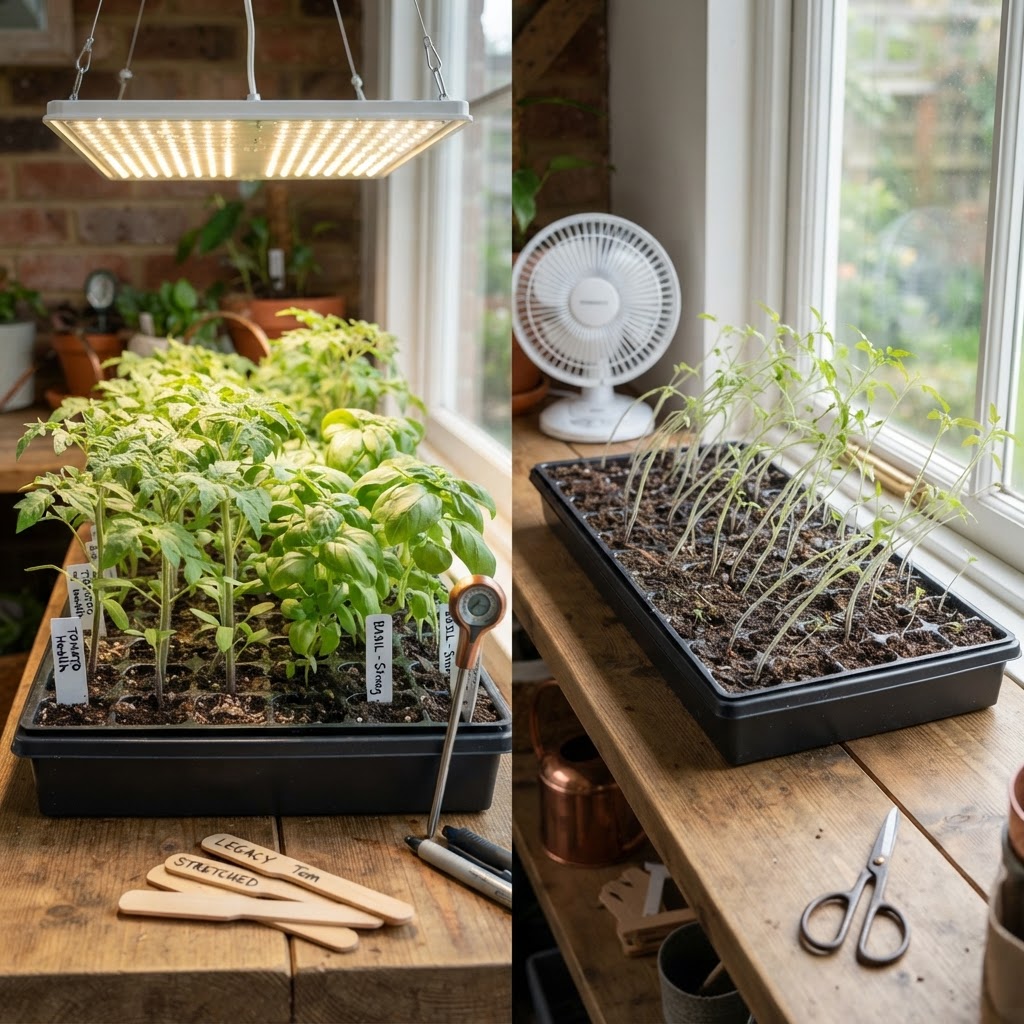
Why Are My Seedlings Growing Leggy? Simple Causes and Fixes for Stronger Starts
If your seedlings are tall, thin, floppy, and leaning toward the window, you are not alone. Leggy seedlings are one of the most common problems for beginner gardeners, especially when starting seeds indoors.
The good news is that leggy growth usually has a clear cause, and in many cases, you can fix it or prevent it next time. Once you understand what seedlings need in their first few weeks, growing stocky, healthy plants becomes much easier.
Why This Topic Matters
Seedlings set the stage for your whole vegetable garden. When young plants grow strong stems and compact leaves, they are much more likely to handle transplanting, pests, weather changes, and normal garden stress.
Leggy seedlings, on the other hand, often struggle from the start. They can fall over, snap easily, dry out faster, and become weak transplants that never really catch up.
For beginners, this problem is frustrating because it can feel like you did everything right. You planted the seeds, watered them, and watched them sprout. Then suddenly, they stretched into pale little stems that look more like threads than future tomato plants.
Understanding why this happens helps you save time, seeds, and energy. It also gives you more confidence the next time you start peppers, tomatoes, lettuce, brassicas, or herbs indoors.
Quick Answer
Seedlings grow leggy because they are stretching for more light. In most cases, the main cause is not enough light, but warm temperatures, overcrowding, and poor airflow can make the problem worse.
A leggy seedling usually has:
- A long, thin stem
- Wide spacing between leaves
- A pale or weak appearance
- A tendency to lean or flop over
To fix the problem, move seedlings closer to a strong grow light or a brighter window right away. You should also keep temperatures moderate, thin crowded seedlings, and use a small fan for airflow.
Some leggy seedlings can recover, especially tomatoes, which can be planted deeper later. Others may remain weak, so prevention is always easier than repair.
Step-by-Step Guide
1. Check the Light First
The first thing to ask is how much light your seedlings are actually getting. A sunny window often looks bright to us, but it is usually not strong enough for compact indoor seedlings.
Most vegetable seedlings need intense light for 12 to 16 hours a day. If they are on a windowsill, they may be receiving light from only one direction, which causes them to bend and stretch.
If you are using grow lights, check the distance. Lights that are too high above the seedlings allow stems to stretch upward. In general, fluorescent or LED grow lights should sit just a few inches above the tops of the seedlings, following the manufacturer's guidance.
A simple fix is to:
- Use full-spectrum grow lights
- Keep lights close to the seedlings
- Run them 12 to 16 hours daily
- Rotate trays if using window light
2. Lower the Temperature After Germination
Warmth helps seeds sprout, but once they emerge, too much heat can encourage fast, weak growth. Many beginners leave seed trays on a heat mat or in a very warm room for too long.
After germination, most seedlings do better in cooler conditions. They still need warmth, just not the high temperatures used to trigger sprouting.
As a general rule:
- Remove heat mats after most seeds sprout
- Aim for roughly 60 to 70 degrees Fahrenheit for many cool-season seedlings
- Keep warm-season crops like tomatoes and peppers comfortable, but not overly hot
When seedlings are warm and dimly lit at the same time, legginess happens fast. Bright light plus moderate temperatures is a much better combination.
3. Thin Crowded Seedlings
If several seedlings are growing in one cell or pot, they compete for light and space. This crowding leads to stretching and weaker stems.
It can feel wasteful to remove extra seedlings, but thinning is one of the kindest things you can do for the strongest plant. Instead of pulling extras out, snip them at soil level with small scissors so you do not disturb the roots of the one you keep.
Try to leave:
- One seedling per cell for most vegetables
- Plenty of space between pots or trays for air circulation
- Enough room so leaves are not constantly overlapping
4. Improve Airflow
In nature, seedlings are exposed to moving air. Indoors, still air can contribute to weak stems and damp conditions.
A small fan on a gentle setting can help seedlings develop sturdier stems. You do not want strong wind blasting them. Just a light breeze is enough to encourage stronger growth and reduce excess moisture around the plants.
Good airflow also helps lower the risk of damping off, a disease that can kill very young seedlings at the soil line.
5. Water Consistently, Not Constantly
Overwatering does not directly cause legginess as often as low light does, but soggy soil can create weak, stressed seedlings. Underwatering can also stunt growth and make recovery harder.
The goal is evenly moist soil, not muddy soil. Check the surface and the weight of the tray before watering again.
A good routine is to:
- Water when the top of the mix starts to dry slightly
- Empty excess water from trays if needed
- Use containers with drainage holes
- Water gently so stems are not knocked over
6. Pot Up Leggy Seedlings When Appropriate
If seedlings already have long stems, moving them into slightly larger containers can help. This works especially well for tomatoes because they can grow roots along buried stems.
When potting up tomatoes, you can bury part of the stem below the soil line, leaving the top leaves above the surface. This gives the plant a stronger base and often improves its long-term performance.
Be more careful with other vegetables. Many plants do not like deep burying in the same way tomatoes do. Peppers may tolerate some extra depth, but cucumbers, squash, and many other seedlings are better handled gently without burying too much stem.
7. Support Recovery With Better Conditions
Once a seedling is leggy, you cannot fully erase the stretch that already happened. What you can do is prevent it from getting worse and encourage sturdier new growth.
Over the next several days, focus on:
- Stronger light
- Cooler post-germination temperatures
- Proper spacing
- Light airflow
- Steady watering
If the seedlings begin producing new leaves that are closer together and darker green, that is a sign conditions are improving.
8. Decide Which Seedlings Are Worth Keeping
Not every seedling can or should be saved. If a plant is extremely thin, bent, pale, and unable to stand even with improved care, starting over may be the better option.
This is especially true if you still have time in the season. Re-sowing seeds under better conditions can give you much stronger plants than trying to nurse severely leggy ones for weeks.
Ask yourself:
- Does the seedling have healthy leaves?
- Is the stem only slightly stretched or severely weak?
- Can it support itself at all?
- Do you have enough time to start again?
Sometimes the most practical gardening decision is to replant.
Common Beginner Mistakes
Relying on a Sunny Window Alone
This is probably the most common mistake. Even bright south-facing windows often do not provide enough consistent intensity for indoor vegetable seedlings, especially in late winter or early spring.
Seedlings may sprout fine there, but then quickly become thin and lean toward the glass.
Keeping Grow Lights Too Far Away
A grow light hanging high above the tray is much less useful than people expect. Seedlings need the light source close enough to prevent stretching.
If your seedlings doubled in height in just a few days and look spindly, check the distance first.
Leaving Heat Mats On Too Long
Bottom heat is excellent for germination. It is not always ideal after the seedlings emerge.
Too much warmth without enough light tells the plant to grow quickly upward, which leads to weak stems.
Sowing Too Thickly
Beginners often sprinkle extra seeds “just in case.” That makes sense at planting time, but if every seed sprouts, the tray becomes crowded fast.
Without thinning, seedlings compete and stretch. A crowded tray also dries unevenly and has poorer airflow.
Fertilizing Too Early or Too Much
Seedlings do not need heavy feeding right away. If you use a strong fertilizer too early, you can push soft, fast growth before the seedling has a sturdy structure.
Once true leaves appear, a diluted liquid fertilizer can be helpful, but more is not better.
Waiting Too Long to Act
Leggy seedlings rarely fix themselves. The earlier you adjust the light, temperature, and spacing, the better your results will be.
Best Tips for Success
Start with the easiest changes first. You do not need a complicated indoor setup to grow better seedlings.
Here are the most helpful habits for strong, compact growth:
- Use grow lights instead of relying only on window light
- Keep lights just above the seedlings and raise them as plants grow
- Turn lights on for 12 to 16 hours each day
- Remove heat mats after germination unless a specific crop still needs extra warmth
- Thin seedlings early so each plant has space
- Provide a gentle fan for stronger stems and better airflow
- Water consistently but avoid soggy soil
- Pot up tomatoes deeper if they become slightly leggy
- Start seeds at the right time so they do not sit indoors too long before transplanting
It also helps to know that different vegetables behave differently. Tomatoes and brassicas are often more forgiving. Cucumbers, squash, and melons usually prefer less root disturbance and can become stressed if left in seed trays too long.
Keep a simple seed-starting journal if you want to improve quickly. Write down when you sowed, what light setup you used, how warm the room was, and which seedlings became leggy. Small notes make it easier to spot patterns and improve season after season.
Recommended Supplies or Tools
You do not need a fancy seed-starting station, but a few basic tools make a big difference.
Helpful basics
- Full-spectrum LED grow lights
- Adjustable light stand or shelving
- Seed trays or cell packs with drainage
- Quality seed-starting mix
- Small scissors for thinning seedlings
- Heat mat for germination only
- Thermometer to monitor room temperature
- Small fan for gentle airflow
- Watering can or spray bottle with a gentle flow
- Labels to track varieties and sowing dates
Nice extras if you want a smoother setup
- Timer for grow lights
- Bottom-watering trays
- Potting mix for potting up larger seedlings
- Small pots for transplanting tomatoes and peppers
If you are deciding where to spend money first, prioritize grow lights. Light is the number one factor behind most leggy seedling problems.
Frequently Asked Questions
Can leggy seedlings be saved?
Sometimes, yes. Mildly leggy seedlings often improve when given stronger light, better spacing, cooler temperatures, and airflow. Tomatoes are especially forgiving because you can bury part of the stem when potting up or transplanting.
Very weak seedlings with threadlike stems may not recover well. In that case, starting over is often easier.
Will putting seedlings outside fix legginess?
Outdoor light is much stronger than indoor light, so it can help. But you should not move indoor seedlings straight outside full time unless weather conditions are suitable and the plants are properly hardened off.
Sudden sun, wind, and cold can shock tender seedlings. Introduce them gradually.
How close should grow lights be to seedlings?
It depends on the type of light, but many seed-starting lights work best just a few inches above the tops of the seedlings. Follow the manufacturer's instructions if available.
The key idea is that the light should be close enough to stay intense without overheating the plants.
Are leggy seedlings caused by too much water?
Usually, no. The main cause is insufficient light. However, overwatering can weaken seedlings and create poor growing conditions, which makes the overall problem worse.
Think of water as a supporting factor, not the primary reason in most cases.
Should I start over if my seedlings are leggy?
If the seedlings are only slightly stretched, try correcting the growing conditions first. If they are severely weak, falling over, or far behind schedule, re-sowing may be the better choice.
Beginners often learn more from a fresh second attempt than from trying to rescue plants that never had a fair start.
Final Thoughts
If you have been asking, “why are my seedlings growing leggy,” the answer is usually simple: they need stronger light, along with the right temperature and spacing. This is a very common seed-starting issue, and it does not mean you are bad at gardening.
Indoor seed starting has a learning curve. Once you adjust your setup and catch problems early, you will have a much easier time growing sturdy, healthy vegetable seedlings.
Start with better light, keep conditions balanced, and do not be afraid to re-sow if needed. Every tray of seedlings teaches you something, and that is how strong home gardens begin.