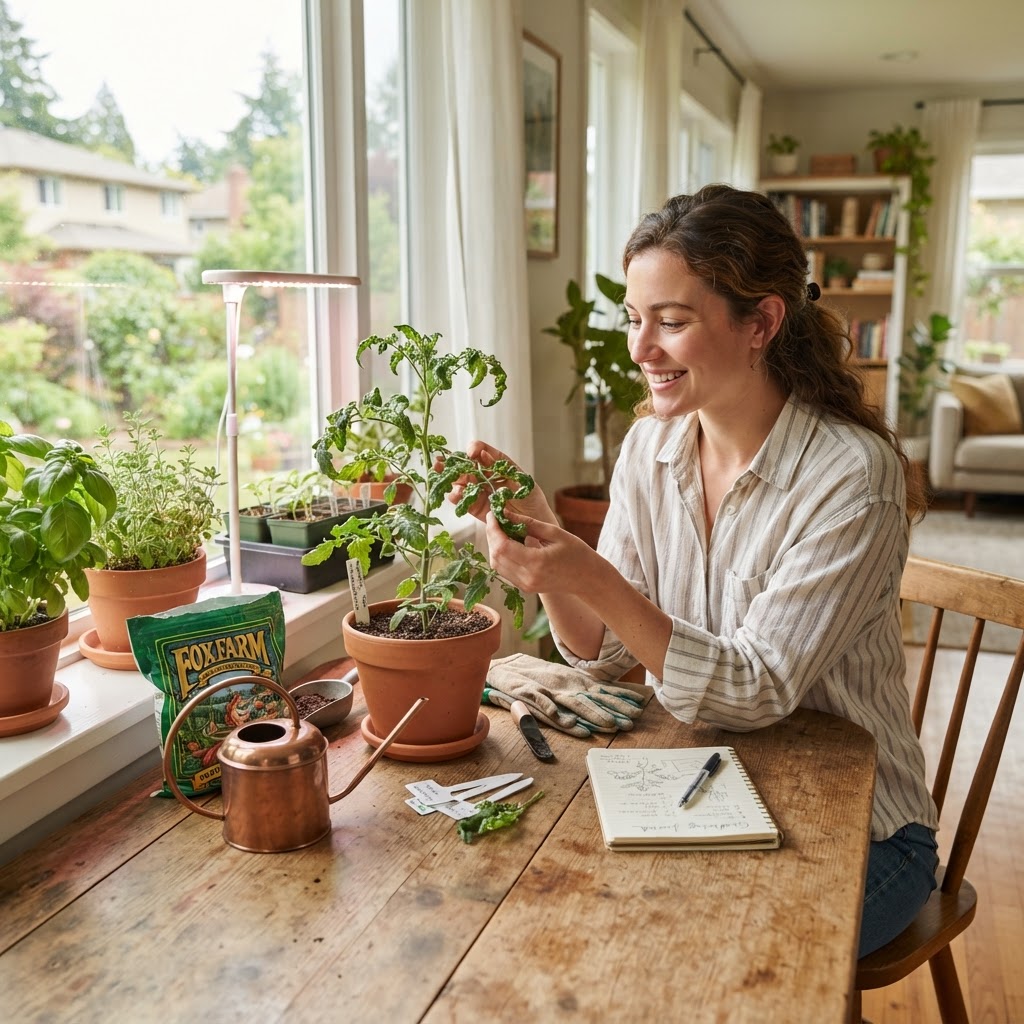
Why Are My Tomato Leaves Curling Indoors? Causes and Easy Fixes
If you’re staring at your indoor tomato plant and wondering why the leaves are curling, you’re not alone. Leaf curl is one of the most common problems beginner gardeners see, and the good news is that it often points to a fixable growing condition rather than a lost plant.
Indoor tomatoes live in a very different environment than outdoor plants. Light, airflow, watering habits, and even the pot size can all affect leaf shape, so a little detective work usually reveals the cause.
Why This Topic Matters
Tomato leaves are like an early warning system. When they start curling, cupping, or rolling, the plant is telling you that something in its environment is off.
Catching the problem early matters because indoor tomato plants depend completely on you. Outdoors, a plant can send roots deeper for moisture, benefit from breezes, or get stronger sun. Indoors, it has a limited pot, controlled watering, and often less-than-ideal light.
Leaf curl itself is not always an emergency. In many cases, the plant is reacting to stress from inconsistent watering, too much heat from a window, low humidity, or roots getting cramped in the container.
But if you ignore the warning signs, a minor issue can turn into slower growth, blossom drop, fewer tomatoes, or a plant that becomes more vulnerable to pests and disease. That’s why it helps to check the whole setup instead of focusing only on the curled leaves.
The encouraging part is that most indoor tomato leaf curl problems improve once the plant’s conditions are more stable. Beginner gardeners can usually correct the issue with simple changes, not complicated treatments.
Quick Answer
If you’re asking, “why are my tomato leaves curling indoors?” the fastest answer is this: your tomato plant is usually stressed by its growing conditions.
The most common causes are:
- Uneven watering
- Too much heat or intense direct sun through glass
- Not enough light overall
- Low indoor humidity
- Overfertilizing
- Roots becoming pot-bound
- Pest activity such as aphids, spider mites, or whiteflies
In many cases, curled leaves are a physiological response, which means the plant is reacting to stress rather than suffering from a serious disease. If the leaves are still mostly green and the plant looks otherwise healthy, start by checking water, light, temperature, and the pot.
However, if curling comes with yellowing, spotting, sticky residue, webbing, distorted new growth, or a sharp decline in the plant’s health, inspect carefully for pests or disease. Indoor problems are often easier to fix when you act early.
Step-by-Step Guide
1. Look at which leaves are curling
Start with a close inspection. Are the oldest lower leaves curling, or is the newest top growth twisted and misshapen?
Older leaves curling upward or inward often point to environmental stress such as watering issues, heat, or root stress. New growth that looks tightly distorted can suggest pests, herbicide exposure, or a more serious problem.
Also notice the color and texture:
- Green but curled leaves often suggest stress
- Yellow curled leaves may point to watering or nutrient problems
- Crispy edges can mean heat, dry air, or underwatering
- Soft droopy curl may indicate overwatering or root trouble
- Sticky leaves or speckling may mean pests
This first step helps you narrow down the cause before changing too many things at once.
2. Check your watering routine
Inconsistent watering is one of the biggest reasons indoor tomato leaves curl. Tomatoes like moisture that is steady, not soggy and not bone dry.
A common beginner pattern is letting the soil get extremely dry, then soaking it heavily. That cycle stresses the roots, and the leaves may curl as the plant tries to reduce moisture loss.
To check the soil, stick your finger 1 to 2 inches deep. If it feels dry at that depth, it may be time to water. If it still feels damp, wait a bit longer.
A better routine is:
- Water deeply until excess drains from the bottom.
- Empty the saucer so roots are not sitting in water.
- Wait until the top inch or two dries before watering again.
- Adjust based on plant size, pot size, season, and indoor temperature.
Tiny daily sips are usually less helpful than thorough watering followed by a slight drying period. The goal is even moisture, not constant wetness.
3. Evaluate light and heat conditions
Indoor tomatoes need a lot of light. When light is too weak, plants stretch, become leggy, and may develop stressed foliage. When light is too intense through a hot window, leaves can curl to protect themselves.
South-facing windows are often the best natural-light option, but glass can also trap heat. If the leaves closest to the window are curling while the rest of the plant looks better, heat stress may be part of the issue.
Aim for:
- 8 or more hours of strong light daily
- Grow lights if natural light is limited
- Leaves not pressed against cold or hot window glass
- Daytime temperatures around 65 to 80°F
- Nights not dropping too cold near drafty windows
If you use grow lights, keep them at the recommended distance. Lights placed too far away may not provide enough intensity. Lights placed too close can overheat tender growth.
4. Think about humidity and airflow
Indoor air is often dry, especially in winter when heating systems run often. Tomatoes prefer decent airflow, but extremely dry air can add stress and contribute to leaf curling.
At the same time, stale air is not ideal either. A plant in a closed corner with no circulation is more likely to struggle with fungal issues and pests.
Here’s a simple balance:
- Keep the plant away from heating vents and radiators
- Use a small fan on a gentle setting nearby, not blasting directly on the plant
- Group plants loosely if you grow more than one
- Consider a pebble tray or room humidifier if the air is very dry
You do not need tropical humidity for tomatoes. You just want to avoid extremely dry, hot, stagnant conditions.
5. Check whether the pot is too small
Tomatoes grow quickly and develop substantial roots. A plant that outgrows its pot can show curled leaves, slowed growth, drooping between waterings, or roots circling the bottom.
If the plant dries out very quickly every day, looks large for its container, or has roots poking from drainage holes, it may be pot-bound. Root stress limits the plant’s ability to take up water and nutrients evenly.
Signs it may need a bigger pot:
- Water runs through instantly
- Soil dries out much faster than before
- The plant is top-heavy and unstable
- Roots are visible at the bottom or surface
- Growth has stalled
For most indoor tomato plants, especially indeterminate varieties, a larger container makes a big difference. Repot gently into fresh potting mix with good drainage.
6. Review fertilizer use
Tomatoes are hungry plants, but too much fertilizer can do more harm than good indoors. Excess nitrogen often pushes lots of leafy growth, sometimes accompanied by curling, dark green leaves, or soft growth that is more attractive to pests.
If you’ve been feeding frequently, pause and reassess. Indoor plants often need less fertilizer than outdoor tomatoes because their growth is limited by container size and available light.
A beginner-friendly approach is:
- Use a balanced or tomato-specific fertilizer
- Follow label rates carefully
- Feed less often in lower-light seasons
- Never add extra “just in case”
- Flush the soil occasionally with plain water if salt buildup is suspected
White crust on the soil surface or pot rim can be a sign of fertilizer salts collecting over time.
7. Inspect for pests
Indoor tomatoes can still get pests, especially if they share space with houseplants. Aphids, whiteflies, and spider mites can all lead to curled or distorted leaves.
Check under the leaves and along stems. Use a magnifying glass if needed.
Look for:
- Tiny moving dots
- Fine webbing
- Sticky residue
- Clusters of soft-bodied insects
- Speckled or stippled leaves
- Twisted new growth
If you find pests, isolate the plant if possible. Rinse the leaves with water and treat with insecticidal soap or neem according to the label. Repeat treatments as needed, because one spray is rarely enough.
8. Rule out disease or more serious problems
Most indoor leaf curl is environmental, but it’s still smart to consider disease if the plant is declining fast. Viral issues can cause curling, distortion, mottling, and stunted growth.
Disease is more likely if:
- New growth is severely deformed
- Leaves show unusual mosaic patterns
- The plant stops growing normally
- Symptoms worsen even after you improve care
If you strongly suspect a virus, it is often best to remove the plant to protect others. There is no easy home cure for viral plant diseases.
That said, beginners should not jump straight to the worst-case scenario. Water, light, temperature, roots, and pests are much more common causes indoors.
9. Make one or two changes at a time
When you notice leaf curl, it’s tempting to do everything at once. But changing water, fertilizer, light, and pot size all in one day makes it harder to know what helped.
Instead, correct the most likely issue first. Then watch the plant for 7 to 14 days.
Existing curled leaves may not fully flatten again. What matters most is whether new growth looks healthier. Fresh, normal leaves are the best sign that your fix is working.
Common Beginner Mistakes
One common mistake is overreacting to a few curled leaves. Not every curled leaf means the plant is in serious trouble, especially if the plant is green and still growing.
Another mistake is watering on a strict calendar instead of checking the soil. Indoor conditions change from week to week, so the plant’s water needs also change.
Beginners also often assume more fertilizer will solve every plant problem. In reality, a stressed tomato plant may curl more if excess fertilizer is added.
Here are some other pitfalls to avoid:
- Using a decorative pot without drainage holes
- Keeping the plant in a tiny starter container too long
- Expecting a dim window to provide enough light for fruiting tomatoes
- Letting leaves touch freezing winter glass or hot summer glass
- Ignoring pests because they are small at first
- Moving the plant constantly from one spot to another
A final mistake is judging recovery too quickly. Damaged leaves may stay curled, so focus on whether the plant produces healthier new growth after you adjust its care.
Best Tips for Success
Indoor tomatoes do best when their environment stays as steady as possible. Stability matters more than perfection.
Try these beginner-friendly habits:
- Check soil moisture before watering
- Give the plant the brightest light you can, ideally with grow lights if needed
- Choose a container large enough for mature roots
- Rotate the pot occasionally for even growth
- Inspect leaves weekly for pests
- Use fertilizer lightly and consistently, not heavily
- Provide support with a stake or cage so the plant stays upright
It also helps to grow varieties better suited to containers and indoor spaces. Compact or dwarf tomatoes are often easier indoors than large sprawling types.
If you’re growing from seed, don’t wait too long to pot up young plants. Early root crowding can set the stage for stress later.
Recommended Supplies or Tools
You do not need a fancy setup to grow healthy indoor tomatoes, but a few simple tools can make troubleshooting much easier.
Helpful supplies include:
- A pot with drainage holes
- High-quality potting mix for containers
- A watering can with a narrow spout
- A saucer or tray to catch runoff
- A small moisture meter if you struggle with watering
- Full-spectrum grow lights for low-light rooms
- A gentle clip-on fan for airflow
- Tomato cage, stake, or soft ties for support
- Insecticidal soap for common pests
- Clean pruning scissors for removing damaged leaves
If you only invest in a few things, prioritize light, drainage, and the right pot size. Those three factors solve many indoor tomato problems before they start.
Frequently Asked Questions
Should I cut off curled tomato leaves?
If the leaves are still green and doing useful work, leave them on for now. Remove only leaves that are badly damaged, yellow, diseased-looking, or touching the soil.
Can overwatering cause tomato leaves to curl indoors?
Yes. Overwatering can stress the roots, reduce oxygen in the soil, and lead to soft, droopy curling. If the pot stays wet for long periods, improve drainage and let the top layer dry slightly before watering again.
Will curled tomato leaves uncurl after I fix the problem?
Sometimes slightly stressed leaves improve, but often the old leaves stay somewhat curled. The better sign is healthy new growth appearing after you correct the issue.
Do indoor tomatoes need grow lights?
In many homes, yes. Tomatoes are high-light plants, and a sunny window alone may not be enough for strong growth, especially in winter or cloudy climates.
Could pests really be the reason if I only see a little curling?
Yes, especially with new growth. Small pest infestations can start subtly, so it’s worth checking under leaves regularly before the problem spreads.
Final Thoughts
If you’ve been asking why your tomato leaves are curling indoors, try not to panic. In most cases, your plant is dealing with everyday stress from water, light, temperature, roots, or pests rather than something hopeless.
Start with the basics and make small, steady improvements. With a little observation and patience, indoor tomato plants often bounce back well, and the healthy new growth will tell you that you’re on the right track.