How to Grow Indoor Tomatoes (The Complete Beginner's Guide)
Affiliate Disclosure: This article contains affiliate links. If you make a purchase through one of them, we may earn a small commission at no extra cost to you. We only recommend products we genuinely believe will help your garden thrive.
Maybe you've dreamed about picking a ripe tomato off a plant sitting in your living room in the middle of January. Or maybe you've tried growing tomatoes indoors before and ended up with a scraggly plant, zero fruit, and a lot of questions about where things went wrong.
Here's the truth: learning how to grow indoor tomatoes is completely doable for beginners — but it does require getting a few key things right. Light, variety selection, and pollination are the big three that most guides gloss over. Get those right and you'll be harvesting fresh tomatoes at home regardless of the season outside.
The Quick Answer: How to Grow Indoor Tomatoes
- Choose a compact or dwarf variety — full-size tomatoes are very difficult indoors
- Use a grow light — window light alone is almost never enough
- Plant in a container at least 5 gallons in size — tomatoes need room for roots
- Water consistently — let the top inch of soil dry before watering again
- Pollinate by hand — indoors, there are no bees to do the job for you
- Feed every 1–2 weeks once flowering begins
Best Tomato Varieties for Growing Indoors
This is where most beginners go wrong first. They grab a big beefsteak variety and wonder why the plant grows six feet tall and produces almost nothing indoors. For indoor tomato gardening to work, you need compact varieties bred for small spaces.
Dwarf and Micro Varieties
- Tiny Tim — Only 12–18 inches tall. Produces small, sweet cherry tomatoes. Perfect for a windowsill with supplemental light.
- Micro Tom — The smallest tomato plant in existence. Stays under 8 inches.
- Tumbling Tom (Red or Yellow) — Cascading habit, beautiful in a hanging planter. Very productive.
- Terenzo F1 — Bred for containers and indoor growing. Strong flavor and good yields.

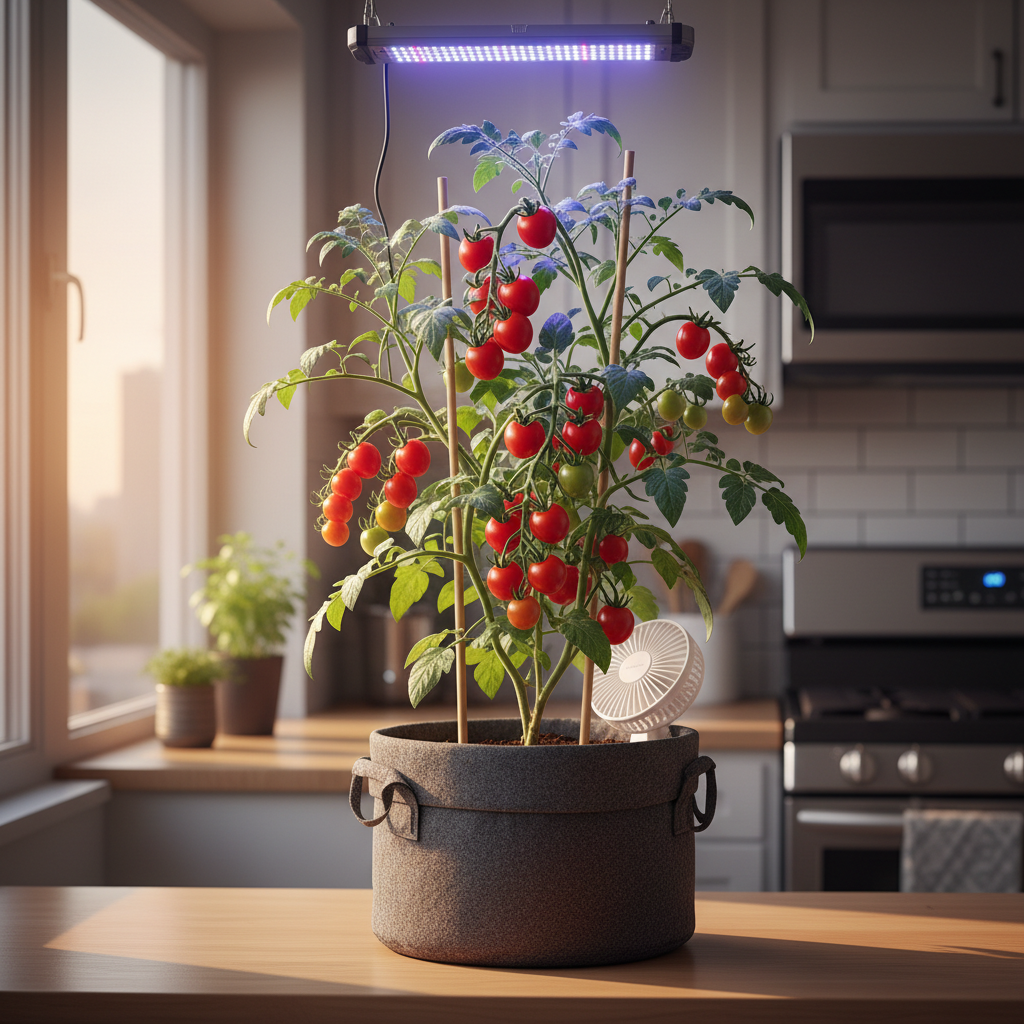
A 10-gallon fabric grow bag gives indoor tomato roots the space they need for a productive harvest.
Cherry Tomatoes for Indoors
Cherry tomatoes are your best bet for a real harvest indoors. They fruit faster and produce more consistently than large-fruited varieties.
- Sun Gold — Incredibly sweet, prolific producer, does well under grow lights
- Sweet Million — Long clusters of small tomatoes, great for beginners
- Black Cherry — Rich flavor, compact growth habit
Compact Determinate Varieties
- Patio F Hybrid — Bred for containers, stays around 2 feet
- Bush Early Girl — Classic flavor, compact, reliable in containers
For most beginners, Tiny Tim, Tumbling Tom, or Sun Gold are the ones we'd recommend first. They're forgiving, productive, and won't take over your space.
What You Need to Grow Indoor Tomatoes
Grow Lights
This is the single most important piece of equipment. Without adequate light, nothing else matters — your plants will be leggy, weak, and won't flower or fruit.
Tomatoes need 8–12 hours of direct sunlight outdoors, which translates to 14–16 hours under a grow light indoors. A south-facing window in winter provides maybe 4–6 hours of weak, low-angle light. That's not enough.
A full-spectrum LED grow light positioned 2–4 inches above your plants is essential. Look for one with at least 2000 lumens covering both blue and red wavelengths.
Containers and Grow Bags
- Micro and dwarf varieties: 1–3 gallon containers minimum
- Cherry tomatoes: 5-gallon containers or fabric grow bags
- Compact determinates: 7–10 gallon containers for best results
Fabric grow bags are a great option — they provide excellent drainage, prevent overwatering through air-pruning, and are inexpensive.
Self-Watering Planters
If there's one upgrade that makes indoor tomato growing dramatically easier, it's a self-watering planter. The built-in reservoir wicks moisture up to roots on demand. You fill the reservoir every few days rather than guessing when to water. Inconsistent watering is one of the leading causes of flower drop and blossom end rot indoors.

Transplant tomato seedlings into their final container when they reach 4 to 6 inches tall.
Potting Mix and Fertilizer
Use a high-quality potting mix with perlite — never garden soil in containers. For feeding, use a liquid tomato fertilizer every 1–2 weeks once flowering begins. A bloom-focused formula higher in phosphorus and potassium works best at the fruiting stage.
Fan for Airflow
What nobody tells you about indoor tomato growing: your plants need air movement. Outdoors, wind strengthens stems naturally. A small fan running a few hours per day prevents weak, floppy growth and reduces fungal problems.
Choosing the Best Grow Lights for Indoor Tomatoes
Why Window Light Isn't Enough
Even the sunniest south-facing window delivers low-angle, glass-filtered light for only a few hours of actual intensity in fall and winter. The result of insufficient light is always the same: leggy, stretched plants with weak stems, few flowers, and no fruit. This is the most common reason indoor tomatoes fail.
Why Full-Spectrum LED Grow Lights Win
- Energy efficient — won't significantly raise your electricity bill
- Low heat output — won't burn plants or overheat your space
- Long lifespan — quality LEDs last 50,000+ hours
- Full spectrum — provides blue light for growth and red light for flowering and fruiting
How to Position Your Grow Light
- Position 2–4 inches above seedlings and young plants
- Raise the light as plants grow to maintain that distance
- Run 14–16 hours per day using a simple outlet timer
- Allow 6–8 hours of darkness per day — plants need a rest cycle
Step-by-Step Guide to Growing Indoor Tomatoes
Step 1: Start From Seed or Transplant
For seeds: use a seed starting tray with seed starting mix, a heat mat set to 70–80°F, and get your grow light on the moment seedlings emerge.
Step 2: Transplant Into Your Main Container
Once seedlings have 2–3 sets of true leaves, move them to their final container. Bury them deep — up to 2/3 of the stem — and roots will grow along the buried stem for a stronger plant.
Step 3: Water Consistently
Check daily. Water when the top inch feels dry. Water thoroughly until it drains from the bottom. Avoid letting soil completely dry out or stay saturated.
Step 4: Feed Regularly
- Weeks 1–3: balanced fertilizer at half strength, once a week
- First flowers appear: switch to a bloom/tomato formula, every 7–10 days
- Active fruiting: continue bloom formula every 7–10 days
Step 5: Prune Suckers
Pinch off the small shoots growing in the V between the main stem and branches. This redirects energy toward fruit. For dwarf varieties, minimal pruning is needed.
Step 6: Pollinate by Hand
This is the step most beginners skip — and then wonder why plants flower but never set fruit. Once flowers open, do one of the following daily:
- Gently shake each flower cluster with your finger
- Run an electric toothbrush lightly against the back of each cluster for 1–2 seconds
- Use a small paintbrush to transfer pollen between flowers
This is the secret to fruit set on indoor tomatoes.

Stake or cage your indoor tomato plant from early on to prevent stem breakage as it grows.
Step 7: Support Your Plants
Even compact varieties benefit from support as they fruit. Use a small tomato cage, bamboo stake, or string tied to a hook above the plant.
Watering and Feeding Indoor Tomatoes
Overwatering is the number one killer of indoor tomatoes. Soggy soil leads to root rot and yellowing leaves. Only water when the top inch of soil is dry.
Inconsistent watering causes blossom end rot — that black spot on the bottom of developing tomatoes. Self-watering planters solve this beautifully.
Fertilizer Schedule:
- Weeks 1–3 after transplanting: balanced liquid, half strength, once a week
- Flowering stage: bloom-boosting formula every 7–10 days
- Fruiting stage: continue bloom formula every 7–10 days
- Dark green leaves with no flowers: reduce nitrogen, increase phosphorus
Common Indoor Tomato Problems and How to Fix Them
Yellow Leaves
Most commonly overwatering or underwatering. Check soil moisture. Yellow at the bottom is often normal aging. Yellow throughout with wet soil = root rot.
Curling Leaves
Upward curl = heat stress or grow light too close. Downward curl = overwatering.
Leggy Plants
Grow light not close enough or bright enough. Move it closer and extend daily hours.
Flowers Falling Off
The most frustrating indoor tomato problem. Causes:
- Lack of hand pollination (most common)
- Temperature extremes (below 55°F or above 85°F)
- Inconsistent watering
- Very dry indoor air
Slow Growth
Usually light or nutrition. Confirm your light runs 14–16 hours daily and you're feeding regularly.
Fungus Gnats
Tiny flies breeding in moist soil. Let the surface dry out more between waterings. Use yellow sticky traps for adults. Bottom watering breaks the breeding cycle.
No Fruit Set
Almost always pollination. Are you shaking or vibrating flowers daily? An electric toothbrush works perfectly.
How Long Do Indoor Tomato Plants Produce?
With good care, an indoor tomato plant can produce for 6–12 months continuously. Cherry varieties tend to be the most prolific and longest-lasting.
- Seed to first harvest: 60–80 days for cherry varieties
- Peak production: 3–4 months after first harvest begins
- Total productive lifespan: 6–18 months depending on variety and care
When production slows significantly, start fresh with new plants. Many growers keep a staggered planting schedule for continuous harvests.
Best Indoor Tomato Growing Setups
Basic Container + Grow Light
Place a self-watering planter near a south-facing window, hang a grow light above it. Works well for micro and dwarf varieties and is the most accessible starting point.

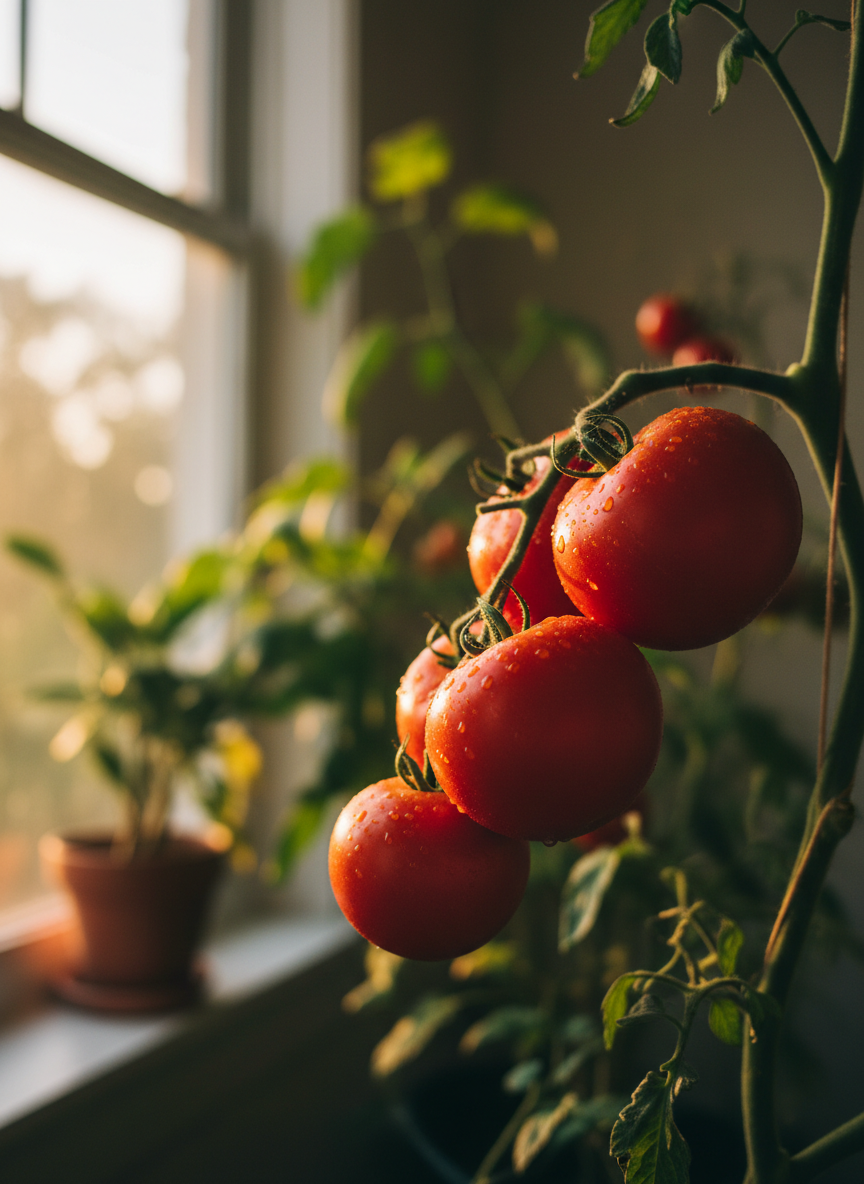
A well-tended indoor tomato plant rewards you with fresh tomatoes for weeks or even months.
Fabric Grow Bags Under LED Panels
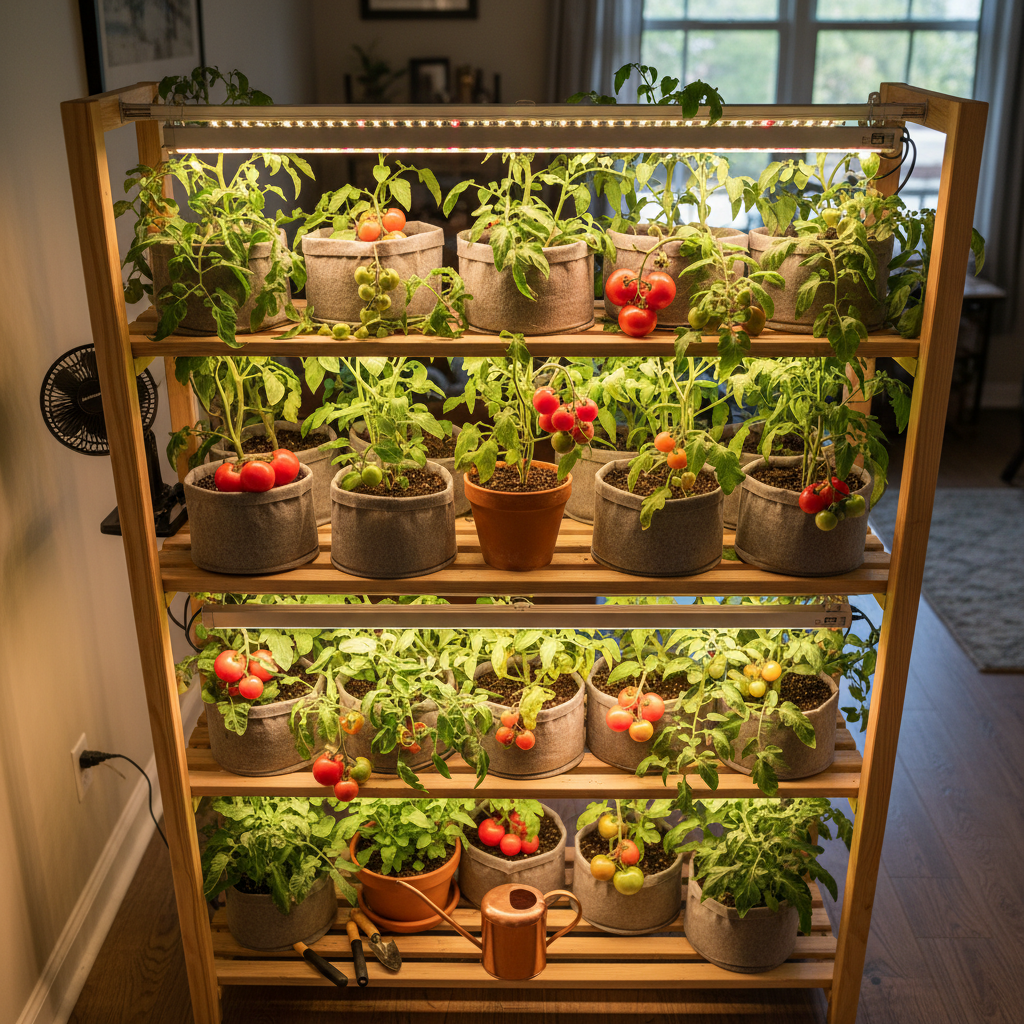
For 2–4 plants, fabric grow bags under a panel-style LED grow light is the most popular setup among serious home growers. Good drainage, good airflow, manageable size.
Countertop Hydroponic Systems
All-in-one systems with built-in grow lights and nutrient dosing are excellent for micro and dwarf tomatoes. Minimal space, nearly hands-off care. Higher upfront cost but very beginner-friendly.
Grow Tents
For the most ambitious growers, a small 2x2 or 2x4 grow tent with a dedicated LED light maximizes efficiency and keeps everything tidy. Ideal for year-round multi-plant production.
Frequently Asked Questions
Can tomatoes really grow indoors without sunlight?
Yes — with a good full-spectrum LED grow light, tomatoes don't need sunlight at all. Provide at least 2000 lumens for 14–16 hours per day.
What's the easiest tomato to grow indoors?
Tiny Tim or Tumbling Tom. They stay compact, are forgiving of imperfect conditions, and produce reliably.
Do indoor tomatoes need to be pollinated?
Absolutely. Without hand pollination, flowers bloom and drop without setting fruit. Shake or vibrate flower clusters once per day when blooms are open.
How big of a container do I need?
Dwarf varieties: 1–3 gallons. Cherry tomatoes: 5 gallons. Compact determinates: 7–10 gallons.
Can I grow tomatoes indoors year-round?
Yes. With a grow light and compact variety, indoor tomatoes aren't bound by seasons.
Why does my plant flower but not produce fruit?
Almost always a pollination issue. Start gently shaking or vibrating flower clusters daily. Results are visible within 1–2 weeks.
How often should I water indoor tomatoes?
Check daily. Water when the top inch of soil is dry. A self-watering planter removes the guesswork.
You Can Do This
Indoor tomato growing has a bit of a reputation for being difficult. And if you go in without the right information, it can feel that way.
But once you understand the basics — choose a compact variety, give them real light, water consistently, and pollinate by hand — indoor tomatoes become one of the most rewarding plants you can grow at home.
Start simple. Pick a small variety. Set up a grow light with a timer. Hand pollinate when flowers appear. Your first indoor tomato harvest is closer than you think.
Recommended Products
Looking for the right gear to get started? We've curated our top picks for sustainable vegetable gardening — from raised beds and grow lights to seed-starting kits and organic fertilizers — on our Recommended Products page.
Ready to Start?
If you're ready to gear up, check out our recommended raised beds and grow lights on Amazon — beginner-approved and built to last.
Ready to Start?
If you're ready to gear up, check out our recommended raised beds and grow lights on Amazon — beginner-approved and built to last.
Ready to Start?
If you're ready to gear up, check out our recommended raised beds and grow lights on Amazon — beginner-approved and built to last.
Ready to Start?
If you're ready to gear up, check out our recommended raised beds and grow lights on Amazon — beginner-approved and built to last.