Do Indoor Gardens Attract Bugs? What Beginner Gardeners Should Know
Affiliate Disclosure: This article contains affiliate links. If you make a purchase through one of them, we may earn a small commission at no extra cost to you. We only recommend products we genuinely believe will help your garden thrive.
If you are thinking about growing vegetables and herbs indoors, you may be wondering if you are also inviting bugs into your home. It is a fair question, especially for beginners who want fresh food without dealing with pest problems.
The good news is that indoor gardens do not automatically attract bugs. But certain growing conditions can make indoor plants appealing to a few common pests, so prevention and early action matter.
Why This Topic Matters
Many new gardeners assume indoor growing is completely pest-free. In reality, indoor gardens usually have fewer pest problems than outdoor gardens, but they are not immune.
A small issue can also spread faster indoors because plants are close together and natural predators are missing. If you catch problems early, most indoor pest issues stay manageable and do not ruin your garden.
This topic matters even more if you are growing food in a kitchen, spare room, or apartment. Nobody wants clouds of fungus gnats near the sink or sticky leaves on a basil plant sitting by the window.
Understanding why bugs show up helps you avoid panic. It also helps you focus on the real causes, which are usually moisture, stressed plants, poor airflow, or bringing in an already infested plant.
Quick Answer
Yes, indoor gardens can attract bugs, but they do not always do so. Most indoor pest problems happen because the space provides what bugs want, such as damp soil, weak plants, still air, or easy access from infested plants, potting mix, or open windows.
The most common indoor garden pests are:
- Fungus gnats
- Aphids
- Spider mites
- Whiteflies
- Mealybugs
- Scale insects

Overwatered soil is the leading cause of fungus gnats — let the top inch dry out between waterings.
Of these, fungus gnats are often the biggest annoyance for beginners. They are attracted to consistently moist soil, and their larvae live in the top layer of potting mix.
The key takeaway is simple: indoor gardens do not have to attract bugs if you keep plants healthy, avoid overwatering, inspect new plants, and monitor your growing area regularly.
Step-by-Step Guide
1. Understand what attracts bugs indoors
Indoor pests usually are not interested in your home itself. They are interested in specific conditions around your plants.
Common attractors include:
- Wet or soggy soil
- Dead leaves on the soil surface
- Weak, stressed plants
- Crowded plants with poor airflow
- New plants carrying hidden pests
- Open windows or doors near plants
- Reused pots that were not cleaned well
When you know what causes problems, pest prevention becomes much easier. You can fix the environment instead of only reacting after bugs appear.
2. Start with clean plants, pots, and soil
One of the easiest ways bugs enter an indoor garden is by hitchhiking in. A new herb from the garden center or a gifted houseplant can bring pests inside without you noticing.
Before adding any plant to your indoor garden, inspect the leaves, stems, and soil surface. Look under leaves for tiny insects, webbing, sticky residue, cottony patches, or eggs.
It also helps to use fresh, quality potting mix rather than soil from outdoors. Outdoor soil can introduce insects, weed seeds, and plant diseases that are harder to manage inside.
If you reuse containers, wash them thoroughly with warm soapy water. Clean pots reduce the chance of old pests, eggs, or disease spores lingering from a previous planting.
3. Water carefully, not constantly
Overwatering is one of the most common reasons indoor gardens attract bugs. Damp soil creates ideal conditions for fungus gnats and can also weaken roots, making plants more vulnerable.
Instead of watering on a fixed schedule, check the soil first. Many indoor vegetables and herbs do best when the top inch of soil is allowed to dry slightly before watering again.
A simple way to check is to insert your finger into the soil. If it still feels moist near the top, wait another day and check again.

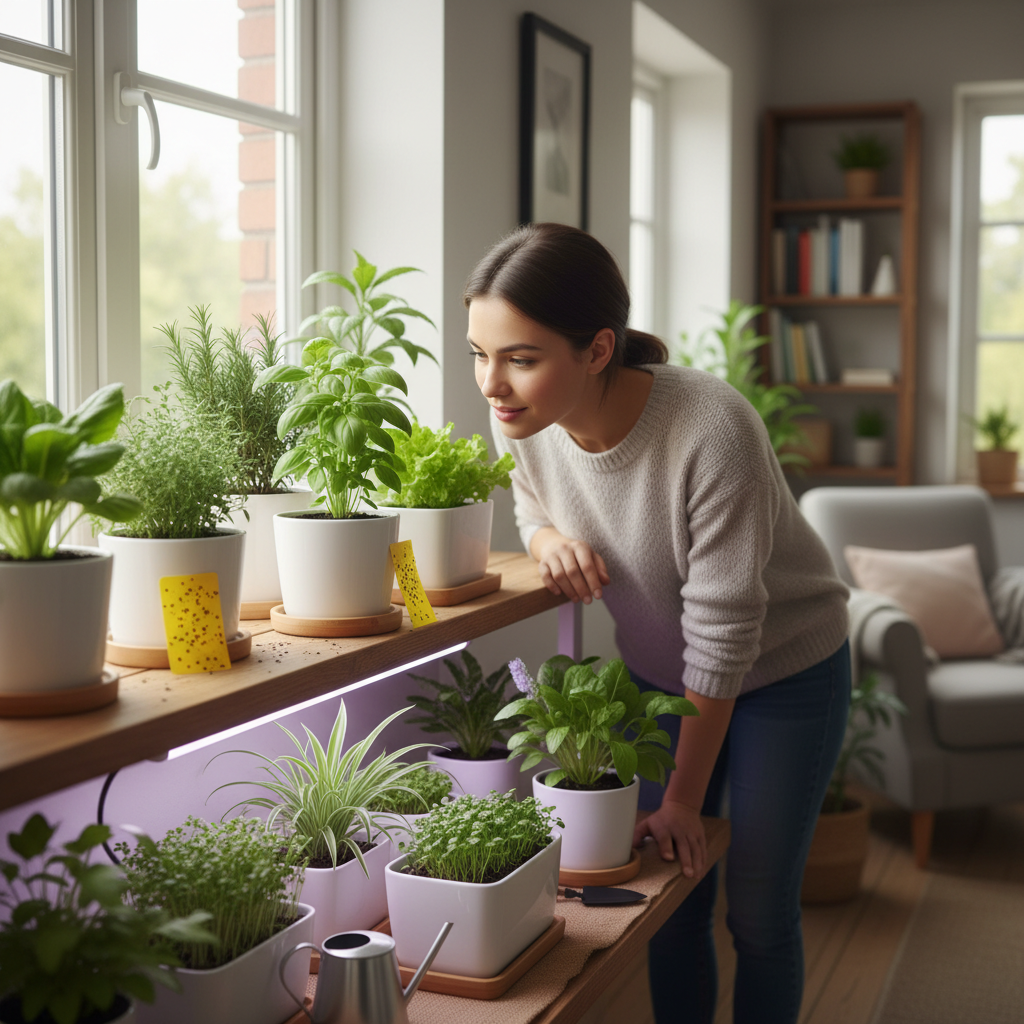
Yellow sticky traps are one of the most effective non-toxic tools for catching indoor garden pests.
Make sure pots have drainage holes and never let containers sit in standing water for long. Good drainage protects roots and makes the space less attractive to moisture-loving pests.
4. Give plants enough light and airflow
Healthy plants are better at resisting pests. Low light and stale air can stress plants, leading to weak growth that insects take advantage of.
If natural light is limited, use a grow light to keep vegetables and herbs growing steadily. Leggy, pale plants are more likely to struggle and become pest-prone.
Airflow matters too. A small fan on a gentle setting can help reduce still, humid conditions where pests and disease problems thrive.
Do not crowd plants tightly together. Spacing gives leaves room to dry and makes it easier for you to inspect stems and leaf undersides.
5. Inspect your plants every few days
Early detection is your biggest advantage indoors. A tiny pest problem is much easier to solve than a full-blown infestation.
Check for these signs:
- Tiny flying insects around the soil
- Yellowing or curling leaves
- Speckled leaves or pale dots
- Sticky residue on foliage
- Fine webbing
- Cotton-like clusters near stems
- Leaves that look distorted or stunted
Spend just a minute or two looking closely at each plant. Pay extra attention to the underside of leaves, where many pests hide.
Yellow sticky traps can also help you monitor flying pests like fungus gnats and whiteflies. They do not solve every problem by themselves, but they can alert you early.
6. Isolate new or suspicious plants
If you buy a new plant or notice one plant acting strangely, keep it separate from the rest for a while. This simple step can prevent a minor issue from spreading to your whole indoor garden.
A quarantine period of about one to two weeks is helpful for new plants. During that time, inspect the plant several times and watch for insects or leaf damage.
If a plant already has pests, move it away from healthy plants right away. Isolation gives you time to treat it without risking the rest of your garden.
7. Remove pests with simple, gentle methods first
When bugs appear, start with the least aggressive fix. Many indoor pests can be reduced with basic care and cleanup.
Try these first steps:
- Remove heavily damaged leaves.
- Rinse leaves with a gentle spray of water if the plant can tolerate it.
- Let the soil dry a bit more between waterings if fungus gnats are present.
- Use yellow sticky traps for flying adults.
- Wipe pests off leaves and stems with a damp cloth or cotton swab.
For persistent soft-bodied pests like aphids, whiteflies, or mealybugs, insecticidal soap can be useful when used according to label directions. Neem oil may also help in some cases, though it should be applied carefully and not excessively indoors.
8. Clean up the growing area regularly
Good sanitation makes a noticeable difference. Fallen leaves, spilled potting mix, algae on trays, and old plant debris all create a friendlier environment for pests.
Make cleanup part of your normal routine. Empty saucers after watering, remove dead leaves, and wipe shelves or windowsills where you keep plants.
This habit is especially helpful in compact indoor gardening spaces. Small areas can stay productive and clean when they are maintained consistently.
Common Beginner Mistakes
A lot of indoor pest issues come from normal beginner habits, not from doing anything terribly wrong. Most are easy to fix once you know what to watch for.
Overwatering everything

A diluted neem oil spray applied every two weeks prevents most indoor garden pest problems.
Many beginners water plants too often because they want to be helpful. Unfortunately, constantly wet soil is one of the fastest ways to encourage fungus gnats and root stress.
Bringing home plants without checking them
A healthy-looking plant can still hide pests under leaves or in stem joints. Skipping inspection is one of the main ways bugs enter an indoor garden.
Using garden soil from outdoors
Outdoor soil may seem convenient, but it can contain insects, eggs, weed seeds, and pathogens. Indoors, that can turn into a frustrating mess very quickly.
Ignoring airflow
Indoor spaces often have still air, especially in winter. Without some air movement, humidity builds up around foliage and plants may become weaker over time.
Waiting too long to act
A few pests can become many pests surprisingly fast. Beginners sometimes hope the problem will disappear on its own, but indoor infestations usually need some kind of action.
Treating the wrong problem
Not every tiny bug is the same. Fungus gnats require different solutions than spider mites or aphids, so it helps to identify the pest before treating it.
Best Tips for Success
If you want an indoor garden with fewer bug problems, focus on prevention more than treatment. A simple routine goes a long way.
Here are some of the best habits to build:
- Check plants at least twice a week.
- Water based on soil moisture, not the calendar.
- Use containers with drainage holes.
- Give plants enough light to stay strong.
- Keep leaves and soil surfaces clean.
- Avoid overcrowding pots and trays.
- Quarantine new plants before mixing them in.
- Use sticky traps to monitor flying pests.
- Remove weak or badly infested plant material early.
It also helps to stay realistic. Seeing one or two gnats once in a while does not mean your indoor garden is failing.
The goal is not perfect sterility. The goal is to create healthy growing conditions that make serious pest outbreaks much less likely.
Recommended Supplies or Tools
You do not need a huge pest-control kit to grow vegetables indoors successfully. A few practical supplies can help you prevent problems and respond quickly.
Helpful basics
- Fresh indoor potting mix
- Clean pots with drainage holes
- Watering can with a narrow spout
- Drip tray or saucer for each pot
- Small fan for airflow
- Sharp scissors or pruning snips
- Soft cloths or cotton swabs for cleaning leaves
- Magnifying glass for close inspection
Useful pest-monitoring tools
- Yellow sticky traps for fungus gnats and whiteflies
- Moisture meter if you struggle with overwatering
- Spray bottle for rinsing leaves or applying labeled treatments
Treatment options to keep on hand

Good airflow, proper watering, and clean growing conditions prevent most indoor garden pest issues.
- Insecticidal soap labeled for edible plants
- Neem oil product labeled for indoor or edible plant use
- Hydrogen peroxide is sometimes discussed for fungus gnats, but it should be used cautiously and only with reliable guidance
Always read product labels before using any pest treatment on herbs or vegetables. Indoor edible gardening is safest when treatments are chosen carefully and used only when needed.
Frequently Asked Questions
Do all indoor vegetable gardens get bugs?
No. Many indoor gardens have very few pest issues, especially when plants are started with clean supplies and watered correctly.
Pests are possible, but they are not guaranteed. Prevention habits make a big difference.
What bug is most common in indoor gardens?
Fungus gnats are one of the most common indoor garden pests, especially in containers that stay too wet. The adults are annoying, but the bigger issue is the damp soil that allows them to multiply.
Aphids, spider mites, whiteflies, and mealybugs are also common depending on the plants and indoor conditions.
Do grow lights attract bugs?
Grow lights themselves do not usually create pest problems, but light can attract some flying insects if they are already nearby. The bigger issue is usually the plants and soil conditions, not the light.
Healthy growth under proper lighting can actually help plants resist pests better.
Are indoor herb gardens less likely to get pests than houseplants?
Not always. Herbs can still get aphids, spider mites, whiteflies, or fungus gnats.
However, many herbs prefer slightly drier conditions and good airflow, which can make some pest problems less severe if they are cared for well.
Can I get rid of indoor garden bugs without harsh chemicals?
Often, yes. Many beginner pest issues can be managed with better watering, rinsing leaves, sticky traps, hand removal, and gentle treatments like insecticidal soap.
The best approach is to catch the problem early. Severe infestations are always harder to handle.
Recommended Products
Looking for the right gear to get started? We've curated our top picks for sustainable vegetable gardening — from raised beds and grow lights to seed-starting kits and organic fertilizers — on our Recommended Products page.
Ready to Start?
If you're ready to gear up, check out our recommended raised beds and grow lights on Amazon — beginner-approved and built to last.
Ready to Start?
If you're ready to gear up, check out our recommended raised beds and grow lights on Amazon — beginner-approved and built to last.
Ready to Start?
If you're ready to gear up, check out our recommended raised beds and grow lights on Amazon — beginner-approved and built to last.
Ready to Start?
If you're ready to gear up, check out our recommended raised beds and grow lights on Amazon — beginner-approved and built to last.
Ready to Start?
If you're ready to gear up, check out our recommended raised beds and grow lights on Amazon — beginner-approved and built to last.
Ready to Start?
If you're ready to gear up, check out our recommended raised beds and grow lights on Amazon — beginner-approved and built to last.
Ready to Start?
If you're ready to gear up, check out our recommended raised beds and grow lights on Amazon — beginner-approved and built to last.
Ready to Start?
If you're ready to gear up, check out our recommended raised beds and grow lights on Amazon — beginner-approved and built to last.
Final Thoughts
So, do indoor gardens attract bugs? They can, but bugs are usually responding to conditions rather than the simple fact that plants are indoors.
If you use clean materials, avoid overwatering, give your plants enough light and airflow, and inspect them often, you can grow vegetables and herbs inside with far fewer pest problems than you might expect. For beginners, that is encouraging news.
Indoor gardening does not have to mean sharing your home with swarms of insects. With a little routine care and quick action when something looks off, you can keep your indoor garden healthy, productive, and enjoyable.