How to Pollinate Indoor Tomatoes (The Easy Beginner's Guide)
Affiliate Disclosure: This article contains affiliate links. If you make a purchase through one of them, we may earn a small commission at no extra cost to you. We only recommend products we genuinely believe will help your garden thrive.
You've done everything right. Your indoor tomato plant is healthy, green, and loaded with beautiful yellow flowers. You're watering consistently, the grow light is running on schedule, and you're feeding on time. But week after week, those flowers open, fade, and drop off without a single tomato forming.
This is one of the most common and frustrating experiences in indoor tomato gardening — and the cause is almost always the same thing: no pollination.
Learning how to pollinate indoor tomatoes is the missing piece for most beginners. The good news? It's one of the easiest things to fix. It takes about 30 seconds a day, requires no special skills, and the results are immediate. Let's walk through everything.
The Quick Answer: How to Pollinate Indoor Tomatoes
Tomato flowers are self-fertile, meaning each flower contains both male and female parts. But pollen still needs to move from the anthers to the stigma inside the flower, and that movement requires vibration.
Outdoors, bees and wind provide that vibration constantly. Indoors, you have to do it yourself. Here are the main methods:
- Shake the plant gently by tapping the main stem
- Run a small fan near the plant for a few hours each day
- Use an electric toothbrush pressed against the flower stem for 1–2 seconds
- Use a soft paintbrush to gently transfer pollen between open flowers
Do this once a day when flowers are fully open and you'll start seeing fruit forming within a week or two. That's genuinely all it takes.
Why Indoor Tomatoes Need Help with Pollination
This is the part what nobody tells you when you first start growing tomatoes indoors. Outside in a garden, pollination happens automatically and you never have to think about it. Indoors, the environment that makes pollination possible simply doesn't exist unless you create it.
No Bees Indoors

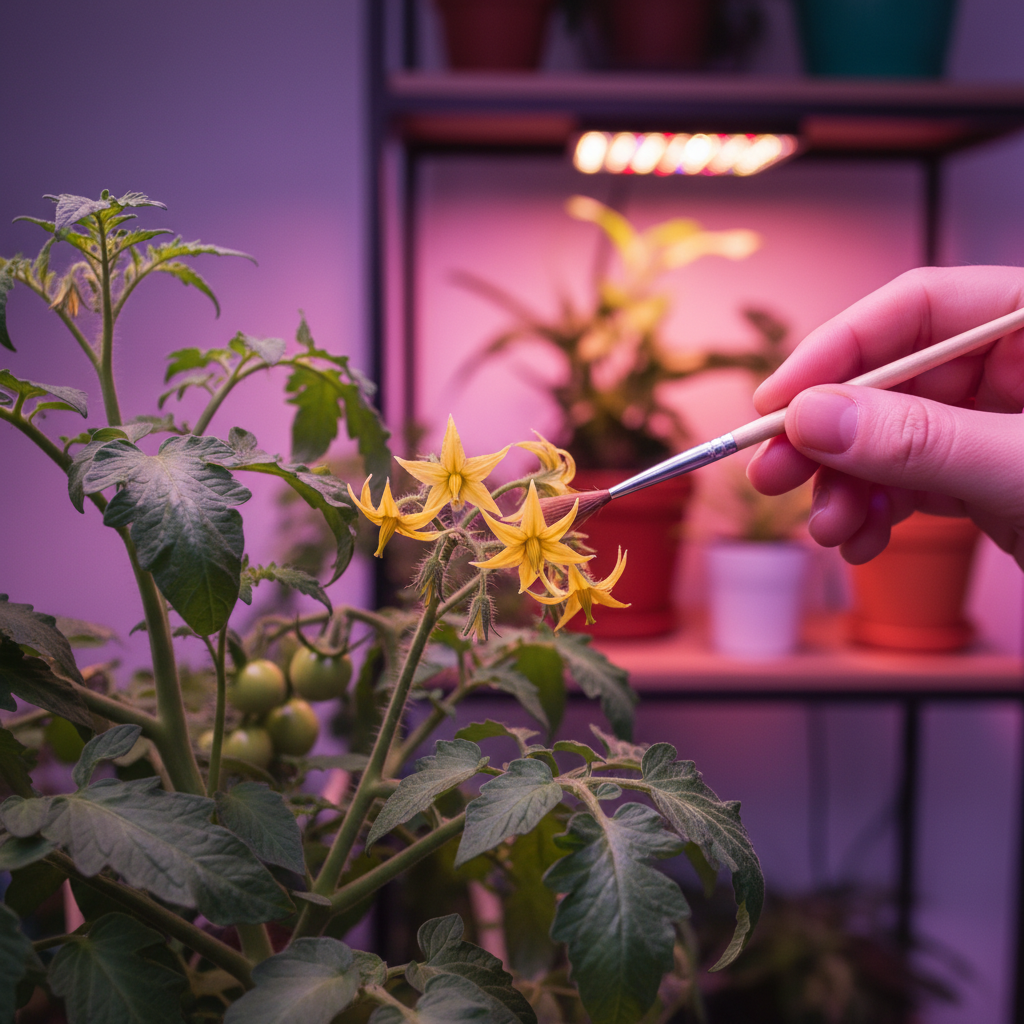
Tomato flowers are ready to pollinate when fully open and showing yellow pollen-covered stamens.
Bumblebees are the primary pollinators for tomatoes in nature. They practice something called buzz pollination or sonication — they grab a tomato flower and vibrate their flight muscles at a specific frequency that causes the anther to release a burst of pollen. It's an incredibly efficient system.
In your living room or grow tent, there are no bees. Without that vibration trigger, pollen stays trapped inside the anther and never reaches the stigma. No pollen transfer = no fruit.
No Wind Indoors
Even a light breeze outdoors shakes tomato plants constantly throughout the day, causing small amounts of pollen to release and drift. Indoors, the air is usually still. Without any movement, pollen just sits there.
Poor Airflow Amplifies the Problem
Many beginner indoor setups have no air movement at all — no fan, no open windows, nothing. This creates a still, sometimes humid environment that makes pollen sticky and clumped rather than loose and ready to transfer. Poor airflow also promotes fungal problems, weak stems, and slow overall growth.
The Result: Flower Drop
When a tomato flower isn't pollinated within its window of fertility (typically 2–3 days after opening), the plant drops it. This is a natural energy-conservation mechanism — the plant doesn't waste resources developing fruit from an unfertilized flower.
If your flowers are blooming and falling off without setting fruit, pollination is almost certainly the issue.
How Tomato Pollination Actually Works
You don't need a botany degree for this, but understanding the basics makes the whole process click.
Each tomato flower has a cone-shaped structure in the center called the anther cone. Inside and around this cone, pollen is produced. The stigma — the female part of the flower — sits at the center and needs to receive pollen to trigger fertilization and fruit development.
For pollination to succeed, pollen grains need to shake loose from the anthers and land on the stigma. Because both parts are in the same flower, this doesn't require pollen from a separate plant — it just requires that physical vibration to dislodge the pollen.
When a bumblebee grabs a tomato flower and buzzes, it creates vibration at around 400 Hz — exactly the frequency that causes the anther to release pollen in a visible little cloud. The toothbrush method works because electric toothbrushes vibrate at a similar frequency. Pretty clever, right?
Signs Your Indoor Tomatoes Aren't Being Pollinated
Before you change your routine, make sure pollination is actually the problem. Here's what poor or failed pollination looks like:
- Flowers opening and dropping within 2–3 days without any fruit forming behind them
- Tiny tomatoes starting to form then yellowing and dropping off (incomplete pollination)
- Lots of flowers but zero fruit over multiple weeks
- Shriveled or dried-up flowers that never seem to set
- Very low fruit production relative to the number of flowers the plant produces

An electric toothbrush vibrates flowers the same way a bee does, releasing pollen effectively.
If you're seeing any of these, start hand pollinating immediately. You should see improvement within 1–2 weeks.
How to Pollinate Indoor Tomatoes: 5 Methods That Work
Method 1: The Gentle Shake
This is the simplest method and works surprisingly well for plants that are in good health with loose, dry pollen.
- Find a flower cluster with open blooms (fully open, bright yellow, petals spread wide)
- Gently tap the main stem just below the flower cluster with your finger
- Or grip the stem and give it a light but firm shake for 1–2 seconds
- You might see a small puff of yellow pollen if conditions are right
- Repeat for every open flower cluster on the plant
Do this once per day during the morning or early afternoon.
Method 2: The Small Fan Method
A clip-on fan running for 3–4 hours each day near your tomato plants solves a lot of problems at once — it strengthens stems, improves airflow to reduce fungal risk, and provides enough gentle air movement to trigger pollination passively.
This isn't a replacement for more active hand pollination on large flower sets, but it's a great supplement and is particularly effective for plants with many open flowers at once. Position the fan so it creates gentle, indirect airflow across the plants rather than blasting them directly.
Method 3: Tapping Flower Clusters
Slightly more targeted than shaking the whole plant, this method involves gently tapping or flicking individual flower clusters with your finger.
- Identify open flowers on a cluster
- Gently tap the back of the cluster (the part where it attaches to the stem) with one finger
- A light tap — not aggressive, just a gentle knock — is enough to vibrate the flowers
- Work through all open clusters on the plant
- Repeat daily
This works well for smaller plants where you want precision without disturbing the whole plant.
Method 4: The Electric Toothbrush Method
This is the most effective method for indoor tomato pollination, and it's the closest thing to replicating natural bee buzz pollination. It sounds silly until you try it — and then you'll swear by it.
- Get a cheap electric toothbrush (you don't need anything fancy — a basic battery-powered one works perfectly)
- Turn it on
- Touch the back of the toothbrush head lightly against the stem just behind an open flower cluster, or directly against the anther cone of individual flowers
- Hold it there for 1–2 seconds
- You'll often see a small cloud of yellow pollen released immediately
- Move to each open flower cluster and repeat
- Do this once per day in the morning
The vibration from the toothbrush mimics bumblebee sonication almost exactly. Many experienced indoor growers keep a dedicated toothbrush clipped near their tomato plants. It's that effective.
Method 5: The Soft Paintbrush Method
This method works best when you want to be very deliberate about pollen transfer, or when your flowers are particularly large and accessible.
- Get a small, soft artist's paintbrush (a clean watercolor brush works perfectly)
- Gently swirl the tip of the brush inside an open flower, around the anther cone
- You'll pick up yellow pollen on the brush tip
- Move to the next open flower on the same plant and swirl again inside
- Repeat across all open flowers
- Do this every day or every other day
This is a slower method than the toothbrush but great for beginners who want to see the pollen transfer happening and feel confident it's working.
Best Time of Day to Pollinate Indoor Tomatoes
Timing matters more than most people realize.
Tomato pollen is at its best — driest, most abundant, and most fertile — during mid-morning, roughly between 10am and 2pm in natural conditions. For indoor growers, this translates to the middle of your grow light cycle, a few hours after your lights come on.

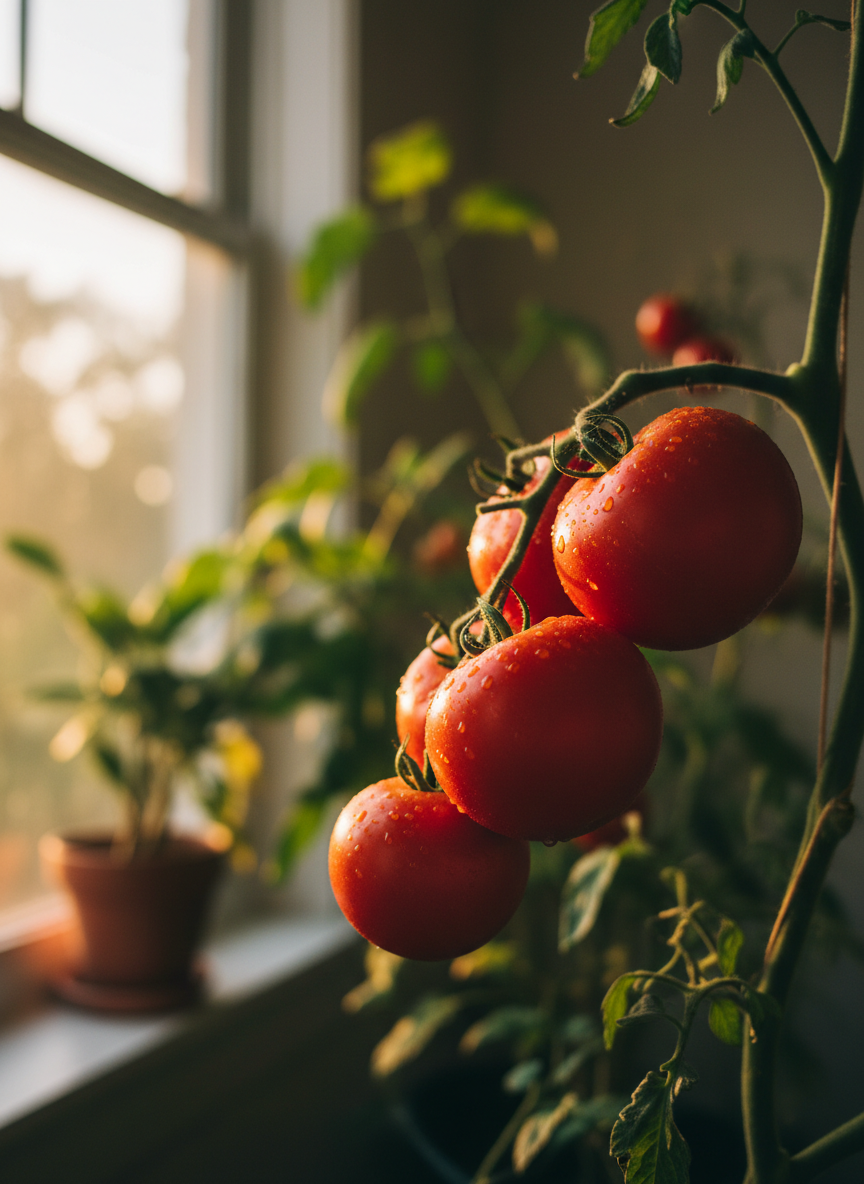
Successful pollination shows within days as tiny green tomato fruits begin to set and swell.
Why Timing Matters
- Early morning: humidity can be higher, pollen may be more clumped and less mobile
- Mid-light cycle: pollen is driest and releases most easily, flowers are fully open
- Late light cycle: flowers may be starting to close, pollen less viable
- During heat waves or hot days: pollen viability drops when temperatures exceed 85°F; this can cause pollination failure even when you're doing everything right
Ideal Conditions for Pollination
- Temperature between 65–80°F
- Humidity below 70% (very high humidity makes pollen sticky)
- Flowers fully open, petals spread wide
- A few hours into the daily light cycle
If your indoor environment is very humid, improve airflow with a fan and consider spacing out waterings slightly to let the air around the plants dry between sessions.
Common Indoor Tomato Pollination Mistakes to Avoid
Being Too Rough With Flowers
The goal is gentle vibration, not aggressive shaking. Rough handling can damage the flower structure and knock blossoms off before they've had a chance to set. Firm enough to vibrate, gentle enough not to snap.
Skipping Days
Tomato flowers are only receptive for a short window — roughly 2–3 days after fully opening. If you skip two days, you may miss the entire fertility window for a whole flower cluster. Build pollination into your daily plant check routine so it becomes automatic.
Relying on a Window for Light
Here's the indirect pollination problem nobody talks about: weak lighting causes weak, sticky pollen. Plants growing in insufficient light produce fewer flowers, and those flowers often have reduced pollen viability. If you're hand pollinating correctly but still getting no fruit, check your light setup. A full-spectrum LED grow light makes a significant difference in flower quality and pollen abundance.
Excessive Humidity
High humidity causes pollen grains to clump together, making transfer much less effective. Make sure your grow area has good air circulation. A small clip-on fan running a few hours daily keeps humidity in check and improves pollination success significantly.
Pollinating Closed Flowers
Only pollinate flowers that are fully open — petals spread wide and bright yellow. Partially opened or closed flowers aren't ready. Forcing pollen transfer on an unready flower doesn't help and can cause damage.
Poor Airflow Setup
If your grow space has no air movement at all, pollen is less likely to transfer even with manual help. A fan is genuinely one of the most important and underrated tools in an indoor tomato setup.
How Long After Pollination Do Tomatoes Appear?
Successful pollination is satisfying to watch because the signs show up quickly.
Within 24–48 hours of successful pollination, you'll notice the flower petals beginning to drop away naturally — this is a good sign. The base of the flower (the swollen part behind the petals, called the ovary) will begin to swell visibly.
Within 1 week, a small green tomato the size of a pea will be clearly visible where the flower was.
Over the next 4–8 weeks (depending on variety), that green tomato will grow and eventually ripen to its mature color.
For cherry tomatoes, the full cycle from successful pollination to ripe fruit is typically 45–60 days. For larger varieties, plan for 70–90 days.
What Partial Pollination Looks Like
Sometimes pollination is partially successful — a small tomato begins to form but then yellows and drops before reaching full size. This usually means pollination happened but wasn't complete enough to sustain fruit development. It can be caused by pollen viability issues (high temps, poor light), timing, or humidity. Improve conditions and continue daily pollination.
Best Tomato Varieties for Indoor Growing
Some varieties are simply better suited to indoor growing and hand pollination than others. Choosing the right variety makes everything easier.
Best Cherry Tomatoes for Indoors

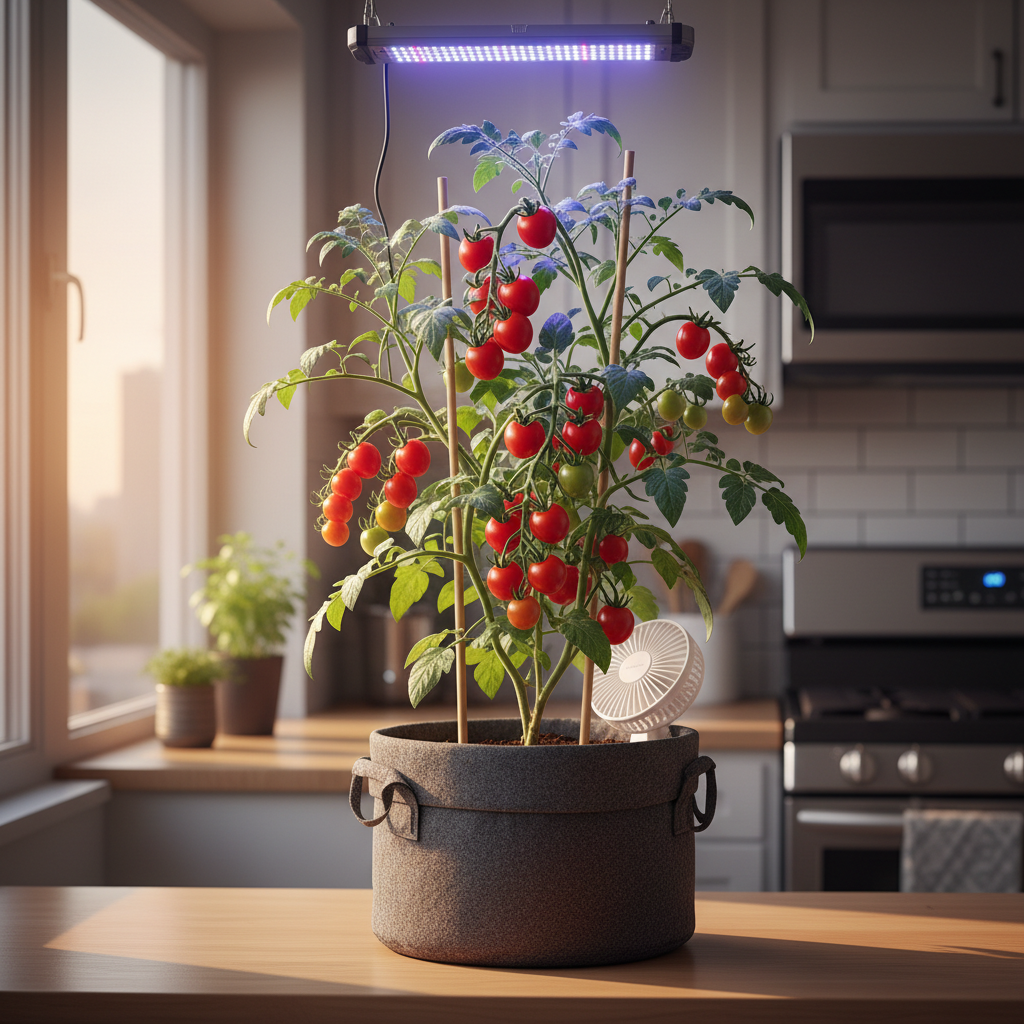
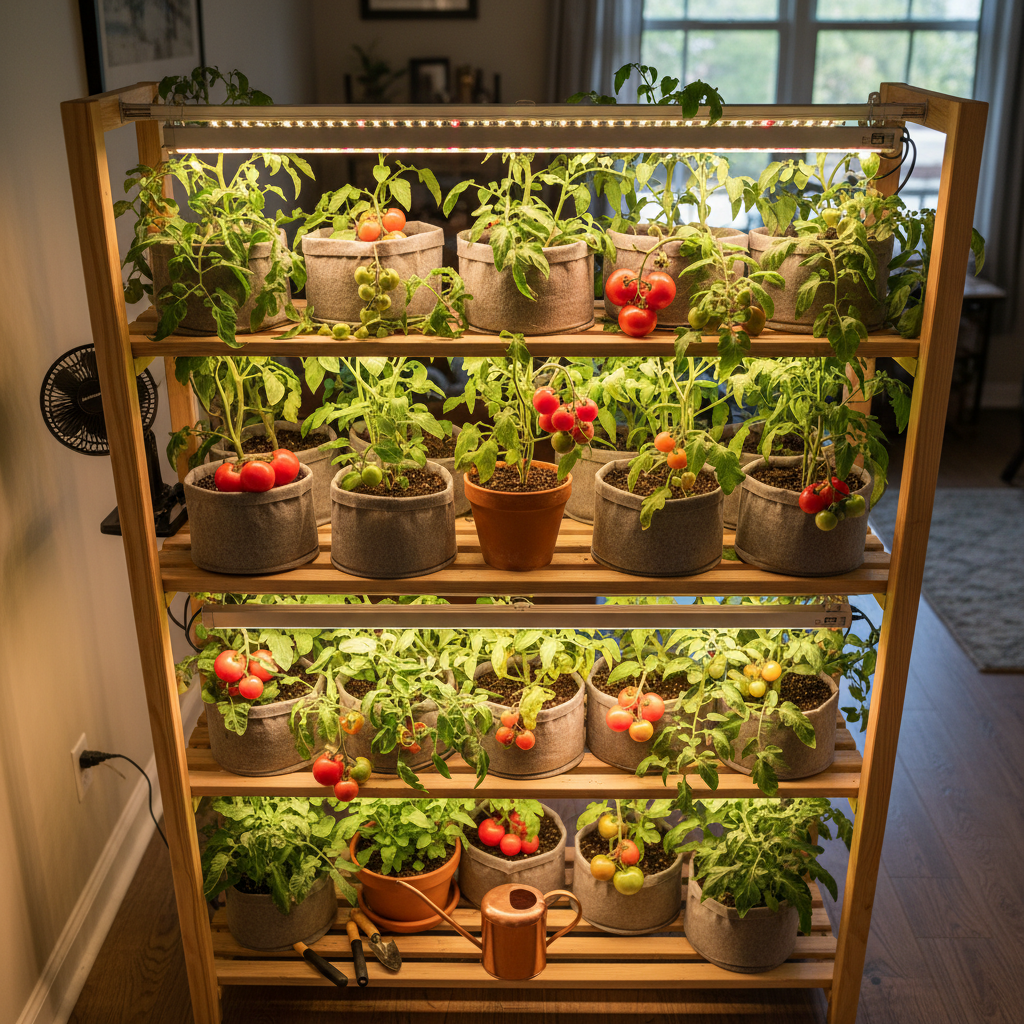
With consistent manual pollination, indoor tomato plants can produce abundantly all season.
- Sun Gold — Prolific, sweet, highly reliable under grow lights
- Sweet Million — Long clusters of fruit, very beginner-friendly
- Tiny Tim — Stays under 18 inches, perfect for small setups
Best Dwarf Varieties for Indoors
- Micro Tom — World's smallest tomato plant, great for countertops
- Tumbling Tom — Cascading habit, ideal for hanging planters or shelves
- Terenzo F1 — Bred specifically for container and indoor growing
Why Variety Matters for Pollination
Smaller-flowered varieties like cherry tomatoes are generally easier to hand pollinate because their flower clusters are more accessible and their pollen tends to release freely. Large-fruited varieties can have larger, heavier flowers that are slightly more difficult to work with and require more careful timing.
Frequently Asked Questions
How do I know if my indoor tomato has been pollinated?
The clearest sign is that flower petals drop naturally (not before the flower fully opens) and a small swelling begins to form at the base of the flower within 1–2 days. Within a week you should see a small green tomato forming.
How often should I hand pollinate indoor tomatoes?
Once per day, every day while flowers are open. The toothbrush or tapping method takes under a minute for most plants. Consistency matters more than technique.
Can I use a fan instead of hand pollinating?
A fan helps significantly and should be part of every indoor tomato setup, but it's not a complete substitute for direct hand pollination — especially for plants with many flowers. Use both together for best results.
Why are my tomato flowers falling off even though I'm pollinating?
Flower drop can also be caused by temperature extremes (above 85°F or below 55°F), inconsistent watering, very dry air, or nutrient imbalances. If pollination technique is correct, check these other factors.
What time of day is best for pollinating indoor tomatoes?
A few hours into your grow light cycle — mid-morning in natural light terms. This is when pollen is driest and most abundant.
Does high humidity affect indoor tomato pollination?
Yes. High humidity (above 70%) makes pollen sticky and clumped, reducing transfer effectiveness. Improve airflow and let the grow area dry out between waterings.
Can I pollinate tomatoes with a cotton swab?
Yes, a cotton swab works similarly to a paintbrush. Swirl it gently inside an open flower to collect pollen, then transfer to another flower. It's slightly less effective than the electric toothbrush method but absolutely works in a pinch.
One Simple Step, Dramatically Better Results
If you've been watching your indoor tomatoes bloom and drop week after week without fruit, the solution was probably in this article. Learning how to pollinate indoor tomatoes is genuinely one of the simplest and highest-impact things you can do as an indoor gardener.
Pick your method — a gentle daily shake, a small fan, the toothbrush trick, or a soft paintbrush — and build it into your daily plant check. It takes less than a minute. And the first time you see that tiny green tomato swelling behind a flower you just pollinated? That feeling never gets old.
You're one small step away from real indoor tomatoes. Go get it.
Recommended Products
Looking for the right gear to get started? We've curated our top picks for sustainable vegetable gardening — from raised beds and grow lights to seed-starting kits and organic fertilizers — on our Recommended Products page.
Ready to Start?
If you're ready to gear up, check out our recommended raised beds and grow lights on Amazon — beginner-approved and built to last.
Ready to Start?
If you're ready to gear up, check out our recommended raised beds and grow lights on Amazon — beginner-approved and built to last.
Ready to Start?
If you're ready to gear up, check out our recommended raised beds and grow lights on Amazon — beginner-approved and built to last.
Ready to Start?
If you're ready to gear up, check out our recommended raised beds and grow lights on Amazon — beginner-approved and built to last.